
Things to Do in Charleston: Pastel Streets, Harbour History and Slow Southern Days
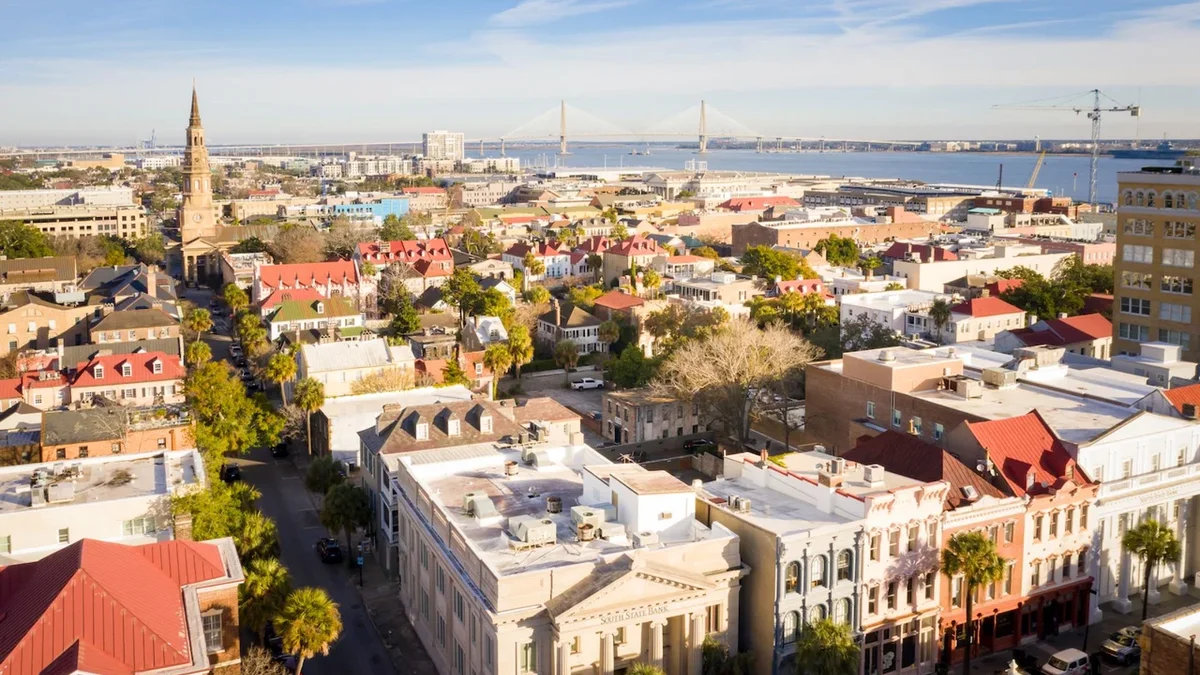
Charleston greets a first-time visitor with colour before history has time to explain itself. Pastel houses line East Bay Street, live oaks spread wide canopies over quiet side streets, and church steeples rise above a harbour that has shaped trade, war and daily life for more than three centuries. The best things to do in…
Charleston greets a first-time visitor with colour before history has time to explain itself. Pastel houses line East Bay Street, live oaks spread wide canopies over quiet side streets, and church steeples rise above a harbour that has shaped trade, war and daily life for more than three centuries. The best things to do in Charleston reward a slow pace. Walk the lower peninsula in the morning, take a harbour tour in the middle of the day, and save the gardens and museums for the softer light of late afternoon.
This guide covers the top attractions in Charleston in the order a first visit flows, starting with the City Market and Rainbow Row, then the Battery, the great Lowcountry gardens, the museums of the historic district, and the ferry to Fort Sumter. Every section gives a verified address, opening times where an official source lists them, and a practical tip. You will also find a Charleston itinerary table, a ticket table with direct official booking links, honest cost estimates, and sections on halal food in Charleston and mosques in Charleston, so Muslim travellers can plan with confidence.
Base yourself on the lower peninsula if you can. The market, Rainbow Row, the Battery, the Charleston Museum and the Old Slave Mart Museum sit within a comfortable walking area, and the ferry point for Fort Sumter sits close to the harbour front. Give the city two full days at a minimum. Three days adds Magnolia Plantation and Gardens, the South Carolina Aquarium at a relaxed pace, and a day trip to a nearby Lowcountry town without rushing.
Stay here: The Vendue
An art hotel in the French Quarter at 19 Vendue Range, Charleston, SC 29401, close to Waterfront Park and the City Market. Best for travellers who want a distinctive boutique stay in the heart of the historic district.
Charleston at a Glance

| Best Known For | Pastel Rainbow Row houses, the Battery, historic houses, Lowcountry gardens and harbour history |
| Location | South Carolina Lowcountry, on a peninsula between the Ashley River and the Cooper River |
| Founded | 1670 as Charles Town, later renamed Charleston, and moved to the present peninsula site in 1680 |
| Top Cluster | The historic district on the lower peninsula, from Marion Square south to White Point Garden |
| Airport | Charleston International Airport, around 12 miles northwest of downtown |
| Best Months to Visit | March, April, May, September, October and November |
| Good to Know | The city keeps Eastern Time, and summer days are hot and humid, so start outdoor walks early |
Best for First-Time Visitors
- Historic Charleston City Market
- Rainbow Row
- The Battery and White Point Garden
Best for Families

- South Carolina Aquarium
- Fort Sumter ferry tour
- Magnolia Plantation and Gardens
Best Free Experiences
- Rainbow Row walk on East Bay Street
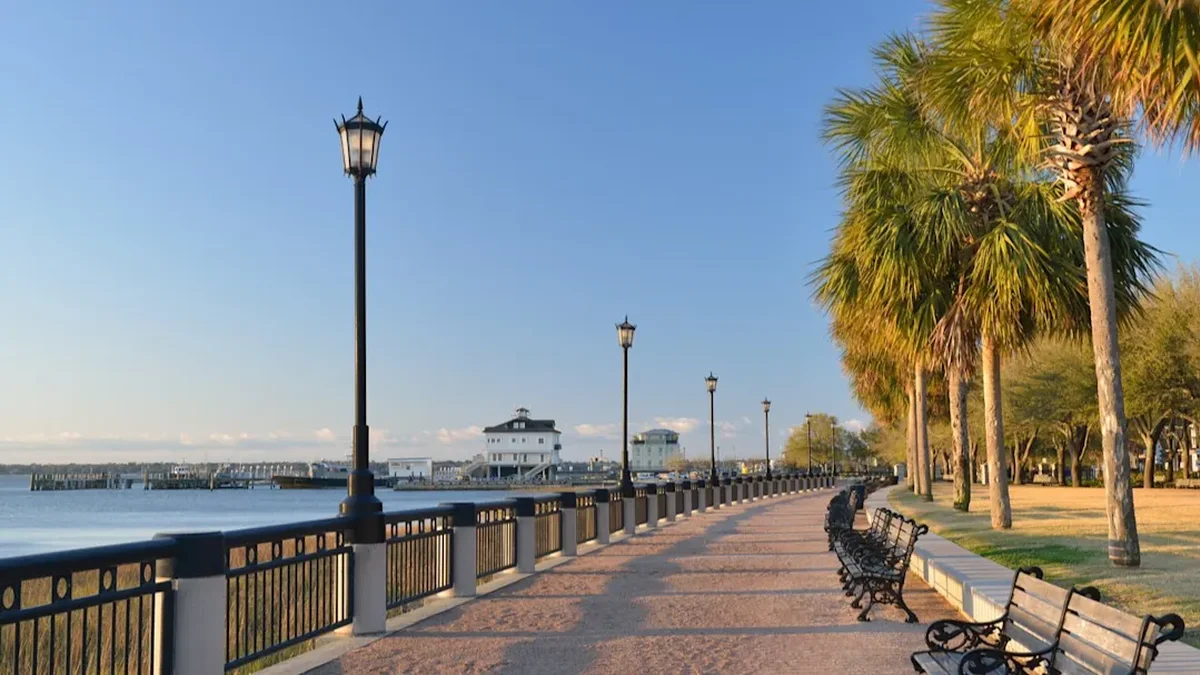
- The Battery promenade and White Point Garden
- Waterfront Park and the Pineapple Fountain
Top Things to Do in Charleston

Start in the French Quarter and the Market area, where the City Market and Rainbow Row sit a short walk apart. From there, walk south through the historic district to the Battery, then return north for the museums on Meeting Street. Keep the gardens and the harbour ferry for separate half days, since both deserve unhurried time and both sit away from the densest walking cluster.
1. Browse Local Craft at the Historic Charleston City Market

Best for

First-time visitors, shoppers and anyone who wants a lively introduction to Charleston craft. The Historic Charleston City Market is one of the oldest public markets in the United States, and it remains the cultural heart of downtown.
The market stretches for four blocks along Market Street, from Meeting Street toward East Bay Street, in open sheds and in the enclosed Great Hall. More than 300 vendors sell sweetgrass baskets, jewellery, art, food and local goods. Sweetgrass basket weaving is the craft to watch first. Weavers work with local grasses in a tradition carried through Gullah families, and many makers are happy to talk about the patterns and the time each basket takes. Arrive in the morning for the widest choice and the calmest browsing, and allow at least one hour.
Address: 188 Meeting Street, Charleston, SC 29401
Do not miss

The sweetgrass basket stalls in the open sheds. Look for tight, even coils and for baskets in useful sizes, from small bread baskets to large market baskets, and ask the maker about care at home.
Practical info

The day market runs daily from 9:30 in the morning to 5:00 in the evening. A night market runs on Thursday, Friday and Saturday evenings from April to December, from 6:30 to 10:30 in the evening. Entry to the market is free. The market is closed on 25 December.
Insider tip: Start at the Meeting Street end and walk the full length of the sheds before buying. Prices and styles vary by maker, and the second pass is when the right basket usually stands out.
2. Photograph the Pastel Houses of Rainbow Row

Best for

Photographers, architecture lovers and every first-time visitor. Rainbow Row is the most photographed street in Charleston, a row of Georgian houses in soft pastel colours on East Bay Street.
The row runs along the east side of East Bay Street between Tradd Street and Elliott Street, in the South of Broad neighbourhood. Thirteen houses form the core row, built in the 1700s as merchant houses with shops below and living rooms above. Pastel repainting began in the 1930s, when owners chose light colours to brighten the street, and the palette has stayed ever since. Each house keeps its own detail, from window boxes and shutters to ironwork and doorways, so the row rewards a slow walk rather than a single photo from one spot.
Address: 83 to 107 East Bay Street, Charleston, SC 29401
Do not miss

The full sweep of the row from the south end, where the colour sequence reads best in morning light. Pause at the middle houses for the contrast between pink, yellow, blue and green facades.
Practical info

Rainbow Row is a public street, free to walk at any hour. The houses are private homes, so view them from the pavement and respect residents. Morning light gives the clearest photos, and early weekdays are quieter than weekend middays.
Insider tip: Walk Rainbow Row first, then continue south to the Battery. The two sights pair naturally, and the route keeps the harbour on your left for much of the walk.
3. Walk the Battery and White Point Garden
Best for

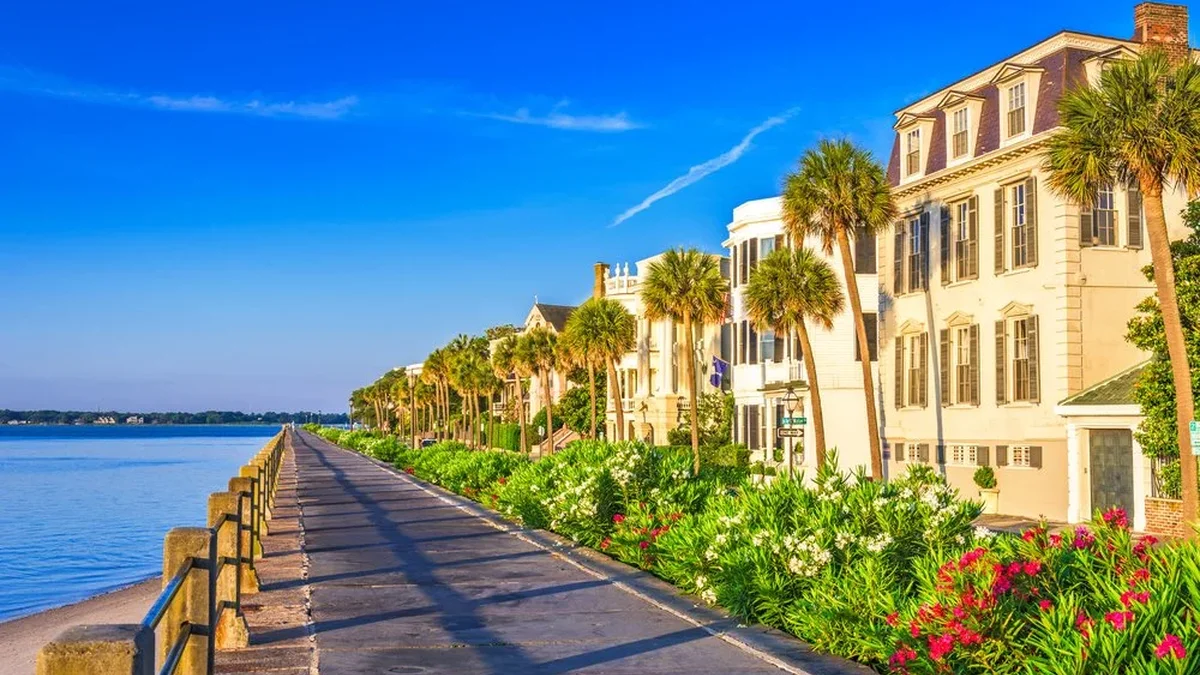
Walkers, history lovers and travellers who want the classic Charleston harbour view. The Battery and White Point Garden form the southern tip of the peninsula, where a defensive seawall and promenade meet a shaded public park.
Start at the east end of the Battery and follow the promenade west. Grand houses line the landward side, many built in the 1800s, while cannons and monuments mark the harbour side. At the tip, White Point Garden spreads over 5.7 acres under live oaks, with paths, benches and a gazebo. The park is bounded by East Battery Street, Murray Boulevard, King Street and South Battery Street. From the promenade, look across the harbour toward Fort Sumter and the Ravenel Bridge. Allow one to two hours for the full loop at a relaxed pace, including time to sit under the oaks.
Address: 2 Murray Boulevard, Charleston, SC 29401
Do not miss

The oak canopy in White Point Garden. The wide, low branches and Spanish moss create the most peaceful shade in downtown Charleston, and the garden feels a world away from King Street traffic.
Practical info

The Battery and White Point Garden are public and free to enter. The park is open daily, with city park hours, and the promenade is flat and easy for wheelchairs and pushchairs. Parking near the Battery is limited, so walk from the historic district or use the free downtown shuttle and walk the last stretch.
Insider tip: Visit in the last hour before sunset, when light falls on the harbour and the houses along Murray Boulevard glow warm. The garden benches fill early, so arrive a little ahead of sunset for a seat.
4. Spend a Slow Morning at Magnolia Plantation and Gardens

Best for

Garden lovers, families and travellers who want Lowcountry nature with honest history. Magnolia Plantation and Gardens sits on the Ashley River, around 15 minutes by car northwest of downtown, and it pairs romantic gardens with clear, factual interpretation of enslaved labour.
The gardens are the oldest public gardens in the United States in continuous cultivation, with camellias, azaleas, live oaks and winding paths beside ponds and bridges. The house tour, the From Slavery to Freedom tour and the historic cabins tell the story of the people who lived and worked here, including enslaved people whose skill built the rice economy of the Lowcountry. The Audubon Swamp Garden, reached by boardwalk, adds herons, egrets and turtles in a quiet wetland setting. Plan three to four hours, and wear comfortable shoes for garden paths.
Address: 3550 Ashley River Road, Charleston, SC 29414
Do not miss

The From Slavery to Freedom tour and the cabins. These stops give the visit its depth, and they balance the beauty of the gardens with the human cost behind the estate.
Practical info

Magnolia Plantation and Gardens is open daily from 9:00 in the morning to 4:00 in the afternoon for garden entry, with tours through the day. Check the official site for current admission before you go, since prices vary by tour choice. The Nature Train and the Wildlife Boat Tour are optional extras, with the boat tour seasonal and weather dependent.
Insider tip: Book the first house tour of the day, then walk the gardens while tour groups are still indoors. The Long White Bridge photographs best before midday crowds arrive.
5. Understand the Lowcountry at The Charleston Museum

Best for

History lovers who want one clear overview before exploring the streets. The Charleston Museum, founded in 1773, is the oldest museum in the United States, and it tells the natural and cultural history of the Lowcountry in one building.
Start in the Lowcountry History Hall, which traces Native American life, colonial settlement, rice cultivation built on enslaved labour, and the growth of Charleston as a major Atlantic port. The natural history gallery adds fossils and wildlife of the region, while the decorative arts galleries show Charleston silver, textiles and furniture. A hands-on gallery for children keeps younger visitors engaged, and the museum shop offers books on Lowcountry history for deeper reading. Allow two hours, and pair the visit with the Joseph Manigault House or the Heyward-Washington House nearby if time allows, since combination tickets cover the museum and the houses.
Address: 360 Meeting Street, Charleston, SC 29403
Do not miss

The slave badges and rice tools in the history hall. These small objects explain, in concrete terms, how enslaved labour was controlled and how West African agricultural knowledge shaped Lowcountry rice farming.
Practical info

The museum is open Monday to Saturday from 9:00 in the morning to 5:00 in the evening, and Sunday from 12:00 noon to 5:00 in the evening. Adult admission is listed at 15 dollars on recent official listings, with youth and child rates lower and children aged 2 and under free. Confirm current admission on the official site before you go, since listings have varied between 12 and 15 dollars for adults.
Insider tip: Visit the Charleston Museum before the house museums. The history hall gives context for every house, garden and street you see afterwards.
6. Sail to Fort Sumter by Ferry

Best for

History lovers, families and travellers who want a harbour tour with a powerful story. Fort Sumter Tours runs the only ferry service that docks at Fort Sumter, from Liberty Square in downtown Charleston and from Patriots Point in Mount Pleasant.
The ferry ride takes around 30 minutes each way, with narration on harbour landmarks, and the visit at the fort lasts around one hour. At the fort, National Park Service rangers lead talks, and exhibits explain how the first shots of the Civil War were fired here in April 1861. The fort itself is a National Historical Park site, with open parade grounds, cannon displays and harbour views back toward the city. The full round trip takes around two and a half hours, so plan it as a morning or afternoon block, not as a quick add-on.
Address: 340 Concord Street, Charleston, SC 29401, at the Fort Sumter Visitor Education Centre on Liberty Square
Do not miss

A ranger talk at the fort. The talks place the buildings and cannons in the wider story of the war, and they answer questions that the signs alone cannot cover.
Practical info

From Liberty Square, ferries run at 9:30 in the morning, 12:00 noon and 2:45 in the afternoon in the main season, from late February to late November, with a reduced winter schedule. Adult ferry tickets are listed at 43 dollars, senior and active military tickets at 39 dollars, and child tickets for ages 4 to 11 at 26 dollars, with children aged 3 and under free. Book online in advance, arrive at least 30 minutes early, and note that ticket windows and boats accept cards only.
Insider tip: Take the first ferry of the day. The fort is quietest in the morning, the light on the harbour is clearest, and the rest of the day stays free for the historic district.
7. Face Difficult History at the Old Slave Mart Museum

Best for

Travellers who want to understand Charleston history in full. The Old Slave Mart Museum, at 6 Chalmers Street, stands in one of the few surviving slave auction galleries in South Carolina, and it tells the story of the domestic slave trade in Charleston with care and directness.
The museum focuses on this building and site. After an 1856 city ordinance ended public sales on the north side of the Old Exchange Building, sales moved indoors to rooms and yards along Chalmers, State and Queen Streets, including the complex known as Ryans Mart. Exhibits explain the mechanics of the trade, the economics behind it, and the lives of enslaved people through documents, first-hand accounts and personal letters. The visit is compact and text rich, and it takes around one hour. It is a sombre stop, and it belongs early in a Charleston visit, since it changes how every later house and garden reads.
Address: 6 Chalmers Street, Charleston, SC 29401
Do not miss

The first-hand accounts and letters in the upper galleries. These voices carry the human detail that statistics alone cannot give, and they stay with visitors long after the visit ends.
Practical info

The museum is open Monday to Saturday from 9:00 in the morning to 5:00 in the evening. Adult admission is listed at 8 dollars in recent listings. Talks run twice daily at 11:00 in the morning and 3:00 in the afternoon where scheduled, so check the official site on the day.
Insider tip: Allow quiet time after this visit before moving to the next sight. The museum is small, but the material deserves reflection, not a rushed exit into shopping streets.
Stay here: Hotel Bennett
A grand hotel overlooking Marion Square at 404 King Street, Charleston, SC 29403, with a spa and rooftop pool for overnight guests. Best for travellers who want a central, full-service base on King Street.
8. Explore Ocean Life at the South Carolina Aquarium

Best for

Families, rainy days and travellers who want a calm indoor highlight near the harbour. The South Carolina Aquarium follows the journey of water from the mountains of South Carolina to the open ocean, in galleries that suit all ages.
The Great Ocean Tank, holding 385,000 gallons, anchors the visit, with sharks, rays and sea turtles moving through open water. The Shallows touch tank lets children feel rays and small sea creatures under staff guidance, while the sea turtle care centre shows recovering turtles in a working hospital setting, with many later returned to the ocean. Outdoor decks give harbour views, and keeper talks through the day explain feeding and conservation work. Allow two to three hours, and book a timed entry online where the ticket calendar offers one for your date.
Address: 100 Aquarium Wharf, Charleston, SC 29401
Do not miss

The sea turtle care centre on the upper level. Watching recovery work in progress gives children a clear, hopeful reason to care about ocean conservation.
Practical info

The aquarium is open daily from 9:00 in the morning, with last entry at 3:30 in the afternoon and the building closing at 5:00 in the evening. Admission uses dynamic pricing by date, so check the official ticket calendar for your date and book early for the best price. Children under 3 enter free. Parking is available in the Aquarium Wharf garage nearby.
Insider tip: Arrive at opening time, when the touch tank is quiet and the Great Ocean Tank viewing areas are clear. Save the outdoor deck for the end, when the harbour light is best for photos.
More Worth Your Time in Charleston

If the eight main sights leave you with a spare half day, these seven stops add depth without repeating the same story. Middleton Place, at 4300 Ashley River Road, Charleston, SC 29414, offers 65 acres of the oldest landscaped gardens in the United States, a house museum and stableyards, open daily from 9:00 in the morning to 5:00 in the evening. Patriots Point Naval and Maritime Museum, at 40 Patriots Point Road, Mount Pleasant, SC 29464, lets visitors board the aircraft carrier USS Yorktown and the destroyer USS Laffey, open daily from 10:00 in the morning to 5:00 in the evening.
Angel Oak Park, at 3688 Angel Oak Road, Johns Island, SC 29455, protects a Southern live oak estimated at 300 to 400 years old, with a canopy shading 17,000 square feet, and entry is free. Waterfront Park and the Pineapple Fountain, at 1 Vendue Range, Charleston, SC 29401, give a harbour front promenade and the most photographed fountain in the city. The Nathaniel Russell House, at 51 Meeting Street, Charleston, SC 29401, shows a grand Federal style house with a famous free flying staircase, while the Aiken-Rhett House, at 48 Elizabeth Street, Charleston, SC 29403, preserves a house much as it was left, including original slave quarters. Boone Hall Plantation and Gardens, at 1235 Long Point Road, Mount Pleasant, SC 29464, is known for its Avenue of Oaks, Gullah culture presentation and Black History in America exhibit in nine original cabins, open Monday to Saturday from 9:00 in the morning to 5:00 in the evening and Sunday from 12:00 noon to 5:00 in the evening.
Charleston Attractions Compared

| Attraction | Best For | Cost | Time Needed |
|---|---|---|---|
| Historic Charleston City Market | Craft shopping and a first morning | Free entry | 1 to 2 hours |
| Rainbow Row | Photos and architecture | Free | 30 to 60 minutes |
| The Battery and White Point Garden | Harbour views and a slow walk | Free | 1 to 2 hours |
| Magnolia Plantation and Gardens | Gardens and Lowcountry history | Check the official site | 3 to 4 hours |
| The Charleston Museum | A full Lowcountry overview | 15 dollars adults, recent listings | 2 hours |
| Fort Sumter ferry | Harbour history and a boat tour | 43 dollars adults | 2.5 hours |
| Old Slave Mart Museum | Essential difficult history | 8 dollars adults, recent listings | 1 hour |
| South Carolina Aquarium | Families and indoor days | Dynamic pricing, check the calendar | 2 to 3 hours |
| Middleton Place | Historic gardens and stableyards | Check the official site | 3 to 4 hours |
| Patriots Point | Ships and naval history | Check the official site | 3 to 4 hours |
| Angel Oak Park | A natural wonder on Johns Island | Free | 1 hour |
| Waterfront Park and Pineapple Fountain | Harbour front photos and rest | Free | 1 hour |
Suggested Itineraries

| Trip Length | What to See |
|---|---|
| 1 Day | Start at the Historic Charleston City Market when it opens, walk Rainbow Row and continue to the Battery and White Point Garden. Spend the afternoon at The Charleston Museum and finish at Waterfront Park. |
| 2 Days | Day 1: As above, plus the Old Slave Mart Museum. Day 2: The Fort Sumter ferry in the morning and the South Carolina Aquarium in the afternoon. |
| 3 Days | Days 1 and 2 as above. Day 3: Magnolia Plantation and Gardens in the morning, Angel Oak Park in the afternoon, or a day trip to Savannah or Beaufort. |
Book Tickets in Charleston

Book the ferry and the main paid sights in advance, especially in spring and autumn weekends. Every link below goes to the official ticket page for that attraction.
| Attraction | Tickets |
|---|---|
| Magnolia Plantation and Gardens | Book Tickets |
| The Charleston Museum | Book Tickets |
| Fort Sumter ferry | Book Tickets |
| Old Slave Mart Museum | Book Tickets |
| South Carolina Aquarium | Book Tickets |
Where to Stay in Charleston
Top 3 hotels in Charleston
Explore all hotels >- The Vendue ★★★★
- Hotel Bennett ★★★★★
- The Charleston Place ★★★★★

The lower peninsula suits almost every Charleston itinerary. The market, Rainbow Row, the Battery and the Meeting Street museums sit within walking distance of the historic district hotels, and the drive out to Magnolia Plantation and Gardens and to Angel Oak Park stays manageable. Upper King Street trades a little distance for a livelier dining street, while Mount Pleasant suits travellers who plan several harbour and Patriots Point days.
| Area | Best For | What Is Nearby |
|---|---|---|
| South of Broad and the Battery | First-time visitors who want quiet streets | White Point Garden, Rainbow Row and historic houses |
| French Quarter and the Market | Walkers and shoppers | Historic Charleston City Market, Waterfront Park and harbour front dining |
| Upper King Street and Marion Square | Dining, shopping and museum days | The Charleston Museum, King Street shops and the Central Mosque area |
| Mount Pleasant | Families and harbour days | Patriots Point, Fort Sumter ferry from Patriots Point and Boone Hall Plantation |
Two hotels with verified official booking pages cover the main styles of stay:
- The Vendue: An art hotel in the French Quarter at 19 Vendue Range, Charleston, SC 29401, close to Waterfront Park and the City Market. Best for travellers who want a distinctive boutique stay in the heart of the historic district.
- Hotel Bennett: A grand hotel overlooking Marion Square at 404 King Street, Charleston, SC 29403, with a spa and rooftop pool for overnight guests. Best for travellers who want a central, full-service base on King Street.
What to Eat in Charleston

Charleston eats like a Lowcountry port city, with seafood, rice dishes, fresh vegetables and sweet desserts at the centre of the table. Food often becomes the memory travellers carry home, a pattern explored in our guide to how food tourism is shaping modern travel. The halal options below come first, then the local dishes worth knowing by name.
Halal Food in Charleston

Baba Kabob Market and Deli, listed as halal in its own listing title, sits at 4952 Centre Pointe Drive, Suite 110, North Charleston, SC 29418. The menu centres on Middle Eastern grilled meats, rice plates and market goods, and it suits a North Charleston lunch on a Patriots Point or Boone Hall day. Confirm halal certification with staff on the day, since listings describe the restaurant as halal without publishing a certifier name.
Istanbul Shish Kabob Restaurant (Halal) sits at 4940 Centre Pointe Drive, Suite C, North Charleston, SC 29418, close to Baba Kabob. The menu runs from mixed grill plates and shish kabob to pilaf rice and fresh salads, and the restaurant is listed as halal in its own listing title. As with any halal listing, ask staff about sourcing when you order, and confirm on the day.
Afghan Restaurant and Market, listed as a halal restaurant, sits at 5101 Ashley Phosphate Road, Unit 133, North Charleston, SC 29418. Kabuli pulao with lamb, mantu dumplings, bolani pastries and kofta kebab give a different Lowcountry table, with Afghan bread and a small market attached. For downtown dining, The Halal Guys at 540 King Street, Charleston, SC 29403 is listed as a halal restaurant in current listings, with chicken and gyro rice plates. Food choices shape a trip as much as sights do, a point covered in our guide to how food tourism is shaping modern travel, and downtown diners should still confirm halal status with staff before ordering meat dishes.
Two further downtown and West Ashley options are listed here only as confirm-with-staff choices. Leyla Fine Lebanese Cuisine, at 298 King Street, Charleston, SC 29403, serves Lebanese dishes including hummus, stuffed grape leaves, lamb shank and baklava, but its halal status is not stated in its own listing, so confirm with staff before ordering meat dishes. Nirlep Indian Restaurant, at 908 Savannah Highway, Charleston, SC 29401, serves Indian curries and tandoor dishes, with vegetable dishes as the safest choice until staff confirm meat sourcing. In every case, ask clearly about meat sourcing, and choose vegetable, seafood or egg dishes if staff cannot confirm.
Local Dishes to Try

Shrimp and grits is the signature Lowcountry plate, with fresh shrimp over stone ground grits in a light sauce. She crab soup, made with crab meat and cream, is the classic Charleston starter, while fried green tomatoes, okra and collard greens show the vegetable side of Southern cooking. For dessert, look for coconut cake, banana pudding and pecan pie. Eating well is part of understanding a place, a theme explored in our guide to how food tourism is shaping modern travel, and the market food stalls give a low cost way to taste several dishes in one stop.
Mosques and Prayer Facilities in Charleston

Charleston holds an established Muslim community with mosques on the peninsula and in North Charleston, and visitors are welcome at daily and Friday prayers. Prayer times shift with the season, so check the site of the mosque before you go.
- Central Mosque of Charleston: The largest mosque in the area, at 1082 King Street, Charleston, SC 29403. The mosque is open for the five daily prayers, with Friday prayer at 1:30 in the afternoon year round, and it sits within walking distance of Upper King Street hotels.
- Islamic Center of Charleston: At 1117 King Street, Charleston, SC 29403, close to the Central Mosque, with daily and Friday prayers for the peninsula community.
- Masjid Al-Jami Ar-Rasheed: At 1998 Hugo Avenue, North Charleston, SC 29418, handy for North Charleston halal restaurants and for Patriots Point days.
- Al-Furqan Islamic Center: At 41 Nunan Street, Charleston, SC 29403, a neighbourhood prayer centre on the peninsula.
Getting Around Charleston

| Option | Best For | Cost |
|---|---|---|
| Walking | The historic district, the market, Rainbow Row and the Battery | Free |
| CARTA DASH | Free downtown shuttle routes on the peninsula | Free |
| CARTA Bus | Citywide travel without a car, including the airport route | 3.50 dollars single ride, recent listings |
| Car and Parking | Magnolia Plantation, Middleton Place, Angel Oak and day trips | Rental plus garage and lot fees |
| Taxi and Rideshare | Airport runs and evenings | Metered and app fares vary |
The historic district follows a simple grid, and the main sights between Marion Square and the Battery sit within a 15 to 20 minute walk of each other, so walking covers the core of the guide. CARTA, the Charleston Area Regional Transportation Authority, runs the free Downtown Area Shuttle, known as DASH, on routes through the peninsula, with all routes meeting near the Charleston Visitor Center. Regular CARTA buses cost 3.50 dollars for a single ride in recent listings, and Route 11 serves Charleston International Airport.
Charleston International Airport stands around 12 miles northwest of downtown, roughly a 20 to 25 minute drive in normal traffic. Taxis and rideshares wait outside the terminal, and the CARTA airport bus offers a lower cost link to the city. A rental car earns its keep on garden, Angel Oak and day trip days, while downtown garages keep parking simple on the rest of the trip. The Charleston Visitor Center garage at 375 Meeting Street is a useful base for DASH routes.
What a Day in Charleston Costs

| Travel Style | Attractions | Food | Stay and Transport | Rough Daily Total |
|---|---|---|---|---|
| Budget Traveller | 0 to 25 dollars, mixing free walks with one low cost museum | 30 to 45 dollars | 110 to 150 dollars hotel, free DASH | 140 to 220 dollars |
| Mid-Range Traveller | 45 to 85 dollars for two or three paid sights | 60 to 95 dollars | 180 to 280 dollars hotel, 20 to 40 dollars parking and rides | 305 to 500 dollars |
| Family of Four | 100 to 180 dollars with aquarium and ferry pricing | 130 to 190 dollars | 220 to 320 dollars family room, 25 to 45 dollars parking and fuel | 475 to 735 dollars |
Charleston rewards planners. Rainbow Row, the Battery, White Point Garden, Waterfront Park and Angel Oak Park cost nothing to enter, and the free DASH shuttle removes parking from downtown days. A historic district day built around the City Market, Rainbow Row and the Battery stays gentle on the budget, while the Fort Sumter ferry is the single largest ticket to plan for in advance.
Best Time to Visit Charleston

| Season | Months | What to Expect |
|---|---|---|
| Spring | March to May | Mild days, azaleas and camellias in bloom, and busy garden weeks |
| Summer | June to August | Hot and humid days, early outdoor walks, and cool indoor museums at midday |
| Autumn | September to November | Warm early autumn days, easing crowds, and comfortable walking weather |
| Winter | December to February | Cooler days, lower hotel prices, and quieter streets and museums |
March, April, May, September, October and November give the easiest sightseeing weather in Charleston. Spring brings the best garden colour, while autumn brings warm days without summer humidity. Summer visitors should start outdoor days early, save museums for the heat of the afternoon, and carry water on every walk. Winter is the quietest season, with lower hotel prices and short queues at paid sights.
Day Trips from Charleston

Savannah, Georgia

Savannah sits around two hours southwest of Charleston by road, and it makes the classic Lowcountry pairing. Spanish moss, public squares, a riverfront walk and a strong food scene mirror Charleston history from a Georgia angle, and a full day gives time for one historic district walk, one house museum and a relaxed lunch. Savannah (guide in preparation) is the natural next city after Charleston for travellers who want a second Southern port city.
Beaufort, South Carolina

Beaufort sits around 70 miles southwest of Charleston, and it offers a quieter Lowcountry town with antebellum houses, oak lined streets and a small historic district that is easy to walk in half a day. Pair Beaufort with the nearby historic sites of the Sea Islands region for a full day, and return to Charleston in the evening for dinner. Beaufort (guide in preparation) suits travellers who prefer slow towns over busy cities.
Summerville and the Ashley River Road

Summerville, northwest of Charleston, is known for azalea gardens and a quiet small town centre, and it pairs well with the Ashley River Road gardens. Combine a morning at Magnolia Plantation and Gardens or Middleton Place with a Summerville lunch and a slow afternoon walk, without the pressure of a long drive. This route keeps the day in Lowcountry garden country, close to the city.
Practical Tips for Visiting Charleston

Good to Know

- Group the historic district sights into walking days, and keep Magnolia Plantation and Gardens, Middleton Place and Angel Oak Park for car days.
- Book Fort Sumter ferry times and Magnolia house tours ahead in spring and autumn, when both sell out on weekends.
- Use the free DASH shuttle for the peninsula, and save parking fees for garden and day trip days only.
- Carry water and sun protection on summer walks, and start Battery and Rainbow Row walks early in the day.
- Check mosque prayer times and halal restaurant hours before you go, since both shift with the season.
Good to Avoid

- Planning Fort Sumter as a last minute stop. Ferry times are fixed, and late arrival can mean a missed sailing.
- Assuming every museum opens daily at the same hour. Sunday hours differ at the Charleston Museum and at several house museums.
- Driving between historic district sights. Walking is faster than parking twice, and downtown garages add up across a day.
- Photographing private homes from driveways or gardens. Stay on the pavement at Rainbow Row and respect residents.
Final Thoughts
Charleston gives a traveller more than a checklist. It gives pastel streets that photograph beautifully and history that asks for thought, from the market sheds where Gullah craft lives on, to the Battery where harbour and city meet, to the small museum on Chalmers Street that tells a hard truth with clarity. Walk slowly, sit under the oaks, take the ferry, and let the city set its own unhurried pace.
Keep Exploring
- Savannah (guide in preparation)
- Beaufort (guide in preparation)
- Atlanta (guide in preparation)
Rainbow Row, the Battery, and Fort Sumter make the essential circuit, and Magnolia Plantation and Gardens, Middleton Place, Boone Hall Plantation, Charleston City Market, the Angel Oak Tree, Patriots Point Naval and Maritime Museum, and the Arthur Ravenel Jr. Bridge fill the days around them. The two day plan in this guide pairs the Historic District on day one with the plantations on day two.
Spring brings mild days with azaleas in bloom and the busiest garden weeks, autumn brings mild days after the hot summer, and winter brings the lowest prices with the shortest days. Walk the Historic District for Rainbow Row, the Battery, and the City Market, and use the free DASH trolley for the downtown loop. Book Fort Sumter ferry tickets and plantation tours ahead, since both sell out on weekends in spring.
The Historic District suits almost every itinerary, with Rainbow Row, the Battery, and the City Market within walking distance, while Mount Pleasant suits travellers who want Patriots Point and the bridge views at the door. The Central Mosque of Charleston holds daily prayers and the Friday prayer, and visitors are welcome. A fourth day rewards a slower pace, with the Angel Oak Tree, the plantations, and the harbourfront each deserving a full morning.
FAQs
What are the best things to do in Charleston for first-time visitors?
Start with the Historic Charleston City Market, Rainbow Row and the Battery, then add The Charleston Museum and the Old Slave Mart Museum. This route covers craft, architecture, harbour views and essential history in one walkable area.
How many days do you need in Charleston?
Two full days cover the historic district, the Fort Sumter ferry and the South Carolina Aquarium in comfort. A third day adds Magnolia Plantation and Gardens, Angel Oak Park and a day trip to Savannah or Beaufort without rushing.
What is Charleston best known for?
Charleston is best known for Rainbow Row pastel houses, the Battery and White Point Garden, Lowcountry gardens, historic houses and harbour history, including Fort Sumter and the Civil War story that began there.
When is the best time to visit Charleston?
March, April, May, September, October and November bring the most comfortable sightseeing weather. Spring gives the best garden colour, autumn gives warm days without summer humidity, and winter gives the lowest hotel prices.
Is Charleston a good destination for families?
Yes. The South Carolina Aquarium fills half a day for younger children, the Fort Sumter ferry adds a boat tour with ranger talks, and Magnolia Plantation and Gardens gives space to run, explore and learn outdoors.
Where can visitors find halal food in Charleston?
Baba Kabob Market and Deli and Istanbul Shish Kabob Restaurant (Halal), both in North Charleston, are listed as halal, with Afghan Restaurant and Market also listed as halal. Downtown, The Halal Guys on King Street is listed as halal in current listings. Confirm halal certification with staff on the day before ordering meat dishes.
How do visitors get around Charleston without a car?
Walk the historic district, where the market, Rainbow Row, the Battery and the Meeting Street museums sit within a 15 to 20 minute walk of each other, and use the free CARTA DASH shuttle for the rest of the peninsula. CARTA buses and rideshares cover the airport, gardens and day trips when walking does not fit.







2 Comments