
Things to Do in Gjirokaster: Castle, Old Bazaar and Stone Tower Houses
Gjirokaster greets a first time visitor with grey stone roofs stacked on a steep hillside, white walls above cobbled lanes, and a great castle watching over the Drino Valley. The city is known as the City of Stone, and the name fits every view. Begin at the castle in the cool morning, walk down through…
Gjirokaster greets a first time visitor with grey stone roofs stacked on a steep hillside, white walls above cobbled lanes, and a great castle watching over the Drino Valley. The city is known as the City of Stone, and the name fits every view. Begin at the castle in the cool morning, walk down through the Old Bazaar at midday, and save the historic houses of the Palorto quarter for the softer light of the afternoon.
This guide covers the top things to do in Gjirokaster in the order a first visit flows, starting with the castle and the Old Bazaar, then the Ethnographic Museum and the great tower houses, then the Bazaar Mosque and the Cold War Tunnel, and finally a quiet walk out to Dunavat and the Ali Pasha Bridge. Every section gives a verified address, opening times where a reliable source lists them, and a practical tip, plus itinerary, ticket and cost tables and sections on halal food and mosques. For wider planning, the guide to The Ultimate Guide: 19 Best Things to Do in Albania (2026 Edition) sets Gjirokaster beside the other great sights of Albania.
Base yourself in the Old Town if you can. The castle, the Old Bazaar, the Ethnographic Museum, Zekate House, Skenduli House, the Bazaar Mosque and the Cold War Tunnel all sit within a compact hillside area, and the steep cobbled streets reward a slow pace and sturdy shoes. A stay in the new town adds a bus ride or a taxi ride to every outing.
Stay here: Hotel Kalemi
A hotel in a restored traditional house at Rruga Bashkim Kokona 14, Gjirokaster, close to the Ethnographic Museum and Zekate House. Best for a traditional stone house stay with views over the Old Town.
Gjirokaster at a Glance

Best for First-Time Visitors

- Gjirokaster Castle
- Old Bazaar
- Ethnographic Museum
Best for Families

- Old Bazaar craft shops
- Cold War Tunnel
- Castle ramparts and views
Best Free Experiences

- Old Bazaar lanes
- Palorto quarter walk
- Dunavat walk to Ali Pasha Bridge
| Best Known For | Gjirokaster Castle, the Old Bazaar, Ottoman tower houses with stone slab roofs, the Ethnographic Museum, the Bazaar Mosque, the Cold War Tunnel, and a UNESCO listed Old Town |
| Location | Southern Albania, in the Drino Valley between the Mali i Gjere mountains and the Lunxheri mountains, around 227 kilometres south of Tirana |
| UNESCO Listing | Historic Centres of Berat and Gjirokastra, inscribed on the World Heritage List in 2005, with Berat added as an extension in 2008, on criteria iii and iv |
| Top Cluster | The Old Town hillside, with the castle, the Old Bazaar, the Palorto quarter houses, the Bazaar Mosque and the Cold War Tunnel close together |
| Nearest Airports | Tirana International Airport, around 227 kilometres by road, and Corfu International Airport, reached by ferry from Saranda and then by road |
| Best Months to Visit | April, May, June, September and October |
| Good to Know | Streets are steep and cobbled and stone slabs can be slippery when wet, so wear shoes with grip, carry water, and start hill walks early in hot weather |
Top Things to Do in Gjirokaster

Start high, at the castle, where the scale of the fortress and the sweep of the valley give the clearest sense of why this hill was fortified for centuries. Walk down into the Old Bazaar for crafts and stone lanes, climb through the Palorto quarter for the museum and the tower houses, and finish at street level with the Bazaar Mosque and the Cold War Tunnel.
1. Stand Above the Valley at Gjirokaster Castle
Best for
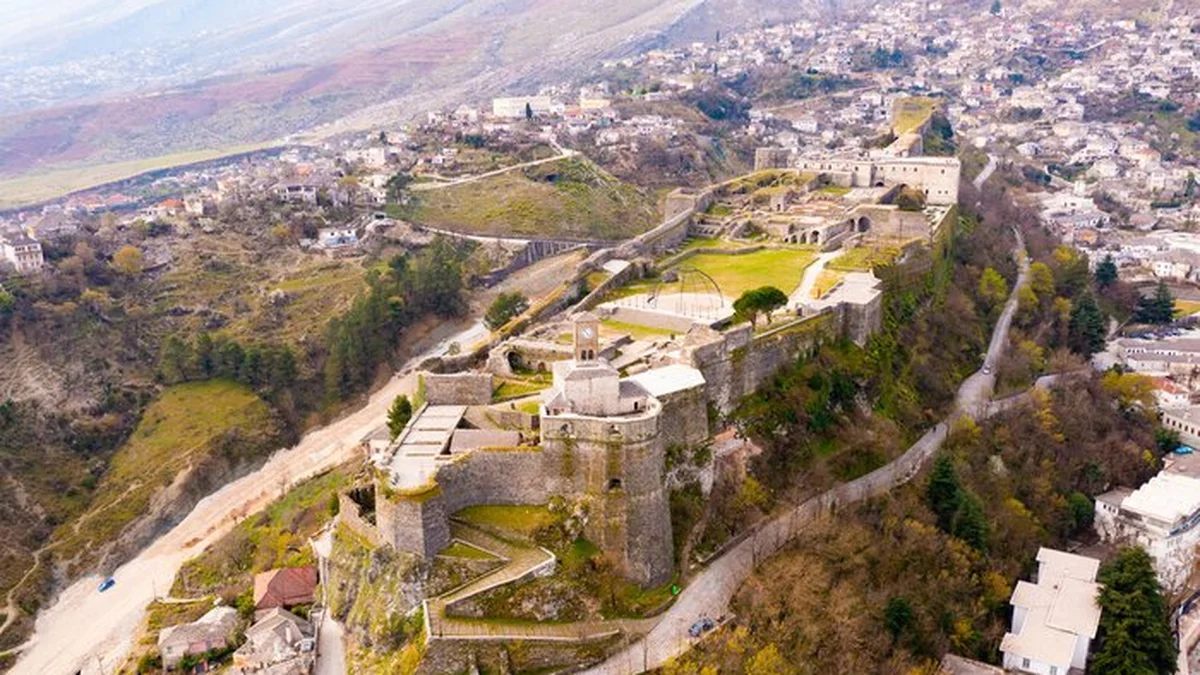
First-time visitors, history lovers, photographers and travellers who want the single most commanding view in Gjirokaster. Gjirokaster Castle crowns a long narrow ridge above the Old Town, and it is one of the largest fortresses in the Balkans. The first walls are believed to date from the 12th century, the fortress was taken by the Ottomans in 1419, and it was expanded to its present size under Ali Pasha of Tepelena in the late 18th century and the early 19th century.
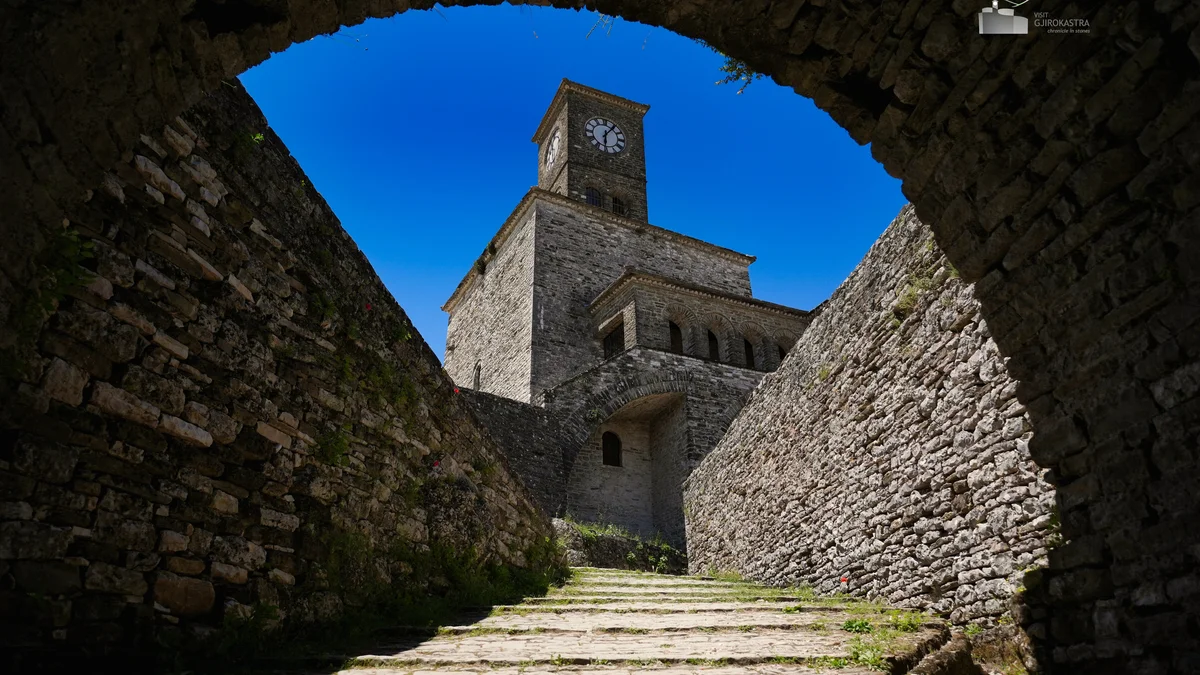
The National Museum of Armaments holds arms from 1912 to the end of the Second World War, with most of the display devoted to the partisan struggle of 1939 to 1944. An artillery gallery, a small Italian tank and an American training plane forced to land near Tirana in 1957 stand among the highlights, with the 19th century clock tower at the eastern end. Allow two to three hours.
Address: Rruga Elvia Celebi, Gjirokaster
Do not miss
The view from the ramparts across the Drino Valley and the stone roofs of the Old Town below. Walk the full length of the fortress slowly and look out to the mountains on the far side of the valley.
Practical info
The castle is open daily from 9:00 in the morning, with seasonal closing times, so check on the day. Listings give 400 lek for entry and 200 lek for the museum, so confirm charges at the ticket point. The climb from the Old Bazaar is steep and cobbled, so wear shoes with grip and allow 15 to 40 minutes. A taxi from the new town costs around 300 to 500 lek.
Insider tip: Arrive at opening time and walk the ramparts before groups build up, then save the museums for the heat of midday.
2. Wander the Stone Lanes of the Old Bazaar

Best for
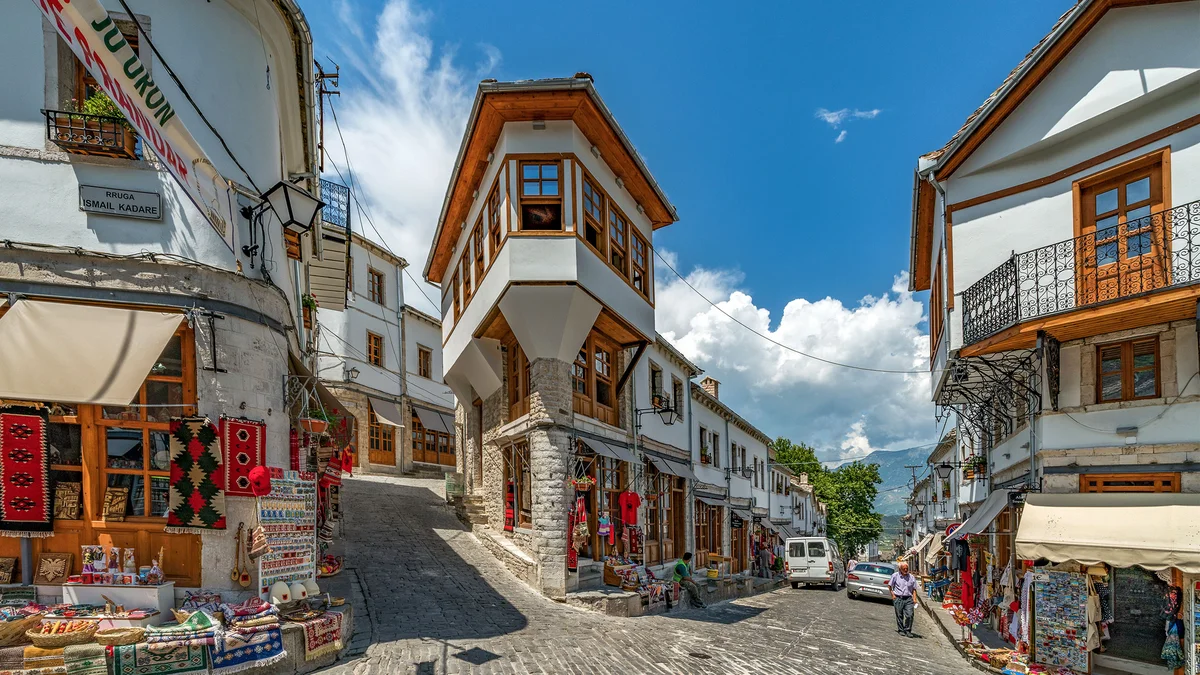
First-time visitors, shoppers, craft lovers and travellers who want the living heart of the Old Town. The Old Bazaar, known locally as Qafa e Pazarit, dates from the 17th century and was the commercial heart of the city below the castle walls. Fire destroyed much of the early bazaar in the 19th century, and the bazaar was rebuilt in a similar form, so the lanes keep the character of an Ottoman market quarter, with stone arched shop fronts and grey stone roofs.
Shops sell wood carving, silver filigree jewellery, handwoven textiles, wool socks, the white felt cap known as the qeleshe, local honey, preserves, mountain tea and soap. Prices are generally reasonable, and polite bargaining on larger items is normal. Allow one to two hours for a slow wander.
Address: Qafa e Pazarit, Rruga Alqi Kondi, Gjirokaster
Do not miss
The view where two winding shopping streets meet, with small shops squeezed between stone facades and the castle rising above the roofs. Look up as well as into shop windows, since the upper floors and stone slab roofs give the bazaar its distinctive skyline.
Practical info
The Old Bazaar is an open quarter of lanes, so there is no entrance charge and no single opening time, and individual shops keep their own hours. The lanes are steep and cobbled in places, so wear shoes with grip and take care after rain. The Bazaar Mosque stands in the quarter, and the Cold War Tunnel entrance sits close by on Cerciz Topulli Square. Carry some lek in cash, since small shops may not accept cards.
Insider tip: Walk the bazaar twice, in the morning when workshops open and in the early evening when the lanes fill with local life.
3. Step Inside Daily Life at the Ethnographic Museum

Best for
History lovers, culture lovers, families and travellers who want to understand how a wealthy Gjirokaster household lived in the 19th century. The Ethnographic Museum stands in the Palorto quarter, described as the best preserved district in the Old Town, on the site of the home of Enver Hoxha, the communist leader of Albania from 1944 to 1985. The original house was destroyed by fire, and the present building was constructed in 1966 as a model traditional Gjirokaster house. From 1966 to 1991 it served as the Anti-Fascist Museum, and in 1991 the exhibits of the previous Ethnographic Museum were moved into the space.
The house has four floors, all open to the public, and the rooms are arranged as they would have been used, with household items, folk costumes and cultural artefacts typical of a wealthy 19th century family. Allow one to two hours.
Address: Palorto Quarter, Gjirokaster
Do not miss
The furnished reception rooms on the upper floors, where painted woodwork, textiles and household objects show the domestic world of the Old Town at its most refined. The walk through the Palorto quarter is part of the experience, with stone lanes and tower houses on every side.
Practical info
The museum is open all year. From April to September it is open daily from 8:00 in the morning to 12:00 at midday and from 4:00 in the afternoon to 7:00 in the evening, and from October to March it is open from 8:00 in the morning to 4:00 in the afternoon from Wednesday to Sunday, closed on Monday and Tuesday. Admission is listed at 200 lek. A second listing gives daily hours of 9:00 in the morning to 6:00 in the evening, so check the current hours on the day.
Insider tip: Visit the museum before Zekate House and Skenduli House, since it explains the tower house plan.
4. Climb to the Painted Rooms of Zekate House

Best for
Architecture lovers, photographers and travellers who want the grandest surviving tower house in Gjirokaster. Zekate House was built in 1811 and 1812 for Beqir Zeko, an administrator under Ali Pasha, and it stands at the highest point of the Palorto quarter. Inside, lavish painted ceilings, carved wood and furnished rooms show the wealth of an elite household of the early 19th century, and the upper floors give sweeping views over the UNESCO Old Town and the Drino Valley.
Family members guide many visits and share the history of the house in person. Ask about the painted decoration and the guest room customs, and allow time on the upper floors for the view. Allow one hour, plus time for the climb through the Palorto lanes.
Address: Rruga Bashkim Kokona, Gjirokaster
Do not miss
The painted ceilings and carved wood of the main reception room, and the view from the upper floors at the end of the climb. The ceilings are the finest single detail in any Gjirokaster house open to visitors, and the view rewards the steep approach with the full pattern of stone roofs below.
Practical info
Zekate House is open year round, with longer hours in summer, so confirm the current hours on the day. An entrance charge is normally paid in cash in lek at the house, so carry small notes and coins. The approach is steep and cobbled, with steps inside, so wear shoes with grip.
Insider tip: Visit in the late afternoon, when the climb is cooler and the light over the valley softens.
5. Enter a Family Home at Skenduli House

Best for
Travellers who want an intimate, lived in historic house and families who prefer a guided family story to a formal museum. Skenduli House stands on Rruga Palorto, a short walk from the Ethnographic Museum, and it has been in the hands of the same family for generations. The house was built in the 18th century, with the present form dated to 1823 in several listings, and it is exceptionally well preserved, with tall stone foundations, original furnishings and nine fireplaces.
The family history is central to the visit. Guides from the owning family explain the rooms, the fireplaces and the guest customs, including a balcony from which the lady of the house could see guests without being seen. Allow 45 minutes to one hour.
Address: Rruga Palorto, Gjirokaster
Do not miss
The nine fireplaces and the guest room arrangements, which show how heat, hospitality and privacy were managed in a large household.
Practical info
Listings give daily opening hours of 9:00 in the morning to 7:00 in the evening, with a small entrance charge paid at the house, so confirm hours and charges on the day, since no dedicated official page for the house was found during research. The walk from Cerciz Topulli Square follows Rruga Palorto uphill on cobbles, so wear comfortable shoes. A local bus from the new town to the square costs around 30 lek in current listings, and a taxi costs around 300 to 500 lek.
Insider tip: Go with the family guide and ask questions as you move from room to room.
6. Pause at the Bazaar Mosque in the Old Bazaar

Best for
Travellers interested in Ottoman heritage and visitors seeking a place of prayer. The Bazaar Mosque, also called Memi Bey Mosque and known locally as Xhamia e Pazarit, was built in 1757 in the Old Bazaar quarter, as part of the urban plan of Memi Pasha for the New Bazaar. It is one of fifteen mosques originally built in the city during the Ottoman era, and it was designated a Cultural Monument of Albania in 1973, which spared it from demolition during the communist period. It returned to the Muslim community in 1991.
The mosque is a small, well proportioned building with a stone minaret and a domed prayer hall, and the interior holds antique Turkish frescoes and inscriptions restored in recent years. Beside it stands a two storey octagonal building constructed in 1727, originally a Bektashi meeting house and now used as a madrasah.
Address: Old Bazaar, Gjirokaster
Do not miss
The frescoes and inscriptions inside the prayer hall, and the stone minaret seen from the bazaar lanes below. The minaret gives the building its landmark presence in the quarter, and the octagonal building beside it adds a second layer of religious history to the same small plot. Dress modestly, remove shoes before entering the prayer area, and avoid visiting during congregational prayer.
Practical info
The mosque is free to visit and is best visited outside prayer times. No street number was verified during research, and no official mosque page with opening hours was found, so use the Old Bazaar as the address point and ask a shopkeeper for the short walk to the entrance. Prayer times shift with the season, so check locally on the day.
Insider tip: Visit in the quiet middle of the morning, after the bazaar shops open and before the midday prayer.
7. Descend Into the Cold War Tunnel

Best for
History lovers and travellers interested in the communist era. The Cold War Tunnel is an underground bunker built in secret in the early 1970s, 800 metres long with 59 rooms, designed as an emergency shelter for local government and party officials. Rooms were set aside for ministries, local government, sleeping quarters, power generation and water storage, with a decontamination room, a generator room and an air filtration room among the most telling survivals.
The main entrance stands close to the municipality building on Cerciz Topulli Square, and the guided walk takes around 20 minutes. Much of the original furniture was removed in 1990, so the tunnel feels stark and genuine. Allow 30 to 45 minutes in total.
Address: Sheshi Cerciz Topulli, Gjirokaster
Do not miss
The generator room and the air filtration room, which show the practical machinery behind the shelter plan, and the sequence of small offices and sleeping rooms that show how daily life was meant to continue underground. Listen to the guide for the story of the secret construction, since the hidden character of the building is central to its history.
Practical info
From April to October the tunnel is open daily from 9:00 in the morning to 6:00 in the evening, and from November to March from 8:00 in the morning to 2:00 in the afternoon, with an entrance charge listed at 200 lek. Expect stairs, narrow corridors, low lighting and uneven surfaces, and a light jacket helps in the cool interior.
Insider tip: Go early in the day for a calmer walk, and wear shoes with grip for the uneven floors.
Stay here: Hotel Cajupi
A hotel on the central square at Sheshi Cerciz Topulli 5, Gjirokaster, beside the Cold War Tunnel entrance and the lanes to the Old Bazaar, with a terrace and a restaurant on site.
8. Walk Out to Dunavat and the Ali Pasha Bridge

Best for
Walkers and photographers who want the quieter side of the Old Town. The Dunavat walk starts at Cerciz Topulli Square and heads through the Old Bazaar quarter, past the Nanxa stream and the Cfaka quarter, before reaching Dunavat, a quarter of old houses, gardens and hillside views. The walk ends at the Ali Pasha Bridge, a surviving section of the aqueduct built more than 200 years ago by Ali Pasha of Tepelena to bring water from Mount Sopot, around 10 kilometres away, to the city.
Most of the aqueduct was destroyed in 1932, so the bridge stands as a fragment of a much larger system. The full guided route takes around three hours on uneven terrain, so sturdy shoes, water and sun protection matter.
Address: Dunavat Quarter, Gjirokaster
Do not miss
The Ali Pasha Bridge itself, seen from below and from the path above, with the valley and the hills behind it. Look back toward the Old Town from the higher ground, where the castle and the stone roofs sit in a single view.
Practical info
The walk is free and follows public lanes and paths, with no ticket and no single official visitor page found during research, so check the route with a local guide or at a hotel before setting out. Start in the morning, carry water, wear shoes with grip, and tell someone the planned route and return time.
Insider tip: Start from Cerciz Topulli Square in the morning and reach the bridge before the heat of the day.
More Worth Your Time in Gjirokaster
Cerciz Topulli Square holds the monument to Cerciz Topulli, the Cold War Tunnel entrance, Hotel Cajupi and the lanes to the bazaar and the Palorto quarter, and it works as the natural meeting point for every Old Town walk. The Obelisk of Gjirokaster, erected in the first decade of the 20th century as a symbol of education, stands close by.
The Gjirokaster Museum, at Rruga Gjin Bue Shpata in the castle area, presents the history of the town in galleries restored with the support of the Gjirokastra Foundation, and listings give daily hours of 9:00 in the morning to 6:00 in the evening. Ismail Kadare House, at Rruga Fato Berberi 16 in the Palorto quarter, is the childhood home of the author Ismail Kadare, now a museum, and listings give the same daily hours. The House of Polyphony, on Rruga Ismail Kadare, focuses on polyphonic singing, and its details were not fully verified, so check locally before a special trip.
Gjirokaster Attractions Compared

Gjirokaster Castle costs 400 lek for entry and needs 2 to 3 hours, and the Old Bazaar is free to walk and needs 1 to 2 hours.
| Attraction | Best For | Cost | Time Needed |
|---|---|---|---|
| Gjirokaster Castle | Fortress history and valley views | 400 lek castle entry, 200 lek museum, in listings | 2 to 3 hours |
| Old Bazaar | Crafts, shopping and stone lanes | Free to walk, shopping varies | 1 to 2 hours |
| Ethnographic Museum | Domestic life and costumes | 200 lek | 1 to 2 hours |
| Zekate House | Painted rooms and views | Small cash charge, confirm on the day | 1 hour |
| Skenduli House | Family home and guided stories | Small charge, confirm on the day | 45 minutes to 1 hour |
| Bazaar Mosque | Ottoman heritage and prayer | Free entry | 20 to 30 minutes |
| Cold War Tunnel | Communist era history | 200 lek | 30 to 45 minutes |
| Dunavat and Ali Pasha Bridge | Quiet walks and aqueduct history | Free walk | 2 to 3 hours |
| Gjirokaster Museum | Town history galleries | Charge not verified, confirm on the day | 1 hour |
| Ismail Kadare House | Literary heritage | Charge not verified, confirm on the day | 1 hour |
Suggested Itineraries

One day starts at Gjirokaster Castle in the morning and finishes at the Bazaar Mosque and the Cold War Tunnel in the afternoon.
| Trip Length | What to See |
|---|---|
| 1 Day | Start at Gjirokaster Castle in the morning, continue to the Old Bazaar for midday, and finish at the Bazaar Mosque and the Cold War Tunnel in the afternoon. |
| 2 Days | Day 1: As above, plus the Ethnographic Museum. Day 2: Zekate House and Skenduli House in the morning and the Dunavat walk to Ali Pasha Bridge in the afternoon. |
| 3 Days | Days 1 and 2 as above. Day 3: Gjirokaster Museum and Ismail Kadare House in the morning, then a day trip to Libohove or to the Blue Eye spring, with Butrint as the fuller third day option. |
Book Tickets in Gjirokaster
Most Gjirokaster sights sell tickets at the entrance in cash, and no online ticket sales were verified during research. Every link below goes to the verified visitor page for that sight, and tickets should be bought at the entrance on the day.
| Attraction | Tickets |
|---|---|
| Gjirokaster Castle | Plan Your Visit |
| Ethnographic Museum | Plan Your Visit |
| Cold War Tunnel | Plan Your Visit |
| Zekate House | Plan Your Visit |
| Skenduli House | Plan Your Visit |
Where to Stay in Gjirokaster
Top 3 hotels in Gjirokaster
Explore all hotels >- Hotel Kalemi ★★★
- Hotel Cajupi ★★★★
- Hotel Gjirokastra ★★★
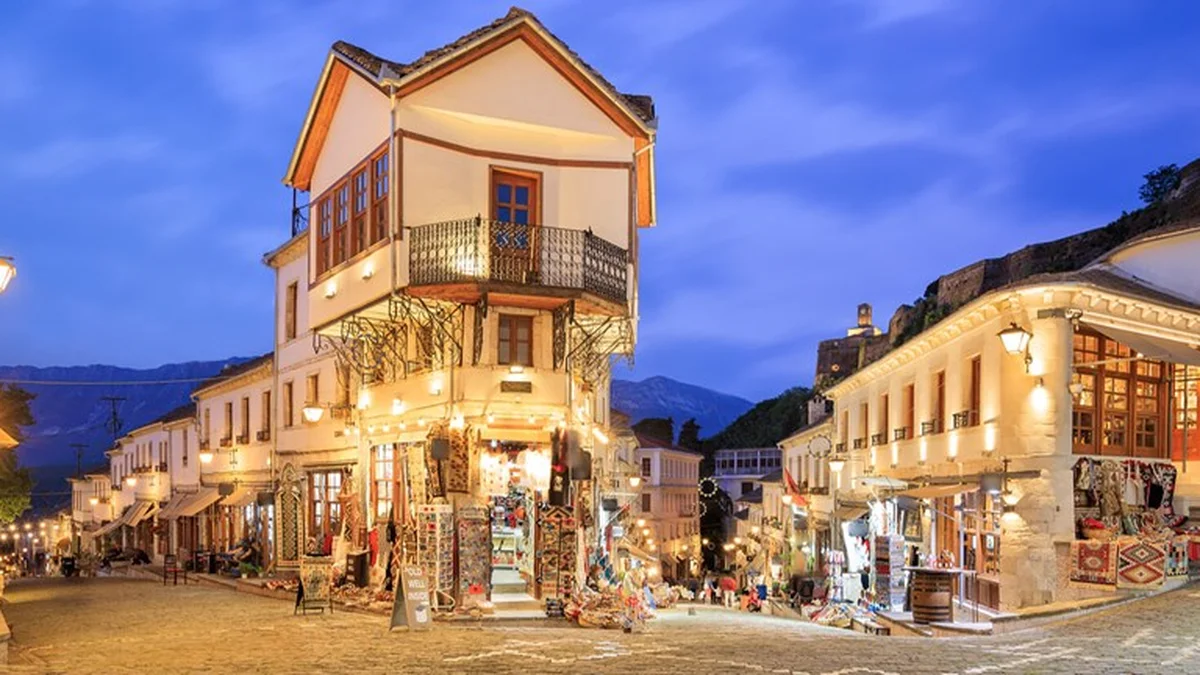
The Old Town suits almost every Gjirokaster itinerary. The castle, the Old Bazaar, the Palorto quarter houses, the Bazaar Mosque and the Cold War Tunnel sit within a compact hillside area. The new town below the hill suits travellers who arrive by bus and prefer level streets, with a short bus ride or taxi ride up to the Old Town for each outing.
Two hotels with hotel websites listed in current listings cover the main styles of stay:
- Hotel Kalemi: A hotel in a restored traditional house at Rruga Bashkim Kokona 14, Gjirokaster, close to the Ethnographic Museum and Zekate House. Best for a traditional stone house stay with views over the Old Town. Check room types, rates and check in details on the hotel site before booking.
- Hotel Cajupi: A hotel on the central square at Sheshi Cerciz Topulli 5, Gjirokaster, beside the Cold War Tunnel entrance and the lanes to the Old Bazaar, with a terrace and a restaurant on site in current listings. Best for a central square base. Check room types, rates and check in details on the hotel site before booking.
| Area | Best For | What Is Nearby |
|---|---|---|
| Old Town and Old Bazaar | First-time visitors who want walkable stone lanes | Old Bazaar, Bazaar Mosque and Cold War Tunnel |
| Palorto Quarter | Historic house stays and quiet lanes | Ethnographic Museum, Zekate House and Skenduli House |
| Castle Hillside | Views and early castle visits | Gjirokaster Castle and Gjirokaster Museum |
| New Town | Bus arrivals and road trips | Intercity bus station, main road access and taxi ranks |
Where to Eat in Gjirokaster

Gjirokaster eats like a southern Albanian stone city, with hearty mountain cooking, fresh salads, herb filled rice dishes, baked pies and slow cooked dishes in family run taverns around the Old Bazaar. Food often becomes the memory travellers carry home, a pattern explored in our guide to how food tourism is shaping modern travel.
Halal Food in Gjirokaster
Halal Restaurant Val-Mar, listed halal in current listings, sits at Rruga Alqi Kondi, Gjirokaster, in the Old Bazaar area, close to the Bazaar Mosque. Listings give daily hours of 8:00 in the morning to 11:00 in the evening. No halal statement was found on a restaurant own website, and no restaurant own website was found, so confirm halal status with staff on the day, and choose vegetable, lentil, egg and cheese dishes until staff confirm meat sourcing.
Rejan Pizza Halal, listed halal in current listings, sits at Rruga Zejtareve, Gjirokaster, in the Old Bazaar area. Listings give daily hours of 10:00 in the morning to 11:30 in the evening. No halal statement was found on a restaurant own website, so confirm halal status with staff on the day, and choose vegetable and cheese pizzas and salads until staff confirm.
Beyond the two restaurants above, ask clearly about meat sourcing at any restaurant that does not state a halal position, and choose qifqi, fergese, byrek with spinach or cheese, stuffed peppers, salads, lentil soups and egg dishes until staff confirm. Eating well is part of understanding a place, a theme explored in our guide to how food tourism is shaping modern travel.
Local Dishes to Try
Qifqi is the dish to know by name in Gjirokaster. The fried rice balls, made with boiled rice, eggs, herbs such as mint and dill, and sometimes a little cheese, are hard to find anywhere else in Albania, and they are served as a starter or a side dish, often with yoghurt. Fergese, byrek with spinach or cheese, stuffed peppers, japrak and tave kosi complete the classic table, with mountain tea and local honey at the end of the meal. Qifqi also appears in the food of Berat, as shown in the guide to The Ultimate Guide to Berat Restaurants: A Culinary Journey Through the City of a Thousand Windows. Food choices shape a trip as much as sights do, a point covered in our guide to how food tourism is shaping modern travel.
Mosques and Prayer Facilities in Gjirokaster

Gjirokaster holds an established Muslim community, and visitors are welcome at daily and Friday prayers at the Bazaar Mosque. Prayer times shift with the season, so check locally on the day, and arrive early for Friday prayer.
- Bazaar Mosque: The main historic mosque open to visitors, also called Memi Bey Mosque, at the Old Bazaar, Gjirokaster, close to the bazaar lanes and Cerciz Topulli Square. Built in 1757, designated a Cultural Monument in 1973, and returned to the Muslim community in 1991. Dress modestly, remove shoes before entering the prayer area, and visit outside prayer times for sightseeing. No published prayer timetable was found on a verified mosque page, so confirm prayer times locally.
No second mosque with a verified address was confirmed during research, so this section names one mosque only. Travellers who need a prayer space outside the Bazaar Mosque hours should ask locally at the mosque or at their hotel.
Getting Around Gjirokaster
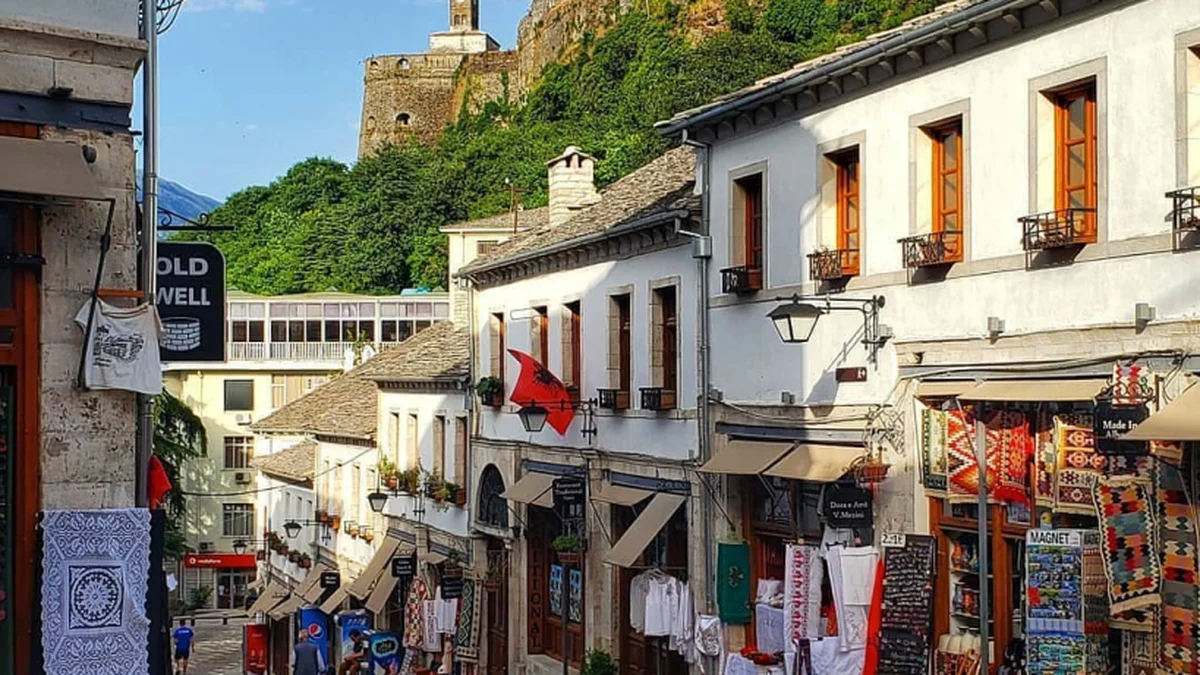
The Old Town follows a compact hillside pattern, and the castle, the bazaar, the Palorto quarter houses, the Bazaar Mosque and the Cold War Tunnel sit within a short walk of each other, with Cerciz Topulli Square as the hub. A local bus connects the new town with the Old Town for around 30 lek, and a taxi to the castle entrance costs around 300 to 500 lek.
Intercity buses link Gjirokaster with Is Tirana Worth Visiting? A Comprehensive Guide to the Vibrant Capital of Albania, 227 kilometres away, with a fastest journey of three hours and 30 minutes and 11 daily departures in current Gjirafa listings. A hire car earns its keep on day trip days, while Old Town days are best on foot.
| Option | Best For | Cost |
|---|---|---|
| Walking | Old Town, castle, bazaar, Palorto quarter and Dunavat walk | Free |
| Local Bus | New town to Old Town and Cerciz Topulli Square | Around 30 lek for one trip, in listings |
| Taxi | Castle hill, hotel transfers and evening returns | Around 300 to 500 lek within the town, in listings |
| Intercity Bus | Tirana, Saranda and other Albanian cities | Around 13.50 euro from Tirana, average fare in listings |
| Car Hire | Butrint, Blue Eye, Libohove and valley villages | Rental charges vary |
| Guided Tour | Dunavat walk, castle and house visits with local stories | Tour charges vary |
What a Day in Gjirokaster Costs

Gjirokaster is one of the more affordable historic cities in Europe, and the Old Town cluster keeps transport costs low. The castle, the museum and the tunnel carry small charges in lek, while the bazaar lanes and the Dunavat walk cost nothing.
| Travel Style | Attractions | Food | Stay and Transport | Rough Daily Total |
|---|---|---|---|---|
| Budget Traveller | 800 to 1,000 lek, mixing castle, museum and tunnel charges with free bazaar and Dunavat walks | 1,200 to 2,000 lek | 3,500 to 5,500 lek guesthouse, walking and bus days | 5,500 to 8,500 lek |
| Mid-Range Traveller | 1,000 to 1,500 lek for castle, museums, tunnel and houses | 2,500 to 4,500 lek | 6,000 to 10,000 lek hotel, 500 to 1,000 lek taxis | 10,000 to 17,000 lek |
| Family of Four | 3,000 to 5,000 lek with castle, museum, tunnel and house charges | 6,000 to 10,000 lek | 10,000 to 16,000 lek family room, 1,000 to 2,000 lek taxis and fuel | 20,000 to 33,000 lek |
Best Time to Visit Gjirokaster

April, May, June, September and October give the easiest sightseeing weather. Spring brings mild days, autumn brings clear light and quieter lanes, summer visitors should start hill walks early, and winter visitors should dress warmly and check shorter seasonal hours.
| Season | Months | What to Expect |
|---|---|---|
| Spring | March to May | Mild days, green valley views, comfortable hill walking and fewer visitors |
| Summer | June to August | Hot and dry days, with average highs around 30 degrees, and busy castle and house visits |
| Autumn | September to November | Warm days easing from summer heat, clear valley light and quieter lanes |
| Winter | December to February | Cool and wet days, with average lows near freezing at night, and quiet museums with shorter hours |
Day Trips from Gjirokaster

Butrint National Park, via Saranda
Butrint National Park sits around 18 kilometres from Saranda and around 55 kilometres south of Gjirokaster by road. The park holds a Greek theatre, a baptistery with a mosaic floor, a great basilica, city walls and a museum, set beside Lake Butrint and the Vivari Channel, and UNESCO lists the site as a World Heritage property inscribed in 1992. From April 1 to October 31 the park opens at 8:30 in the morning, with last entry at 6:00 in the evening, and from November 1 to March 31 it opens at 9:00 in the morning, with last entry at 3:00 in the afternoon, with a standard ticket listed at 1,000 lek. Allow two to three hours, plus the drive each way, and combine the trip with Saranda town and the ferry crossing described in the guide to Saranda to Corfu Ferry: The Ultimate Guide to Crossing the Ionian.
Libohove and Libohove Castle
Libohove sits around 15 kilometres south of Gjirokaster, across the Drino Valley at the foot of Bureto Mountain. The castle is a substantial fortress with four polygonal corner towers and a curtain wall around a wide courtyard, built between 1796 and 1798, and presented by Ali Pasha of Tepelena as a dowry to his sister Shanica. The town adds a leafy main street, a centuries old plane tree, and the house of Myfit Bey Libohove, the first minister of internal affairs and foreign affairs in the new Albanian government of 1912.
The Blue Eye Spring and Muzine Village
The Blue Eye spring, known as Syri i Kalter, sits between Gjirokaster and Saranda on the SH99 road near Muzine village, around 37 kilometres from Gjirokaster and around 22 kilometres from Saranda. Water rises from a deep karst pool in a forest setting, with the centre glowing deep blue ringed with turquoise and green, and the pool has been surveyed to around 22 metres, with divers reaching around 50 metres and the true depth unknown. The water stays at around 10 degrees all year, and viewing platforms and a small bridge give a close look at the colours, so stay on the viewing areas and follow the signs at the pool. From the road junction the walk is around 2 kilometres each way, with a small entrance charge of around 50 lek for a vehicle in recent listings, and public buses can set passengers down at the junction, so ask the driver about a return before getting off.
Practical Tips for Visiting Gjirokaster

Good to Know
- Group the castle, the Old Bazaar, the Bazaar Mosque and the Cold War Tunnel into one day, and keep the Palorto quarter houses for a second morning.
- Wear shoes with grip for every Old Town walk. Cobbled lanes and stone slabs are steep and can be slippery when wet.
- Carry lek in cash for entrance charges, small shops, taxis and local buses, with small notes and coins for house visits that take cash at the door.
- Carry water and sun protection on every hill walk, and start castle, Dunavat and Blue Eye walks early, especially from June to August.
- Check mosque prayer times and halal restaurant hours before you go, and confirm halal status with staff at any restaurant that does not state a halal position.
Good to Avoid
- Starting a long hill walk at midday in summer. Heat builds fast on open stone lanes, and shade is scarce on the ramparts and the Dunavat paths.
- Assuming every museum opens daily at the same hour. Monday and Tuesday closures and seasonal hours differ across Gjirokaster museums.
- Driving between Old Town sights. Walking is faster than parking twice on the hillside, and the lanes are best explored on foot.
- Assuming a restaurant is halal because it serves Middle Eastern or Albanian food. Ask staff clearly about meat sourcing, and choose vegetable, lentil, cheese and egg dishes until staff confirm.
Final Thoughts
Gjirokaster gives a traveller more than a checklist. It gives stone roofs in morning light, a fortress above a wide valley, painted ceilings in quiet tower houses, craft workshops in the bazaar, a mosque that survived a century of upheaval, and a tunnel that tells the starkest chapter of modern Albanian history. Two days cover the central sights well, and a third day adds Butrint, Libohove or the Blue Eye spring. Korce (guide in preparation) continues the Albania series for travellers heading north.
Gjirokaster Castle, the Old Town lanes, and the Zekate House make the essential circuit, and the Skenduli House, the Ethnographic Museum, the Cold War Tunnel, and the Old Bazaar fill the days around them. The castle, with its clock tower, its prison, and its captured aeroplane, gives the widest view over the Drino valley, and the Ottoman tower houses give the interiors, with carved wood, painted ceilings, and stone roofs.
Spring brings mild days and the first garden colour, autumn brings colours and comfortable walking weather, and summer brings hot days suited to museums and evening lanes. The bus from Tirana takes around 3 hours and the bus from Saranda takes around 1 hour, and the Old Town rewards walking, since the castle, the houses, and the bazaar sit within a few minutes of each other, though the lanes run steep. Book house museum visits for the morning, when the rooms are quietest, and keep the castle for the late afternoon, when the light runs low over the valley.
Stay in the Old Town for the lanes and the castle path, or in the New Town for easier walking and the bus station, since both put the sights and the restaurants within reach. The Gjirokaster Mosque holds daily prayers and the Friday prayer, and visitors are welcome. If a third day is free, Butrint sits around 1 hour south, a UNESCO World Heritage site with Greek, Roman, Byzantine, and Venetian layers in one park.
Keep Exploring
- The Ultimate Guide: 19 Best Things to Do in Albania (2026 Edition)
- The Ultimate Guide to Berat Restaurants: A Culinary Journey Through the City of a Thousand Windows
- What to Do in Shkoder: The Ultimate Guide to the Northern Gem of Albania
- Is Tirana Worth Visiting? A Comprehensive Guide to the Vibrant Capital of Albania
- Durrës, Albania: The Ultimate Family Sanctuary & Historical Coastal Gem
- Saranda to Corfu Ferry: The Ultimate Guide to Crossing the Ionian
FAQs
What are the best things to do in Gjirokaster for first-time visitors?
Start with Gjirokaster Castle, the Old Bazaar and the Ethnographic Museum, then add Zekate House, Skenduli House, the Bazaar Mosque and the Cold War Tunnel. This route covers fortress history, crafts, domestic life, Ottoman heritage and Cold War history in a compact hillside area.
How many days do you need in Gjirokaster?
Two full days cover the Old Town cluster, the castle, the bazaar, the Palorto quarter houses, the mosque and the tunnel in comfort. A third day adds a day trip to Butrint National Park, Libohove or the Blue Eye spring without rushing.
What is Gjirokaster best known for?
Gjirokaster is best known as the City of Stone, with Gjirokaster Castle, the Old Bazaar, Ottoman tower houses with stone slab roofs, the Ethnographic Museum, the Bazaar Mosque, the Cold War Tunnel, and a UNESCO listed Old Town in the Drino Valley of southern Albania.
When is the best time to visit Gjirokaster?
April, May, June, September and October bring the most comfortable sightseeing weather. Spring gives mild walking days, autumn gives clear light and quieter lanes, and summer gives hot dry days best started early, while winter gives cool wet days with quiet museums and shorter hours.
Is Gjirokaster a good destination for families?
Yes. The castle ramparts fill a full morning for children of school age, the Old Bazaar craft shops give a gentle afternoon walk, the Cold War Tunnel gives a short guided visit for older children, and the Palorto quarter houses show domestic life clearly. Steep cobbles and tunnel stairs need care with younger children.
Where can visitors find halal food in Gjirokaster?
Halal Restaurant Val-Mar on Rruga Alqi Kondi and Rejan Pizza Halal on Rruga Zejtareve are both listed halal in current listings in the Old Bazaar area. No halal statement was found on a restaurant own website for either venue, so confirm halal status and meat sourcing with staff on the day.
How do visitors get around Gjirokaster without a car?
Walk in the Old Town for the castle, the bazaar, the Palorto quarter houses, the Bazaar Mosque and the Cold War Tunnel, ride the local bus between the new town and Cerciz Topulli Square for around 30 lek, and use taxis for the castle hill at around 300 to 500 lek. A hire car is still needed for Butrint, the Blue Eye spring and Libohove.


2 Comments