Things to Do in Minneapolis: Your Ultimate 2026 Guide to the City of Lakes
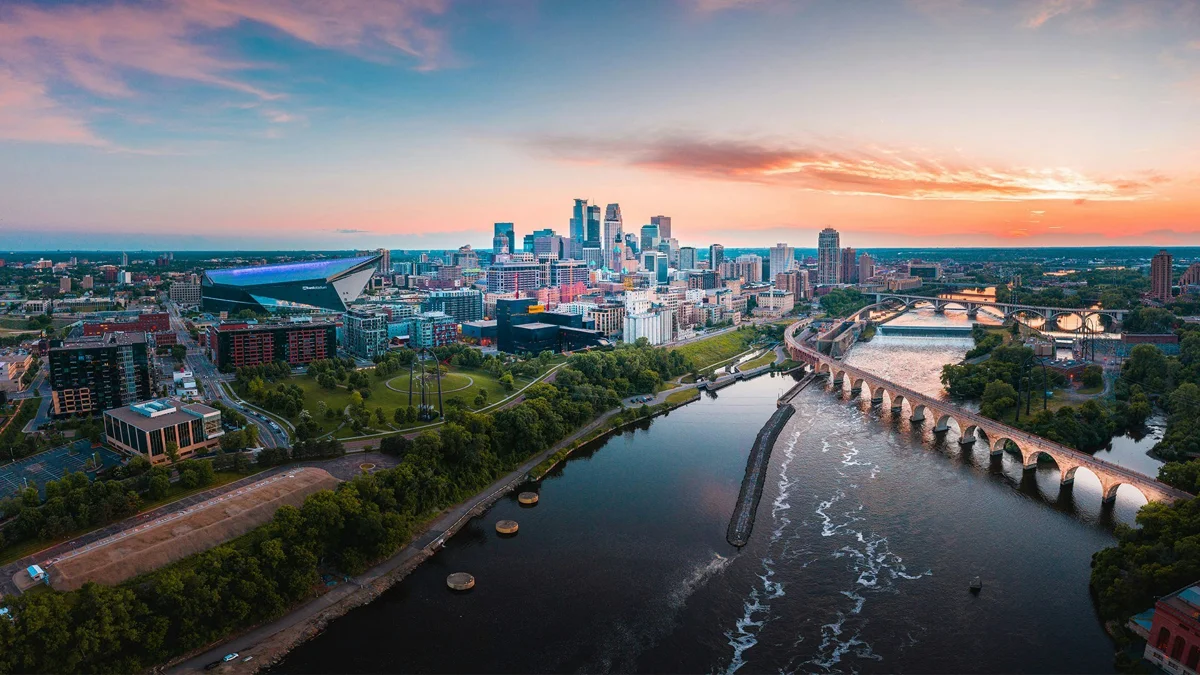
Minneapolis has both a great river and a chain of lakes: the Mississippi River bending past downtown bluffs, and clear lakes strung across the southwest of the city like beads on a green thread. Add a 53 foot waterfall inside the city limits, two major art museums that anchor any list of things to do…
Minneapolis has both a great river and a chain of lakes: the Mississippi River bending past downtown bluffs, and clear lakes strung across the southwest of the city like beads on a green thread. Add a 53 foot waterfall inside the city limits, two major art museums that anchor any list of things to do in Minneapolis, and a food scene shaped by one of the largest Somali communities in the United States.
The pleasant surprise is how much of Minneapolis is parkland and how much of it is free. The Minneapolis Institute of Art and the Minneapolis Sculpture Garden charge nothing at all. The Chain of Lakes trails run for miles past gardens and skyline views, and the Stone Arch Bridge gives you the finest walk in the city for the price of shoe leather.
This guide covers the best things to do in Minneapolis. It walks through the top Minneapolis attractions with real prices, addresses and opening patterns, then covers hotels, halal restaurants with street addresses, mosques, transport, budgets and the best time to visit Minneapolis. Every ticket button leads to an official attraction page.
Minneapolis at a Glance
| Best Known For | The City of Lakes: 22 lakes inside the city limits, the Mississippi River and the Chain of Lakes trail system |
| Top Free Attractions | Minneapolis Institute of Art, Minneapolis Sculpture Garden, Minnehaha Falls, Stone Arch Bridge, Weisman Art Museum, Eloise Butler Wildflower Garden in season |
| Best Areas to Stay | Downtown beside Nicollet Mall for a first visit; the North Loop for dining; the Mill District for the riverfront museums |
| Airport | Minneapolis-Saint Paul International Airport (MSP), about 20 minutes from downtown by car, with a direct METRO Blue Line train |
| Getting Around | METRO Blue Line and Green Line light rail, Metro Transit buses, the downtown Skyway system, walking and cycling |
| Currency | US Dollar (USD) |
| Time Zone | Central Time (CT) |
| Best Months to Visit | May to October for lake trails and gardens; June to September for the warmest weather |
Quick Picks for a First Visit

- Minneapolis Sculpture Garden and the Walker Art Center
- Minneapolis Institute of Art (free)
- Stone Arch Bridge and St Anthony Falls
Quick Picks for Families

- Mill City Museum and the Flour Tower ride
- Minnehaha Falls and Minnehaha Regional Park
- Mall of America and Nickelodeon Universe
Quick Picks for a Budget Trip

- Minneapolis Institute of Art (free)
- Chain of Lakes trails and Lyndale Park gardens (free)
- Weisman Art Museum (free)
Top Things to Do in Minneapolis

The thirteen experiences below are the essential Minneapolis attractions, ordered so you can build a route from the downtown museums to the lakes and the great indoor mall. Each entry gives the practical details and an insider tip.
1. Minneapolis Sculpture Garden

Best for: The postcard photograph of Minneapolis; a free first stop beside the Walker Art Center
Start where every Minneapolis album starts. Across Vineland Place from the Walker Art Center, the Minneapolis Sculpture Garden spreads over 11 green acres filled with dozens of large scale works, and one of them became the symbol of the city: Spoonbridge and Cherry, a giant spoon that holds a bright red cherry, with water spraying from the cherry stem. The blue rooster of Hahn/Cock stands nearby.
The garden is free and open every day from 6:00 a.m. to 12:00 midnight, from a dawn walk to a late evening stroll after the museums close. The Cowles Conservatory adds a glasshouse of palms and seasonal plants. Combine the garden with the Walker galleries next door for a full half day.
Tip: Come in the soft light of early morning. The lawns stay quiet, the spoon and cherry photograph cleanly, and the conservatory is at its calmest.
2. Walker Art Center

Best for: Contemporary art in depth; one of the leading modern art museums in the United States
The Walker Art Center at 725 Vineland Place, Minneapolis, MN 55403 is one of the most respected contemporary art museums in the country. Inside, the galleries rotate through painting, sculpture, film and design, with major touring exhibitions and a permanent collection built over more than a century.
Admission costs $18 for adults, $16 for seniors age 65 and above and $12 for students, while visitors age 18 and under enter free. The galleries open Wednesday, Friday, Saturday and Sunday from 10:00 a.m. to 5:00 p.m. and on Thursdays until 9:00 p.m., closing on Mondays and Tuesdays. Allow two to three hours, and pair the visit with the free Sculpture Garden across the street.
Tip: Thursday is the long day, with galleries open until 9:00 p.m. Walk the Sculpture Garden first, then finish inside as the crowds thin.
3. Minneapolis Institute of Art (Mia)

Best for: Five thousand years of world art with free admission; the finest rainy day plan in the city
If the Walker owns the present, the Minneapolis Institute of Art owns the whole sweep of history. Mia at 2400 Third Avenue South, Minneapolis, MN 55404 holds more than 100,000 works covering 5,000 years, from Egyptian objects and Chinese bronzes to European masterworks, plus one of the strongest Asian art collections in the United States. The neoclassical building south of downtown feels like a palace built for wandering.
General admission to Mia is always free; only special exhibitions may carry a charge. The museum opens Tuesday to Sunday from 10:00 a.m. to 5:00 p.m., staying open until 9:00 p.m. on Thursdays, and closes on Mondays. The sheer size of the collection means a second visit never repeats the first.
Tip: Pick two wings and do them slowly. The Asian art wing and the period rooms reward an unhurried hour each.
4. Mill City Museum
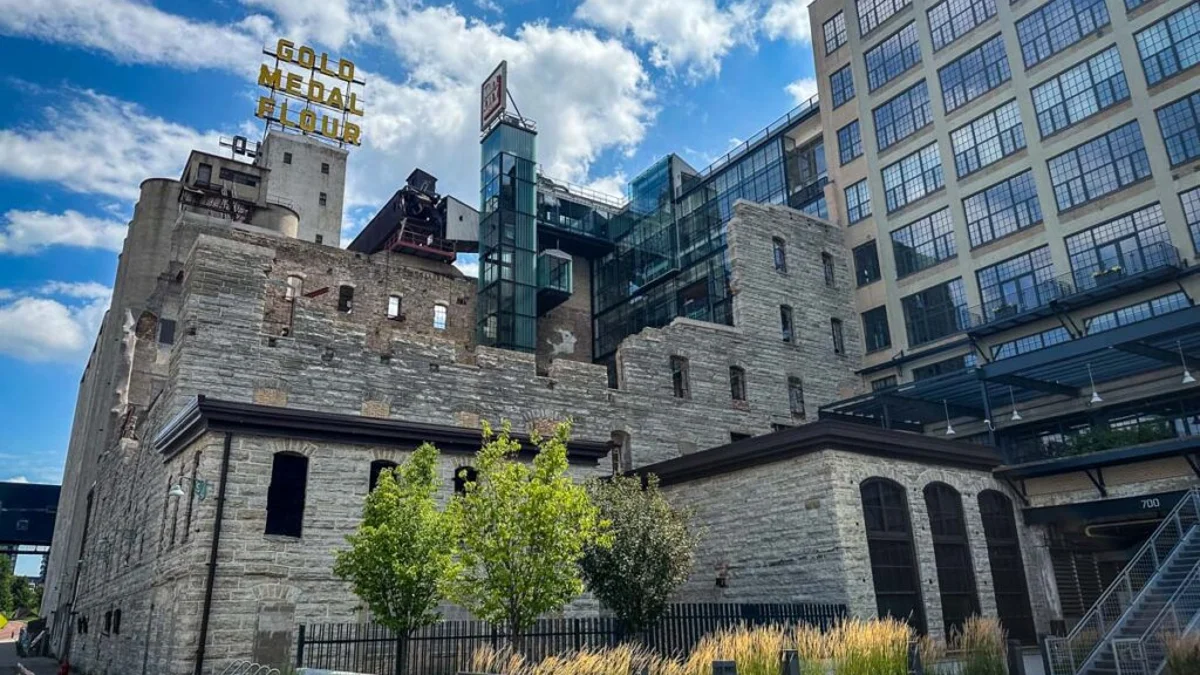
Best for: The story of flour, water power and the making of Minneapolis; a favorite for children
Minneapolis grew rich milling flour, and this museum stands inside the ruins of the mill that explains why. The Mill City Museum at 704 South 2nd Street, Minneapolis, MN 55401 fills the burned stone shell of the Washburn A Mill, once among the largest flour mills in the world. The signature experience is the Flour Tower, a giant elevator ride that lifts you eight stories through the working levels of the old mill, ending at a river observation deck.
Around the tower, hands-on exhibits cover the Water Lab, a Baking Lab and the story of how flour brands from this riverfront fed the world. Admission costs $15 for adults, $12 for seniors, veterans, active military and college students, and $8 for children ages 5 to 17, with children age 4 and under free. The museum opens Wednesday to Friday from 10:00 a.m. to 4:00 p.m. and Saturday and Sunday to 5:00 p.m., closing on Mondays and Tuesdays. Tickets are sold on site only, so arrive early on busy weekends.
Tip: Ride the Flour Tower first, before the school groups arrive, then step into the ruin courtyard and look up at the blackened stone walls.
5. Stone Arch Bridge and St Anthony Falls
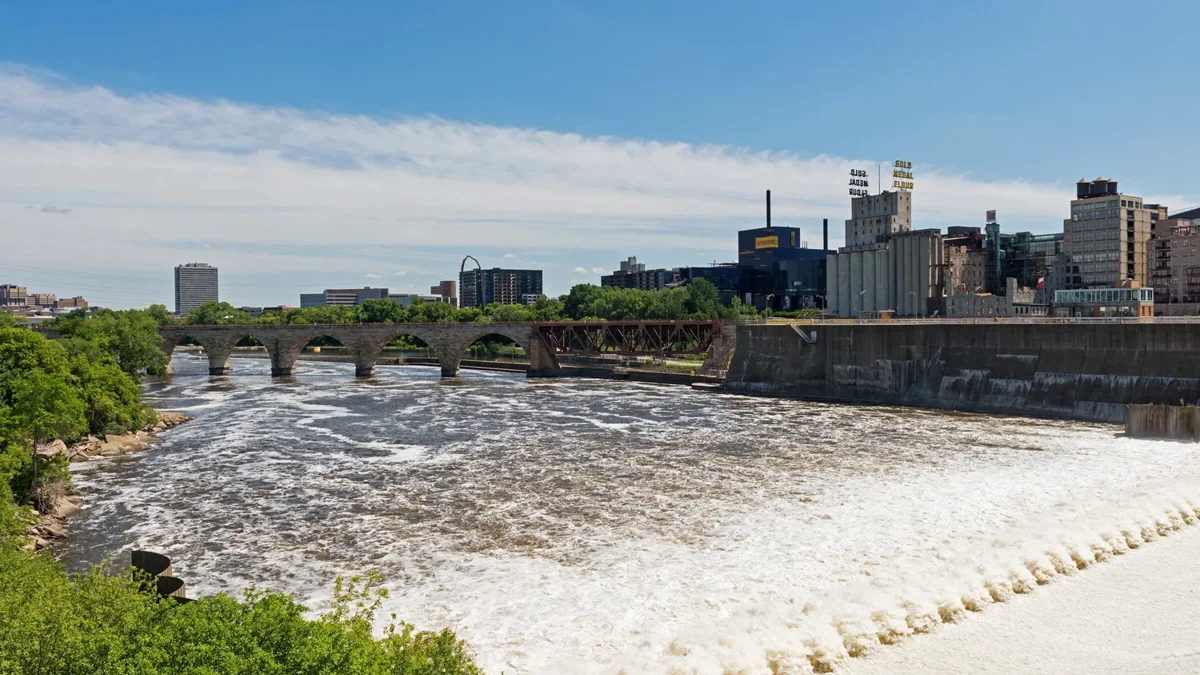
Best for: The classic Minneapolis walk; skyline views, river history and the only natural waterfall on the Mississippi
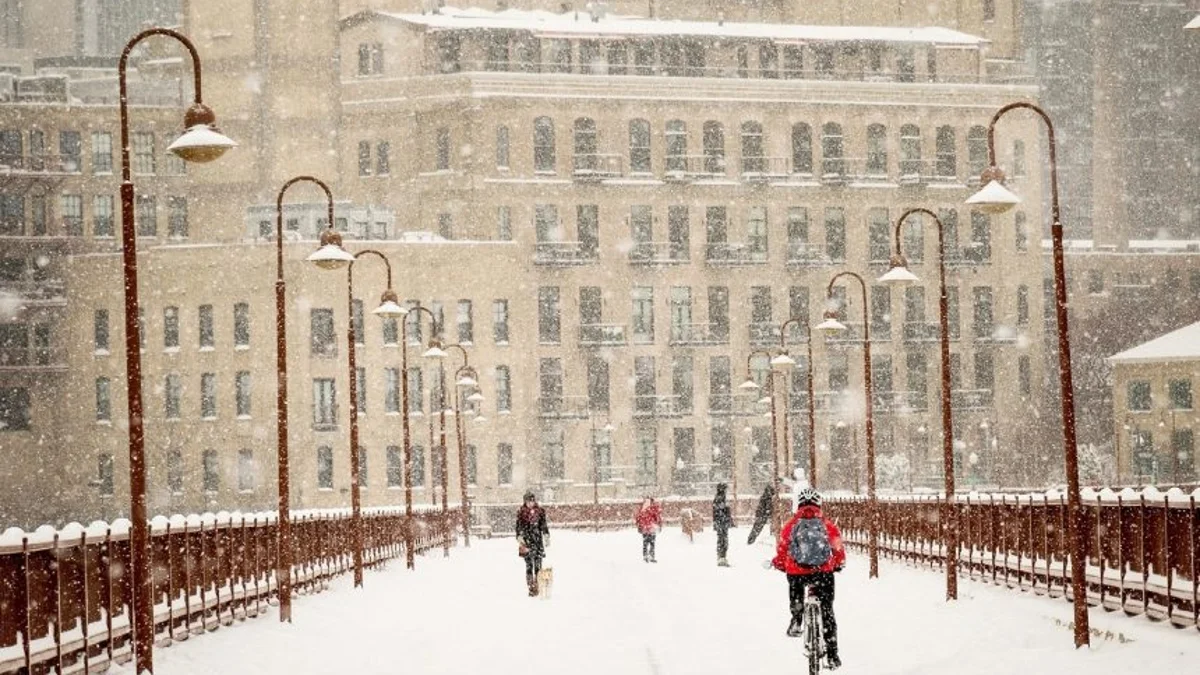
Every city has one walk that explains it, and in Minneapolis it crosses the Stone Arch Bridge. Built in 1883 for the railroads of James J. Hill, the bridge arcs across the Mississippi on 23 stone arches over 2,100 feet, and today it belongs to walkers and cyclists alone. From its deck you look straight at St Anthony Falls, the only natural waterfall on the entire Mississippi River, the drop that powered the sawmills and flour mills that built two cities.
The walk is free at any hour, and both ends repay a linger. On the downtown side, the Mill District stacks museum, theater and mill ruins into a few blocks. On the far side, heritage trails run through the riverfront parks, with signs that tell the story of the falls. Sunset is the prime hour, when the stone arches warm and the downtown towers reflect in the river.
Tip: Walk the bridge in a loop with the riverfront trails, then end at Mill Ruins Park beside the museum.
6. Guthrie Theater and the Endless Bridge

Best for: Architecture lovers; a deep blue landmark with a viewing bridge that reaches toward the falls
Even travelers who never take a theater seat should visit the Guthrie Theater as a building. The riverfront home of the Guthrie at 818 South 2nd Street, Minneapolis, MN 55415, designed by French architect Jean Nouvel and opened in 2006, wears a deep midnight blue skin. Inside, the public spaces climb through stacked lobbies to two viewpoints that anyone may use free of charge.
The first is the Endless Bridge, a cantilevered observation deck that extends 178 feet from the face of the building, suspended high above West River Parkway, aiming straight at the falls. The second is the Amber Room on Level 9, a glass box tinted the color of late afternoon sun, with views that sweep almost full circle over the river and the Mill District. The public areas of the building open Tuesday to Sunday; check the official site for the hours of the day.
Tip: Pair the Guthrie with Mill City Museum next door: museum in the morning, Endless Bridge before lunch.
7. Minnehaha Falls and Minnehaha Regional Park

Best for: A waterfall in the city; the most loved park walk in Minneapolis in every season
Fifteen minutes from downtown, Minnehaha Creek slips over a limestone ledge and falls 53 feet into a green glen, and the city has long treasured the spot. Minnehaha Regional Park at 4801 South Minnehaha Drive, Minneapolis, MN 55417 wraps the falls in 193 acres of oak woods, limestone bluffs and river overlooks. A poem by Henry Wadsworth Longfellow made the falls famous across the world in 1855, and the park keeps old treasures such as the Victorian depot nicknamed the Princess Station and the John H. Stevens House from 1849.
Entry is free, and the park opens daily, from 6:00 a.m. to 10:00 p.m. in most areas and later in the developed sections. Paved paths run from the upper overlook down into the glen and along the creek to the Mississippi River. In deep winter the falling water builds a curtain of ice behind the falls. The METRO Blue Line stops at 50th Street and Minnehaha Park, a short walk from the falls.
Tip: Visit after spring rain or during the spring melt, when the falls roar. Weekday mornings keep the glen peaceful even in July.
8. Chain of Lakes and Lyndale Park Gardens

Best for: Walking and cycling the lake paths; gardens, skyline views and the everyday Minneapolis outdoors
The Chain of Lakes is the green heart of Minneapolis: five lakes, Brownie Lake, Cedar Lake, Lake of the Isles, Bde Maka Ska and Lake Harriet, joined by channels and ringed by parkland. About 13 miles of walking paths and 15 miles of cycling paths loop the water within the Grand Rounds parkway system. Walkers and cyclists get separate paths, and the downtown skyline rises over the trees as a backdrop.
On the northeast side of Lake Harriet, Lyndale Park packs four gardens into 61 acres: a formal Rose Garden that ranks among the oldest public rose gardens in the country, a Peace Garden of rock and pine, perennial borders and the Thomas Sadler Roberts Bird Sanctuary in the woods behind. The Lake Harriet Bandshell, a landmark pavilion at the north end of the lake, anchors the walking loop of 2.75 miles, while the loop around Bde Maka Ska, the largest lake in the city, runs 3.1 miles. The lakes cost nothing to enjoy, and in winter the cleared paths and frozen lakes carry walkers, skiers and skaters through the white season.
Tip: Time the Rose Garden for mid June, when the beds peak, then walk the Lake Harriet loop and finish with skyline views from Bde Maka Ska.
9. Weisman Art Museum
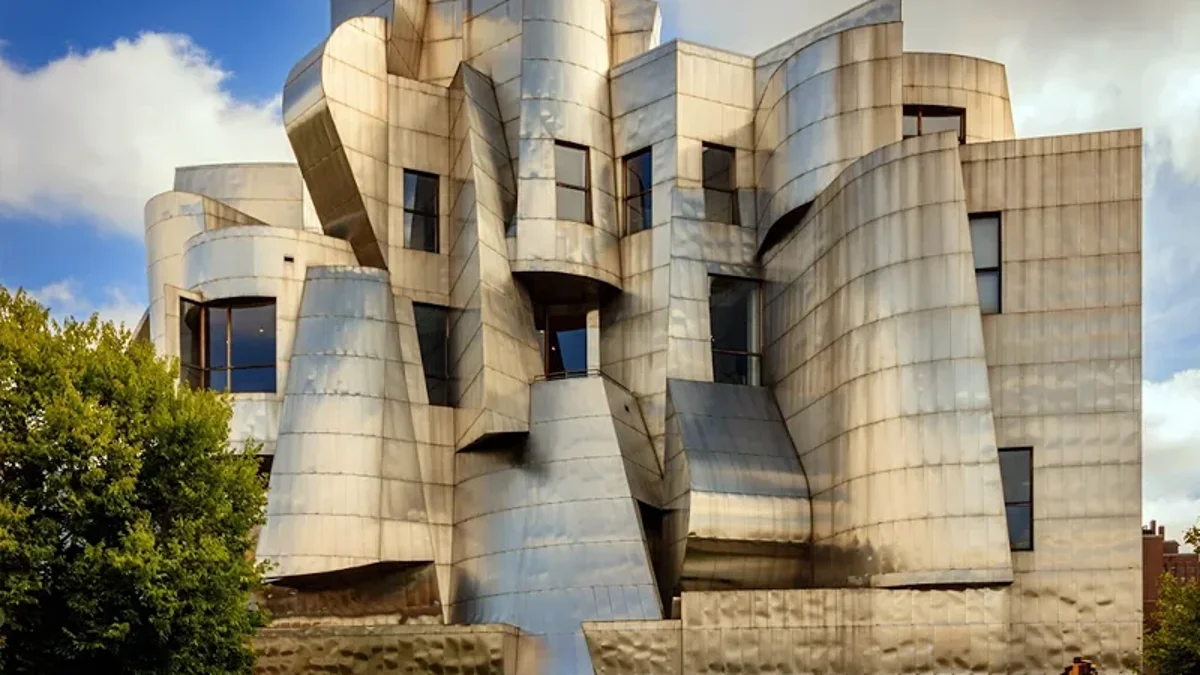
Best for: A free museum inside a Frank Gehry sculpture of a building; river views from the galleries
On the east bank of the Mississippi, at the University of Minnesota, the Weisman Art Museum folds and shines like a piece of crumpled steel brought to life. Designed by Frank Gehry and opened in 1993, the building at 333 East River Road, Minneapolis, MN 55455 is half the exhibit before you even enter. Inside, the university collection runs deep in American art, strong in early modern masters, ceramics and traditional Korean furniture.
Admission is always free, which makes the Weisman the easiest add-on in this guide. The museum closes on Mondays and Tuesdays, and open days run from 10:00 a.m. to 5:00 p.m., with weekend openings at 11:00 a.m. Gallery windows and a terrace frame the downtown skyline across the river.
Tip: Cross the river on the Washington Avenue Bridge pedestrian level, see the museum, and continue to the halal kitchens of Cedar-Riverside for lunch.
10. American Swedish Institute

Best for: A castle-like mansion of carved oak and porcelain stoves; Nordic culture in the middle of Minneapolis
Swedish immigrants shaped Minnesota, and their showpiece stands at 2600 Park Avenue, Minneapolis, MN 55407. The American Swedish Institute pairs the Nelson Cultural Center with the Turnblad Mansion of 1908, a 33 room house of hand carved wood and glowing Swedish porcelain stoves, built by newspaper publisher Swan Turnblad. Rotating exhibitions cover Nordic art and design, and the FIKA cafe serves Swedish baking and light meals.
Admission costs $17 for adults, $15 for seniors age 62 and above and $10 for youth ages 6 to 18 and students with ID, while children age 5 and under enter free, and a limited income ticket costs $1. The institute opens Tuesday to Sunday from 10:00 a.m. to 4:00 p.m., staying open until 8:00 p.m. on Thursdays, and closes on Mondays. Free parking sits in the lot at 27th Street and Park Avenue. Allow about ninety minutes for the mansion and exhibitions.
Tip: Tour the mansion rooms slowly and look up. The carved ceilings and tile stoves carry more detail than the furniture.
11. Eloise Butler Wildflower Garden and Bird Sanctuary

Best for: Native wildflowers and birdsong inside the city; the quietest walk in this guide
Inside Theodore Wirth Park, a gate opens into the oldest public wildflower garden in the United States, founded in 1907 by botany teacher Eloise Butler. The Eloise Butler Wildflower Garden and Bird Sanctuary at 1 Theodore Wirth Parkway, Minneapolis, MN 55405 gathers more than 600 native plant species and more than 140 bird species into woodland, wetland and prairie meadows joined by a looping trail and boardwalk.
Admission is free, and the season runs from April 15 to October 15, with a few extra weekends in late October. The garden opens Tuesday to Sunday from 7:30 a.m. to 6:00 p.m., staying open until 8:00 p.m. on Thursdays through late August, and closes on Mondays. Free naturalist tours leave the Martha Crone Visitor Shelter daily in season. Each month changes the cast, from spring ephemerals to tall prairie flowers in fall.
Tip: Go in the first hour of a weekday morning for birdsong and empty trails, and bring binoculars for spring warblers.
12. Midtown Global Market

Best for: Eating around the world in one hall; the best single lunch stop for a curious family
On Lake Street, the old Sears building holds a world tour under one roof. The Midtown Global Market at 920 East Lake Street, Minneapolis, MN 55407 opened in 2006 and gathers dozens of small kitchens, bakeries, grocers and craft stalls run by the immigrant communities of the city. Moroccan tagines at Moroccan Flavors stand an aisle away from Nepali dumplings, Mexican tortas, Middle Eastern sweets and East African plates, with shared tables in the middle of the hall.
Entry is free, and the market opens Monday to Saturday from 10:00 a.m. to 8:00 p.m. and Sunday from 11:00 a.m. to 6:00 p.m. Prices stay gentle, portions stay honest, and many stalls prepare halal food; ask at the counter for the halal options of the day. A parking ramp beside the building offers validation with a purchase.
Tip: Walk one full circuit before ordering. Graze in stages, and save room for the bakeries near the east end.
13. Mall of America

Best for: The largest shopping and indoor fun complex in the United States; a full day in any weather
Ten miles south of downtown, in Bloomington, the Mall of America at 60 East Broadway, Bloomington, MN 55425 operates on a scale that defies the word mall. More than 520 stores ring a seven acre indoor amusement park, Nickelodeon Universe, with the SEA LIFE Minnesota aquarium, mini golf and more than 50 restaurants stacked through four levels. Minnesota charges no sales tax on clothing or shoes, which stretches every shopping budget further.
Entry to the mall is free, parking is free, and the building opens Monday to Saturday from 10:00 a.m. to 9:00 p.m. and Sunday from 11:00 a.m. to 7:00 p.m. The METRO Blue Line runs from downtown straight to the mall station, making this the easiest big outing without a car. Families should pick two anchor attractions in advance, because a full circuit of the mall runs to miles of walking.
Tip: Ride the Blue Line and skip the parking ramps. Weekday mornings feel calm, and ride lines stay short.
Top Attractions Compared

| Attraction | Best For | Cost | Time Needed |
|---|---|---|---|
| Minneapolis Sculpture Garden | The Spoonbridge and Cherry photograph | Free | 45 minutes to 1 hour |
| Walker Art Center | Contemporary art exhibitions | $18; age 18 and under free | 2 to 3 hours |
| Minneapolis Institute of Art | 5,000 years of world art | Free | 2 to 4 hours |
| Mill City Museum | Flour milling history and the Flour Tower | $15 | 1.5 to 2 hours |
| Stone Arch Bridge and St Anthony Falls | The classic riverfront walk | Free | 1 to 2 hours |
| Guthrie Theater and the Endless Bridge | Architecture and river viewpoints | Free public areas | 45 minutes |
| Minnehaha Falls and Minnehaha Regional Park | A 53 foot waterfall in the city | Free | 1.5 to 3 hours |
| Chain of Lakes and Lyndale Park Gardens | Lake trails, roses and skyline views | Free | Half day |
| Weisman Art Museum | Gehry architecture and free art | Free | 1 to 2 hours |
| American Swedish Institute | The Turnblad Mansion and Nordic culture | $17 | 1.5 hours |
| Eloise Butler Wildflower Garden | Native wildflowers and birding | Free | 1 to 2 hours |
| Midtown Global Market | Global food stalls on Lake Street | Free entry | 1 to 2 hours |
| Mall of America | 520 stores and an indoor theme park | Free entry | Half day to full day |
Suggested Itineraries

| Trip Length | How to Spend It |
|---|---|
| 1 Day | Start at the Minneapolis Sculpture Garden and the Walker Art Center, cross downtown to Mill City Museum and the Stone Arch Bridge, take the Guthrie Endless Bridge, and end the day at the free galleries of Mia on a Thursday evening. |
| 2 Days | Day 1 downtown: Sculpture Garden, Walker, Mill City and the riverfront. Day 2 outdoors: the Chain of Lakes and Lyndale Park gardens in the morning, then the Blue Line to Minnehaha Falls. |
| 3 Days | Add the Weisman Art Museum and the American Swedish Institute, lunch at Midtown Global Market, a day trip to the Minnesota State Capitol and Historic Fort Snelling in St Paul, and a shopping day at Mall of America. |
Book Your Minneapolis Tickets Online

Skip the ticket lines and book in advance. Every link below goes to the official ticket page for that attraction.
| Attraction | Book Tickets |
|---|---|
| Walker Art Center | Book Tickets |
| American Swedish Institute | Book Tickets |
| Mall of America Attractions | Book Tickets |
| Historic Fort Snelling | Book Tickets |
Where to Stay in Minneapolis
Top 3 hotels in Minneapolis
Explore all hotels >
The best area to stay in Minneapolis depends on your plan. Downtown beside Nicollet Mall puts the light rail, the Skyway system and the riverfront museums within an easy walk. The North Loop, the old warehouse district north of downtown, trades formality for the strongest dining streets in the city. The Mill District and Downtown East base you beside Mill City Museum, the Guthrie and the Stone Arch Bridge.
| Area | Best For | Vibe |
|---|---|---|
| Downtown and Nicollet Mall | First-time visitors and transit users | Skyway links, light rail at the door and the riverfront a short walk away |
| North Loop | Food lovers and design fans | Warehouse hotels, chef driven dining rooms and brick streets |
| Mill District and Downtown East | Museum weekends | Mill City Museum, the Guthrie and the Stone Arch Bridge at the end of the street |
Three hotels cover the downtown bases well. Rates swing with the season and with event calendars, peaking on summer weekends, so open each official hotel page below for live prices.
- Four Seasons Hotel Minneapolis, 245 Hennepin Avenue, Minneapolis, MN 55401. The luxury landmark at the top of Nicollet Mall, with 222 rooms, river views, a spa floor and a restaurant by chef Gavin Kaysen, two blocks from the Mississippi.
- Hewing Hotel, 300 Washington Avenue North, Minneapolis, MN 55401. A boutique hotel inside an 1897 farm implement warehouse in the North Loop, with 124 rooms and the Tullibee restaurant cooking from Minnesota woods and lakes.
- Canopy by Hilton Minneapolis Mill District, 708 South 3rd Street, Minneapolis, MN 55415. A 183 room hotel in a converted implement company building from the early 1900s, steps from the Guthrie and the Stone Arch Bridge, with loaner bikes for guests.
What to Eat in Minneapolis

Minneapolis eats like the crossroads it is. Scandinavian bakeries, Hmong and Vietnamese kitchens along University Avenue, Mexican taquerias on Lake Street and one of the great Somali food scenes outside East Africa all share a few miles. The Midtown Global Market gathers the world into one hall, and Nicollet Avenue south of downtown runs a strip locals call Eat Street. Halal food in Minneapolis is a strength of the city, not an afterthought.
Halal Food in Minneapolis

Safari Restaurant at 3010 4th Avenue South, just off Lake Street, is a landmark of Somali cooking in Minnesota, serving goat meat plates, chicken suqaar and beef isku karis over fragrant basmati rice with fresh muufo bread. Near the University of Minnesota, Afro Deli and Grill at 720 Washington Avenue Southeast, Minneapolis, MN 55414 states its promise plainly: every dish on the menu is prepared halal. Order the crisp beef sambusas, the Somali steak sandwich or the Chicken Fantastic over rice.
In Northeast Minneapolis, Holy Land at 2513 Central Avenue Northeast, Minneapolis, MN 55418 runs a restaurant, bakery and grocery under one roof, with halal zabiha certified meat, an award winning hummus, chicken shawarma, kebabs and a wood fire rotisserie chicken that regulars order by the whole bird. It opens daily from 9:00 a.m. to 9:00 p.m., and the grocery side stocks dates, olives, cheeses and breads. With the halal stalls of the Midtown Global Market added, a halal traveler can eat a different cuisine every day of a Minneapolis week.
Local Dishes to Try

Minnesota keeps its own table traditions. The Jucy Lucy, a burger with the cheese sealed inside the beef patty, was born in the grills and diners of south Minneapolis and still arrives with a warning to let the molten center cool. Wild rice, the state grain, turns up in soups and pilafs across the city. Walleye, the state fish, fills sandwiches and fish fry plates in season. For something sweet, try lefse, the soft potato flatbread rolled with butter and sugar, and the cardamom buns of the FIKA cafe at the American Swedish Institute.
Mosques and Prayer Facilities in Minneapolis

Minneapolis holds one of the largest Muslim communities in the United States, built by Somali, East African, South Asian and Arab families, and visitors will find mosques with daily prayers and Friday congregations in several neighborhoods.
In North Minneapolis, Masjid An-Nur, the Mosque of the Light, serves a multicultural congregation from 1729 Lyndale Avenue North, Minneapolis, MN 55411, with the five daily prayers, a Friday congregation at 1:30 p.m. and deep community programs run with its Al-Maaun service arm. In Cedar-Riverside, Dar Al-Hijrah Mosque at 504 Cedar Avenue South, Minneapolis, MN 55454 stands a short walk from the West Bank campus, with daily prayers, Friday services and a weekend Quran school.
Cedar-Riverside and the Lake Street corridor hold several smaller prayer spaces within a few blocks of each other, minutes from the university museums. Friday services draw the largest gatherings of the week at every mosque in the city, so arrive early for parking.
Getting Around Minneapolis

| Option | Best For | Typical Cost |
|---|---|---|
| METRO Blue Line | The airport, downtown, Minnehaha Falls and Mall of America | $2 per ride; All-Day Pass $4 |
| METRO Green Line | Downtown to the University of Minnesota and St Paul | $2 per ride; All-Day Pass $4 |
| Metro Transit buses | Lake Street, the lakes and neighborhood trips; free ride buses run along Nicollet Mall | $2 per ride |
| Skyway system | Moving around downtown in winter without going outside | Free |
| Car | The Chain of Lakes, day trips and Fort Snelling | Downtown ramp parking by the hour or day |
| Walking and cycling | Downtown, the riverfront and the lake paths | Free |
The light rail does the heavy lifting for visitors. The METRO Blue Line links downtown with Minneapolis-Saint Paul International Airport, Minnehaha Falls and Mall of America, while the Green Line crosses the river to the University of Minnesota and continues to downtown St Paul. A standard fare costs $2 at any hour, tickets and passes stay valid for two and a half hours with transfers, and an All-Day Pass costs $4 from station machines or the Metro Transit app. Trains and platforms work on a proof of payment system, so buy before you board.
Downtown itself is a walking district, and in winter the Skyway system takes over: miles of enclosed, climate controlled walkways link hotels, offices, shops and arenas across the center, so a January visitor can cross downtown in shirtsleeves. The system thins out on weekends, so check the door signs on Sundays. For the lakes, buses and a car share the work.
How Much Does a Trip to Minneapolis Cost?

| Item | Typical Cost |
|---|---|
| Walker Art Center | $18 per adult; age 18 and under free |
| Mill City Museum | $15 per adult |
| American Swedish Institute | $17 per adult |
| Historic Fort Snelling | $12 per adult |
| METRO All-Day Pass | $4 per person |
| Halal lunch | $12 to $20 per person |
| Mid-range hotel | $130 to $220 per night |
| Top free sights | Mia, the Sculpture Garden, Minnehaha Falls, the Stone Arch Bridge, the Weisman and the lake trails cost nothing |
Minneapolis gives a budget traveler unusual value for a major American city. Two of the three big museums charge nothing, the waterfalls and lake trails are free, transit across the whole metro costs less than a coffee, and the halal kitchens serve generous plates at gentle prices. A visitor who pays for the Walker and Mill City, rides the Blue Line and eats halal on Lake Street can cover the best of Minneapolis for a modest daily sum.
Best Time to Visit Minneapolis

| Season | Months | What to Expect |
|---|---|---|
| Spring | April to May | Cool days around 45 to 65 degrees Fahrenheit, Minnehaha Falls at full flow, wildflowers at Eloise Butler from April 15, thinner crowds |
| Summer | June to August | Warm, often 75 to 85 degrees, roses at Lyndale Park in June, long evenings on the lake paths and the busiest museum season |
| Fall | September to November | Crisp days and the finest color of the year along the river and the lakes in early to mid October; the wildflower garden closes in mid October |
| Winter | December to March | Deep cold, often 10 to 30 degrees, a frozen curtain of ice at Minnehaha Falls, the Skyway at full value and the lowest hotel rates of the year |
June to September is the classic Minneapolis: warm lakeside paths, gardens in bloom and every attraction on full hours. September may be the finest month of all, with summer warmth, thinner crowds and the first color along the river bluffs. May trades a little warmth for the waterfall at its strongest and the wildflower garden at its freshest. Winter is the connoisseur season: dress in real layers, walk the frozen falls, and let the Skyway carry you between museums while the city sparkles outside the glass.
Day Trips from Minneapolis

St Paul and the Minnesota State Capitol
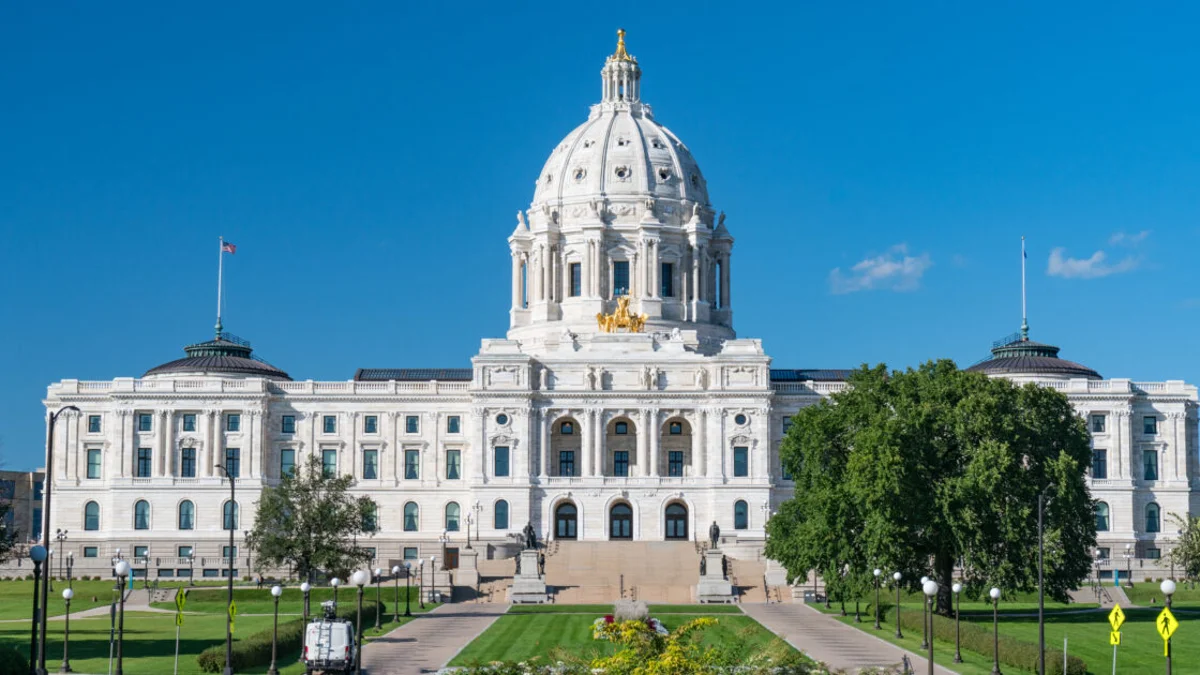
The twin city across the river keeps a slower rhythm, and the Green Line puts it twenty minutes away. The Minnesota State Capitol at 75 Rev. Dr. Martin Luther King Jr. Boulevard, St. Paul, MN 55155 rises in white marble over the city, designed by Cass Gilbert and opened in 1905, with the second largest self-supported marble dome in the world. Admission is free, and guided tours of 45 minutes leave on the hour, Monday to Friday from 9:00 a.m. to 3:00 p.m. and Saturday from 10:00 a.m. to 2:00 p.m., climbing in fair weather to the golden horses of the Quadriga on the roof.
Historic Fort Snelling

Where the Minnesota River meets the Mississippi, the stone walls of Historic Fort Snelling at 200 Tower Avenue, St. Paul, MN 55111 guard the bluff above the confluence. The fort began in the 1820s as the northern outpost of the young United States, and the Minnesota Historical Society now runs it as a living history site, with guided walking tours and the Plank Museum and Visitor Center telling 10,000 years of human history at this meeting of waters. Admission costs $12 for adults, $10 for seniors, students and active military and $8 for children ages 5 to 17. Hours change with the season, running Thursday to Saturday from 10:00 a.m. to 4:00 p.m. in the fall and winter season, so confirm the day on the official site first.
Stillwater on the St Croix River

About 40 minutes east, Stillwater is one of the oldest towns in Minnesota, a lumber era river port on the St Croix River that kept its brick main street and its famous lift bridge. It makes an easy half day of bookshops and river views. In fall, the wooded bluffs above the river carry some of the finest color in the state.
Practical Tips for Visiting Minneapolis
Good to Know

- Two of the three great museums are free. Mia and the Weisman charge nothing, and the Sculpture Garden and lake trails are free too, so anchor each day with a free sight.
- Mill City Museum sells tickets on site only. Arrive near opening time on weekends to secure a Flour Tower slot without a long wait.
- The METRO Blue Line is the visitor workhorse: airport, downtown, Minnehaha Falls and Mall of America on one line for a $2 fare or a $4 All-Day Pass.
- Minnesota charges no sales tax on clothing or shoes, which makes Mall of America and downtown shopping noticeably kinder to the budget.
- The Walker, Mia, Mill City and the Weisman all rest early in the week, so plan park and lake days on Mondays and Tuesdays.
- Friday prayer fits the sightseeing day: Dar Al-Hijrah stands near the university museums and Masjid An-Nur serves the north side, both a short ride from downtown.
Good to Avoid

- Do not underestimate a Minneapolis winter. Pack a real coat, hat, gloves and boots from November to March.
- Do not drive downtown for Mall of America. The Blue Line ends inside the mall complex and skips the parking ramps and the highway traffic.
- Do not board a METRO train without a ticket or a validated pass. Platforms are paid fare zones and inspectors check proof of payment at random.
- Do not save the Chain of Lakes for a rushed hour. The loops are long; give Lake Harriet or Bde Maka Ska a full morning each.
- Do not climb the gorge barriers at St Anthony Falls or Minnehaha Falls for a photograph. Stay on the marked paths and overlooks at both sites.
Final Thoughts
Minneapolis rewards the traveler who slows down. A spoon and a cherry over a green lawn, five thousand years of art behind a free door, an elevator ride through a flour mill, a waterfall at the end of a city street and a chain of lakes strung with walking paths: the city strings its treasures along water, most of them free. Give it three days if you can, eat on Lake Street, pray in Cedar-Riverside, and walk one lake loop at golden hour. The City of Lakes will handle the rest.
The Walker Art Center with the Minneapolis Sculpture Garden, the Mill City Museum, the Guthrie Theater, and the Stone Arch Bridge make the riverfront circuit, and Minnehaha Falls, the Chain of Lakes, the Minneapolis Institute of Art, the Weisman Art Museum, the Foshay Tower, and the Mall of America fill the days around them. The two day plan in this guide pairs the riverfront and Mill District on day one with the Sculpture Garden and the Chain of Lakes on day two.
Summer brings festivals and the warmest days for the lakes and the falls, while winter brings the Skyway system, with heated walkways joining downtown buildings above the street. Use Metro Transit light rail for the airport, the Mall of America, and the university, at 2 dollars in rush hour and 2.50 dollars at peak, and walk the Stone Arch Bridge and the Mill District for the best river views. Book Guthrie Theater tours ahead in summer, when weekend slots fill, and allow a full afternoon for Minnehaha Falls, since the falls, the gorge, and the river trails all deserve unhurried time.
Downtown suits almost every itinerary, with the riverfront, the Guthrie, and the Skyway at the door, while the North Loop suits travellers who want warehouses turned into galleries and restaurants. The Islamic Center of Minnesota, at 1401 Gardena Avenue NE, holds daily prayers and the Friday prayer, and visitors are welcome. If a fourth day is free, Stillwater sits around 30 miles east on the St Croix River, with a historic Main Street, river views, and antique shops.
FAQs
What are the best things to do in Minneapolis for first-time visitors?
Walk the Minneapolis Sculpture Garden and tour the Walker Art Center, spend a free afternoon inside the Minneapolis Institute of Art, ride the Flour Tower at Mill City Museum and cross the Stone Arch Bridge at sunset. Add Minnehaha Falls and one Chain of Lakes loop to cover the essentials in two full days.
How many days do you need in Minneapolis?
Two days cover the core: the museums, the riverfront and one lake loop. Three days add the Weisman Art Museum, the American Swedish Institute and a day trip to St Paul for the State Capitol and Historic Fort Snelling. Four days open a full shopping and family day at Mall of America.
What are the best free things to do in Minneapolis?
General admission at the Minneapolis Institute of Art is always free, the Weisman Art Museum is free, and the Minneapolis Sculpture Garden, Minnehaha Falls, the Stone Arch Bridge, the Chain of Lakes trails and the Eloise Butler Wildflower Garden in season all cost nothing. The Guthrie Theater viewpoints, the Endless Bridge and the Amber Room, are free as well.
What is the best time of year to visit Minneapolis?
June to September brings warm weather, gardens in bloom and the longest attraction hours. September adds thinner crowds and early fall color. May is best for Minnehaha Falls at full flow and the first wildflowers. Winter is cold but rewarding, with the frozen waterfall, low hotel rates and the Skyway system linking the downtown museums.
Is Minneapolis good for families with children?
Yes, and the value helps. Children ride the Flour Tower, meet the giant spoon at the Sculpture Garden, walk behind the ice curtain at Minnehaha Falls in winter and spend a full day at Nickelodeon Universe inside Mall of America. The Walker admits everyone age 18 and under free, Mia is free for all, and the halal kitchens and mosques of the city make family logistics easy for Muslim travelers.
Where can you find halal food in Minneapolis?
Minneapolis has one of the strongest halal scenes in the American Midwest. Safari Restaurant at 3010 4th Avenue South serves Somali classics off Lake Street, Afro Deli and Grill at 720 Washington Avenue Southeast prepares every dish halal near the university, and Holy Land at 2513 Central Avenue Northeast pairs a halal zabiha kitchen with a bakery and grocery. The Midtown Global Market adds more halal stalls under one roof.
How do you get from Minneapolis-Saint Paul Airport to downtown Minneapolis?
Take the METRO Blue Line. Trains run from both airport terminals straight to downtown Minneapolis for a $2 fare, with Minnehaha Falls and Mall of America on the same line. Taxis cover the trip in about 20 minutes by road, but the train skips traffic.