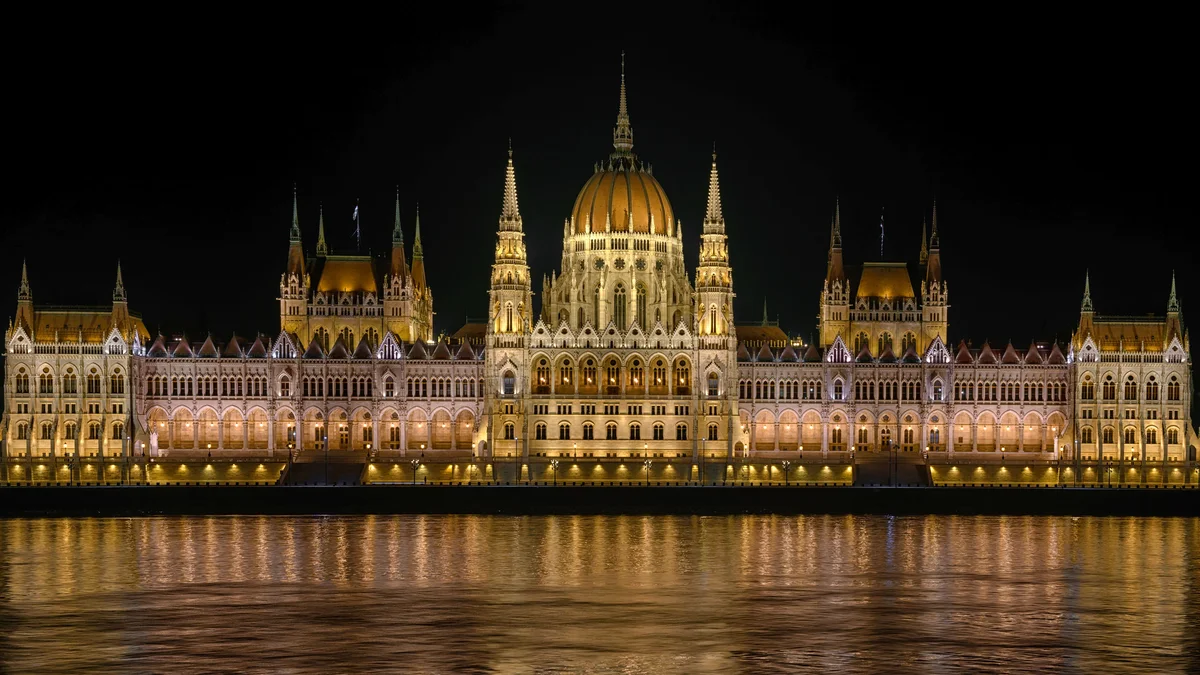
Things to Do in Budapest: The Parliament on the Danube, the Towers of Castle Hill and the Yellow Palace of Szechenyi Bath
Budapest is two cities holding hands across a river: flat, grand Pest on the east bank, all boulevards, domes and cafe windows, and green, hilly Buda on the west, where a castle crowns the ridge. The best things to do in Budapest reward travellers who cross the Danube often, because the postcard views face each…
Budapest is two cities holding hands across a river: flat, grand Pest on the east bank, all boulevards, domes and cafe windows, and green, hilly Buda on the west, where a castle crowns the ridge. The best things to do in Budapest reward travellers who cross the Danube often, because the postcard views face each other across the water, and the Chain Bridge ties the two halves together.
This guide plans the city the practical way: the eight sights that matter most, and verified ticket prices in Hungarian forints from official pages. Budapest also works well for Muslim and family travellers, with halal kitchens in Pest and honestly mapped prayer options below.
Budapest at a Glance

| Detail | What to Know |
|---|---|
| Country | Hungary |
| Region | Central Hungary, on both banks of the Danube |
| Best for | First time visitors, architecture lovers, families and photographers |
| Famous for | The Parliament, Castle Hill, historic thermal baths and the first metro line of continental Europe |
| Currency | Hungarian forint (HUF); cards widely accepted |
| Getting around | Metro, Danube trams, buses and the funicular |
| Halal food | Turkish, Pakistani, Indian and Lebanese kitchens across Pest, mapped below |
| Prayer | Budapest Mosque (District XI), Dar es Salaam, community centre (District XIV) |
Quick Picks

Best Iconic Sights

- The Parliament, inside and out
- Fisherman Bastion above the Danube
- The Chain Bridge and the Danube Promenade
- The dome terrace of St Stephen Basilica
Best for Families

- The funicular ride up Castle Hill
- Margaret Island gardens and lawns
- City Park and Vajdahunyad Castle
- The reopened Citadella park
Best Free and Low Cost

- Fisherman Bastion lower terraces, free at every hour
- The Citadella park and the Liberty Statue
- Heroes Square and the City Park lake
- The Danube Promenade at dusk
The Top Things to Do in Budapest

The eight experiences below are ranked in the order most first time visitors should meet them. Prices are the adult rates on the official pages checked for this guide, so confirm the fee before you set out. The halal kitchens of the city are mapped in the Where to Eat section; readers planning a food led trip will also enjoy our guide to how food tourism is shaping modern travel.
1. The Hungarian Parliament Building: The Palace on the River

Best for
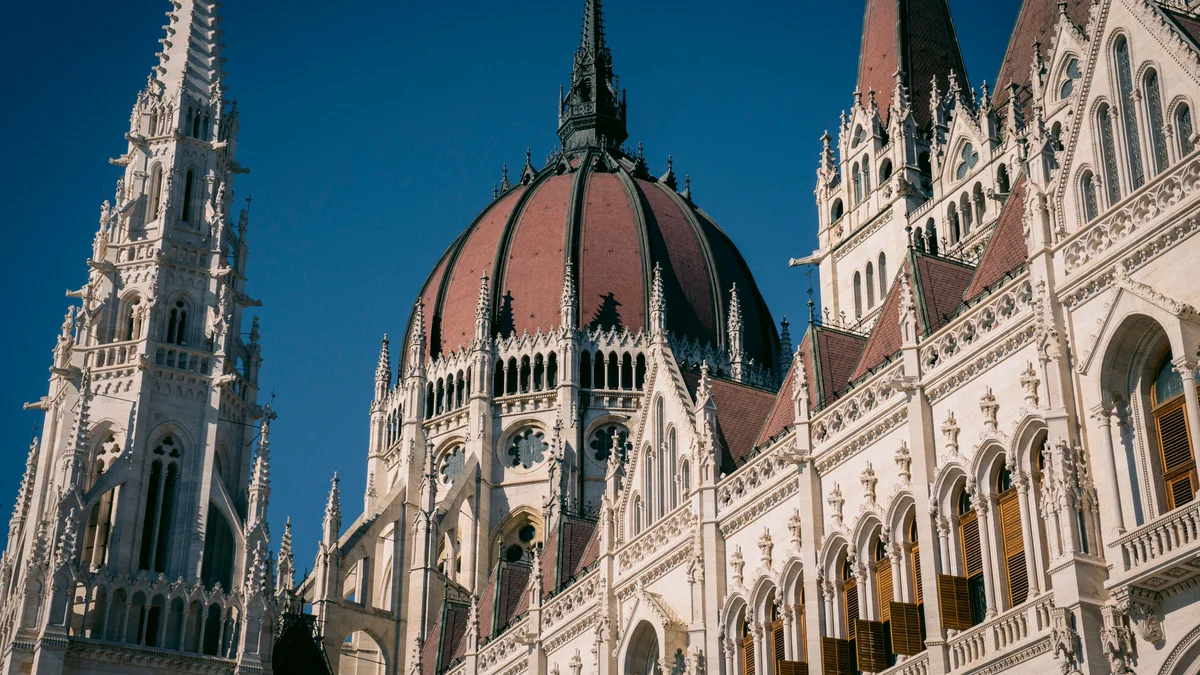
The essential interior visit of Budapest; book ahead, then walk the riverbank for the exterior view.
Address: Kossuth Lajos Square 1-3, District V, Budapest 1055.
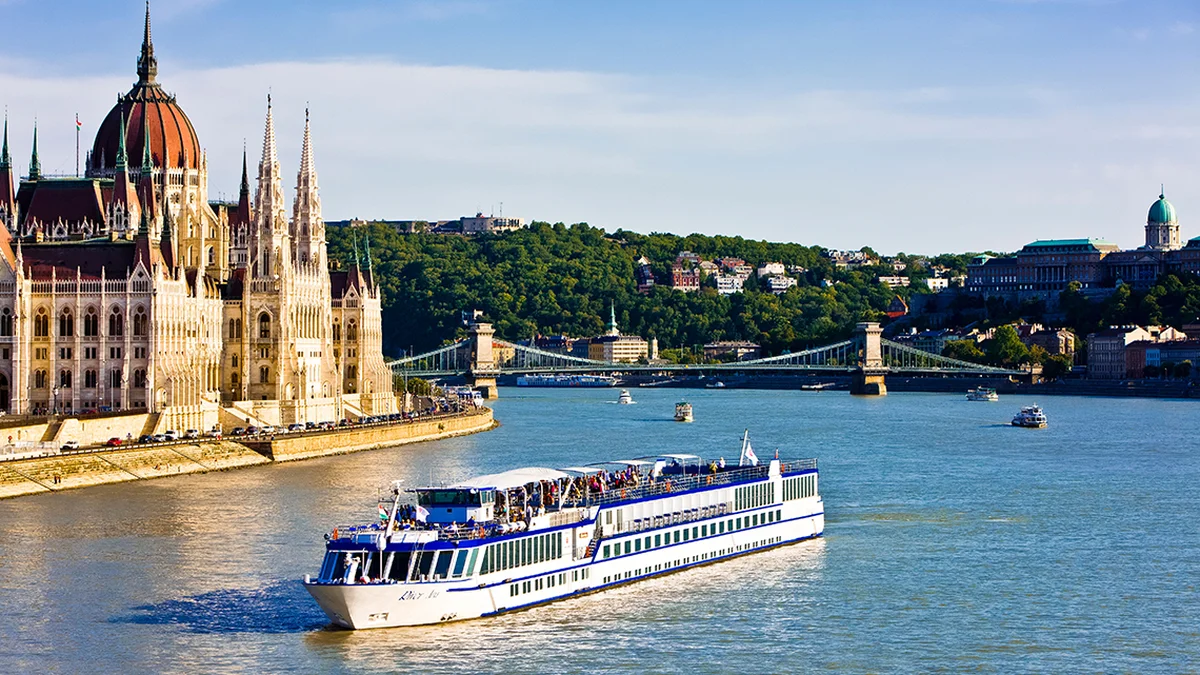
The Parliament is the largest building in Hungary and the symbol of the country, a neo-Gothic river palace designed by Imre Steindl and built between 1885 and 1904. It runs 268 metres along the Pest bank, its dome rising exactly 96 metres, the height of the year 896, when the Magyar tribes settled the land. The river front, all spires, arches and statues of kings, is the view on every Budapest postcard.
Inside, visitors join a guided tour of about 45 minutes through the grand staircase and the Dome Hall, where the Holy Crown of Hungary stands guarded under the painted ceiling. Tours run in set languages through the day and can be cancelled at short notice for state events, so book ahead.
Do not miss

The Holy Crown in the Dome Hall, and the building floodlit from the Buda bank after dark.
Practical info

Guided tours cost 7,000 HUF for adult citizens of the European Economic Area and 14,000 HUF for other visitors; students aged 6 to 24 pay 3,500 HUF and 7,000 HUF, and children under 6 enter free. Bring a passport or identity card, because the reduced rate is checked at entry. The Visitor Centre opens from 8:00 to 18:00 from April to October and from 8:00 to 16:00 in the rest of the year. Metro line M2 stops at Kossuth Lajos Square.
Book the first tour of the day, then cross to Batthyany Square for the classic photograph of the river front.
Insider tip
2. Buda Castle and Castle Hill: The Royal Quarter

Best for
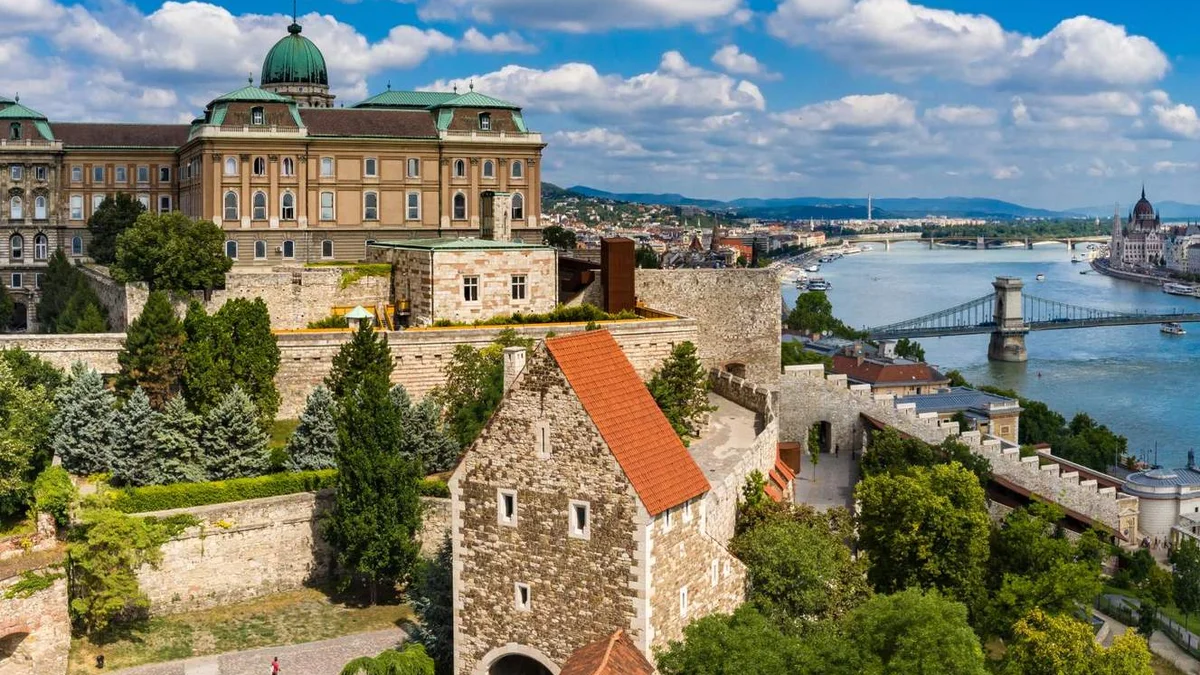
Palace museums, cobbled lanes and the finest terraces in the city, reached by a funicular from 1870.
Address: Buda Castle, Szent Gyorgy Square 2, District I, Budapest 1014.
Castle Hill is a fortified plateau above the Danube, a World Heritage district of palace wings, museums and quiet baroque lanes. Its Royal Palace, rebuilt many times across eight centuries, now holds the Hungarian National Gallery, the Budapest History Museum and the National Szechenyi Library. The courtyards and riverside terrace are free at every hour, with the view taking in the Chain Bridge and the Parliament.
The ride up is half the pleasure. The Buda Castle Funicular has climbed the hill from Clark Adam Square since 1870, the second oldest funicular in Europe, in two wooden cabins, Margit and Gellert, on a 95 metre track. Inside the palace, the Hungarian National Gallery tells the story of Hungarian art, from medieval altarpieces to the great canvases of Munkacsy and Csontvary.
Do not miss

The palace terrace at golden hour, and Uri Street, the oldest lane of the district.
Practical info

The funicular charges 4,500 HUF one way and 5,500 HUF for a return ticket, with child tickets for ages 3 to 14 at 2,000 HUF and 3,000 HUF; it runs daily to 22:00 and closes on some Mondays for maintenance. BKK travelcards are not valid on the funicular. The Hungarian National Gallery opens from Tuesday to Sunday, 10:00 to 18:00; the permanent exhibition costs 5,800 HUF for adults. The hill itself and its terraces cost nothing.
Ride up in the morning and walk down through the Castle District lanes at the end of the day.
Insider tip
3. Fisherman Bastion and Matthias Church: The Fairytale Terrace

Best for

A white stone terrace of seven towers beside the coronation church of Hungary.
Address: Szentharomsag Square, District I, Budapest 1014.
Fisherman Bastion looks medieval and is barely a century old. The architect Frigyes Schulek built it between 1899 and 1905 on the stretch of wall once defended by the guild of fishermen, and its seven pointed towers stand for the seven Magyar chieftains. From the arcades the whole of Pest opens up: the Parliament across the water, the Chain Bridge to the right.
Beside the bastion stands Matthias Church, the Church of Our Lady of Buda Castle, where Hungarian kings were crowned and royal weddings were held. Schulek rebuilt it in the same years in neo-Gothic, and its roof of glazed Zsolnay tiles in green and gold is the colour note of the whole hill. Inside, every wall carries painted patterns, and the 197 step tower gives the highest view in the Castle District.
Do not miss
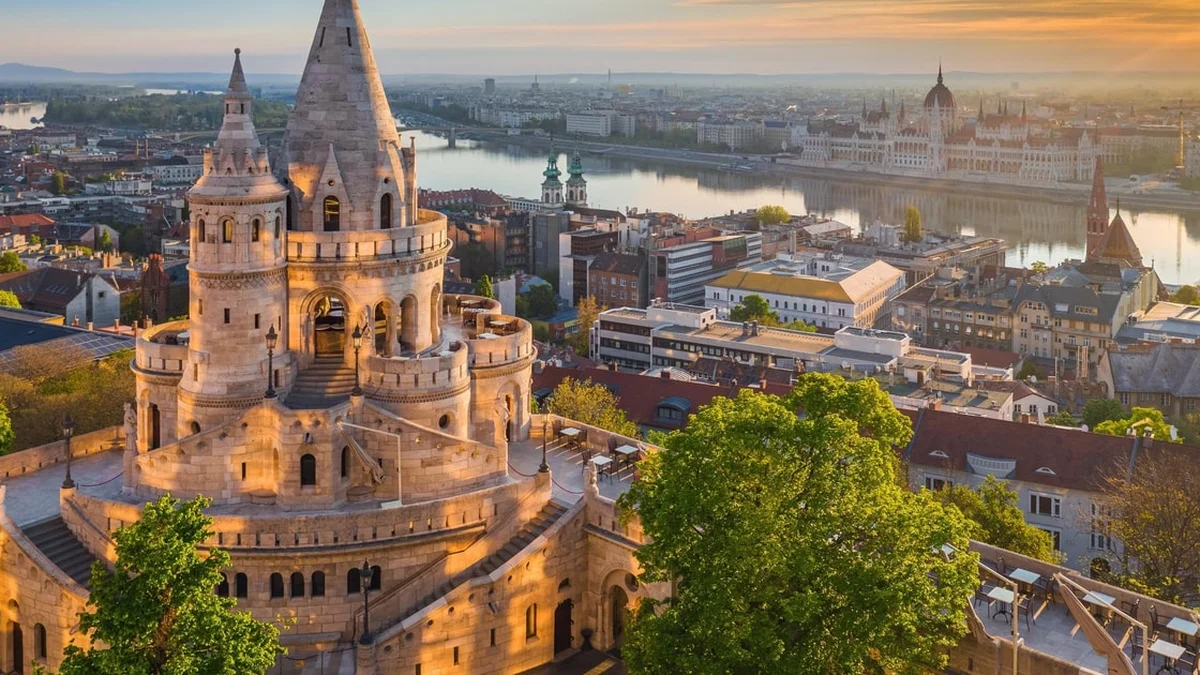
The lower arcade in the late afternoon, when the sun lights the Parliament from behind you, and the statue of King Stephen between the church and the bastion.
Practical info
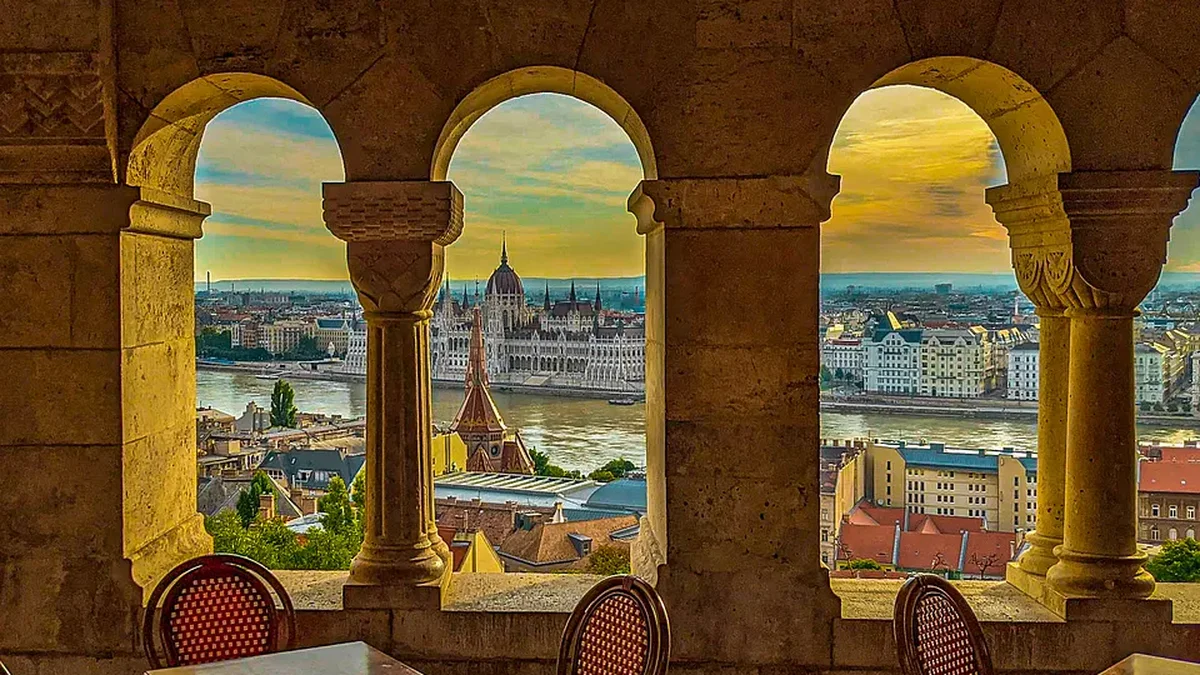
The lower terraces, arcades and stairways of the bastion are free at every hour. The upper viewing level costs 1,700 HUF, reduced to 850 HUF for children, students and pensioners; it opens from 9:00 to 19:00, and to 21:00 from June to September. Matthias Church charges 3,400 HUF for adults and 2,700 HUF for students and seniors; the tower is a separate ticket at 4,000 HUF, and a family ticket covers two adults with their children for 9,500 HUF.
Come before 9:00, when the terraces are nearly empty and free on every level.
Insider tip
4. St Stephen Basilica: The Dome of Pest

Best for
The grandest interior in Pest and its best viewpoint, in one building.
Address: Szent Istvan Square 1, District V, Budapest 1051.
The Basilica is the largest church in Budapest, built between 1851 and 1905 and named for Stephen, the first king of Hungary. Its dome rises to exactly 96 metres, the same height as the Parliament, a pairing that stands for the balance of state and faith. The building survived the collapse of its first dome in 1868, and the interior glows with marble, mosaics and gilded plaster.
In a chapel inside rests the Holy Right Hand, the most revered relic of Hungary. The visit that most travellers remember, though, is the panoramic terrace that circles the dome at 65 metres: a full round view over Pest to the castle and the Buda hills. Lifts cover most of the climb.
Do not miss

The terrace late in the afternoon, and the floodlit facade from the square at dusk.
Practical info

Sightseeing tickets are sold in three parts, with prices in force from December 2025: the church hall costs 2,600 HUF for adults, the panoramic terrace with the treasury costs 5,000 HUF, and the all in one ticket costs 6,800 HUF; reduced tickets cost 2,000 HUF, 4,000 HUF and 5,500 HUF, and children under 6 enter free. The church hall opens to visitors from Monday to Saturday, 9:00 to 17:45, and on Sunday from 13:00 to 17:45; the terrace and treasury open daily from 9:00 to 19:00.
Buy the all in one ticket and take the terrace first on a clear morning.
Insider tip
5. The Chain Bridge and the Danube Promenade: The Walk That Joins the City

Best for

The signature walk of Budapest, free at every hour; cross at dusk.
Address: The Chain Bridge runs from Szechenyi Square in Pest to Clark Adam Square in Buda.
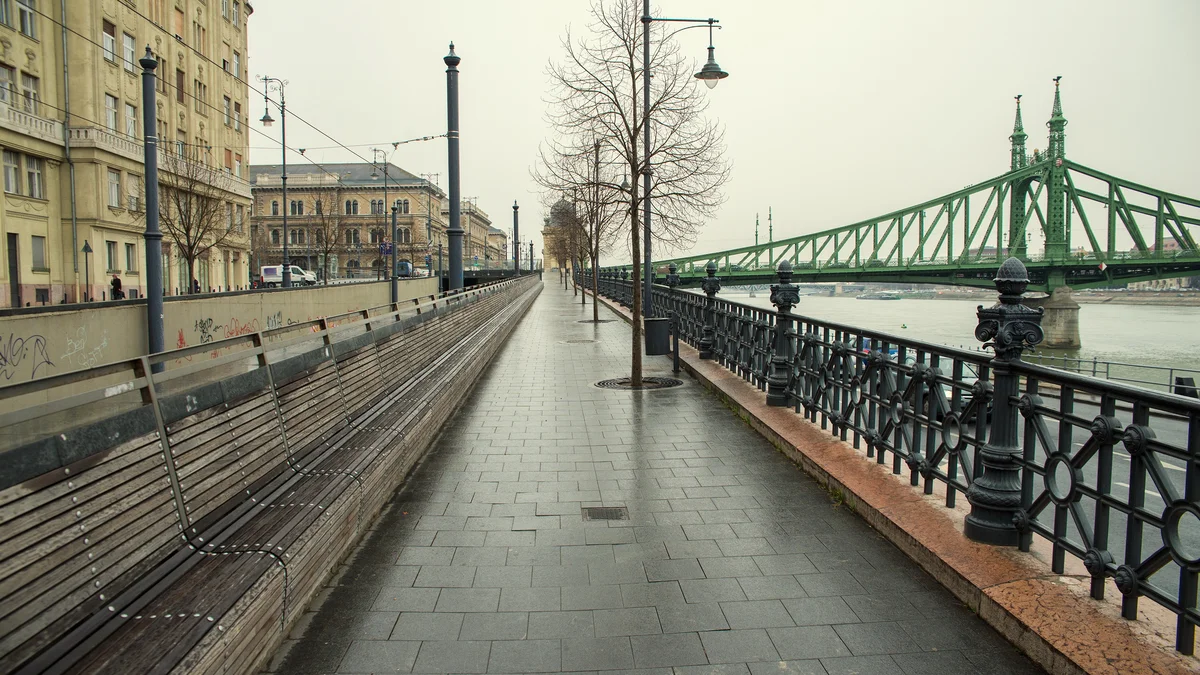
Until 1849, Buda and Pest were two towns joined by boats and a floating bridge that winter ice tore away. The Chain Bridge changed the country: designed by the English engineer William Tierney Clark and built under the Scottish engineer Adam Clark, it was the first permanent bridge across the Danube in Hungary, hung from iron chains and guarded by four stone lions. It was blown up in 1945, rebuilt to the original design by 1949, and returned to the city renovated in 2023.
Walk it slowly. From the middle of the span: the castle on one side, the Parliament ahead, Gellert Hill closing the view to the south. On the Pest bank, the Danube Promenade runs south past cafe terraces; a short walk north from the Parliament brings you to the Shoes on the Danube Bank, sixty pairs of iron shoes fixed to the stone edge, a quiet memorial to victims shot into the river in 1944 and 1945.
Do not miss
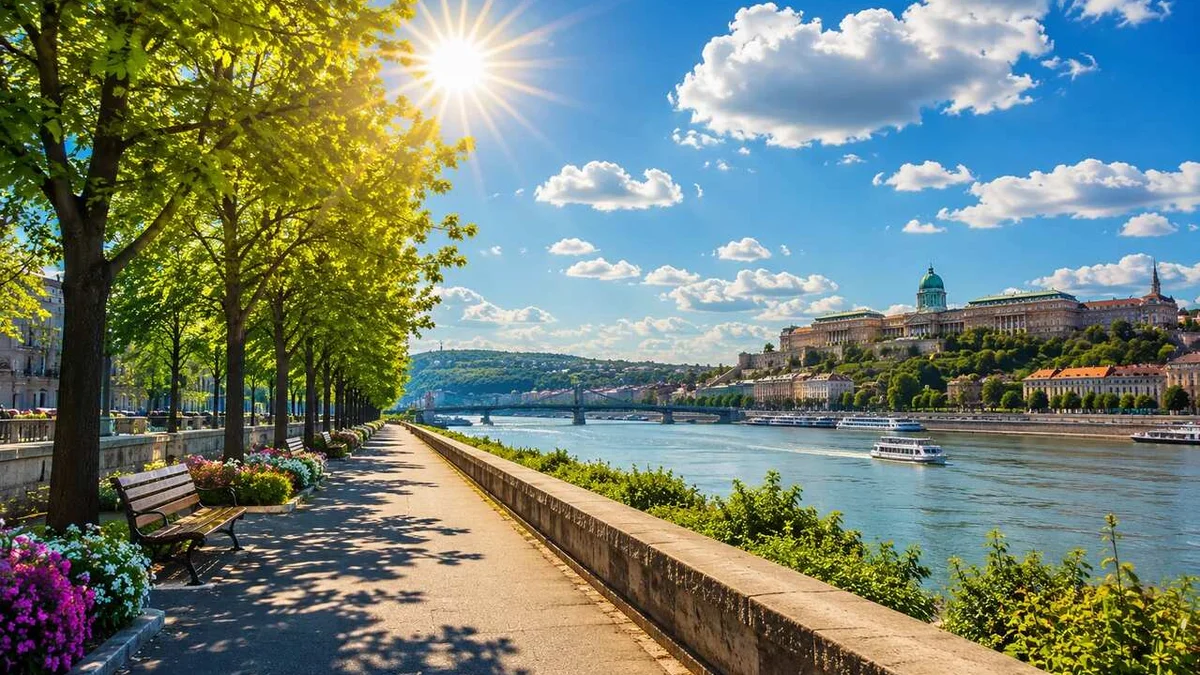
The lions at close range, and tram 2 running the embankment under the castle at dusk.
Practical info

The bridge and the promenade are public space, free at every hour. Tram 2, the sightseeing line of the city, follows the Pest embankment and stops below the Parliament.
Cross in the last light, then ride tram 2 back after dark; one ticket, two different cities.
Insider tip
6. Dohany Street Synagogue: The Largest Synagogue in Europe
Best for

Moorish revival architecture, a museum and a memorial garden in the historic Jewish quarter.
Address: Dohany Street 2, District VII, Budapest 1074.
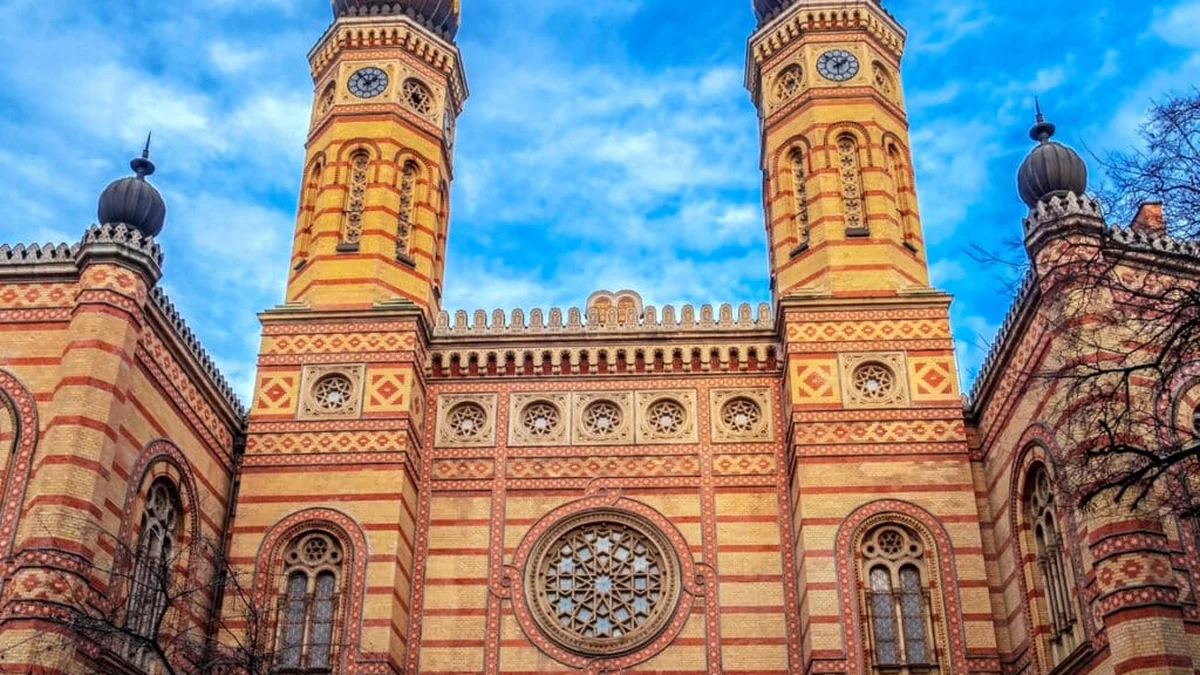
The Great Synagogue on Dohany Street, built between 1854 and 1859 to designs by the Viennese architect Ludwig Forster, is the largest synagogue in Europe, seating about 3,000 people. Its twin towers and striped brick facade borrow from Moorish models, and the vast interior repays slow looking. The complex is a place of worship and a memorial: in the garden behind the building, the Raoul Wallenberg Memorial Park holds the Tree of Life, a weeping willow of steel whose leaves carry the names of victims of the Holocaust.
One ticket covers the whole complex: the synagogue, the Hungarian Jewish Museum in the adjoining wing, the memorial park, the small cemetery and the exhibition on the ghetto in the cellar, with a guided tour included. Allow at least an hour and a half, and dress modestly, with shoulders and knees covered.
Do not miss

The Tree of Life in the memorial park, read leaf by leaf.
Practical info
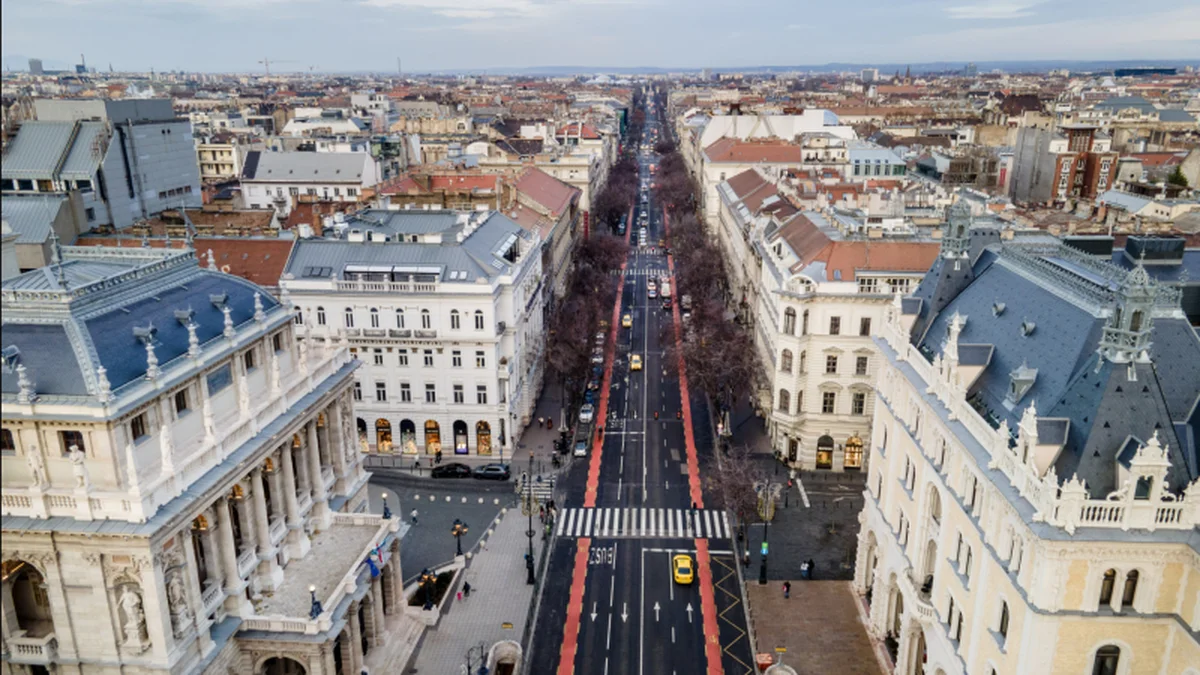
Admission costs 14,500 HUF for adults, 12,000 HUF for students with a student card or an ISIC card, and 5,500 HUF for children aged 6 to 12; children under 6 enter free, and a family ticket for two adults with at least two children costs 33,000 HUF. The complex opens from Sunday to Thursday and on Friday morning; it is closed on Saturdays and on Jewish holidays. In October the doors close at 18:00, in the summer season at 20:00, and in winter at 16:00. Astoria station on metro line M2 is a few minutes on foot.
Join the included guided tour; the building explains itself far better in the words of its own guides.
Insider tip
7. Heroes Square and City Park: The Grand Entrance of Pest

Best for

The ceremonial square of Hungary, opening into the lawns, lake and storybook castle of City Park.
Address: Heroes Square, District XIV, Budapest 1146, at the end of Andrassy Avenue.
Heroes Square was laid out for the millennium celebrations of 1896, the thousandth anniversary of the Hungarian conquest. A 36 metre column carries the Archangel Gabriel with the Holy Crown; around its base ride the seven chieftains of the conquest, and two curved colonnades hold the kings and heroes of a thousand years. Behind the square begins City Park, the green lung of Pest.
In the park stands Vajdahunyad Castle, a pavilion built for the same millennium exhibition by the architect Ignac Alpar, stitching together copies of famous buildings from across historic Hungary: a Romanesque chapel, a Gothic keep, a baroque palace front. Meant to be temporary, it was rebuilt in stone. The castle now holds the Museum of Hungarian Agriculture, the grounds are free, and the lake rows boats in the warm months and carries one of the oldest ice rinks in Europe in winter. The metro line M1 of 1896, itself a World Heritage sight, serves the square.
Do not miss

The statue of the Anonymous chronicler in the castle courtyard, and the square floodlit at night.
Practical info

The square, the park and the castle grounds are free at every hour. The Museum of Hungarian Agriculture inside the castle charges its own admission and opens from Tuesday to Sunday. The M1 metro stops at both Heroes Square and Szechenyi Bath, five minutes deeper into the park.
Walk up Andrassy Avenue from Deak Square at least once; avenue, metro and square were all built for the same millennium.
Insider tip
8. Szechenyi Thermal Bath: The Yellow Palace of Hot Water

Best for

The grand historic bath of Budapest, as much palace as pool; plan a slow half day.
Address: Allatkerti Boulevard 9-11, District XIV, Budapest 1146, in City Park.
Szechenyi is one of the largest medicinal bath complexes in Europe and the first permanent thermal bath of Pest, opened in 1913 in a neo-Baroque palace of yellow walls and domes. The complex holds 18 pools, three of them outdoors in the great courtyard. Outside, steam curls off hot water in winter air, and chess players float their boards at the pool edge, as they have for generations.
Visit it as a historic monument first. Walk the courtyard and read the building. Two practical notes matter for families. Entry is limited to guests aged 14 and above, a rule in force since 2025, so this is not a stop for young children. And the other grand bath of the city, Gellert Bath at the foot of Gellert Hill, is closed for a full renovation until 2028; its Art Nouveau hall can be admired from the square outside, but no ticket is sold.
Do not miss

The outdoor courtyard pools in the early morning, and the chess boards at the edge of the warmest pool.
Practical info

A daily ticket with a locker costs 13,200 HUF from Monday to Thursday and 14,800 HUF from Friday to Sunday, rising to 15,800 HUF on holidays; a private changing cabin adds 1,000 HUF. The Good Morning ticket, for entry before 9:00, costs 10,500 HUF with a locker from Monday to Thursday. The bath opens from 7:00 to 20:00 from Monday to Thursday, to 22:00 on Friday, and from 8:00 to 20:00 at weekends. Bring your own towel, slippers and swimwear, because rentals are not offered.
Arrive before 9:00 on a weekday for the cheapest ticket and the calmest courtyard.
Insider tip
More Worth Your Time in Budapest
Three more stops: a reopened fortress hill, a palace of music and a green island in the river.
Gellert Hill and the Citadella: The Viewpoint Is Back

Gellert Hill, a rocky ridge of 235 metres above the Danube, carries the Liberty Statue and the Citadella fortress, built by the Habsburgs in 1854 to watch over the city. Closed for a full rebuild from 2020, the Citadella reopened in spring 2026 as a public park inside the old walls, with gardens, wall walks and viewing terraces, and the restored Liberty Statue standing over the plaza. The park, the wall walk and the statue are free; park hours run from 6:00 to 24:00 from April to October and from 8:00 to 22:00 from November to March. The Bastion of Liberty exhibition in the western tower, with the Roof Garden 360 terrace, charges 4,900 HUF for adults. Bus 27 climbs the hill to a stop about 500 metres from the entrance.
The Hungarian State Opera House: A Palace on Andrassy Avenue

The Opera House at Andrassy Avenue 22, opened in 1884 to designs by Miklos Ybl, is the architectural jewel of the avenue: a neo-Renaissance palace of marble stairs, gilding and ceiling frescoes by Karoly Lotz. Visitors who want the interior without an evening performance take the OperaTour, a guided walk of about 60 minutes through the public rooms, run daily in English at 13:30, 15:00 and 16:30; tickets are sold on the official Opera pages. Even from the pavement, the facade and its sphinx statues repay a stop on the walk up Andrassy Avenue.
Margaret Island: The Green Lung of the Danube

Margaret Island is a park island of about 2.5 kilometres in the middle of the Danube, joined to the city by Margaret Bridge at the south end and Arpad Bridge at the north, and closed to private cars. Lawns, rose gardens and the ruins of the Dominican convent of St Margaret fill the island. Bus 26, the only bus route on the island, runs its full length, and the musical fountain near the southern entrance is being rebuilt, with a return planned for 2027. Entry is free at every hour, and an unhurried walk from end to end is the best slow afternoon in the city.
Budapest Attractions Compared

All eleven stops, with area, adult entry price and time needed.
| Attraction | Area | Adult entry | Time needed |
|---|---|---|---|
| Hungarian Parliament Building | Kossuth Square, Pest | 7,000 HUF EEA; 14,000 HUF other visitors | About 1.5 hours |
| Buda Castle and Castle Hill | Castle District, Buda | Grounds free; National Gallery 5,800 HUF | Half a day |
| Fisherman Bastion | Castle District, Buda | Lower terraces free; upper level 1,700 HUF | About 1 hour |
| Matthias Church | Castle District, Buda | 3,400 HUF; tower 4,000 HUF | About 1 hour |
| St Stephen Basilica | District V, Pest | 2,600 HUF hall; 6,800 HUF all in one | 1 to 1.5 hours |
| Chain Bridge and the Danube Promenade | Between Buda and Pest | Free | 1 to 2 hours |
| Dohany Street Synagogue | District VII, Pest | 14,500 HUF, tour included | 1.5 to 2 hours |
| Heroes Square and City Park | District XIV, Pest | Free | 2 to 3 hours |
| Gellert Hill and the Citadella | Gellert Hill, Buda | Park free; exhibition 4,900 HUF | 1.5 to 2 hours |
| Margaret Island | In the Danube | Free | 2 to 3 hours |
| Szechenyi Thermal Bath | City Park, Pest | 13,200 HUF weekday with locker | Half a day |
Budapest Itineraries: One, Two and Three Days

Budapest rewards bank by bank planning: Buda for the hill, Pest for the grand interiors. Build your budapest 3 day itinerary from the table below.
| Length | Where you go | Why it works |
|---|---|---|
| 1 day | Castle Hill in the morning: funicular, Buda Castle, Fisherman Bastion and Matthias Church; the Chain Bridge at dusk | The hill, the terraces and the bridge in one sweep |
| 2 days | Day one as above; day two in Pest: the Parliament tour, St Stephen Basilica and its dome terrace, then the Dohany Street Synagogue | The three great interiors of the city, none of them rushed |
| 3 days | Add a City Park day: Heroes Square, Vajdahunyad Castle and Szechenyi Bath; or swap it for Gellert Hill and Margaret Island, or a Godollo day trip | The green side of Budapest, or a first taste of the Danube Bend |
Book Tickets Before You Go

The five tickets where the official page genuinely saves time or money.
| Attraction | Adult price | Official ticket page |
|---|---|---|
| Hungarian Parliament Building (guided tour) | 7,000 HUF EEA; 14,000 HUF other visitors | parlament.hu visitor pages |
| St Stephen Basilica (all in one ticket) | 6,800 HUF | bazilikabudapest.hu |
| Dohany Street Synagogue (guided tour included) | 14,500 HUF | jewishtourhungary.com |
| Szechenyi Thermal Bath (daily ticket with locker, weekday) | 13,200 HUF | szechenyibath.com prices |
| Buda Castle Funicular (return ticket) | 5,500 HUF | siklojegy.hu ticket types |
Where to Stay in Budapest
Top 3 hotels in Budapest
Explore all hotels >
Budapest divides into stay zones with clear trade offs. The Danube side of District V holds the grand hotels and the Parliament view. The Castle District is quiet, historic and steep. Around Deak Square you sleep at the transport hub of the city, near the halal kitchens.
| Area | Best for | Character | Price level |
|---|---|---|---|
| Belvaros and the Danube bank (District V) | First visits and river views | Parliament, Basilica and the Promenade at the door | High |
| Castle District (District I) | Atmosphere and quiet nights | Cobbled lanes above the river, steep walks home | High |
| Deak Square and Andrassy Avenue (Districts VI and VII) | Food led trips and transport | The metro hub, the Opera and the old Jewish quarter | Mid to high |
| City Park side (District XIV) | Families and longer stays | Green streets by Heroes Square and the baths | Mid |
InterContinental Budapest

InterContinental Budapest stands on the Danube Promenade at Apaczai Csere Janos Street 12-14, on the Pest bank beside the Chain Bridge, and its river facing rooms look straight across the water to the Castle District. The hotel runs two restaurants, a spa and an indoor pool, and the tram of line 2 passes the door.
Kempinski Hotel Corvinus Budapest

Kempinski Hotel Corvinus Budapest stands at Erzsebet Square 7-8 in District V, two streets from Deak Square, where the three metro lines cross. It is the downtown choice: the Basilica and the Opera are minutes on foot, the Chain Bridge is a short walk west, and the hotel wraps its rooms around a gastronomic quarter of restaurants and delis, with a spa and pool above the square.
Where to Eat in Budapest

Eating halal in Budapest is easier than in many European capitals, because Pest holds a working scene of Turkish, Middle Eastern, Pakistani and Indian kitchens. One honest caution: pork and lard are the traditional base of the national kitchen, so the dishes section below names the plates to choose and the words to ask with. Readers building a trip around food should start with our explainer on how food tourism is shaping modern travel.
Halal Food in Budapest

Mirchi Pakistani and Indian Restaurant cooks in the food court of the Westend City Center mall at Vaci Road 1-3, by Nyugati station. The kitchen presents itself as halal in its own name and signage, and the menu runs to beef nihari, chicken malai boti, kofta and butter naan. STATED HALAL by the restaurant itself.
Istanbul Kebab and Grill, at Oktober 6 Street 22 in District V, a short walk from St Stephen Basilica, is a Turkish grill house of kebabs, pide and baklava, listed as halal in directories. LISTED HALAL in directories; confirm with the staff on the day.
Mesopotamia serves kebab, gyros plates, pizza and grills in the Westend City Center at Vaci Road 1-3, with a second branch in the Etele Plaza mall in District XI. Halal directories list the Westend kitchen as a halal restaurant. LISTED HALAL in directories; confirm the branch and the day with the staff.
Zenobia, at Andrassy Avenue 8 in District VI, is a Syrian and Lebanese dining room near Deak Square, serving lamb shawarma, kebbeh, hummus and knafeh. The kitchen follows Middle Eastern practice, but it carries no halal certificate that this guide could verify, so ask the staff about the meat sourcing before you order. CONFIRM WITH STAFF.
For a meat free table, Hummus Bar at Kiraly Street 8 in District VII plates falafel, hummus, shakshuka and salads all day, a vegetarian friendly kitchen rather than a halal certified one. VEGETARIAN OPTION.
Local Dishes to Try

Hungarian cooking is paprika country cooking: generous and soup led. Choose with the caution given above and it treats Muslim travellers well. Gulyas, the famous goulash, is a beef and paprika soup with root vegetables and dumplings. Csirkepaprikas is chicken braised in a paprika and sour cream sauce, served with nokedli dumplings. Halaszle, the fish soup of the Danube towns, is built on river fish and hot paprika; ask about the base before ordering. Lecso, a stew of peppers, tomatoes and onions, is a vegetarian plate at heart, though some kitchens add sausage, so ask. Langos, the fried dough disc sold at markets and stations, is best with garlic, sour cream and cheese; ask whether the kitchen fries in oil or in lard. For sweet finishes, retes strudel, Dobos torta and kurtoskalacs, the chimney cake, are all safe pleasures. Remember two phrases: serteshus nelkul means without pork, and csirke, marha and hal are the words for chicken, beef and fish.
Mosques and Prayer Facilities in Budapest

The main mosque of the city is Budapest Mosque at Fehervari Road 41 in District XI, south Buda. It is the largest mosque in Hungary and is run by the Organisation of Muslims in Hungary. Listings give long daily hours, from early morning to 22:00, and the mosque holds the daily prayers and the Friday prayer; the website is iszlam.com and the phone number is +36 20 216 0171.
Closer to the centre, Dar es Salaam Mosque at Bartok Bela Road 29 in District XI, a short walk from Gellert Square, is described as the oldest mosque of modern Hungary, run by the Church of the Muslims of Hungary. Muslim travel guides note that it holds all the daily prayers and the Friday prayer, keeps a separate prayer area for women, and has an English speaking caretaker. The Hungarian Islamic Community keeps its centre and prayer hall at Paskal Street 60 in District XIV, near City Park; its site is magyariszlam.hu. The tomb of Gul Baba, the Ottoman era dervish, stands in a rose garden in Rozsadomb on the Buda side: a place of memory and quiet, kept by a foundation, rather than a working prayer space.
Getting Around Budapest

Budapest transport has one rule that saves every trip: the metro is for distance, the trams are for sightseeing. Four metro lines cross at Deak Square, and tram 2 follows the Danube. Buy tickets before you board and validate them; inspectors check often.
| Mode | Cost | Good to know |
|---|---|---|
| Single ticket | 500 HUF; 700 HUF bought from the driver | One nonstop journey; validate before travel |
| Block of 10 single tickets | 4,500 HUF | Ten rides to share across the stay |
| 24 hour travelcard | 2,750 HUF | Unlimited BKK travel for 24 hours |
| 72 hour travelcard | 5,750 HUF | Unlimited travel for 72 hours; covers city bus 200E, not the express |
| Airport express bus 100E | 2,500 HUF, separate ticket | Runs between the airport and Deak Square; travelcards are not valid on it |
| Castle Hill funicular | 4,500 HUF one way; 5,500 HUF return | Not part of BKK; fares in the Castle section |
A 24 hour group travelcard carries up to five people travelling together for 5,000 HUF, which undercuts two adult day cards; carry proof of age or student status, because the discounts of the city run on documents.
What a Day in Budapest Costs
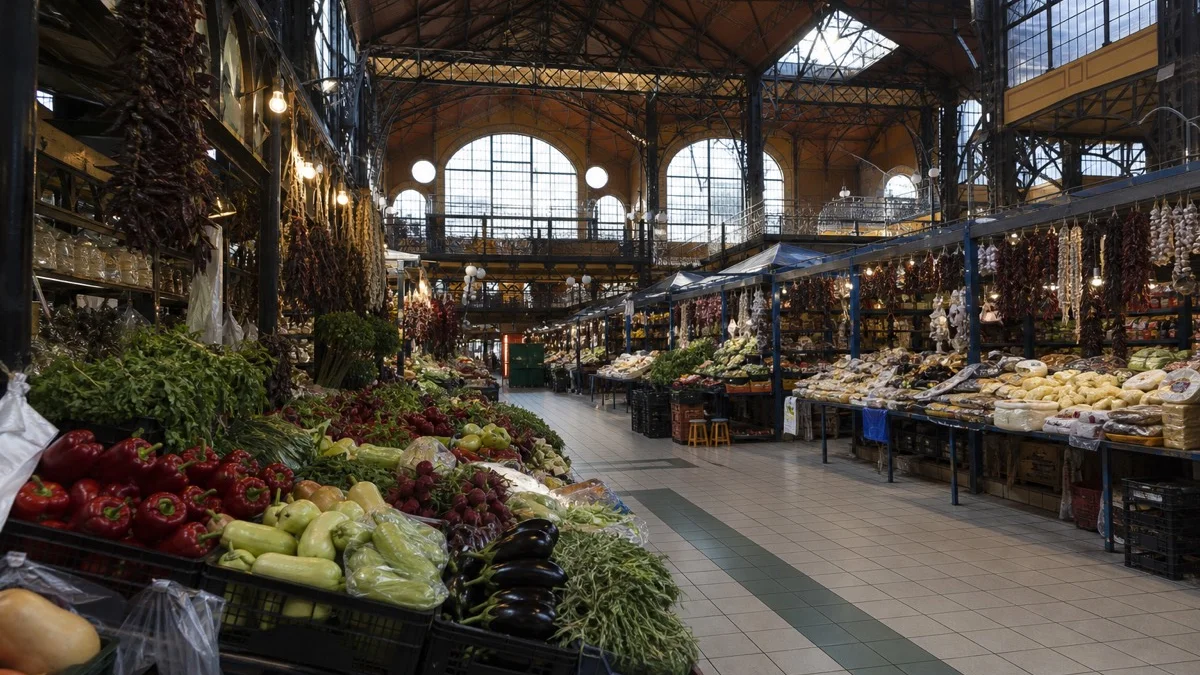
Budapest sits in the middle of the European price range: the great free views do the heavy lifting, and the paid interiors decide the budget. The table gives planning ranges per person for a sightseeing day.
| Category | Budget day | Comfortable day |
|---|---|---|
| Sightseeing entries | About 5,100 HUF (Fisherman Bastion upper level and Matthias Church) | About 20,800 HUF (Parliament tour and the Basilica all in one ticket) |
| Transport | 2,750 HUF (24 hour travelcard) | 2,750 HUF (24 hour travelcard) |
| Lunch | About 2,800 HUF (kebab plate and soup) | About 5,500 HUF (sit down lunch in District V) |
| Dinner | About 4,500 HUF (goulash and dumplings) | About 10,000 HUF (three courses in the centre) |
| Total per person | About 15,200 HUF | About 39,100 HUF |
Best Time to Visit Budapest
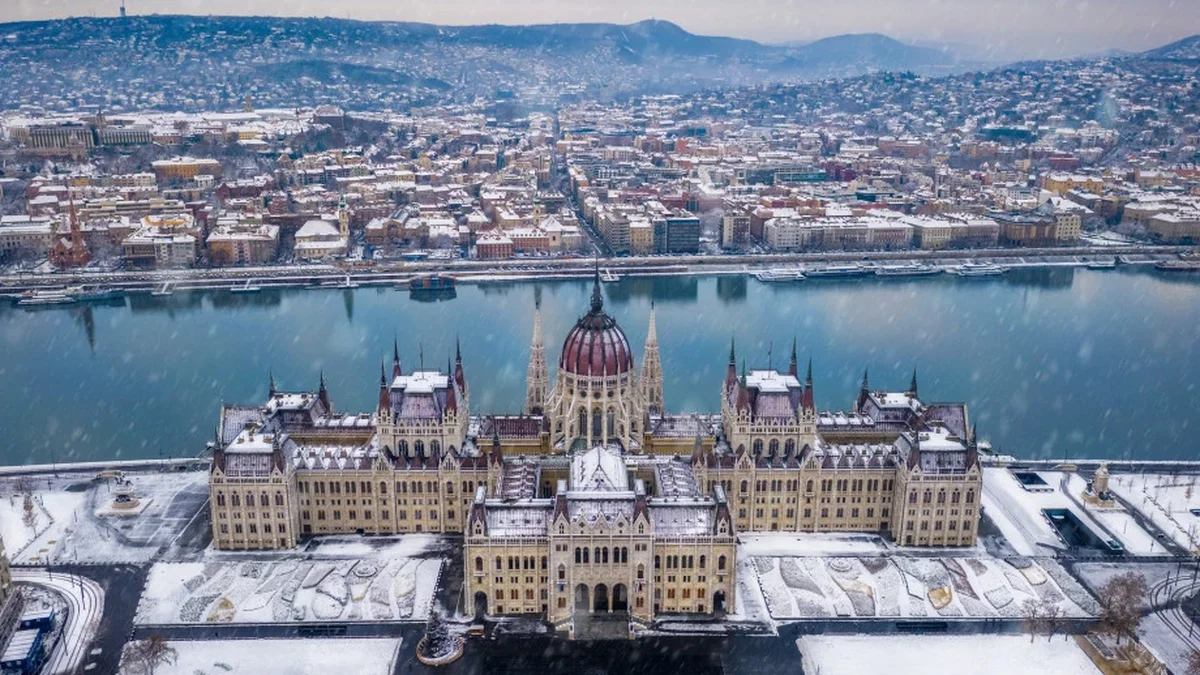
Budapest is a four season city with two gentle peaks: the blossom weeks of spring and the golden light of autumn. Summer brings the heat and the crowds, winter brings the cold and the steam over the outdoor baths.
| Season | Months | What you get | Crowds |
|---|---|---|---|
| Spring | March to May | Mild days, blossom in the parks, long evenings returning | Moderate |
| Summer | June to August | Hot days to about 30 degrees, the longest days of the year | High |
| Autumn | September to November | Golden light on the river, cooler air | Moderate |
| Winter | December to February | Cold days near freezing, steam over the outdoor pools | Low |
Late September and early October sit in the sweet spot: the summer crowds have thinned, the terraces still catch warm afternoons, and the Buda hills start to turn.
Day Trips from Budapest
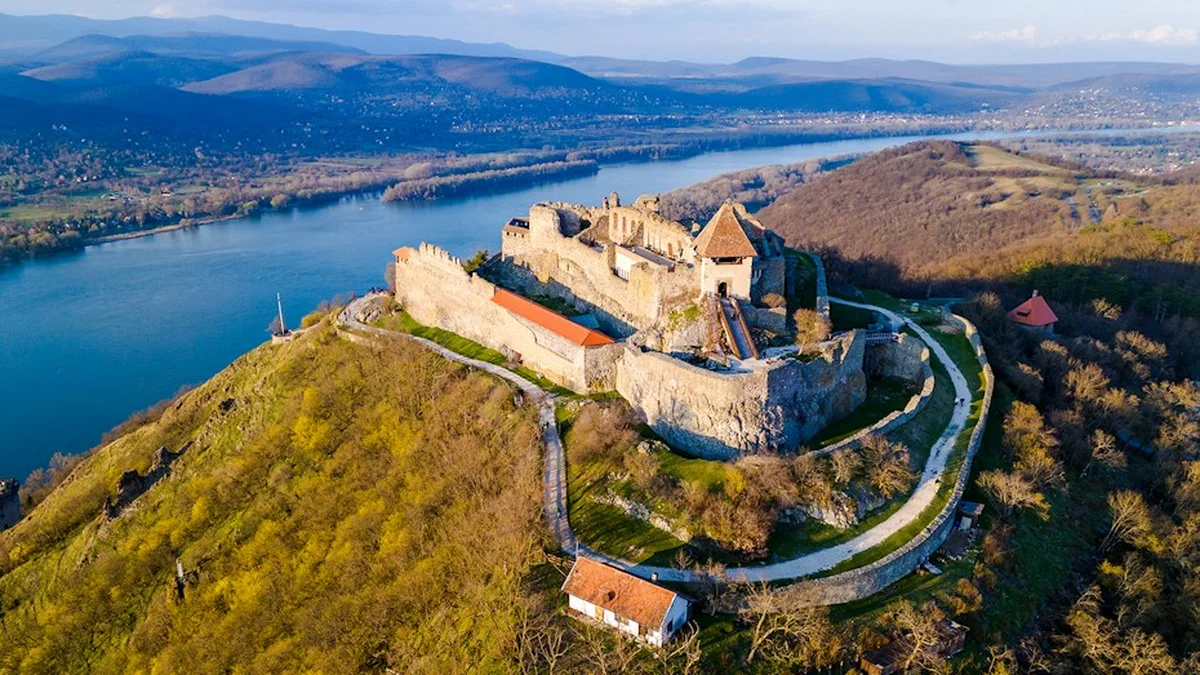
Three easy day trips run on suburban trains and buses: the artists town of Szentendre up the Danube, the castles of Visegrad at the Danube Bend, and the royal palace of Godollo to the east.
Szentendre: The Artists Town on the Danube

Szentendre is a small baroque town of cobbled lanes, church towers and art galleries about 40 minutes north of the city on the H5 suburban line from Batthyany Square. Serbian merchants built its churches and merchant houses in the 18th century, and painters adopted it in the 20th, so the lanes hold museums, galleries and cafe terraces. The main square, the riverside walk and the open air village museum on the edge of town fill a relaxed half day or a full one.
Visegrad: The Castles of the Danube Bend

North of Szentendre the Danube turns through green hills, and Visegrad guards the bend: a medieval royal palace by the river, and the Citadel on the hill above it, with the widest panorama of the river in Hungary. Buses run from Ujpest Varoskapu in about one to one and a half hours, and boats cover the route in the warm months. Pair the palace in the morning with the climb to the Citadel after lunch.
Godollo: The Palace of Queen Elisabeth

Godollo Royal Palace, about 30 kilometres east of the city, is the largest baroque palace in Hungary, built for the Grassalkovich family and given in 1867 as a coronation gift to Emperor Franz Joseph and Queen Elisabeth, the beloved Sisi. The permanent exhibition fills the royal suites, and the 26 hectare park is free. Admission to the permanent exhibition costs 5,000 HUF on weekdays and 5,400 HUF at weekends. The H8 suburban line from Ors vezer Square reaches the palace stop in about 45 minutes.
Practical Tips for Budapest

Good to Know

- Book the Parliament tour online before you travel, and bring the passport or identity card that matches your ticket category.
- Validate every paper ticket as you board; inspectors check on vehicles and at metro exits.
- Carry small forint notes and coins for kiosks and market stalls.
- Dress modestly for the Basilica, Matthias Church and the synagogue: shoulders and knees covered, and quiet voices inside.
- Start Castle Hill at opening time: the funicular queue and the bastion crowds both peak late in the morning.
- Tap water in Budapest is safe and good.
Good to Avoid

- Do not buy Parliament tickets from street sellers or unofficial sites; unofficial tickets are refused at security.
- Do not plan a visit to Gellert Bath; it is closed for renovation until 2028, whatever older guides and photographs suggest.
- Do not travel on a single ticket without validating it; the fine is many times the price of a travelcard.
- Do not assume a Hungarian dish is pork free; ask before ordering, especially with sausages, stews and fried dishes cooked in lard.
- Do not visit the Dohany Street Synagogue on a Saturday; it is closed to visitors for the Sabbath.
- Do not count on the funicular running on a maintenance Monday; check the official page and use bus 16 instead.
Final Thoughts on Budapest
Budapest gives its best to travellers who treat the river as the main street: cross it on foot, ride along it by tram, and end the day watching the lights come on. Give the city that rhythm and it gives back a parliament like a palace, and a castle hill of white towers.
The Hungarian Parliament Building, Buda Castle and Castle Hill, Fisherman Bastion with Matthias Church, and St Stephen Basilica make the essential circuit, and the Chain Bridge walk joins the two banks in one evening. The Dohany Street Synagogue, Heroes Square and City Park, and the Szechenyi Thermal Bath add the grand interiors and the yellow palace of hot water that complete the picture.
Plan bank by bank, with Buda for the hill and Pest for the grand interiors, and give Castle Hill a full morning before crossing back for the basilica and the baths. Book the Parliament tour online before travel and bring the passport or identity card that matches the ticket category. Spring brings blossom in the parks and autumn brings golden light, and tram 2 follows the Danube for the best moving view of the city.
The Danube side of District V holds the grand hotels and the Parliament view, the Castle District is quiet and historic, and the area around Deak Square sleeps at the transport hub of the city, near the halal kitchens. The Budapest Mosque stands at Fehervari Road 41 in District XI, south Buda, and holds the daily prayers and the Friday prayer. If a fourth day is free, Szentendre sits about 40 minutes up the Danube, with cobbled lanes, church towers, and art galleries.
Keep Exploring
- How food tourism is shaping modern travel
- Things to Do in Vienna
- Things to Do in Prague
- Things to Do in Kyoto (guide in preparation)
FAQs
What are the best things to do in Budapest on a first visit?
The Parliament tour, Castle Hill with the funicular, Fisherman Bastion and Matthias Church, and the dome terrace of St Stephen Basilica. Add the Chain Bridge at dusk, the Dohany Street Synagogue, Heroes Square and City Park, and Szechenyi Bath.
How many days do you need in Budapest?
Two full days cover the headline sights: one for Castle Hill and the bridge, one for the Parliament, the Basilica and the synagogue. A third day adds City Park and Szechenyi Bath, the reopened Citadella on Gellert Hill, or a day trip to Szentendre, Visegrad or Godollo.
How much do the main sights of Budapest cost?
The Parliament tour costs 7,000 HUF for EEA citizens and 14,000 HUF for other visitors. The Basilica all in one ticket costs 6,800 HUF, the Dohany Street Synagogue 14,500 HUF with the tour included, Matthias Church 3,400 HUF and the Fisherman Bastion upper level 1,700 HUF, while the lower terraces, the Chain Bridge, Heroes Square, Margaret Island and the Citadella park are all free.
Is Budapest suitable for Muslim travellers and families?
Yes, with the two fixed points mapped in this guide. Halal food sits in Pest: stated halal Pakistani and Indian cooking at Westend, Turkish grills near the Basilica, and Middle Eastern kitchens around Deak Square. Prayer centres on Budapest Mosque in District XI, the Dar es Salaam Mosque near Gellert Square and the Hungarian Islamic Community centre in District XIV. Families should note one rule: Szechenyi Bath admits guests aged 14 and above only, so plan the parks, the funicular and Margaret Island for younger children.
Where can you eat halal food in Budapest?
Start at Mirchi in the Westend City Center food court, a Pakistani and Indian kitchen that presents itself as halal, and Istanbul Kebab and Grill near St Stephen Basilica, listed as halal in the directories. Mesopotamia in Westend and Zenobia on Andrassy Avenue complete the list. Hummus Bar in District VII covers meat free tables. In Hungarian kitchens, ask for beef goulash or chicken paprikash and say serteshus nelkul, without pork.
When is the best time to visit Budapest?
Spring from March to May and autumn from September to November bring the mildest sightseeing weather and moderate crowds, with late September the sweet spot of the year. Summer is hot and busy. Winter is cold and quiet.
How do you travel between Vienna and Budapest?
Direct trains link Vienna main station with Budapest Keleti in under three hours, running through the day, and the two capitals pair naturally in one Central Europe trip: Vienna first for the palaces, Budapest second for the river and the baths. Budapest Keleti connects to metro lines M2 and M4.
