Things to do in Vienna start with a palace that holds 1,441 rooms, and the city never really lowers the scale after that. The imperial capital of the Habsburg dynasty lines the banks of the Danube with marble halls, a cathedral tower from the Middle Ages, the oldest zoo in the world, and gardens grand…
Things to do in Vienna start with a palace that holds 1,441 rooms, and the city never really lowers the scale after that. The imperial capital of the Habsburg dynasty lines the banks of the Danube with marble halls, a cathedral tower from the Middle Ages, the oldest zoo in the world, and gardens grand enough for emperors. Yet Vienna also feels calm and gentle for a capital, with coffee houses on every corner and trams gliding along the Ringstrasse.
The pleasant surprise for Muslim travelers is how easy the city makes a halal trip. Vienna has recognized Islam in law since 1912, Turkish and Persian kitchens anchor whole districts, halal butchers line the market stalls, and the largest mosque in Austria rises in Floridsdorf. Families get palaces, panda bears and a giant Ferris wheel, while free palace gardens, free cathedral entry and free entry under 19 at major museums keep the budget friendly.
This guide covers the best things to do in Vienna in full: the top attractions with verified prices and addresses, a ticket table with official booking links, hotels, halal restaurants with street addresses, the main mosque, airport trains, the Vienna City Card, budgets and the best time to visit Vienna. Every ticket button leads to an official page.
Vienna at a Glance
Best Known For
The imperial capital of Austria: Habsburg palaces, the Danube, Ringstrasse boulevards and coffee house culture
Top Sights
Schönbrunn Palace, Schönbrunn Zoo, the Hofburg and Sisi Museum, St Stephen Cathedral, Belvedere, Kunsthistorisches Museum
Best Areas to Stay
Innere Stadt for a first visit; Hietzing beside Schönbrunn for families; the Hauptbahnhof and Belvedere quarter for value
Airport
Vienna International Airport (VIE), about 16 to 25 minutes from the center by CAT, Railjet or S7 trains
Getting Around
U-Bahn, trams and buses on one ticket; the center is compact and walkable
Currency
Euro (EUR)
Time Zone
Central European Time (CET)
Best Months to Visit
May and June for gardens; September for golden parks
Quick Picks for a First Visit
Schönbrunn Palace and its gardens
St Stephen Cathedral and the old town lanes
The Hofburg and the Sisi Museum
Quick Picks for Families
Schönbrunn Zoo, the oldest zoo in the world
The Giant Ferris Wheel at the Prater
The Danube Tower viewing terrace
Quick Picks for a Budget Trip
The gardens of Schönbrunn and Belvedere (free)
St Stephen Cathedral nave (free)
Hundertwasserhaus from the street (free)
Top Things to Do in Vienna
The eleven experiences below are the essential Vienna attractions, from the great palace in the west through the imperial center to the Danube.
1. Schönbrunn Palace and Gardens
Best for
First time visitors and families. The palace of Schönbrunn is the single most important sight in Vienna and the natural start of any itinerary.
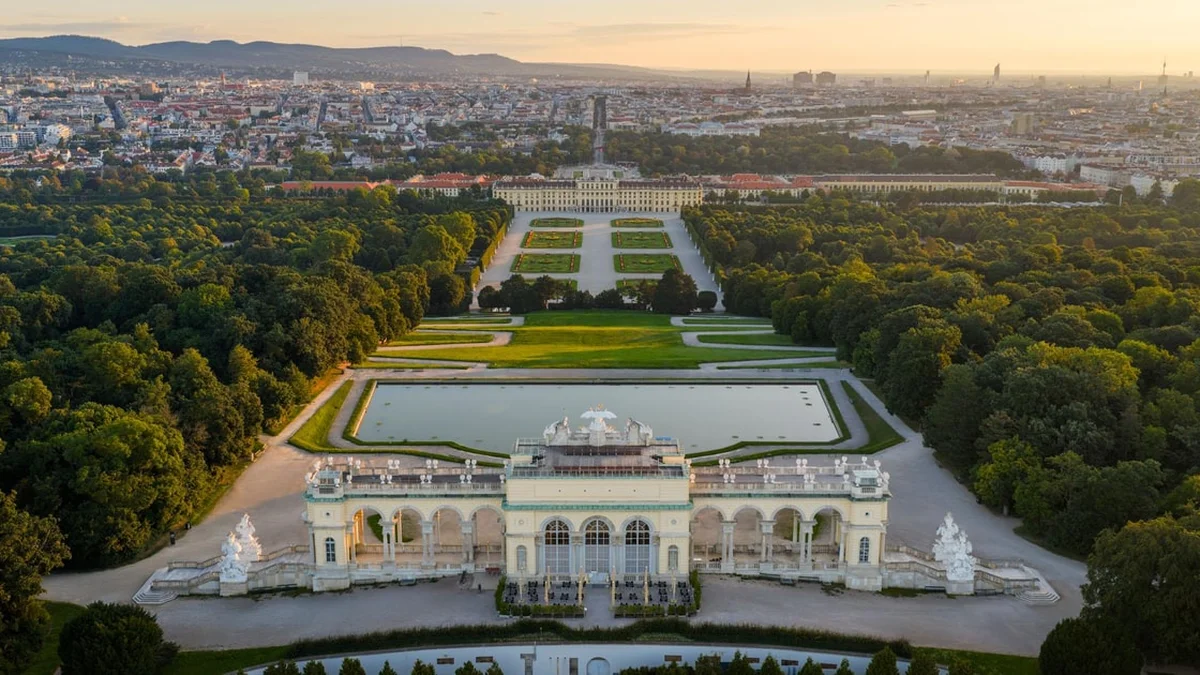
The summer residence of the Habsburg dynasty at Schönbrunner Schloßstraße 47, 1130 Vienna grew into one of the great Baroque palaces of Europe, with 1,441 rooms behind a honey colored facade. Emperor Franz Joseph was born here in 1830. The Palace Ticket leads through the full piano nobile in about 75 minutes with an audioguide included, from the Great Gallery to the Hall of Mirrors and the private rooms of Franz Joseph and Empress Elisabeth. The shorter State Apartments tour covers the ceremonial heart of the palace in about 40 minutes.
Outside, the gardens open free from sunrise to sunset. The Great Parterre runs in flower beds toward the Neptune Fountain, and the hill beyond climbs to the Gloriette, the colonnaded crown of the park. The Classic Pass adds the Privy Garden, the Maze and the Orangery Garden, and the zoo waits inside the same walls.
Do not miss
The walk up the Gloriette hill at the end of the visit. From the terrace, the palace, the parterre and the Vienna skyline line up in one frame.
Practical info
Tickets are sold with fixed admission times, so book the slot ahead on the official site. The Palace Ticket costs €42 for adults and €30 for children age 6 to 18; the State Apartments cost €30 and €20; the Classic Pass costs €49 and €36. Take U-Bahn line U4 to Schönbrunn station.
Tip: Book the first Palace Ticket slot of the day, tour the rooms before the crowds build, then give the gardens the rest of the morning.
Families and animal lovers. Among all the things to do in Vienna with kids, the zoo inside the Schönbrunn park ranks first.
Tiergarten Schönbrunn began in 1752 as an imperial menagerie, which makes it the oldest zoo in the world still in operation. More than 700 species live in the Baroque park setting, from giant pandas and elephants to koalas and Siberian tigers, with historic pavilions beside modern habitats like the rainforest house. Walking distances stay gentle for small children.
Do not miss
The giant pandas. Schönbrunn is one of the few zoos in Europe with pandas, and morning feeding hours give the best chance of seeing them awake.
Practical info
The zoo opens daily from 9:00 a.m., closing between 4:30 p.m. and 6:30 p.m. by season. Admission costs €29 for adults and €17 for children age 6 to 18; children under 6 enter free. Buy on the official site to skip the gate line. U-Bahn line U4 to Hietzing suits a combined palace day.
Tip: The Vienna City Card carries a zoo discount, and one child up to age 15 rides transport free per card. Run the numbers before buying separate tickets.
History lovers. The Hofburg is the imperial palace in the center of the city, a short walk from the cathedral.
For more than six centuries the Hofburg served as the winter residence and seat of power of the Habsburg dynasty, growing wing by wing into a small city of courtyards and state rooms. The day ticket joins three sights in one route: the Sisi Museum, the Imperial Apartments and the palace collections. The museum follows Empress Elisabeth, the famous Sisi, through her dresses, her poems and her exercise equipment. The Imperial Apartments then show the working and living rooms of Emperor Franz Joseph, kept close to the arrangement of his lifetime.
Do not miss
The audience chamber and the study of Franz Joseph in the Imperial Apartments. The plain desk of the emperor, who rose before dawn for sixty years of rule, says more about the dynasty than any throne room.
Practical info
The Sisi Museum and Imperial Apartments open daily from 9:00 a.m. to 5:30 p.m., last admission 4:30 p.m. The day ticket costs €20 for adults, €18 for students and €12 for children age 6 to 18, audioguide included. Take U-Bahn line U3 to Herrengasse. The museum has been under redesign, with the renewed Sisi Museum due to open on 19 November 2026, so check the official site before the visit.
Tip: The Hofburg courtyards stay open after the museums close, and an evening walk through the lit arcades costs nothing.
Every visitor. The cathedral is the symbol of Vienna and the anchor of the old town, and the nave costs nothing to enter.
St Stephen Cathedral at Stephansplatz 3, 1010 Vienna has stood at the center of the city since the first church on the site was consecrated in 1147. The Gothic rebuild began in 1359 under Duke Rudolf IV and raised the landmark Austrians call the Steffl: a South Tower of 136 meters and a roof of colored tiles laid in zigzag patterns and the imperial eagle. Inside, the stone pulpit, the carved high altar and the quiet side chapels carry eight centuries of city history.
Climb the 343 steps of the South Tower for the classic view over the rooftops, or ride the lift in the North Tower to stand beside the great bell. Below ground, guided tours of the catacombs explain the burial vaults of the dynasty.
Do not miss
The view of the tiled roof from the tower. The colored diamond pattern and the double eagle reveal their full design only from above, with the Ringstrasse, the Vienna Woods and the Danube beyond.
Practical info
The cathedral opens Monday to Saturday from 6:00 a.m. to 10:00 p.m. and Sundays and holidays from 7:00 a.m. to 10:00 p.m. The nave is free; the towers and catacombs charge a small fee, with tickets bought inside; no online ticket button for this sight. U-Bahn lines U1 and U3 stop at Stephansplatz outside.
Tip: Come early for the quiet nave, then return at dusk when floodlights pick out the tiled roof.
5. Belvedere Palaces and Gardens
Best for
Art lovers and garden walkers. The Belvedere pairs the most famous painting in Austria with one of the great Baroque gardens of Europe.
Prince Eugene of Savoy built the Belvedere as a summer palace on a gentle slope south of the center.
Two palaces face each other across terraced gardens of fountains and clipped hedges: the Lower Belvedere, his residence, and the Upper Belvedere, built for display. The Upper Belvedere now holds the national gallery of Austrian art, and one room draws visitors from every continent: the hall with The Kiss by Gustav Klimt, the golden painting that became the emblem of art in Vienna.
The gardens between the palaces are free, sloping down with views back to the cathedral tower, and Belvedere 21 adds contemporary art near the main station.
Do not miss
The Marble Hall of the Upper Belvedere, where the Austrian State Treaty was signed in 1955, and the garden axis at golden hour.
Practical info
Tickets run on time slots at all venues, so book ahead on the official site. Upper Belvedere €23, Lower Belvedere €20, Belvedere 21 €12; a 2 in 1 day ticket costs €32 and a 3 in 1 costs €34. The complex stands a short walk from Wien Hauptbahnhof, with tram line D at the garden gates.
Tip: Enter the Upper Belvedere in the morning for The Kiss before the tour groups arrive, then walk downhill through the free gardens.
Art and history at the highest level. The Kunsthistorisches Museum holds the art collection of the Habsburg dynasty, assembled over five centuries.
The museum faces its twin, the Natural History Museum, across Maria Theresien Platz on the Ringstrasse: a domed palace of marble staircases and painted ceilings. The Picture Gallery holds the largest collection of paintings by Pieter Bruegel the Elder in the world, alongside rooms of Vermeer, Raphael, Rubens, Velázquez and Caravaggio. The Kunstkammer displays the goldsmith treasures of the dynasty, crowned by the Saliera of Benvenuto Cellini, a salt cellar of gold and enamel famous across Europe.
Do not miss
The Bruegel room. The Tower of Babel, The Hunters in the Snow and The Peasant Wedding hang together in one gallery, the finest single room of Northern Renaissance painting anywhere.
Practical info
The museum opens daily from 10:00 a.m. to 6:00 p.m., Thursdays until 9:00 p.m., with time slot entry since September 2026. Admission costs €22 online and €24 on site, reduced €19 and €20, and visitors under 19 enter free. Buy only through the official ticket shop; the museum warns about fake ticket websites. U-Bahn lines U2 and U3 stop at Volkstheater.
Tip: Thursday evening opening runs late and quiet, and the dome cafe makes an elegant pause between floors.
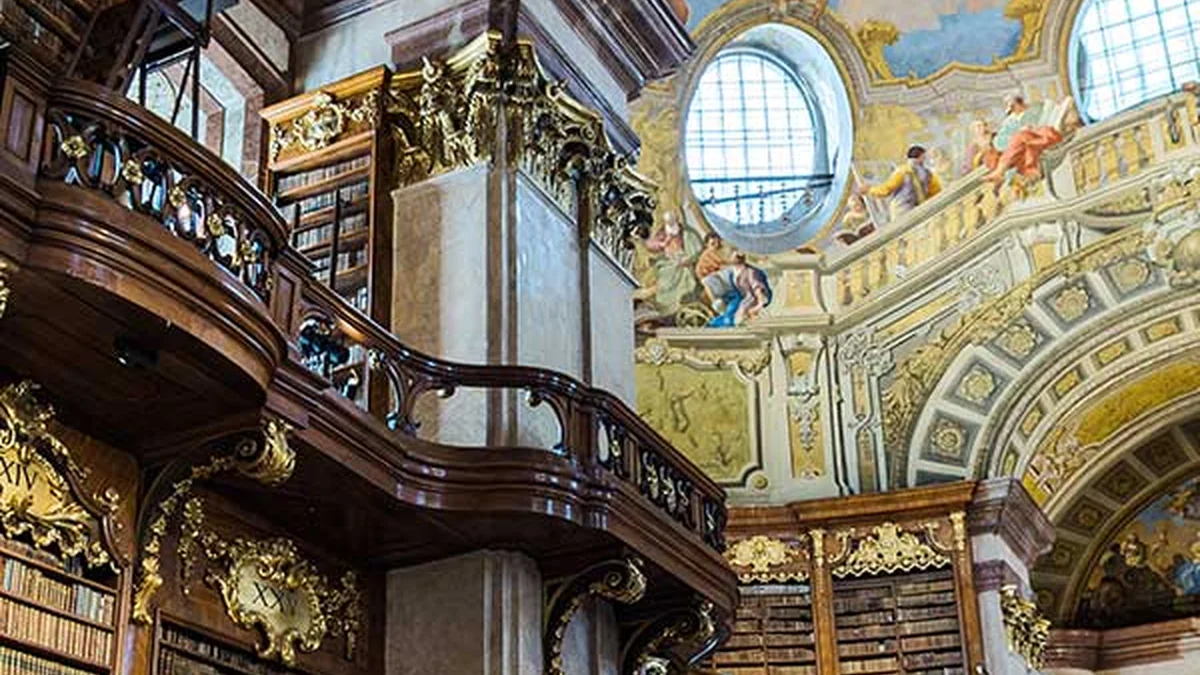
Architecture lovers and book lovers. The State Hall is one of the most beautiful library rooms in the world, hidden inside the Hofburg palace.
Emperor Charles VI ordered the hall built between 1723 and 1737 as the court library: a room almost 80 meters long and 20 meters high, lined with walnut shelves holding around 200,000 historical books printed between 1501 and 1850. Four Venetian globes over a meter in diameter guard the central oval, the dome frescoes of Daniel Gran celebrate the emperor as a patron of learning, and a marble statue of Charles VI stands at the center.
Along the shelves rests the collection of Prince Eugene of Savoy, some 15,000 volumes bound in red, blue and yellow leather, and rotating exhibitions place rare manuscripts in cases along the hall.
Do not miss
The central oval under the dome. Stand at the statue of Charles VI and look both ways: the shelves, the globes and the frescoes align in one view.
Practical info
The State Hall stands at Josefsplatz 1, 1010 Vienna, inside the Hofburg. Hours follow a seasonal pattern: generally Tuesday to Sunday to 6:00 p.m., Thursdays until 9:00 p.m., closed Mondays in the October to May season and open daily in summer; check the official page before the visit. Visitors under 19 enter free.
Tip: Combine the State Hall with the Sisi Museum on one morning. Both stand inside the Hofburg.
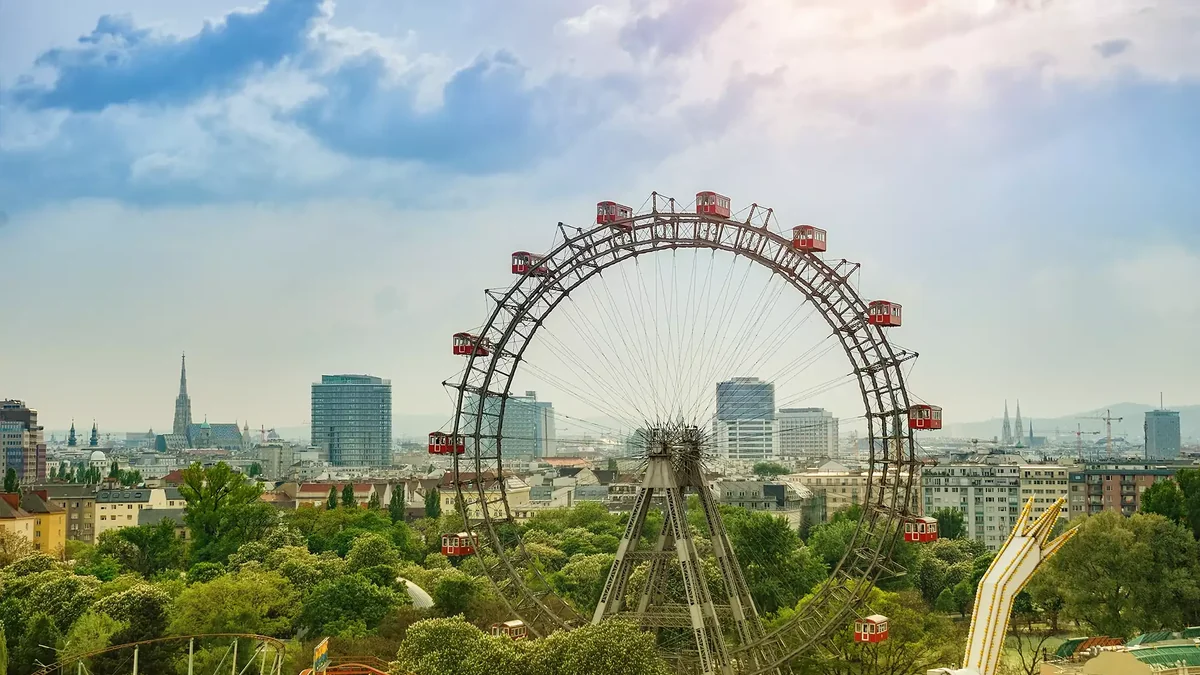
Families, evening views and fresh air. The Prater is the great green playground of Vienna, and the Giant Ferris Wheel turns above its entrance.
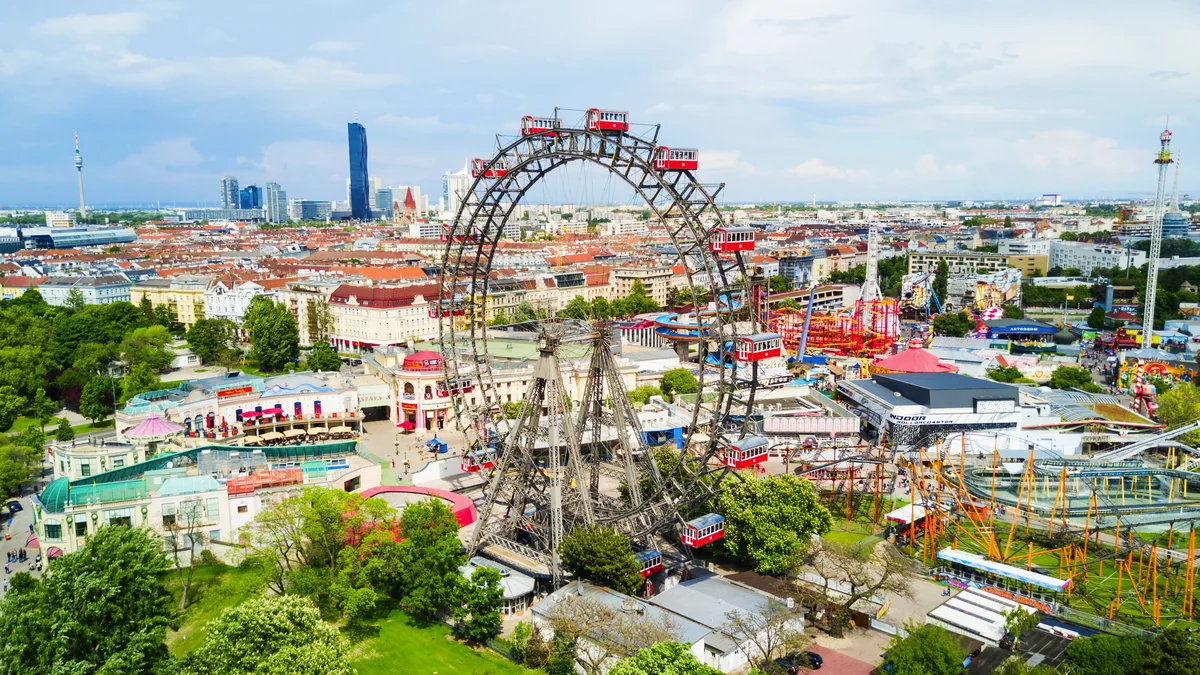
The wheel, the Riesenrad, has turned at Riesenradplatz 1, 1020 Vienna since 1897, when it rose for the golden jubilee of Emperor Franz Joseph. At nearly 65 meters high, a full turn of about 12 to 15 minutes in the red cabins gives a gentle panorama from the Vienna Woods to the Danube. Around it spread the park rides and the wider green Prater of meadows and chestnut avenues.
The park costs nothing to enter, and each ride charges separately, so families control the spend ride by ride. Sunset is the classic hour for the wheel, when the cabins catch the light and the city turns gold below.
Do not miss
A full turn of the wheel at dusk. The slow rotation, the red cabins and the lights of the park below give children the Vienna ride they remember longest.
Practical info
Entry to the Prater grounds is free; the wheel and each ride charge individually, at the entrance and on the official wheel site. U-Bahn lines U1 and U2 stop at Praterstern. Allow two to three hours for the wheel and a park walk.
Tip: Ride the wheel first, then walk the main avenue into the quiet green end of the park, away from the entrance crowds.
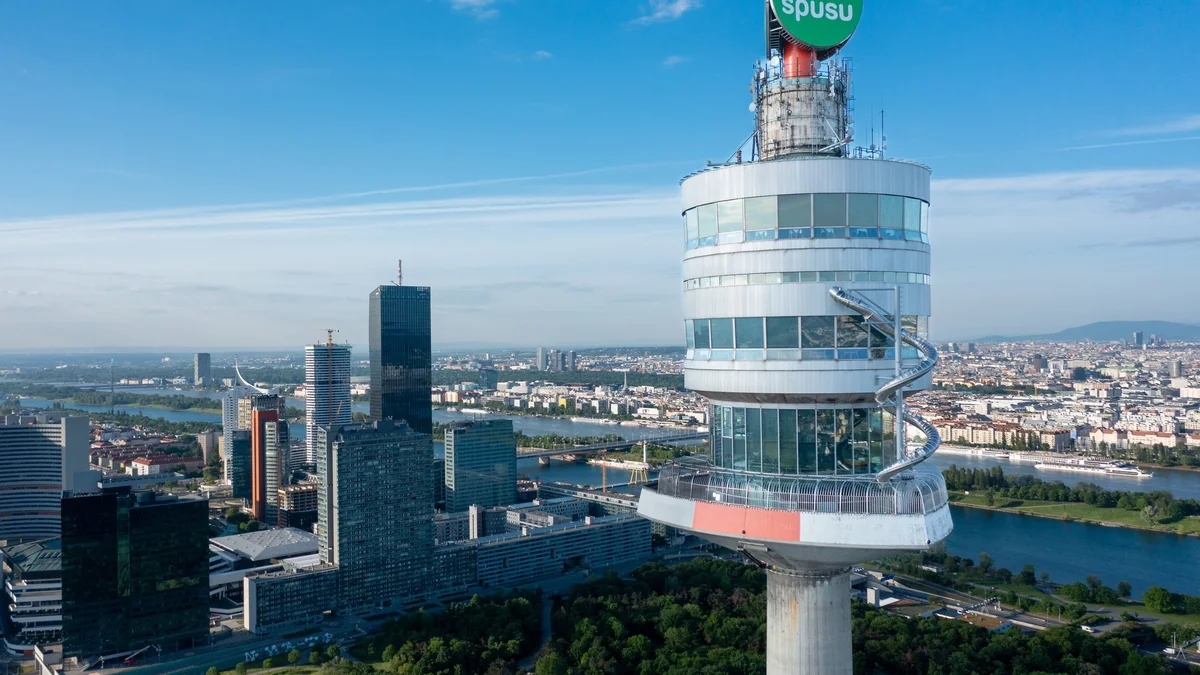
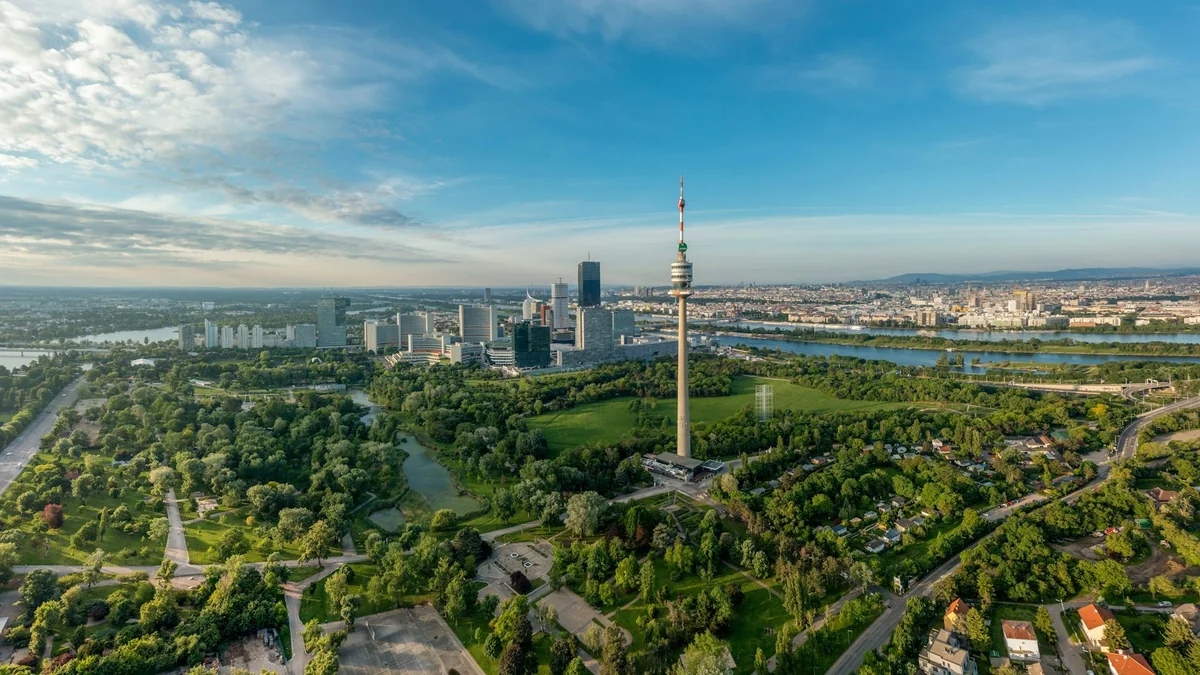
The highest viewpoint in Austria, with a calm green park across the river at its base.
The Donauturm at Donauturmplatz 1, 1220 Vienna rises 252 meters over the Donaupark, which makes it the tallest structure in Austria. Built in 1964 for the Vienna International Garden Show, the tower lifts visitors by express lift to an observation terrace at 150 meters in just 35 seconds. From the terrace the city spreads in full: the old town towers, the loops of the Danube, the Vienna Woods on the horizon and the park below.
A revolving restaurant and a cafe turn slowly at 170 and 160 meters, so a coffee comes with a full rotation over the panorama, in a park setting away from the museum crowds.
Do not miss
A clear morning visit, when the terrace reads like a map and the Danube bends and the skyline pick out in sharp detail.
Practical info
The tower opens from 10:00 in the morning until late in the evening. Tickets cost €18 online with fast lane entry and €19.90 on site, per the official city tourism listing. Take U-Bahn line U1 to Kaisermühlen, then a short bus ride or a walk through the Donaupark.
Tip: Buy the online ticket with fast lane entry on fine weekends; the lift line is the only slow part of the visit.
Photographers, design lovers and anyone who enjoys a building that refuses every straight line. The Hundertwasserhaus is the joyful counterpoint to the imperial city.
At Kegelgasse 34 to 38 and Löwengasse 41 to 43, 1030 Vienna, the artist Friedensreich Hundertwasser worked with the architect Josef Krawina in the mid 1980s to build a block of flats unlike any other in Europe. The facade erupts in color blocks, onion domes and mismatched windows, and more than 200 trees and shrubs grow from the building, with tree tenants leaning from the windows in green crowns. Hundertwasser believed a house should belong to nature and to the people inside it.
The flats are private homes, so viewing happens from the street, free at any hour. The Kunst Haus Wien, a short walk away, holds the paintings behind the facade.
Do not miss
The corner view from Löwengasse, where the full wave of the facade, the domes and the window trees stack into the famous postcard angle.
Practical info
The house is a street sight with no tickets and no hours; arrive in the morning for the facade in full sun. Tram lines 1 and O stop at Hetzgasse, and U-Bahn lines U3 and U4 stop at Landstraße. The Kunst Haus Wien carries its own admission and hours.
Tip: Photograph from across the street, then walk both side streets. Each face of the building carries a different color scheme.
11. Naschmarkt
Best for
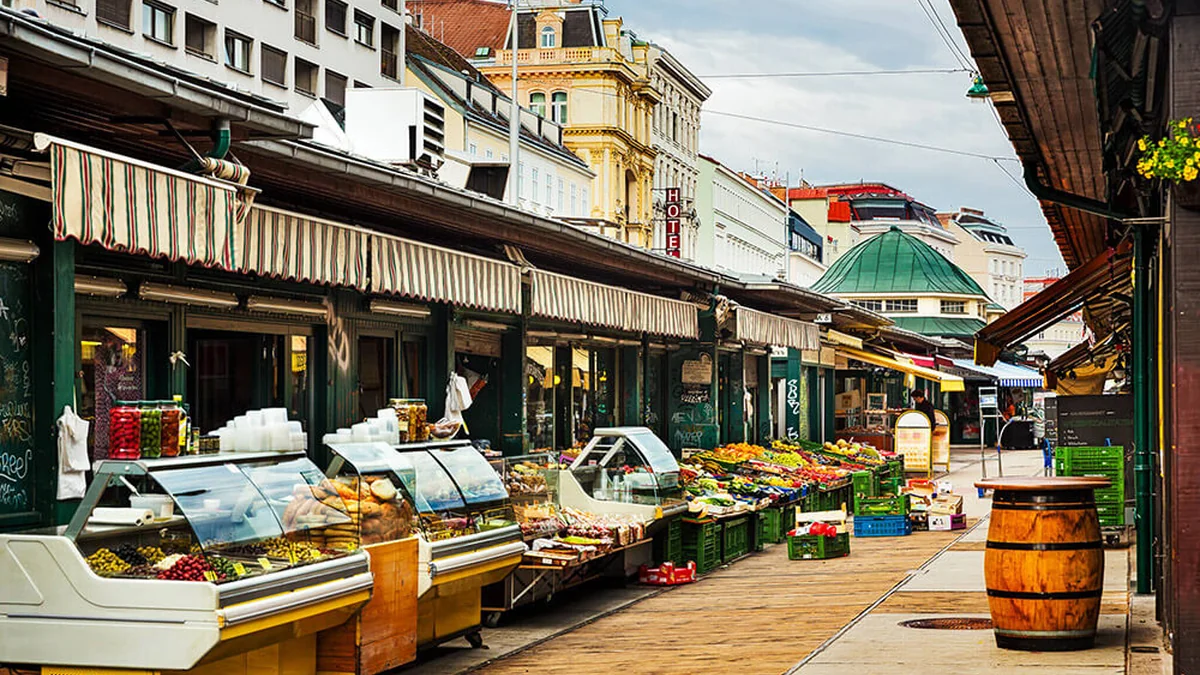
Food lovers, cooks and families grazing their way through lunch. The Naschmarkt is the great open air market of Vienna and the tastiest walk in the city.
More than 120 stalls line the Wienzeile in the 6th district, running between Karlsplatz and Kettenbrückengasse in a river of color and smell: pyramids of spices, dried fruits and nuts, olives and cheeses, bakeries, and produce from Austrian farms beside goods from across the Mediterranean and the Middle East. Turkish and Middle Eastern stalls anchor the mix, with halal friendly ingredients easy to find, from stuffed vine leaves to sweets, dates and fresh flatbreads. The name of the market comes from the word naschen, to nibble, and the stalls encourage exactly that.
Come hungry and treat the lanes as a progressive lunch, tasting from stall to stall, then sit down at one of the small market kitchens for a full plate. On Saturdays a flea market joins the food stalls. Note the rhythm: the stalls rest on Sundays.
Do not miss
The spice stalls and the dried fruit rows near the middle of the market, where saffron, sumac, dried apricots and stuffed dates make the best edible souvenirs.
Practical info
The stalls open Monday to Friday from 6:00 a.m. to 9:00 p.m. and Saturday to 6:00 p.m., closing on Sundays; the flea market starts at 6:30 a.m. Entry is free and no ticket exists, so the market carries no button in this guide. Carry cash for small stalls. U-Bahn line U4 stops at Kettenbrückengasse; lines U1, U2 and U4 meet at Karlsplatz.
Tip: Buy small amounts from many stalls: dried apricots here, cheese there, warm bread at the next stall. The market rewards grazing.
More Worth Your Time
Kunst Haus Wien
A short walk from the Hundertwasserhaus at Untere Weißgerberstraße 13, the museum founded by Hundertwasser in 1991 shows his paintings and architectural models inside a former furniture factory rebuilt in his style. Pair it with the house for the full story of the artist.
Vienna State Opera House
The opera house on the Ringstrasse, opened in 1869 as the first great public building of the boulevard, rewards a look from outside: arcaded loggias and a facade that sets the tone of the whole ring. Daytime guided tours show the architecture and the history of the house from inside.
A Ringstrasse Tram Ride
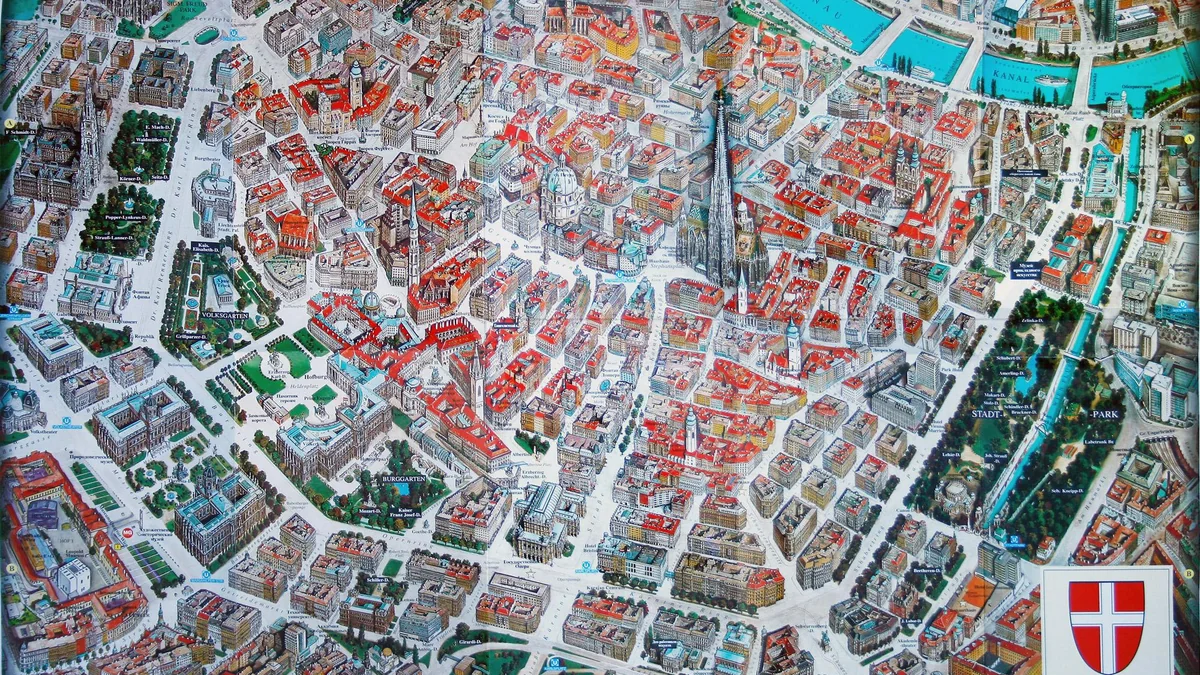
Tram lines 1 and 2 loop the boulevard that replaced the city walls, passing the Parliament, the City Hall, the University and the museum quarter in one slow circuit. Ride the full loop early in the trip; the ring gives the map of Vienna in a single ride.
Work the old town on foot: St Stephen Cathedral early, the Hofburg and the Sisi Museum mid morning, the State Hall after lunch, then a Ringstrasse tram loop and the lit palace courtyards at evening.
2 Days
Day 1 as the old town route. Day 2: the Palace Ticket at Schönbrunn at opening time, the gardens and the Gloriette, then Schönbrunn Zoo for the afternoon.
3 Days
This vienna 3 day itinerary adds the art and the river: the Upper Belvedere for The Kiss, the Kunsthistorisches Museum after lunch, the Naschmarkt for grazing, the Prater wheel at dusk, and the Danube Tower on a clear final morning.
Book Your Vienna Tickets Online
Skip the ticket lines and book in advance. Every link below goes to the official ticket page for that attraction.
The best area to stay in Vienna depends on the shape of the trip. The Innere Stadt puts the cathedral, the Hofburg and the museums on foot. Hietzing in the west suits families living at Schönbrunn and the zoo. The Hauptbahnhof and Belvedere quarter trades old town romance for modern hotels, quick airport trains and gentle rates.
Area
Best For
Vibe
Innere Stadt, the 1st district
First time visitors and short stays
The cathedral, the Hofburg, the Ringstrasse and the coffee houses within a short walk
Hietzing and Schönbrunn, the 13th district
Families and palace focused trips
Leafy streets beside the palace gardens and the zoo, with U4 trains to the center
Hauptbahnhof and Belvedere quarter
Value, rail arrivals and day trips
Modern hotels near the main station, the Belvedere gardens and direct airport trains
Mariahilf and Neubau, the 6th and 7th districts
Shopping and halal food on the doorstep
The Mariahilfer Straße shopping mile, the Naschmarkt nearby and halal kitchens on the side streets
Two verified hotels cover the classic bases: one grand address in the center, one family base at the palace. Open each official page for live rates.
Hotel Sacher Wien, Philharmonikerstraße 4, 1010 Vienna. The family run five star landmark beside the State Opera, welcoming guests since 1876 and home of the Original Sacher Torte. A family program with a discount on a second room for children suits a central luxury base.
Austria Trend Parkhotel Schönbrunn, Hietzinger Hauptstraße 10 to 14, 1130 Vienna. A four star superior hotel in a former imperial guesthouse at the gates of the palace, minutes from the gardens and the zoo, with U-Bahn line U4 at Hietzing.
Vienna feeds a halal traveler better than almost any capital in Central Europe. Generations of Turkish, Arab, Persian and Balkan families built the food scene of whole districts, and halal certification is overseen by the Islamic Religious Community in Austria. Add the coffee house culture, where a slow hour over a melange and a slice of cake counts as a meal in itself. Travelers who plan whole journeys around food will enjoy our guide to how food tourism is shaping modern travel.
Halal Food in Vienna
On the great shopping mile, Restaurant Türkis at Mariahilfer Straße 22 to 24, 1070 Vienna serves a halal certified Turkish kitchen of grills, shawarma, falafel and hummus near the museum quarter, the easiest halal lunch of the sightseeing day. For a Persian table, Pars at Lerchenfelderstraße 148, 1080 Vienna serves full halal food: kababs, slow stews and mixed platters west of the center.
In Ottakring, the 16th district, Kent Restaurant on Brunnengasse, steps from the Brunnenmarkt, is a Turkish institution serving generous grills and family platters. The Brunnenmarkt runs along the same street with more than 170 vendors over nearly a kilometer: halal butchers, döner and lahmacun counters, burek bakeries and Middle Eastern groceries, open Monday to Friday from 6:00 a.m. to 6:30 p.m. and Saturday to 5:00 p.m. Favoriten and Ottakring hold the densest halal scenes in the city.
Local Dishes to Try
The classic plate of the city is Wiener Schnitzel, a veal cutlet in golden breadcrumbs with parsley potatoes and lemon. Tafelspitz follows close behind: beef simmered in broth, carved at the table with horseradish and apple. For sweet courses, order Apfelstrudel with vanilla sauce, Kaiserschmarrn, the shredded caramel pancake with plum compote, and the Original Sacher Torte in a coffee house with marble tables. A melange, half coffee and half steamed milk under foam, is the house drink of the culture.
Mosques and Prayer Facilities in Vienna
Vienna holds one of the oldest established Muslim communities in Western Europe, with prayer space from the grand mosque in the north to small masjids and prayer rooms in nearly every district.
The anchor is the Islamic Centre Vienna at Am Bruckhaufen 3, 1210 Vienna in Floridsdorf, across the Danube. Opened on 20 November 1979, it is the largest mosque in Austria and the only purpose built mosque with a minaret in Vienna, a 32 meter tower beside a dome of 20 meters in diameter, with a library, classrooms and a hall on a site of 8,300 square meters. U-Bahn line U6 to Floridsdorf or Neue Donau leaves a short walk to the gates. Friday prayer draws the largest congregation of the week, so arrive early.
Getting Around Vienna
Option
Best For
Typical Cost
City Airport Train (CAT)
The fastest airport link, non stop to Wien Mitte
€14.90 one way; €24.90 return
Railjet and S7 trains
Airport trains to the main station and Wien Mitte
A few euros on the ÖBB city fare
U-Bahn, trams and buses
Every sight in the city on one ticket
€3.00 digital single; 24 hour ticket €10.20
Vienna City Card
Transport plus discounts at more than 200 sights
24 hours €19; 48 hours €31; 72 hours €37
Walking
The old town, the Ringstrasse and the museum quarter
Free
Trams 1 and 2
The Ringstrasse loop past the great buildings
Covered by any city ticket or pass
Vienna International Airport has no U-Bahn station, so trains carry the airport run. The City Airport Train runs non stop to Wien Mitte in 16 minutes, Railjet trains reach Wien Hauptbahnhof in about 15 minutes, and the S7 stopping service reaches Wien Mitte in about 25 minutes. Check the official airport train pages for the current pattern before travel.
Inside the city, U-Bahn trains, trams and buses run on a single ticket system. Since January 2026 a single ticket costs €3.20 on paper and €3.00 digital, a 24 hour ticket costs €10.20, children under 6 ride free, and children under 15 ride free on Sundays, public holidays and Vienna school holidays. The Vienna City Card adds unlimited transport to discounts at more than 200 sights, one child to age 15 free per card, and pays for itself fast on a palace heavy itinerary.
How Much Does a Trip to Vienna Cost?
Item
Typical Cost
Schönbrunn Palace Ticket
€42 per adult; €30 per child age 6 to 18
Schönbrunn Zoo
€29 per adult; €17 per child; under 6 free
Upper Belvedere
€23 per adult; palace gardens free
Kunsthistorisches Museum
€22 online; under 19 free
Vienna City Card, 24 hours
€19 per adult; one child to age 15 free
City Airport Train
€14.90 one way; €24.90 return
Halal lunch
€12 to €20 per person at Turkish and Persian kitchens
Mid range hotel
€120 to €220 per night depending on season
Top free sights
The gardens of Schönbrunn and Belvedere, the cathedral nave, Hundertwasserhaus and the Naschmarkt lanes cost nothing
Anchor each day with one paid palace or museum, lean on the free gardens and the under 19 entries, and eat at the halal kitchens of Mariahilf and Ottakring, and Vienna stays gentle on the wallet.
Best Time to Visit Vienna
Season
Months
What to Expect
Spring
March to May
Mild days, chestnut trees in flower along the Prater avenue, the palace gardens at their freshest, thinner crowds
Summer
June to August
Long warm days, the gardens in full leaf, early starts for the zoo and the palace, evening light on the Ringstrasse
Autumn
September to November
Golden parks, soft light for photography, comfortable museum weather, calmer ticket lines
Winter
December to February
Cold short days, quiet museums, coffee houses at their coziest and the lowest hotel rates of the year
The best time to visit Vienna for most travelers is May and June, when the gardens bloom and the days run long, ahead of the summer peak. September runs a close second with golden parks and calm museums. July and August bring heat and the longest lines at Schönbrunn, which early time slots solve. Winter suits a museum and coffee house trip at low rates.
Day Trips from Vienna
Melk Abbey and the Wachau Valley
About one hour by train west of Vienna, the Wachau Valley carries the Danube between terraced vineyards and apricot orchards under the protection of UNESCO, and the golden abbey of Melk crowns the western gate of the valley on a rock above the river. The Benedictine abbey fills its hilltop with a marble hall, a library of medieval manuscripts and a church of gold and frescoes. Downstream, Dürnstein stacks its blue abbey tower under a ruined castle on the cliff. Trains run toward Melk through St Pölten.
Bratislava
About one hour by train from Wien Hauptbahnhof, the capital of Slovakia waits across the border with a second old town, a second cathedral and a white castle on a hill over the Danube. Bratislava makes the easiest international day trip from Vienna: trains run through the day, the old town is compact and walkable, and the ride home returns in time for dinner. Carry passports or identity documents for the border crossing.
Hallstatt
Hallstatt is the long haul option, a lakeside village under the Dachstein mountains where pastel houses climb from the water and salt mining shaped the valley for thousands of years. The train ride runs about three and a half hours each way with a change, so treat Hallstatt as a dawn start or an overnight. The village rewards the effort with the most photographed lake view in Austria.
Practical Tips for Visiting Vienna
Good to Know
Schönbrunn runs on fixed admission times. Book the Palace Ticket slot ahead on the official site; same day slots sell out in summer.
Visitors under 19 enter the Kunsthistorisches Museum and the State Hall free, a real saving for families with teenagers.
The Vienna City Card lets one child up to age 15 travel free per card and discounts more than 200 sights, Schönbrunn included.
Most shops close on Sundays. Plan souvenir runs for Saturday, and give Sundays to the palaces, parks and the zoo, which all open.
Good to Avoid
Do not buy Kunsthistorisches Museum tickets from unofficial websites. The museum warns about fake sellers; use only the official shop.
Do not plan the Naschmarkt or the Brunnenmarkt for a Sunday. Both markets rest on Sundays, and the lanes stand empty.
Do not try to do Schönbrunn Palace, the zoo and a museum marathon in one day with small children. The park alone fills a happy day.
Do not use parked fan sites for the Ferris wheel. The official site is wienerriesenrad.com; book there or at the entrance.
Final Thoughts
Vienna gives a family the rare capital that runs at a gentle pace. A palace of 1,441 rooms in the morning, pandas in the oldest zoo in the world at noon, The Kiss and a golden library hall in the afternoon, and a slow turn of the great wheel as the city lights come on. Add halal kitchens in every district, the great mosque across the river and airport trains of 16 minutes, and the city earns a full three days of any Europe trip. Book the palace slots early, and let the Danube set the rhythm.
What are the best things to do in Vienna for first-time visitors?
Start with Schönbrunn Palace and its gardens, St Stephen Cathedral, the Hofburg with the Sisi Museum, and the Upper Belvedere for The Kiss by Klimt. Add the Kunsthistorisches Museum, a Ringstrasse tram loop and an evening ride on the Giant Ferris Wheel.
What are the best things to do in Vienna with kids?
Schönbrunn Zoo leads the list, with giant pandas, elephants and more than 700 species in the palace park. Children also love the Giant Ferris Wheel at the Prater, the terrace of the Danube Tower, the maze at Schönbrunn and grazing through the Naschmarkt stalls. Under 19s enter the Kunsthistorisches Museum and the State Hall free.
How much do Schönbrunn Palace tickets cost?
The Palace Ticket, the full tour with audioguide, costs €42 for adults and €30 for children age 6 to 18. The State Apartments tour costs €30 and €20, and the Classic Pass, which adds the Privy Garden, the Maze, the Orangery Garden and the Gloriette terrace, costs €49 and €36. Tickets carry fixed admission times and sell through the official imperial ticket platform.
How many days do you need in Vienna?
Two days cover the old town, the Hofburg, the cathedral and a palace day at Schönbrunn with the zoo. A vienna 3 day itinerary adds the Belvedere, the Kunsthistorisches Museum, the Naschmarkt and the Danube Tower, and four days open a day trip to the Wachau Valley or Bratislava.
What is the best time to visit Vienna?
May and June bring gardens in full bloom, long days and warm weather before the summer peak. September offers golden parks and calmer museums. Summer suits the zoo and the Prater with early starts, while winter is the quiet season of low rates and empty galleries.
Where can you find halal food in Vienna?
Halal food in Vienna is easy to find. Restaurant Türkis on Mariahilfer Straße serves halal certified Turkish food near the museum quarter, Pars on Lerchenfelderstraße serves full halal Persian dishes, and Ottakring around the Brunnenmarkt holds halal butchers, bakeries and grills. Favoriten carries the densest halal scene of all.
How do you get from Vienna Airport to the city center?
Trains run the whole route. The City Airport Train reaches Wien Mitte non stop in 16 minutes for €14.90 one way, Railjet trains reach Wien Hauptbahnhof in about 15 minutes, and the S7 reaches Wien Mitte in about 25 minutes on the city fare. Taxis wait outside the arrivals hall.
Talha Habib runs The Travel Radiance and writes practical travel guides to help readers plan family-friendly trips with confidence — from where to stay and what to see to how to get around.
Graz greets you with a puzzle. A medieval clock tower stands on a green hill, its big hand pointing at the hour and its small hand at the minutes, the wrong way round on purpose. Below the hill, a smooth blue creature the size of a ship seems to have landed beside the river: the…
The train from Vienna slows beside the Salzach river, and there it is: a pale stone fortress spread along a green ridge, watching over a skyline of domes and Baroque towers. Salzburg is a small city with an outsized silhouette, and the list of things to do in Salzburg starts with that view. Below the…
The boat pulls away from the little station pier, and Hallstatt rises out of the morning mist across the water: a spill of steep roofs, two church towers and a waterfall of lanes between the lake and the rock. The list of things to do in Hallstatt starts with that crossing. Behind the postcard view…
Zell am See lives inside a postcard it did not have to invent. The town curls around the western shore of Lake Zell, a deep blue ribbon of water, while behind the rooftops the ground climbs from the Schmittenhöhe straight up to the ice of the Kitzsteinhorn. Few towns in Austria pack three landscapes into…
Most cities make you choose between the old town and the mountains. Innsbruck does not. You can stand in a medieval lane before a roof of gilded copper, then ride a funicular and two cable cars to a summit more than 2,300 metres above the sea, all between breakfast and lunch. The capital of Tyrol…
















3 Comments