
Things to Do in Cairo: The Pyramids of Giza, the Grand Egyptian Museum and the Minarets of Islamic Cairo
Cairo is a city with two birthdays: the pharaohs raised their tombs on its desert edge more than four thousand years ago, and the caliphs built a second city of domes and minarets beside the Nile a thousand years back. The best things to do in Cairo reward travellers who give both cities their own…
Cairo is a city with two birthdays: the pharaohs raised their tombs on its desert edge more than four thousand years ago, and the caliphs built a second city of domes and minarets beside the Nile a thousand years back. The best things to do in Cairo reward travellers who give both cities their own days.
This guide plans the city the practical way: the eight sights that matter most, and verified ticket prices in Egyptian pounds from official pages. Cairo also works beautifully for Muslim and family travellers, because halal food is the everyday norm.
Cairo at a Glance

| Detail | What to Know |
|---|---|
| Country | Egypt |
| Region | North Africa, where the Nile valley opens into the delta |
| Best for | First time visitors, history lovers, families and photographers |
| Famous for | The Pyramids of Giza, the Grand Egyptian Museum and a thousand years of Islamic architecture |
| Currency | Egyptian pound (EGP); cards accepted at the main sites |
| Getting around | Metro, ride hailing apps, taxis and the Giza shuttle loop |
| Halal food | The local norm across the city, mapped below |
| Prayer | Mosques in every district; Al-Azhar, Sultan Hassan, Ibn Tulun and Amr ibn al-As mapped below |
Quick Picks
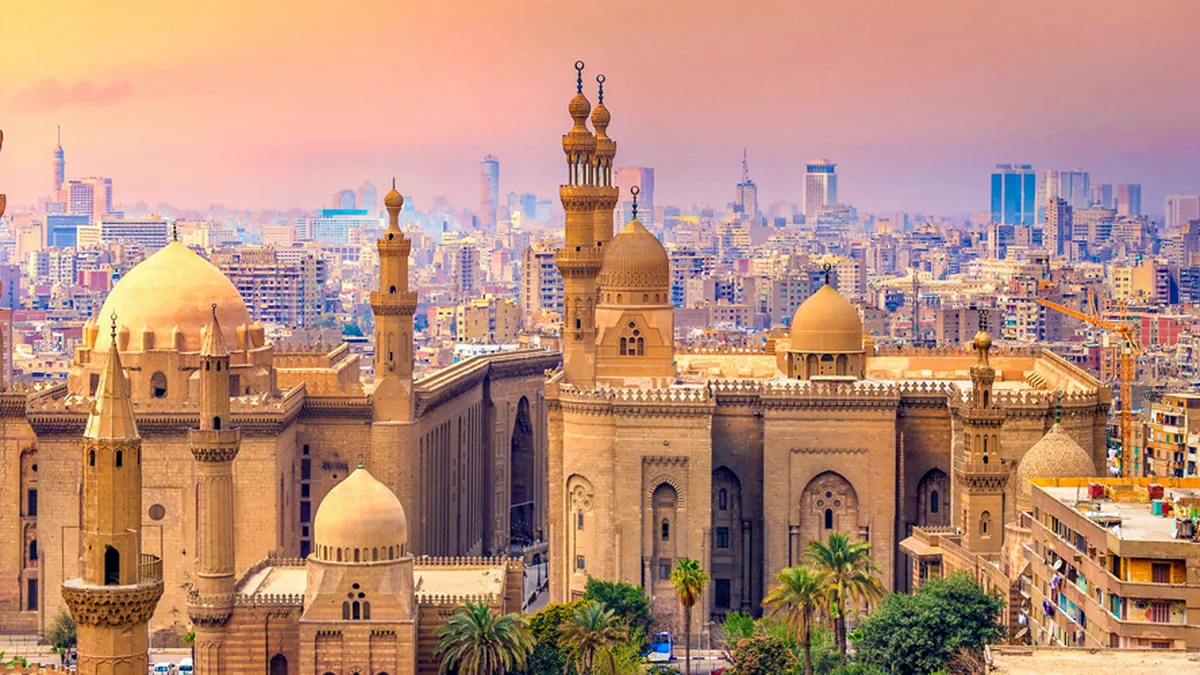
Best Iconic Sights

- The Pyramids of Giza and the Great Sphinx
- The Grand Egyptian Museum
- The Mosque of Muhammad Ali at the Citadel
- Khan el-Khalili bazaar at dusk
Best for Families

- The Grand Egyptian Museum and its Grand Staircase
- Al-Azhar Park lawns and terraces
- The Giza shuttle loop and the Panorama viewpoint
- Coptic Cairo and the fortress lanes of Mar Girgis
Best Free and Low Cost

- Khan el-Khalili lanes, free at every hour
- The churches and synagogue of Coptic Cairo, free
- The Mosque of Ibn Tulun and Al-Azhar Mosque, free
- Al-Azhar Park from 150 EGP
The Top Things to Do in Cairo
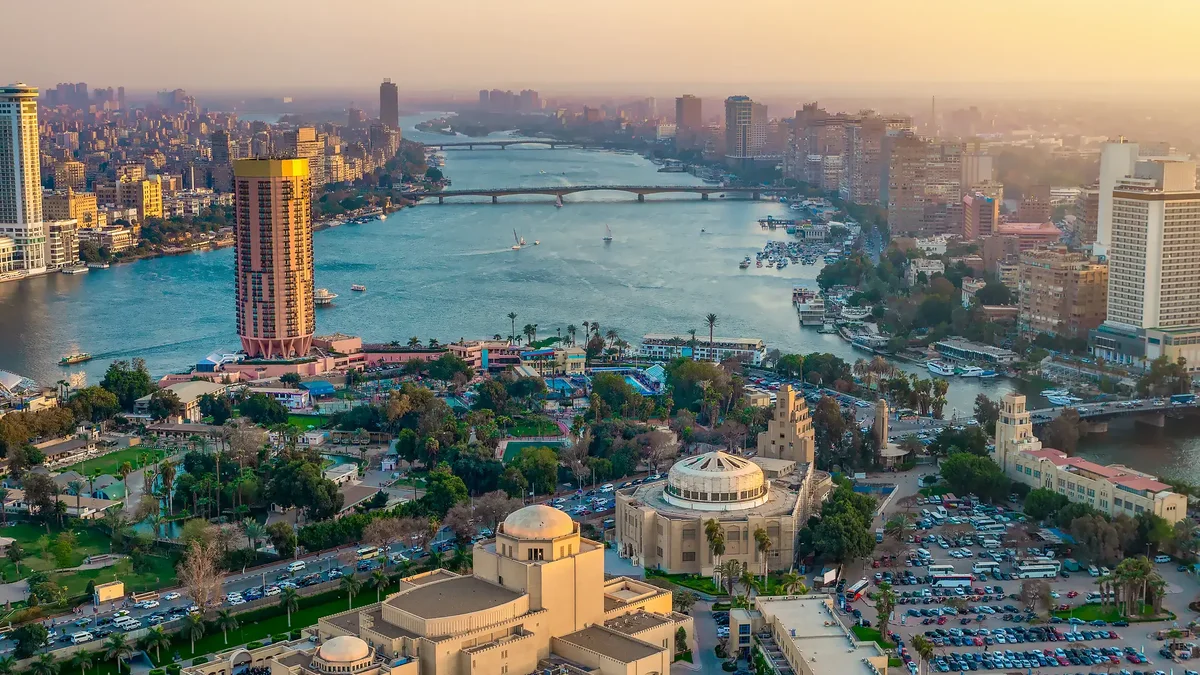
The eight experiences below are ranked in the order most first time visitors should meet them. Prices are the adult rates on the official pages checked for this guide. The halal kitchens are mapped in the Where to Eat section; readers planning a food led trip will also enjoy our guide to how food tourism is shaping modern travel.
1. The Pyramids of Giza and the Great Sphinx: The Last Wonder of the Ancient World

Best for
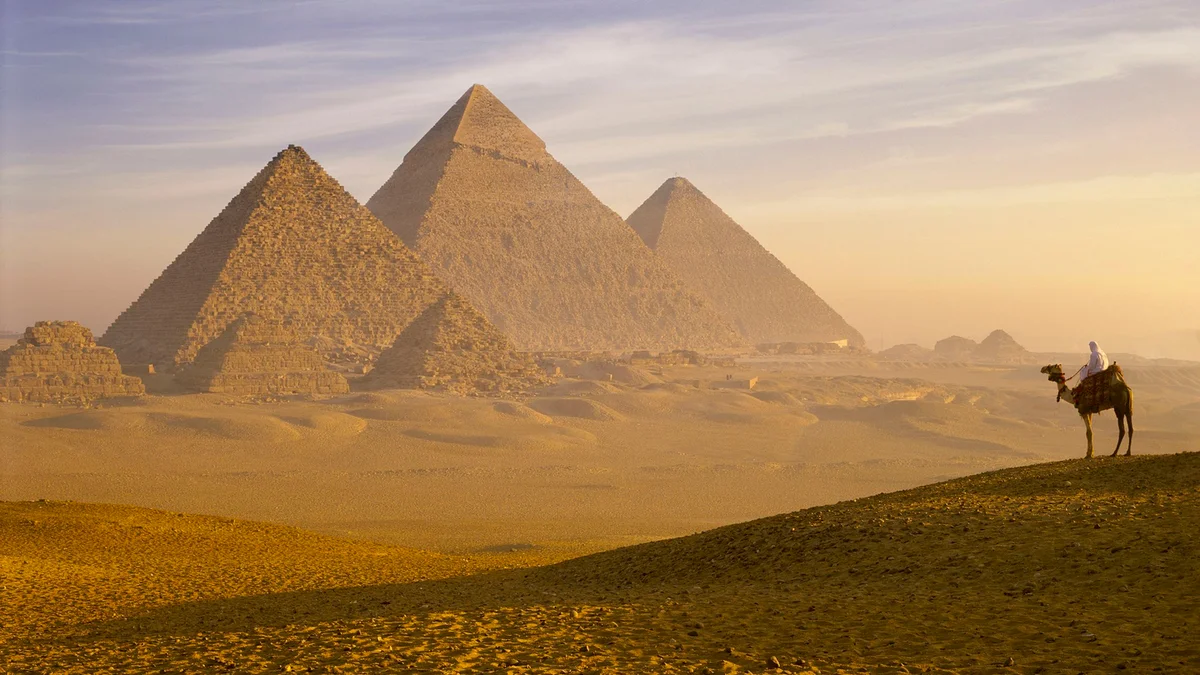
The essential first morning in Egypt; come at opening time and give the plateau half a day.
Address: Giza Plateau, Al Haram, Giza. The main entry is the Great Gate visitor centre on the Cairo to Fayoum Road.
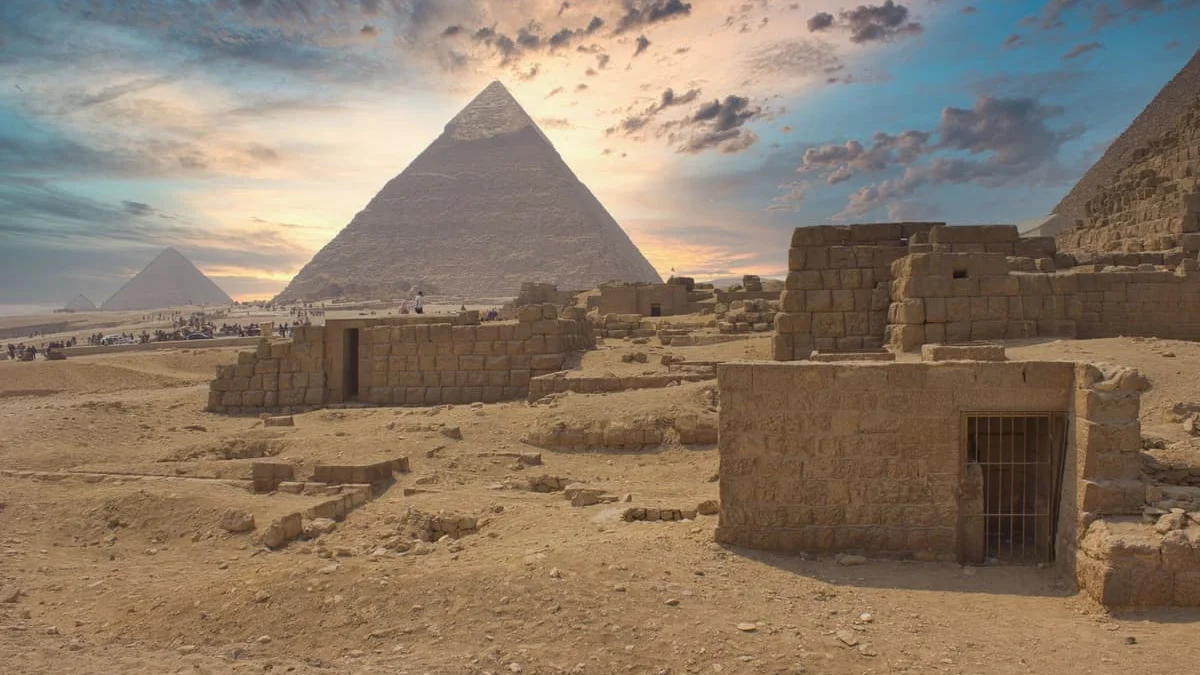
Three kings of the Fourth Dynasty raised their tombs here between about 2580 and 2510 BC: Khufu, Khafre and Menkaure. The Great Pyramid of Khufu stood 146.5 metres high, built from about 2.3 million blocks, the tallest structure built by human hands for more than 3,800 years. The pyramid of Khafre still wears a cap of smooth casing stone at its peak, and the Great Sphinx, a lion with the face of a king, guards the valley below, 73 metres long and 20 metres high.
The plateau works differently now. Private cars and tour coaches no longer enter; visitors pass through the Great Gate visitor centre and ride free electric shuttle buses on a loop of stops: the Panorama viewpoint, Menkaure, Khafre and the Sphinx. The necropolis joined the World Heritage List in 1979, as part of Memphis and its necropolis.
Do not miss

The Panorama viewpoint, where all three pyramids line up in one frame, and the Sphinx at close range from its viewing platform.
Practical info

The area ticket costs 700 EGP for adults and 350 EGP for students, and covers the plateau, the pyramid exteriors and the Sphinx enclosure. Interior tickets are separate: the Great Pyramid of Khufu costs 1,500 EGP and the pyramid of Menkaure 280 EGP, sold for the pyramids open in the current rotation. The plateau opens at 7:00, so buy the Khufu interior ticket first if you want it.
Enter at the Great Gate at opening time, ride the shuttle to the Panorama first, and walk downhill against the flow of the tour groups.
Insider tip
2. The Grand Egyptian Museum: The Largest Museum of One Civilisation

Best for

The complete Tutankhamun collection under one roof; book the timed ticket before you travel.
Address: Al Remaya Square, Giza, about 2 kilometres from the Giza Plateau.
The Grand Egyptian Museum opened to the public in November 2025, after a grand opening ceremony on the first of the month. The complex is the largest archaeological museum in the world dedicated to a single civilisation, holding more than 100,000 artefacts. In the entrance atrium stands the 11 metre colossus of Ramesses II, and the Grand Staircase climbs past royal statues to a window that frames the pyramids.
The heart of the museum is the Tutankhamun collection: all 5,398 objects, shown together for the first time since Howard Carter cleared the burial in 1922, from the gold mask to the chariots, beds and linen. A separate hall holds the solar boat of Khufu, a cedar ship of 43 metres found beside the Great Pyramid. Allow three to four hours at least.
Do not miss

The gold mask of Tutankhamun, the Khufu solar boat, and the view of the pyramids from the top of the Grand Staircase.
Practical info

Tickets are sold online only, in timed slots, on the official site; nothing is sold at the gate. From 1 November 2026 the foreign adult ticket costs 1,830 EGP, and the ticket for students and children costs 920 EGP; children under 6 enter free. One ticket covers every gallery, the Tutankhamun rooms and the boat hall. The galleries open from 9:00 to 18:00, and to 21:00 on Wednesdays and Saturdays, with the last entry one hour before closing.
Take the Wednesday or Saturday late opening: the galleries run to 21:00, the light softens, and the crowds thin.
Insider tip
3. The Egyptian Museum in Tahrir Square: The Original Treasure House

Best for

The classic halls of the old museum, and treasures that never moved to Giza.
Address: Tahrir Square, Downtown Cairo, beside the Nile Corniche.
The Egyptian Museum opened in 1902 in a neoclassical palace on Tahrir Square. The Tutankhamun treasure has moved to the Grand Egyptian Museum, and the royal mummies rest at the National Museum of Egyptian Civilization in Fustat, but the old halls still hold masterpieces.
Seek out the Narmer Palette, the carved slate of the first unification; the gold of Tanis, including the silver coffin and gold mask of Psusennes I; the burial goods of Yuya and Thuya, the great grandparents of Tutankhamun; and the painted statues of Rahotep and Nofret, with eyes of inlaid crystal. The building itself is a period piece of museum history.
Do not miss

The Tanis gold in the jewellery rooms, and the Narmer Palette near the entrance hall.
Practical info

Admission costs 550 EGP for adults and 275 EGP for students. The museum opens daily from 9:00 to batchC-8633-8666-fix:00, and the last ticket is sold at 16:00. Sadat station, where metro lines 1 and 2 cross, stands on the square outside.
Pair this museum with the Grand Egyptian Museum rather than choosing between them: Tahrir tells you how Egyptology began, Giza shows where it stands now.
Insider tip
4. Saqqara and the Step Pyramid of Djoser: Where Pyramid Building Began

Best for

The oldest stone building of Egypt and a quieter desert plateau; pair it with Memphis.
Address: Saqqara, about 30 kilometres south of central Cairo, Giza Governorate.
Before Giza, there was Saqqara. Around 2650 BC the architect Imhotep stacked six stone mastabas above the tomb of King Djoser and invented the pyramid: the Step Pyramid, 62.5 metres high, the oldest large stone building in the world. It stands inside a ceremonial city of courtyards and chapels, ringed by a wall of pale limestone with fourteen false doors and one true entrance.
The necropolis served Memphis, the first capital of Egypt, for three thousand years, so the plateau is layered with treasure: the pyramid of Unas, whose burial chamber carries the Pyramid Texts, the oldest religious writings inscribed inside a pyramid; painted mastaba tombs of the Old Kingdom; and the Serapeum, a gallery of giant granite sarcophagi of the sacred Apis bulls.
Do not miss

The festival courtyard of the Step Pyramid complex, the Pyramid Texts inside the pyramid of Unas, and the Serapeum galleries.
Practical info

The Saqqara ticket costs 600 EGP for adults and 300 EGP for students and includes the Imhotep Museum. The interior of the Step Pyramid costs a further 280 EGP and the Serapeum 340 EGP, and a combined ticket covers the tomb groups. The site opens at 8:00. No metro reaches Saqqara; most visitors hire a car and driver and combine the plateau with Memphis, ten minutes away.
Go to Saqqara before Giza if your days allow it: the Step Pyramid explains the Great Pyramid better than any label.
Insider tip
5. The Citadel of Saladin and the Mosque of Muhammad Ali: The Fortress Above the City

Best for

The Mosque of Muhammad Ali and the widest view in Cairo, in one walled hilltop.
Address: Salah al-Din Square, on the Mokattam Hills, Islamic Cairo.
Salah al-Din al-Ayyubi, the Saladin of the Crusades, began this fortress in 1batchC-8633-8666-fix6, and the rulers of Egypt governed from inside its walls for almost seven hundred years. The terrace still gives the defining view of Cairo: a sea of domes and minarets, with the pyramids floating on the horizon on a clear winter morning.
Above the walls rises the Mosque of Muhammad Ali, built between 1830 and 1848 for the founder of modern Egypt and clad in alabaster, which gives it the popular name of the Alabaster Mosque. Its domes and pencil thin minarets follow the great mosques of Istanbul; inside, the tomb of Muhammad Ali rests behind a bronze grille, and the courtyard clock tower holds the clock sent by King Louis Philippe of France in exchange for the Luxor obelisk now in Paris. The older Mosque of al-Nasir Muhammad stands nearby.
Do not miss

The terrace view toward the pyramids, and the alabaster courtyard of the mosque in the morning light.
Practical info

One ticket covers the whole Citadel, mosques and museums included: 550 EGP for adults and 275 EGP for students, sold by card at the gate. The grounds open daily from 8:00 to batchC-8633-8666-fix:00. Dress modestly for the mosques and carry a scarf; shoes are removed at the mosque door.
Come in the morning for the clearest air: by afternoon the haze usually hides the pyramids.
Insider tip
6. The Mosque and Madrasa of Sultan Hassan: The Giant of Mamluk Cairo

Best for

The grandest mosque and college of the medieval city, facing the Citadel across the square.
Address: Salah al-Din Square, below the Citadel, Islamic Cairo.
The complex of Sultan Hassan is the boldest building of Mamluk Cairo. Sultan an-Nasir Hassan began it in 1356, and in only seven years his builders raised a mosque and college 150 metres long, with walls 36 metres high and a minaret of 68 metres. Behind the vast portal, a dark passage bends and opens into a courtyard, with four great iwans, one for each of the four schools of law of Sunni Islam.
Each iwan served as the teaching hall of one school: Hanafi, Maliki, Shafii and Hanbali. The prayer iwan holds the mihrab and a minbar of carved marble, and behind it stands the mausoleum of the sultan. Across the square, the Mosque of al-Rifai, finished in 19batchC-8633-8661-fix, holds the tombs of the royal family of Egypt and of the last Shah of Iran; one ticket covers both buildings.
Do not miss

The bend of the entrance passage into the bright courtyard, and the mausoleum chamber behind the prayer wall.
Practical info

The combined ticket for Sultan Hassan and al-Rifai costs 220 EGP for adults and 110 EGP for students. The complex opens to visitors from 9:00 to batchC-8633-8666-fix:00 daily, outside the hours of prayer. It stands a short walk downhill from the Citadel gate.
Stand in the centre of the courtyard and turn slowly: four iwans, four schools, one of the great rooms of Islamic architecture.
Insider tip
7. The Mosque of Ibn Tulun: The Oldest Mosque of Cairo

Best for

A vast quiet courtyard and a spiral minaret, far from the crowds of the bazaar lanes.
Address: Ahmed ibn Tulun Square, off Al Saliba Street, Sayeda Zeinab, Cairo.
Ahmad ibn Tulun, the governor who made Egypt independent in all but name, built his congregational mosque between 876 and 879. It is the oldest mosque in Cairo that survives in its original form, and the largest of the city by land area: a great square of red brick arcades around an open courtyard, built in the style of Samarra in Iraq, with pointed arches and carved stucco.
The minaret is the signature: a spiral of stone with the staircase winding around the outside, unique in Egypt, climbed for a panorama of the Citadel, Sultan Hassan and the whole historic city. At the centre of the courtyard stands the ablutions fountain under its dome, added by Sultan Lajin in the thirteenth century. Built against the outer wall, the Gayer-Anderson Museum fills two Ottoman era houses with furniture, carpets and art, and carries its own ticket.
Do not miss

The climb up the spiral minaret, and the play of light through the arched screens of the prayer hall.
Practical info

Admission to the mosque is free, and it opens to visitors daily from 9:00 to 16:00. The Gayer-Anderson Museum beside it costs 100 EGP for adults and 50 EGP for students. Sayeda Zeinab station on metro line 1 is the closest stop, a walk of about twenty minutes or a short taxi ride.
Visit in the middle of the morning, when the courtyard is empty, the brick glows, and the minaret climb is still cool.
Insider tip
8. Khan el-Khalili: The Great Bazaar of Islamic Cairo

Best for

Six centuries of trade in one maze of lanes; come to wander, bargain and drink mint tea.
Address: Between Al-Azhar Street and Al-Muizz Street, by Al-Hussein Square, Islamic Cairo.
The emir Djaharks al-Khalili founded this market in 1382 on the grounds of a Fatimid palace, and trade has never left. The lanes still sort themselves by craft: gold and silver in one alley, copper and brass in another, then spices, perfume oils, textiles, glass and wood. Prices are opening offers, not verdicts, and the bargaining is a conversation.
Anchor the wandering with landmarks. Al-Hussein Square fronts the mosque of the same name, one of the most revered in Egypt; the coffeehouse of El Fishawy has poured coffee in the bazaar since the eighteenth century; and the cafe named for Naguib Mahfouz, the Nobel laureate who wrote these lanes into world literature, waits down El Badistan Lane. West of the bazaar runs Al-Muizz Street, a kilometre of mosques, palaces and merchant houses, among the finest open air museums of Islamic architecture anywhere.
Do not miss

The gold lane at dusk, the spice pyramids in their sacks, and mint tea at El Fishawy between rounds of bargaining.
Practical info

The bazaar is public space and free at every hour; most shops open from the morning to late in the evening, and many close on Friday morning. A combined ticket covers the monument groups of Al-Muizz Street at 220 EGP for adults and 110 EGP for students. The closest metro stops, Attaba and Bab el-Shaariya, are a walk of about fifteen minutes.
Fix your landmarks before you dive in: Al-Hussein Square behind you, Al-Azhar ahead, and never trust the first price.
Insider tip
More Worth Your Time in Cairo
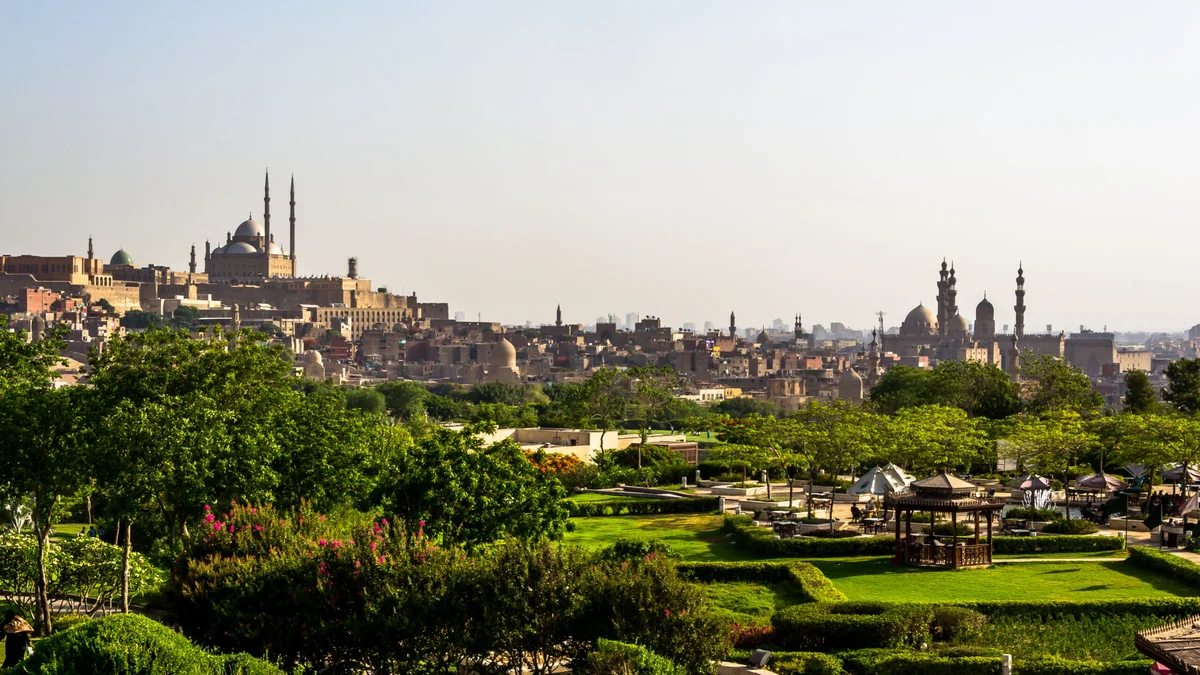
Three more stops: a green hill above the old city, the lanes of Coptic Cairo and the hall of the royal mummies.
Al-Azhar Park: The Green Hill Above the Old City

For five centuries the al-Darassa hill east of the old city collected the rubble of Cairo. The Aga Khan Trust for Culture turned the mound into Al-Azhar Park, opened in 2005: 30 hectares of lawns, orchards and fountains above Islamic Cairo. From the terraces the historic skyline lines up: the Citadel, the minarets of the old city, the modern towers fading west. Entry costs 150 EGP from Sunday to Thursday and 200 EGP on Friday and Saturday, and the park stays open from 9:00 to 22:00, so the sunset hour is the local favourite, when families picnic on the grass.
Coptic Cairo: The Fortress Lanes of the First Christians

South of the centre, around Mar Girgis metro station, the lanes of Coptic Cairo hold the oldest Christian quarter of Egypt inside the Roman Babylon Fortress. The Hanging Church, dedicated to the Virgin Mary, floats its nave above the fortress gatehouse, which is how it earned the name, and it served for centuries as a seat of the Coptic patriarchs. Nearby, the church of Abu Serga shelters a crypt where tradition holds that the Holy Family rested on the flight into Egypt, and the Ben Ezra Synagogue guards the memory of the Cairo Geniza, the storeroom of manuscripts opened in 1896. The churches and the synagogue are free; the Coptic Museum costs 280 EGP for adults and shows the textiles, icons and carved stone of Christian Egypt.
The National Museum of Egyptian Civilization: The Royal Mummies at Fustat

The National Museum of Egyptian Civilization stands by the lake of Ein el-Sira in Fustat, the first Islamic capital of Egypt: the main hall runs from the first farmers of the Nile valley to the modern republic. Its fame rests on the lower floor. In April 2021 the royal mummies of Egypt crossed the city in a televised golden parade from the old museum, and 22 of them, kings and queens of the New Kingdom among them Ramesses II and Hatshepsut, now rest in the Royal Mummies Hall, a dark gallery built to feel like the Valley of the Kings. Admission costs 550 EGP for foreign adults, photography is not allowed in the mummies hall, and about two hours covers both floors.
Cairo Attractions Compared

All eleven stops, with area, adult entry price and time needed.
| Attraction | Area | Adult entry | Time needed |
|---|---|---|---|
| Pyramids of Giza and the Great Sphinx | Giza Plateau | 700 EGP; Khufu interior 1,500 EGP | Half a day |
| Grand Egyptian Museum | Al Remaya Square, Giza | 1,830 EGP (from 1 November 2026) | 3 to 5 hours |
| Egyptian Museum | Tahrir Square | 550 EGP | 2 to 3 hours |
| Saqqara and the Step Pyramid | 30 km south of Cairo | 600 EGP; Step Pyramid interior 280 EGP | Half a day |
| Citadel of Saladin | Mokattam Hills | 550 EGP, mosques and museums included | 2 to 3 hours |
| Mosque and Madrasa of Sultan Hassan | Salah al-Din Square | 220 EGP, with al-Rifai | About 1 hour |
| Mosque of Ibn Tulun | Sayeda Zeinab | Free | About 1 hour |
| Khan el-Khalili | Islamic Cairo | Free; Al-Muizz monuments 220 EGP | 2 to 3 hours |
| Al-Azhar Park | Salah Salem Street | 150 EGP; 200 EGP on Friday and Saturday | 1.5 to 2 hours |
| Coptic Cairo | Mar Girgis, Old Cairo | Churches free; Coptic Museum 280 EGP | Half a day |
| National Museum of Egyptian Civilization | Fustat | 550 EGP | About 2 hours |
Cairo Itineraries: One, Two and Three Days

Cairo rewards district by district planning: the west for Giza, the centre for the museums, the east for the Islamic city. Build your cairo 3 day itinerary from the table below.
| Length | Where you go | Why it works |
|---|---|---|
| 1 day | The Giza morning: the plateau at opening time with one pyramid interior, then the Grand Egyptian Museum in the afternoon | The ancient half of Cairo in one sweep, ending with Tutankhamun |
| 2 days | Day one as above; day two in the historic city: the Egyptian Museum, the Citadel, Sultan Hassan and Khan el-Khalili | Pharaonic Cairo and Islamic Cairo, one day each, neither rushed |
| 3 days | Add Saqqara and Memphis with Ibn Tulun and Coptic Cairo; or swap the third day for Al-Azhar Park at sunset or an Alexandria day trip | The deep layers: the first pyramid, the oldest mosque and the first churches |
Book Tickets Before You Go
The five tickets where the official page genuinely saves time or money.
| Attraction | Adult price | Official ticket page |
|---|---|---|
| Grand Egyptian Museum (timed online ticket) | 1,830 EGP | tickets.gem.eg official booking |
| Pyramids of Giza (plateau ticket) | 700 EGP | egymonuments.com official portal |
| Egyptian Museum (Tahrir Square) | 550 EGP | egymonuments.com official portal |
| Citadel of Saladin (mosques and museums included) | 550 EGP | egymonuments.com official portal |
| Saqqara (with the Imhotep Museum) | 600 EGP | egymonuments.com official portal |
Where to Stay in Cairo
Top 3 hotels in Cairo
Explore all hotels >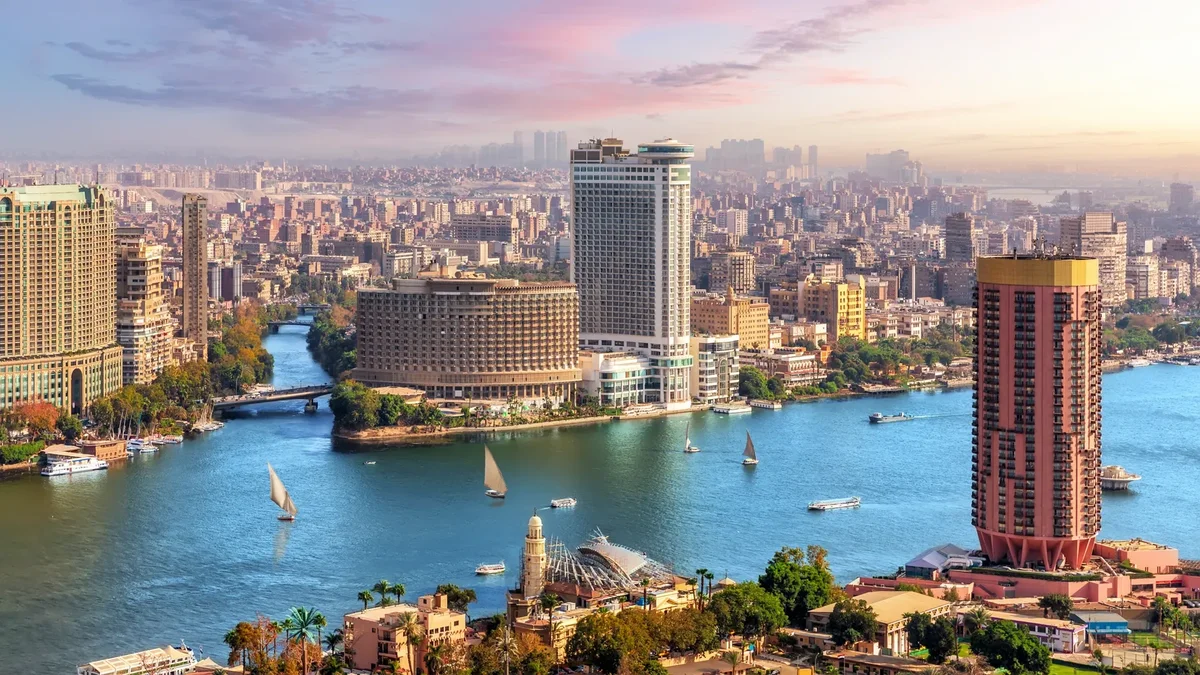
Cairo divides into stay zones with clear trade offs. Zamalek sleeps on a leafy island in the Nile. Downtown holds the classic hotels by the Egyptian Museum. Garden City fronts the Corniche, and Giza puts the pyramids at the window.
| Area | Best for | Character | Price level |
|---|---|---|---|
| Zamalek (Gezira Island) | First visits and calm evenings | Leafy streets of embassies, cafes and bookshops between the bridges | Mid to high |
| Downtown and Tahrir Square | Sightseeing on foot and metro links | Classic hotels by the Egyptian Museum and the old coffeehouse quarter | Mid |
| Garden City and the Nile Corniche | Luxury and river views | Grand hotels on the east bank, facing the sunset over the water | High |
| Giza by the Pyramids | Pyramid views and early starts | Hotels along the plateau roads, far from Islamic Cairo | Mid |
Cairo Marriott Hotel

Cairo Marriott Hotel fills the Gezira Palace in Zamalek, at 16 Saray El Gezira Street. Khedive Ismail built the palace in 1869 to receive royal guests for the opening of the Suez Canal, and its historic rooms now hold restaurants and halls between two modern towers. Gardens, a spa and an outdoor pool soften the city noise.
Four Seasons Hotel Cairo at Nile Plaza

Four Seasons Hotel Cairo at Nile Plaza rises 30 storeys over the Corniche at 1089 Corniche El Nil in Garden City. Rooms and suites face the Nile with private terraces, feluccas sliding past below; inside are ten restaurants, among them Zitouni for Egyptian classics, a large spa and pools above the river traffic. Tahrir Square stands a short drive north.
Where to Eat in Cairo

Eating halal in Cairo needs no strategy, because Egypt is a Muslim majority country and halal is the standard of every local kitchen. One honest note: pork is almost absent from local menus, so the four classics below are safe ground. Readers building a trip around food should start with our explainer on how food tourism is shaping modern travel.
Halal Food in Cairo

Naguib Mahfouz Cafe waits inside Khan el-Khalili at 5 El Badistan Lane, a calm mirrored room with the Khan el-Khalili Restaurant behind it. Order grilled meats, stuffed pigeon, mahshi vegetables and rice pudding, then coffee or hibiscus tea. HALAL AS THE LOCAL NORM.
Abou El Sid, at 157, 26th of July Street in Zamalek, recreates a grand Cairo house of the 1930s, all dark wood and brass. The menu is the Egyptian canon: molokhia with rice, Circassian chicken in walnut sauce, stuffed pigeon, vine leaves and slow stews. Book ahead in the evening; the room fills with Cairo families. HALAL AS THE LOCAL NORM.
Koshary Abou Tarek at 16 Maarouf Street, Downtown, serves one dish: koshary, the national plate of rice, lentils, macaroni and chickpeas under tomato sauce and fried onions, with garlic vinegar and chilli at the table. The house began as a street cart in the 1950s and never changed the recipe. VEGETARIAN BY NATURE.
Felfela, at 15 Hoda Shaarawy Street in Bab el-Louk, Downtown, has fed the city since 1963 on fuul, taameya, baba ghanoush, grilled eggplant and salads, in a garden room hung with lanterns. It is a gentle introduction to Egyptian home cooking. VEGETARIAN FRIENDLY.
Local Dishes to Try

Egyptian cooking is Nile valley cooking: beans, grains, grills and slow pots. Koshary, the national dish, mixes rice, lentils, pasta and chickpeas in tomato sauce. Fuul medames, fava beans stewed for hours and dressed with oil, lemon and cumin, anchors breakfast beside taameya, the broad bean falafel of Egypt, green with herbs. Molokhia, a garlicky green soup poured over rice, divides visitors and delights locals. Hamam mahshi is pigeon stuffed with spiced rice or cracked wheat, the celebration plate of the old city. Hawawshi packs minced meat and peppers into baladi bread and bakes it crisp. Sweet finishes run to om ali, a hot bread pudding with milk and nuts, basbousa in syrup, and kunafa with cheese or cream. Drink karkade, the deep red hibiscus infusion, and strong mint tea. One phrase helps everywhere: ana akul halal means I eat halal.
Mosques and Prayer Facilities in Cairo

Prayer in Cairo is never a logistics problem: the city holds thousands of mosques, and every district in this guide has one within a short walk. Al-Azhar Mosque, founded with the Fatimid city in 970 to 972 on Al-Azhar Street facing Khan el-Khalili, is the mosque of Al-Azhar University, among the oldest universities in the world; entry is free, and visitors are welcome outside prayer times, with modest dress and a headscarf for women.
The Mosque and Madrasa of Sultan Hassan and the Mosque of Ibn Tulun, both covered above, hold the daily prayers and the Friday prayer, as does the Mosque of Muhammad Ali inside the Citadel. In Old Cairo, a short walk from the Coptic quarter, stands the Mosque of Amr ibn al-As in Fustat, founded in 6batchC-8633-8714-fix to 642 by the commander who brought Islam to Egypt: the first mosque raised in Egypt and in Africa, rebuilt many times and still the prayer anchor of the district. Hotel staff everywhere can point to the nearest mosque and the direction of prayer.
Getting Around Cairo

Cairo traffic is the tax on every plan, so group sights by district: Giza in the west, Downtown and Tahrir in the centre, Islamic and Coptic Cairo in the east and south. The metro is the fastest way across the city; ride hailing cars are the way to reach Giza and Saqqara.
| Mode | Cost | Good to know |
|---|---|---|
| Metro single ride | 10 EGP up to 9 stations; batchC-8633-8661-fix EGP to 16 stations; 15 EGP to 23; 20 EGP beyond | Three lines and 84 stations; lines 1 and 2 cross at Sadat and Al-Shohadaa |
| Ride hailing (Uber and Careem) | Priced in the app before you ride | The simplest way to Giza, the Grand Egyptian Museum and Saqqara |
| White taxis | Metered; agree the meter or the fare before you start | Carry small notes; hotel staff can estimate a fair price |
| Giza Plateau shuttle buses | Free with the plateau ticket | Electric loop: visitor centre, Panorama, Menkaure, Khafre, Sphinx |
| Metro to Giza station | 10 to 15 EGP by distance | Line 2 stops at Giza station; a taxi covers the last stretch to the plateau |
| Trains to Alexandria | Priced by class at Ramses Station | About 2.5 to 3 hours; the Bibliotheca closes on Fridays |
Two carriages in the middle of every metro train are reserved for women. Cairo International Airport sits east of the city, while Sphinx International Airport lands you close to Giza and the Grand Egyptian Museum.
What a Day in Cairo Costs

Cairo is one of the great value capitals: the free mosques and lanes do half the work, and the two big Giza tickets decide the budget. The table gives planning ranges per person for a sightseeing day.
| Category | Budget day | Comfortable day |
|---|---|---|
| Sightseeing entries | About 150 EGP (Al-Azhar Park; the mosques, Coptic Cairo and the bazaar are free) | About 2,batchC-8633-8767-fix0 EGP (Grand Egyptian Museum and the Giza plateau) |
| Transport | About 40 EGP (metro rides across the day) | About 500 EGP (ride hailing cars across the day) |
| Lunch | About 100 EGP (koshary, fuul and taameya) | About 500 EGP (sit down lunch in Zamalek) |
| Dinner | About 250 EGP (a local grill house) | About 900 EGP (three courses at a classic restaurant) |
| Total per person | About 540 EGP | About 4,430 EGP |
Best Time to Visit Cairo

Cairo is a desert city with two friendly seasons: the mild winter, and the warm shoulders of spring and autumn. Summer is a furnace at midday.
| Season | Months | What you get | Crowds |
|---|---|---|---|
| Spring | March to May | Warm days; a hot dust wind can blow for a day or two | Moderate |
| Summer | June to August | Very hot days of 35 to 40 degrees; sightseeing at opening time only | Low to moderate |
| Autumn | September to November | Heat easing, golden light, the city back in full swing | Moderate |
| Winter | December to February | Mild days of about 18 to 22 degrees and cool evenings; the clearest pyramid views | High |
The holy month of Ramadan changes the rhythm rather than closing the city: sites often shorten their hours, the days quieten, and the nights fill with lanterns and iftar invitations. Late October to February sits in the sweet spot for a first trip.
Day Trips from Cairo

Three easy day trips run from the city: Alexandria on the Mediterranean, Memphis and Dahshur to the south, and the Fayoum oasis.
Alexandria: The Library and the Fortress on the Harbour

Alexandria stands about 220 kilometres north west of Cairo, and trains from Ramses Station cover the run in about two and a half to three hours. The Bibliotheca Alexandrina, opened in 2002, tilts its granite wall of alphabets toward the harbour; the main library ticket for foreign visitors costs 150 EGP, and an inclusive ticket at 300 EGP adds the Antiquities and Manuscripts Museums. West along the Corniche, a promenade walk of about forty five minutes brings you to the Citadel of Qaitbay, the fortress Sultan Qaitbay raised in 1477 to 1479 on the exact site of the Pharos lighthouse; entry costs 200 EGP. Walk the ramparts, then sit down to a grilled fish lunch before the train home, asking the price before the fish meets the grill. The library closes on Fridays, so pick another day.
Memphis and Dahshur: The First Capital and the First True Pyramids

Thirty minutes south of Saqqara, the open air museum at Mit Rahina guards the remains of Memphis, the capital of Egypt for three thousand years: a colossal statue of Ramesses II in its shelter and an alabaster sphinx in the garden; entry costs 200 EGP. Continue to Dahshur, where Sneferu, the father of Khufu, experimented his way toward the true pyramid: the Bent Pyramid, which changes angle halfway up, and the Red Pyramid, the first smooth sided pyramid, whose chambers open under the same 200 EGP area ticket. Both fields are quieter than Giza.
Fayoum: Waterfalls, Lake Views and the Pottery Village

The Fayoum oasis lies about 100 kilometres south west of Cairo, a green bowl below the desert edge. At Wadi El Rayan, a channel links two lakes and drops over the low waterfalls that are the only falls of Egypt. On the road along Lake Qarun, one of the oldest natural lakes in the world, the view runs to the northern escarpment. End the day in Tunis Village, where potters throw and fire the clay of the oasis in courtyard workshops. The run back to Cairo takes about two hours by road.
Practical Tips for Cairo

Good to Know

- Book the Grand Egyptian Museum online before you travel; foreign visitors buy timed tickets only on the official site, and nothing is sold at the gate.
- Carry a bank card: the main archaeological sites now sell tickets by card at the gates and machines.
- Bring a passport or student card, because the student rates at every site run on documents.
- Dress modestly for the mosques: shoulders and knees covered, quiet voices inside, and a light scarf for women.
- Start the Giza plateau at opening time; the heat and the tour groups both build late in the morning.
- Drink bottled water; it is cheap and sold on every corner of the historic city.
Good to Avoid

- Do not accept a camel or horse ride at Giza without agreeing the full price and the return ride first.
- Do not plan the Bibliotheca Alexandrina for a Friday; the library closes on Fridays.
- Do not squeeze the Grand Egyptian Museum and the Giza plateau into two hours; each needs half a day.
- Do not take photographs inside the Royal Mummies Hall at the National Museum of Egyptian Civilization; photography is not allowed there.
- Do not follow old directions to the Mena House gate at Giza; the main entry is the Great Gate visitor centre on the Fayoum Road.
- Do not cross Cairo at the evening peak without a buffer; traffic can double a journey time.
Final Thoughts on Cairo
Cairo gives its best to travellers who slow down: the pyramids at opening time, tea in the bazaar at dusk, the call to prayer rolling over the rooftops. Give the city that rhythm and it gives back forty five centuries in a single frame: a pyramid, a minaret and the river between them.
The Giza Pyramids with the Sphinx, the Egyptian Museum at Tahrir Square, and the Grand Egyptian Museum make the ancient foundation, and the Citadel with the Mosque of Muhammad Ali, Khan el-Khalili, Coptic Cairo, Al-Azhar Mosque, and Islamic Cairo add the medieval and modern layers. A Nile felucca ride at sunset closes the first full day, and the three day plan in this guide pairs Giza with the Grand Egyptian Museum, Islamic Cairo with the Citadel, and Coptic Cairo with the Khan on separate days.
November to April brings mild days for the pyramids, the Citadel, and the Khan, while summer brings very hot days suited to museums and evening walks only. Use the Metro for central sights at 6 EGP per ride and Uber for Giza and the Grand Egyptian Museum, and book both before arrival, since timed tickets sell out in peak season. Plan around Friday hours, dress modestly in religious sites, and cover the head for mosque entry, with scarves available at the larger mosques.
Zamalek suits a quiet island base with gardens and museums, Downtown suits budget travellers near Tahrir Square and the Metro, and Giza suits travellers who want the pyramids at sunrise. Cairo is an easy city for Muslim travellers, with mosques in every district and the Friday prayer at Al-Azhar Mosque and the Mosque of Ibn Tulun among the most atmospheric in the city. If a fourth day is free, Saqqara sits around 30 kilometres south, with the Step Pyramid of Djoser and the Serapeum, and Dahshur adds the Bent Pyramid and the Red Pyramid.
Keep Exploring
FAQs
What are the best things to do in Cairo on a first visit?
The Pyramids of Giza and the Sphinx, the Grand Egyptian Museum, the Citadel with the Mosque of Muhammad Ali, and Khan el-Khalili. Add the Egyptian Museum, Sultan Hassan, Ibn Tulun and Saqqara, and the first trip covers both cities.
How many days do you need in Cairo?
Three full days cover the headline sights: one for the Giza plateau and the Grand Egyptian Museum, one for Islamic Cairo with the Citadel, Sultan Hassan and the bazaar, and one for Saqqara, the Egyptian Museum and Coptic Cairo. A fourth day adds a day trip to Alexandria or Fayoum.
How much do the main sights of Cairo cost?
The Grand Egyptian Museum costs 1,830 EGP for foreign adults from 1 November 2026, the Giza plateau 700 EGP, the Egyptian Museum and the Citadel 550 EGP each, and Saqqara 600 EGP. Sultan Hassan with al-Rifai costs 220 EGP, while Ibn Tulun, Al-Azhar Mosque, the churches of Coptic Cairo and Khan el-Khalili are all free.
Is Cairo suitable for Muslim travellers and families?
Yes, more easily than almost any capital in the world. Egypt is a Muslim majority country, halal food is the standard of every local kitchen, and mosques stand in every district, from Al-Azhar to the mosque of the neighbourhood. Families should start open air sites at opening time and lean on the air conditioned museums in the afternoon.
Where can you eat halal food in Cairo?
Everywhere, because halal is the norm of the country. For named tables, start with the Naguib Mahfouz Cafe inside Khan el-Khalili, Abou El Sid in Zamalek, Koshary Abou Tarek downtown for the national dish, and Felfela for fuul and taameya.
When is the best time to visit Cairo?
Late October to February brings mild days, cool evenings and the clearest views of the pyramids. March to May and September to November are warm. June to August is very hot, with sightseeing in the first hours.
How do you travel between Cairo and Alexandria?
Trains from Ramses Station reach Alexandria in about two and a half to three hours, and the Bibliotheca Alexandrina and the Qaitbay Citadel stand a promenade walk apart. Go on any day but Friday, when the library closes.
