
Things to Do in Graz: The Schlossberg Clock Tower, the Old Town and the Design City of Austria
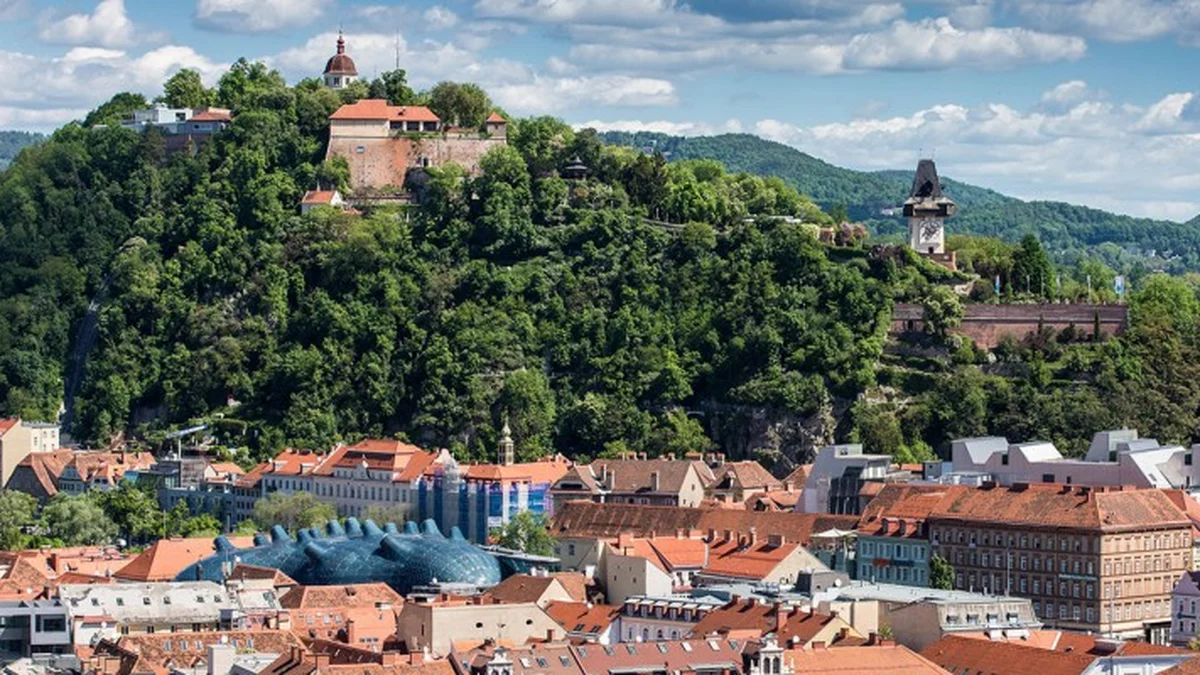
Graz greets you with a puzzle. A medieval clock tower stands on a green hill, its big hand pointing at the hour and its small hand at the minutes, the wrong way round on purpose. Below the hill, a smooth blue creature the size of a ship seems to have landed beside the river: the…
Graz greets you with a puzzle. A medieval clock tower stands on a green hill, its big hand pointing at the hour and its small hand at the minutes, the wrong way round on purpose. Below the hill, a smooth blue creature the size of a ship seems to have landed beside the river: the Friendly Alien. Between the two, a whole old town of red roofs, Renaissance courtyards and café terraces carries on regardless.
This is the second largest city in Austria and the capital of Styria, yet it moves at the pace of a university town. Students fill the lanes, market stalls smell of pumpkin seeds and fresh bread, a funicular climbs the hill every few minutes and almost every sight stands within a gentle walk of the main square.
The best things to do in Graz mix deep history with playful modern design. You can stand inside the largest preserved historical armoury on earth in the morning, ride a glass lift through solid rock in the afternoon and end the day watching the clock tower glow above the rooftops.
Graz at a Glance

| Detail | What to Know |
|---|---|
| Country | Austria |
| Region | Styria, known as the Green Heart of Austria, in the south of the country |
| Best for | Old town history, Renaissance and Baroque art, bold modern architecture, family museums and slow café days |
| Famous for | The Schlossberg clock tower, the UNESCO listed old town, the Friendly Alien art museum and Styrian pumpkin seed oil |
| Currency | Euro (€) |
| Language | German; English is widely understood in hotels, museums and restaurants |
| Getting around | A walkable centre, trams and buses, plus a funicular, a lift and 260 steps up the Schlossberg |
Quick Picks

First-Time Visitors

- Schlossberg and the Clock Tower
- The Old Town and Hauptplatz
- Landeszeughaus, the Styrian Armoury
- Graz Cathedral and the Mausoleum
Families

- The Schlossberg slide and Fairytale Railway
- FRida & freD, the museum for children
- Schloss Eggenberg park and lawns
- The open-air museum at Stübing
Art and History

- Kunsthaus Graz, the Friendly Alien
- Schloss Eggenberg state rooms
- Graz Museum on Sackstraße
- The Double Spiral Staircase
The Top Things to Do in Graz

The eight experiences below are the Graz attractions that give a trip its shape, ranked so you can build a day around the top few. Every one sits in or near the old town, apart from Schloss Eggenberg, a short tram ride west.
Graz also rewards anyone who travels through food, and our guide to how food tourism is shaping modern travel explains why eating like a local has become the smartest way to read a new city.
1. Schlossberg and the Clock Tower: The Hill at the Heart of Graz

Best for

First views of the city, sunset light over the red roofs and the single most loved symbol of Graz.
Address: Schlossberg, 8010 Graz. Funicular valley station at Kaiser-Franz-Josef-Kai 38; lift and steps at Schlossbergplatz.
Every visit to Graz starts here. The Schlossberg is a tree-covered hill rising about 120 metres above the old town to 473 metres above sea level. A mighty Renaissance fortress once crowned the rock, so strong that armies never took it by force. When the fortress was demolished in 1809 under the Treaty of Schönbrunn, the citizens of Graz paid a ransom to save two towers: the bell tower and the beloved clock tower, the Uhrturm. The park that replaced the walls is the favourite green living room of the city.
The Uhrturm took its present shape around 1560 and stands 28 metres tall, wrapped in a wooden gallery. Look closely at the huge clock faces: the long hand shows the hours and the short hand shows the minutes. The first clock had only an hour hand; the minute hand arrived later and took the smaller role. The oldest bell in Graz, cast in 1385, still strikes the hours, and the nearby bell tower of 1588 holds Liesl, the largest bell in Styria.
Do not miss

The ride down. Inside the hill hides the highest underground slide in the world, a 175 metre spiral that drops you back to the city in about 40 seconds of laughing darkness; riders need to be at least 1.3 metres tall. Families should also find the Fairytale Railway, a little train looping through the tunnels inside the mountain, and the small Graz Museum Schlossberg. Up top, paths wander between bastions, viewpoints and picnic lawns, and the terrace below the clock tower gives the classic postcard shot across the old town.
Practical info
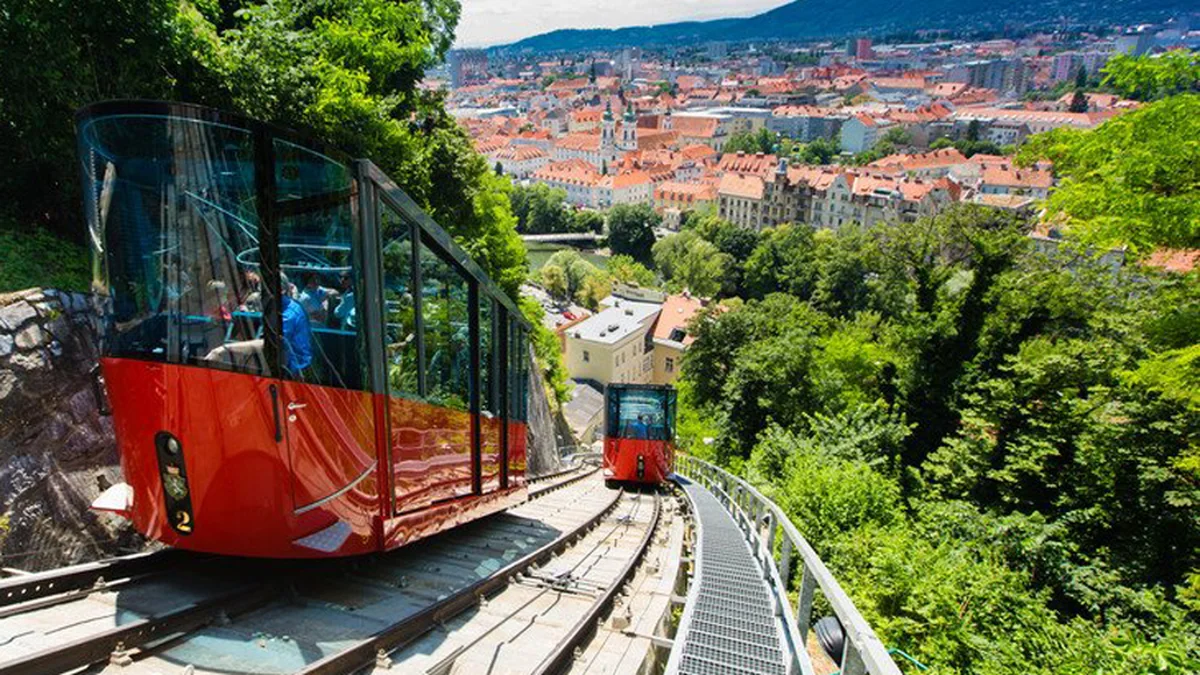
The hilltop park is free and open at all hours. The Schlossbergbahn funicular has climbed the 60 percent gradient since 1894 running every 15 minutes from 09:00 (10:00 in winter) until midnight, and until 02:00 on Friday and Saturday nights; every Zone 101 city ticket is valid on it. The glass lift inside the rock reaches the clock tower in 30 seconds, daily from 08:00 to 00:30, at €2.60 one way. A combined funicular and lift ticket costs €4.90 for adults and €3.10 for children aged 6 to 14. The free way up is the famous Kriegssteig, all 260 steps of it.
Ride up on the funicular, walk down the steps. The descent passes viewpoint after viewpoint, and the city seems to unfold one rooftop at a time.
Insider tip
2. The Old Town: Hauptplatz, Herrengasse and the Landhaus Courtyard

Best for

Slow wandering through one of the best preserved old towns in Central Europe, a UNESCO World Heritage Site since 1999.
Address: Hauptplatz, 8010 Graz, with Herrengasse running south and the Landhaus at Herrengasse 16.
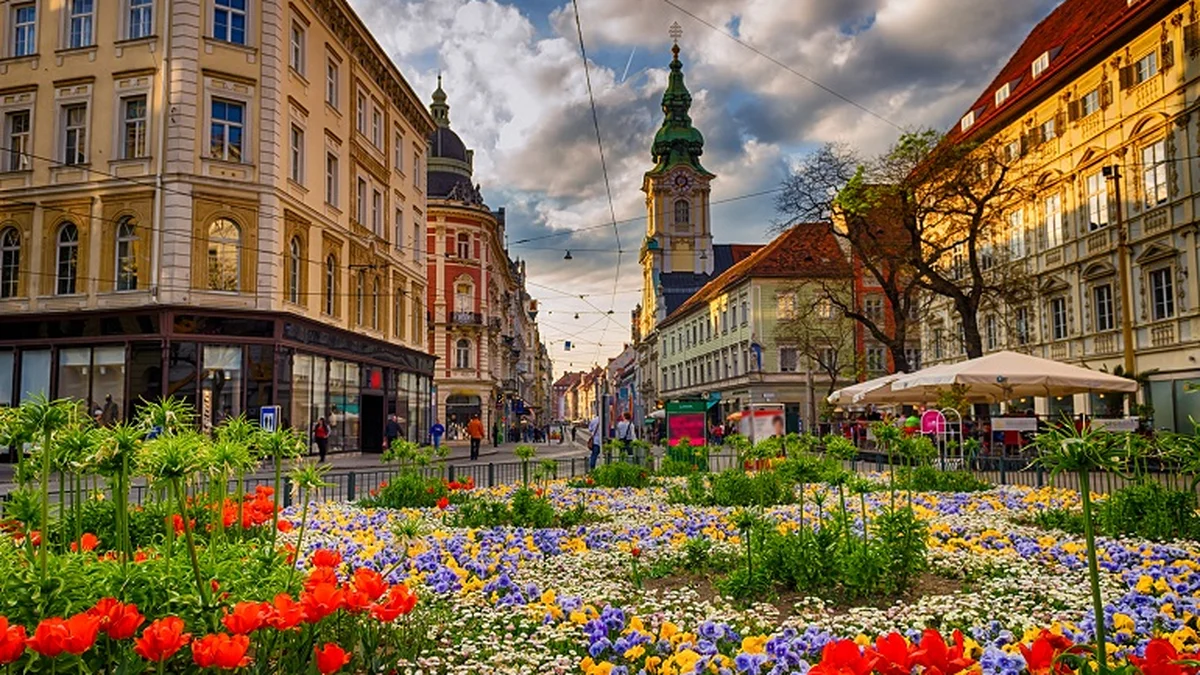
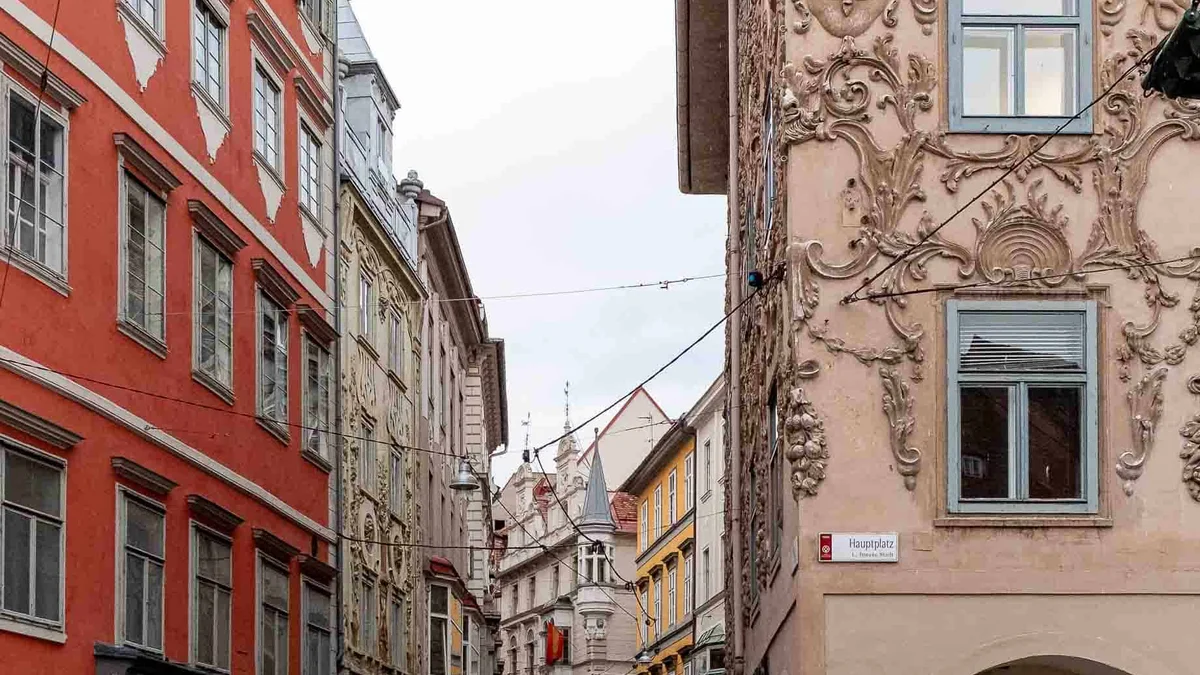
The old town of Graz is not a museum behind glass. It is a working city centre where trams cross medieval squares and Renaissance courtyards hide behind plain doorways. Start at the Hauptplatz, the triangular main square, where painted house fronts lean in around the town hall of 1893. At the centre stands the fountain of Archduke Johann, ringed by four allegorical figures for the rivers Mur, Enns, Drau and Sann.
Walk south down Herrengasse, the parade street of Graz, lined with grand town houses and the famous Luegghaus on the corner of Sporgasse. At Herrengasse 16, step through the gateway of the Landhaus, the seat of the Styrian parliament, into one of the finest Renaissance courtyards in Austria: three floors of Venetian-style arcades from the 1550s and 1560s. The same building holds the Styrian Armoury, attraction number three in this guide. Then climb steep, ancient Sporgasse for the finest lane walk in the city.
Do not miss

The Glockenspiel. On Glockenspielplatz, just east of the Hauptplatz, a wooden couple in Styrian dress steps out of a gable three times a day, at 11:00, 15:00 and 18:00, and dances to the music of 24 bells, ending with a golden rooster flapping its wings. Arrive early, take a coffee on the square and look up: it is the sweetest free show in Graz.
Practical info
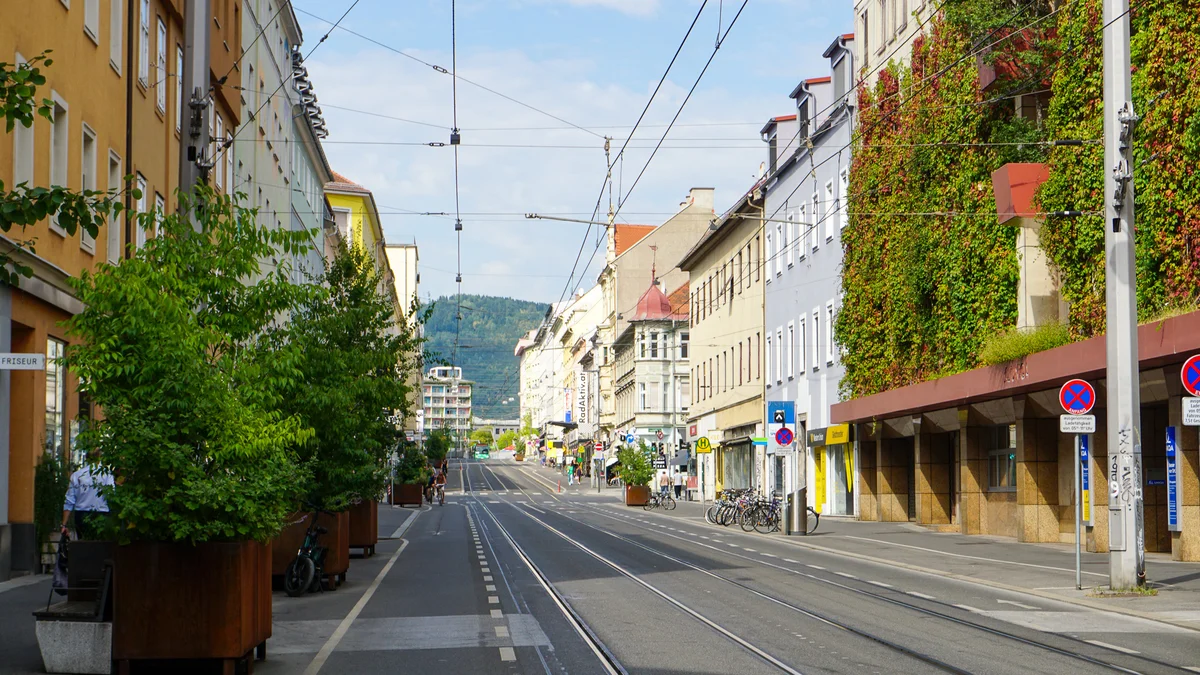
The old town is largely pedestrianised and free to explore at any hour. The Landhaus courtyard opens during the day; entry is free. Trams from every district converge on the Hauptplatz and Jakominiplatz, and the free Altstadtbim stretch means trams through the very centre cost nothing. Allow half a day for the old town alone.
Push open the heavy doors. Half the beauty of Graz hides in courtyards behind unmarked gateways on Herrengasse and Sackstraße.
Insider tip
3. Landeszeughaus: Inside the Styrian Armoury

Best for

History lovers and anyone who wants to walk through a 17th century military warehouse that time forgot.
Address: Herrengasse 16, 8010 Graz, inside the Landhaus building.
For three centuries Styria stood on the frontier of the Habsburg lands, and the province needed weapons close at hand. The Styrian estates built the Landeszeughaus between 1642 and 1647, to plans by Antonio Solar, as the central armoury of the region. What makes it unique in the world is that it never stopped being an armoury. When the weapons were retired, the building kept its racks and its order, and today about 32,000 objects still stand where soldiers left them three centuries ago.
Floor after floor of wooden galleries holds suits of armour for men and horses, helmets by the hundred, swords, muskets, pistols and pikes, arranged in long ranks. It is the largest preserved historical armoury in the world, and it does not feel like a display so much as a storehouse paused mid-shift. Children who yawn at paintings tend to go quiet in front of a full horse armour, and the cannon hall explains the border wars behind it all.
Do not miss

The English guided tour at 12:30, which turns silent rows of steel into stories of border raids and the ordinary foot soldiers who carried this equipment. Tours run Tuesday to Sunday at 11:00 in German, 12:30 in English and 14:00 in German. If you explore alone, climb to the top floor for the view back along the racks.
Practical info
From 1 April to 31 October: Tuesday to Sunday, 10:00 to 18:00. From 1 November to 6 January, entry is by guided tour only, and the museum then closes from 7 January to 31 March. Admission costs €13 for adults, €11 for seniors, €6.50 for students aged 19 to 25 and €3 for ages 6 to 18, with children under 6 free and a family ticket at €26. The Joanneum 24-hour ticket includes the armoury. Bags go into lockers at the entrance.
Pair the armoury with the Landhaus courtyard outside its door. Steel inside, Renaissance grace outside: the contrast is pure Graz.
Insider tip
4. Graz Cathedral and the Mausoleum of Ferdinand II
Best for

Sacred architecture, imperial history and the most ornate skyline corner of the old town.
Address: Burggasse 3, 8010 Graz, in the cathedral quarter at the eastern edge of the old town.
The cathedral quarter forms what locals call the Stadtkrone, the crown of the city: cathedral, mausoleum, castle and old university gathered on one rise. Graz Cathedral, dedicated to Saint Giles, rose between 1438 and 1464 as a late Gothic hall church for Emperor Frederick III. Before you go in, walk around to the south wall and find the Landplagenbild, a fresco of 1485 that shows the three plagues of its age, locusts, pestilence and invasion, bearing down on a painted Graz.
Next door, the turquoise domes belong to the Mausoleum of Emperor Ferdinand II, one of the great Mannerist buildings of Austria. Ferdinand ordered his tomb in 1614 from his court artist Giovanni Pietro de Pomis, who joined a church of Saint Catherine to an oval burial chapel of extraordinary richness. Stucco, frescoes and coloured marble cover every surface, and in the crypt below, a great red marble sarcophagus holds the emperor, who was born in Graz.
Do not miss

The view from the cathedral quarter itself. Stand between the cathedral and the mausoleum domes and look west: the clock tower fills the frame above the rooftops, and you understand the whole geography of Graz in one glance. Inside the cathedral, allow time for the quiet.
Practical info

The cathedral opens daily from early morning into the evening and entry is free; dress modestly and keep visits quiet during services. The mausoleum and the church of Saint Catherine open from April to October only, Tuesday to Sunday from 09:00 to 18:00, and the complex closes from November to the end of March. A small entry charge or donation may apply at the mausoleum door; check the cathedral website before you go.
Visit the mausoleum first and the cathedral second. The tomb blazes with art; the church then feels like a deep breath.
Insider tip
5. Kunsthaus Graz: The Friendly Alien on the Mur

Best for

Contemporary art, unforgettable architecture and the boldest photo in the city.
Address: Lendkai 1, 8020 Graz, on the west bank of the Mur river.
In 2003, as European Capital of Culture, Graz gave itself a birthday present that still startles first-time visitors. The Kunsthaus is a great blue biomorphic bubble, part spaceship, part sea creature, settled among the Baroque roofs of the west bank. London architects Peter Cook and Colin Fournier designed it and gave it the name the whole city now uses: the Friendly Alien. Nozzles reach out of the roof like periscopes, and one of them points a window straight at the clock tower.
The east face carries the famous BIX facade, a skin of 930 fluorescent rings that works as a giant low-resolution screen. After dark the rings pulse with patterns, words and art. Inside, the Kunsthaus holds no permanent collection. Two vast exhibition floors host changing shows of contemporary art, photography and media work, so a repeat visit never repeats itself. The building also shelters the Camera Austria gallery and keeps the facade of the Iron House of 1847 tucked into its base.
Do not miss

The journey up. Travelators glide into the belly of the building, and the top floor opens into one great curved space; come back at dusk to watch the BIX facade light up ring by ring.
Practical info

The Kunsthaus opens Tuesday to Sunday from 10:00 to 18:00, and admission costs €13 for adults; the Joanneum 24-hour ticket covers it together with the armoury and the other Joanneum houses. Exhibitions change several times a year; check the current programme first. Tram lines 1, 3, 6 and 7 stop at Südtiroler Platz by the main bridge, two minutes from the door. Allow 90 minutes for a show.
The alien photographs best from the Schlossberg. Shoot it at blue hour from the clock tower terrace, with the facade beginning to glow.
Insider tip
6. Murinsel and the Lend Quarter: The Creative Bank of the River

Best for

A coffee on a floating island, design shops and the young, creative side of Graz.
Address: Murinsel, Lendkai 19, 8020 Graz, reached by footbridges from both banks of the Mur.
The Murinsel is a ship that never sails. Designed by New York artist Vito Acconci for the Capital of Culture year of 2003, this 47 metre steel shell floats at anchor in the middle of the Mur, held by two footbridges that make it a working crossing too. Inside the shell, an amphitheatre of blue wave-shaped benches curves around a cafe terrace, with the river sliding past on both sides. Crossing is free at any hour.
On the far side lies Lend, the quarter that grew up with the Kunsthaus into the creative heart of Graz. Mariahilferstraße and the lanes around Lendplatz fill with design shops, ateliers, vintage stores and cafes where the crowd is young and the pace is slow. The farmers market on Lendplatz brings Styrian growers into the city, and the whole district feels like the old town let its hair down. A design shop on the island itself sells work by Graz makers, an easy place to find a souvenir with a story.
Do not miss

Sunset from the island, with coffee from the island cafe, open Tuesday to Sunday from 10:00 to 20:00 and closed on Mondays. The Schlossberg lights up in front of you and the Kunsthaus glows behind you. Then wander two streets into Lend for dinner among the locals.
Practical info

The Murinsel is a public footbridge and stays open around the clock; only the cafe and shop keep hours. Everything in Lend sits within five minutes of the island on foot, and the Kunsthaus stop on tram lines 1, 3, 6 and 7 drops you at the western bridge end.
Cross the river on the island, not the main bridge. It adds two minutes and one small wonder.
Insider tip
7. Schloss Eggenberg: A Baroque Palace in a Green Park

Best for

Baroque splendour, a romantic landscape park and the most beautiful half-day escape inside the city.
Address: Eggenberger Allee 90, 8020 Graz, at the western edge of the city.
At the foot of the western hills stands the greatest palace of Styria. Prince Hans Ulrich von Eggenberg, the most powerful nobleman of the Habsburg south, began Schloss Eggenberg in the 1620s and had it designed as a universe in miniature: an image of the calendar built in stone, with the Planetary Room at its heart and, as local tradition counts, 365 windows. The palace joined the UNESCO World Heritage list in 2010, and a great park spreads around it.
The wonder of Eggenberg is how untouched it feels. The state rooms were never modernised, never fitted with heating or electric light, and their Baroque world survives whole: more than 500 ceiling paintings, original furniture and tapestries glowing in candlelit gloom. You see them on a guided tour of about 50 minutes; book your slot at the ticket counter when you arrive. The palace also holds the Alte Galerie of medieval and Baroque art, an archaeology museum and a coin cabinet.
Do not miss

The park. Peacocks wander the lawns like they own them, because for three centuries they have. Ancient trees shade long avenues, a rose garden blooms in season and the whole estate runs on birdsong rather than traffic. Photographers hunt the palace reflection in still water. If you buy one gentle hour in Graz, buy it here.
Practical info

The palace season runs from 28 March to 31 October, Tuesday to Sunday from 10:00 to 18:00; the state rooms open by guided tour only. A palace ticket for the museums and park costs €13 for adults and €3 for ages 6 to 18, and the Joanneum 24-hour ticket covers Eggenberg too. The park alone opens every day of the year, from 08:00 to 19:00 in the main season, at €3 for adults, €6 for a family and €0.50 for children. Tram line 1 towards Eggenberg stops a short walk from the gate; allow at least three hours for palace and park.
Book the first state rooms tour of the day, then take the park slowly. The rooms feel most magical before the groups arrive.
Insider tip
8. FRida & freD: The Hands-On Museum for Children

Best for

Children aged 3 to 12 who learn by touching, building, splashing and experimenting, and parents who enjoy joining in.
Address: Friedrichgasse 34, 8010 Graz, beside the Augarten park, south of the old town.
Most museums tell children to keep hands down. FRida & freD, the Graz museum for children, was built in 2003 on the opposite rule: everything here begs to be touched, pumped, built, balanced and tried. Two hands-on exhibitions run side by side, one designed for children aged 3 to 7 and one for ages 8 and up, so a toddler and a ten-year-old each get a museum tuned to their size. Themes change with the seasons, from inventor workshops to a maths jungle where patterns hide in nature.
The building sits at the edge of the Augarten park, south of the centre: exhibitions in the morning, the park lawns after, and perhaps the in-house theatre, with short performances from Thursday to Sunday at 16:00. A combined 24-hour ticket links the museum with the Fairytale Railway inside the Schlossberg and the Salon Stolz music museum, turning one ticket into a full family day.
Do not miss

The workshop stations, where children come away carrying things they made themselves in guided sessions, with staff who treat small inventors like colleagues. On rainy holiday weeks the museum fills fast, so arrive near opening time.
Practical info

The museum opens Monday and Wednesday to Sunday from 09:00, closing at 17:00 and at 18:00 on Mondays in the main season, and stays closed on Tuesdays. One exhibition costs €7.50 per person, and both exhibitions together cost €12.10. The 24-hour ticket covering FRida & freD, the Fairytale Railway and Salon Stolz costs €15.50 for adults and €13.50 for children, and the Graz Card counts as a concession here.
Buy the 24-hour family ticket and ride the Fairytale Railway on the Schlossberg the same day. Two small adventures, one ticket.
Insider tip
More Worth Your Time in Graz

Three further stops reward anyone with an extra half day in the city.
Graz Museum, Sackstraße

The city museum in Palais Khuenburg on Sackstraße tells the story of Graz itself, from fortress town to design city, in clear and lively rooms. It opens daily from 10:00 to 18:00; admission is €9 for adults, free under 19, and visitors aged 19 to 26 pay as they wish. A smaller branch on the Schlossberg covers the history of the hill.
Franziskanerkirche and Franziskanerplatz

West of the Hauptplatz, Franziskanerplatz is the old town at its most intimate: a small square of cafes and weathered shutters gathered around a fountain, watched over by the Franciscan church, among the oldest in Graz. Step inside for a cool, quiet minute, then take a coffee on the square, where the old town comes to sit down.
The Double Spiral Staircase in the Burg

In the courtyard of the Graz Burg, beside the cathedral, a staircase performs a quiet miracle. Built in 1499 under Emperor Maximilian I, the Double Spiral Staircase winds two flights around one another in a single stone drum: the flights part, cross and reunite on every floor. The courtyard usually opens on weekdays during office hours and the staircase costs nothing to see.
Graz Attractions Compared

Use this table to match each sight to your time, budget and travel style.
| Attraction | Ticket | Time Needed | Best For |
|---|---|---|---|
| Schlossberg and Clock Tower | Hill free; lift €2.60 one way | 2 to 3 hours | First views and sunset |
| The Old Town and Glockenspiel | Free | Half a day | History and wandering |
| Landeszeughaus Styrian Armoury | €13 | 1 to 1.5 hours | History lovers |
| Cathedral and Mausoleum | Cathedral free; mausoleum seasonal | 1 hour | Art and quiet grandeur |
| Kunsthaus Graz | €13 | 1.5 to 2 hours | Modern art and design |
| Murinsel and the Lend Quarter | Free | 1 to 2 hours | Cafes and creative shops |
| Schloss Eggenberg | €13; park only €3 | 3 to 4 hours | Palaces and gardens |
| FRida & freD Museum for Children | €7.50 one exhibition | 2 to 3 hours | Families with young children |
| Graz Museum | €9; under 19 free | 1 to 1.5 hours | Understanding the city |
Graz Itineraries: One, Two and Three Days

| Time | Plan |
|---|---|
| One Day in Graz | Schlossberg for the first views, old town lanes, the Styrian Armoury, the Glockenspiel at 15:00, Kunsthaus and the Murinsel, then sunset back on the Schlossberg |
| Two Days in Graz | Day one as above at an easy pace; day two for Schloss Eggenberg and its park, the cathedral quarter and Mausoleum, and FRida & freD with children or the Graz Museum without |
| Three Days in Graz | Add one full day trip: Riegersburg Castle, Stift Rein abbey or the open-air museum at Stübing |
Book Tickets Before You Go

Graz rarely sells out, but tours and family tickets reward a little planning. Use only the official ticket pages below.
| Experience | Good to Know | Official Tickets |
|---|---|---|
| Schlossbergbahn and Schlossberg Lift | Funicular rides on normal city tickets; lift €2.60 one way; combined ticket €4.90 | Holding Graz Schlossberg |
| Landeszeughaus Styrian Armoury | Adults €13; English guided tour at 12:30 | Joanneum Styrian Armoury |
| Schloss Eggenberg | Palace ticket adults €13; state rooms by guided tour only | Joanneum Schloss Eggenberg |
| FRida & freD Museum for Children | One exhibition €7.50; 24-hour ticket €15.50 | FRida & freD Official Site |
| Riegersburg Castle | Castle, lift and birds of prey show in one visit; check flight times before you go | Riegersburg Visitor Info |
Where to Stay in Graz
Top 3 hotels in Graz
Explore all hotels >- Grand Hôtel Wiesler ★★★★
- Hotel Das Weitzer ★★★★
- Augarten Art Hotel ★★★★

Graz is compact. The old town puts every sight on your doorstep, Lend and Gries give design hotels and local food streets, and the station area suits early trains. All four areas below reach the Hauptplatz within minutes.
| Area | Best For | Good to Know |
|---|---|---|
| Innere Stadt, the Old Town | First-time visitors and short stays | Every major sight sits within a short walk; rooms on the historic lanes cost more |
| Lend, west of the Mur | Design hotels, cafes and a creative local feel | The Kunsthaus and Murinsel are on the doorstep; the old town is one bridge away |
| Gries, south-west of the centre | Value stays and halal food streets | Turkish kitchens and several mosques; trams reach the centre in minutes |
| Bahnhofviertel, around the main station | Early trains and airport buses | Practical and well priced; the centre is a short tram ride east |
The Grand Hôtel Wiesler is the grand address of the west bank: a historic house at Grieskai 4-8, right on the Mur riverfront, with 102 rooms and the clock tower framed in its windows. It stands five minutes on foot from the Kunsthaus and the Murinsel.
A few doors along the same riverfront, Hotel Das Weitzer at Grieskai batchC-8619-8776-fix6 offers the classic Graz welcome in a calmer key, with river-view rooms and the old town one bridge away. Both hotels sit on tram lines into every district.
Where to Eat in Graz

Styria calls itself the delicatessen of Austria, and Graz is where the province comes to eat. Farm produce flows into the morning markets at Kaiser-Josef-Platz and Lendplatz, and nearly every menu carries the deep green gold of the region, pumpkin seed oil. For the bigger picture, read our feature on how food tourism is shaping modern travel before you plan your meals.
Halal Food in Graz

Halal eating in Graz centres on the Turkish kitchens of Gries and Lend, west of the river. Kapadokya Grill House at Griesplatz 36, 8020 Graz, is a bright, well-kept grill house serving döner, kebabs and Turkish plates, and it appears in online halal dining directories for the city. Its sister kitchen, Kapadokya Kebap at Jakominiplatz 15, 8010 Graz, has served Graz since 1995 and calls itself the first döner shop in the city, right on the tram hub south of the old town. In the old town, My Kebap at Reitschulgasse 7a, 8010 Graz, wins loyal local reviews for fresh kebabs and falafel. Halal practice varies by kitchen, so confirm the current halal status with staff before you order.
Local Dishes to Try

Order a salad and it arrives dressed with pumpkin seed oil, thick, dark green and nutty, the signature flavour of Styria; the classic partner is the scarlet runner bean salad, with onion and a sharp dressing. Backhendl, crisp fried chicken in a golden crumb, is the celebratory plate of the province. Vegetarians do well with Käsespätzle, soft egg noodles folded through mountain cheese and fried onions. Finish with warm apple strudel, and look out for the local party trick: vanilla ice cream dressed with pumpkin seed oil.
Mosques and Prayer Facilities in Graz

Graz has an established Muslim community, and its mosques stand west of the Mur in the Lend and Gries quarters, a short walk or tram ride from the old town. The most central is the Eyup Sultan Camii at Josef-Huber-Gasse 9, 8020 Graz, about ten minutes on foot from the Mur bridges. Also in the same quarters are the Noor Moschee at Neubaugasse 67, 8020 Graz, the Ihlas Mosque at Elisabethinergasse 20, 8020 Graz, and the AlRahman Mosque at Mariengasse 43, 8020 Graz. Friday prayer draws the largest congregation, so arrive a little early.
Getting Around Graz

| Option | Details |
|---|---|
| Walking | The old town and cathedral quarter sit within a 15 minute walk of the Hauptplatz; Eggenberg and the station need a tram |
| Trams and buses | Holding Graz runs the network; an hour ticket costs €3.30 and a 24-hour ticket €7.20 for Zone 101. Trams on the short Altstadtbim stretch through the very centre are free |
| Funicular, lift and steps | The Schlossbergbahn takes city tickets, the lift costs €2.60 one way and the 260 steps cost nothing but effort |
| Graz Card | 24 hours €32, 48 hours €42, 72 hours €47; covers Zone 101 transport, the funicular, the lift and entry to many museums, with two children under 15 free per card |
| Taxis and ride services | Taxis wait at the Hauptbahnhof and Jakominiplatz; handy late at night |
| Car and parking | Leave the car in a city garage; the old town lanes are largely pedestrian |
Trains from Vienna reach Graz Hauptbahnhof in around two and a half hours, and trams from the station forecourt run straight to Jakominiplatz and the old town. Once you arrive, put the map away: the centre of Graz is a walking city.
What a Day in Graz Costs
Sample daily costs per person, from the verified ticket prices in this guide and typical Graz prices.
| Style | Stay | Food | Attractions | Transport | Daily Total |
|---|---|---|---|---|---|
| Budget | €35–55 (hostel bed or simple guesthouse) | €25–35 (bakery breakfast, market snacks, kebab dinner) | €0–13 (free sights, one museum at most) | €3.30–7.20 | €65–110 |
| Mid-Range | €90–140 (central hotel) | €45–65 (cafe breakfast, lunch menu, sit-down dinner) | €20–32 (Joanneum 24-hour ticket or Graz Card) | €7.20 | €160–245 |
| Comfort | €160–260 (riverfront grand hotel) | €80–120 (long breakfasts, fine Styrian dinners) | €32–47 (Graz Card over 24 or 48 hours) | €15 (taxis in the mix) | €285–440 |
Best Time to Visit Graz

| Season | What It Feels Like | Best For |
|---|---|---|
| Spring (March to May) | Mild days, blossom in the Eggenberg park and thin crowds; the full museum season opens by April | Photographers and museum lovers |
| Summer (June to August) | Warm evenings on the Schlossberg, full cafe terraces and the longest days of the year | Families in the school holidays |
| Autumn (September to November) | Harvest season in Styria, fresh produce at the markets, golden light on the red roofs | Food lovers |
| Winter (December to February) | Quiet lanes and a calm, local feel; check hours, as the Mausoleum closes, the Armoury shuts from mid-January and Eggenberg rests until spring | A slow, crowd-free city break |
Day Trips from Graz

Riegersburg Castle and the Birds of Prey

About an hour east of Graz, a medieval fortress rides the cone of a dormant volcano 482 metres high. Riegersburg Castle, first mentioned in 1138 and held by the princely family of Liechtenstein since 1822, was never taken in battle. Ride the castle lift up the rock or climb the old path through seven gateways in about 20 minutes, tour the rooms, then take your seat for the famous birds of prey flight display, where eagles, falcons and vultures sweep past the battlements. The castle opens daily in season, generally from 10:00 to 17:00; check flight times on the official visitor page before you set out.
Stift Rein, the Oldest Cistercian Monastery in the World

Fifteen kilometres north-west of Graz, monks have prayed at Stift Rein without interruption since 1129, which makes this quiet abbey in the hills the oldest surviving Cistercian monastery in the world. Margrave Leopold the Strong founded it with monks from Ebrach Abbey, and his tomb rests in the church. Guided tours lead through the Baroque abbey church and a library rich in medieval manuscripts. Tours run daily; check the abbey website for times, dress modestly and keep the silence of a working monastery. Regional buses reach Rein in about half an hour.
Austrian Open-Air Museum Stübing

In a green valley about 15 kilometres north of Graz, the Austrian Open-Air Museum Stübing gathers 103 historic buildings from every province of Austria: farmhouses, mills, alpine huts and a school, spanning six centuries of rural life; the oldest, a grain store, dates to 1452. Craft demonstrations, a village inn and picnic meadows make it the family day trip of choice from Graz. The season runs from 28 March to 31 October, Tuesday to Sunday from 09:00 to 18:00, last admission 16:00, and the Joanneum tickets in this guide cover entry. Local trains stop at Stübing, a walk of about half an hour from the gate.
Practical Tips for Graz

Good to Know

- The Graz Card (24 hours €32) covers Zone 101 transport, the funicular, the lift and many museums; two children under 15 ride and enter free with each card.
- Trams through the very centre are free on the Altstadtbim stretch, and the old town is an easy walk from end to end.
- The Schlossberg lift runs daily from 08:00 to 00:30, so a sunset visit to the clock tower never strands you on the hill.
- Most Joanneum museums close on Mondays, and FRida & freD closes on Tuesdays; plan your museum days around both.
Good to Avoid

- Do not plan the Mausoleum of Ferdinand II for winter; the complex closes from November to the end of March.
- Do not leave Schloss Eggenberg for a Monday, when the palace, the museums and the state room tours all rest.
- Do not drive into the old town lanes; parking is scarce, garages sit at the edges and the centre is faster on foot or by tram.
Final Thoughts
Graz wins people over quietly. It has the grand ingredients, a UNESCO old town, an armoury without equal, a palace built as a calendar, and it serves them without fuss, at cafe pace. The clock tower watches, the alien glows and the river slides between them.
Give Graz two days and it will feel like a discovery you get to keep. Stand on the Schlossberg at sunset, find the Friendly Alien shining across the river and the cathedral domes catching the light, and the puzzle of the first morning resolves itself: old and new, fortress and alien. Styria does not choose, and neither will you.
The Schlossberg and the Clock Tower give the first views, the Old Town lanes around Hauptplatz and Herrengasse give the second morning, and the Landeszeughaus, the cathedral quarter with the Mausoleum of Ferdinand II, and the Kunsthaus give the interiors. Schloss Eggenberg, with its park, and FRida and freD, the hands on museum for children, fill the second day, and the Murinsel and the Lend quarter add the creative bank of the river. The Graz Card, at 32 euros for 24 hours, covers Zone 101 transport, the funicular, the lift, and many museums, with two children under 15 riding and entering free with each card.
The old town puts every sight on the doorstep, Lend and Gries give design hotels and local food streets, and the station area suits early trains, with all four areas reaching the Hauptplatz within minutes. The Eyup Sultan Camii stands at Josef-Huber-Gasse 9, about ten minutes on foot from the Mur bridges, and the mosques of the city stand west of the Mur in the Lend and Gries quarters. If a third day is free, Riegersburg Castle sits about an hour east, a medieval fortress on the cone of a dormant volcano 482 metres high, first mentioned in 1138 and never taken in battle.
FAQs
What is Graz best known for?
Graz is best known for the Schlossberg clock tower with its reversed hands, the UNESCO listed old town below it, the Kunsthaus art museum nicknamed the Friendly Alien and the Styrian speciality pumpkin seed oil.
How many days do you need in Graz?
Two days is the sweet spot: one for the Schlossberg, the old town, the Armoury and the Kunsthaus, a second for Schloss Eggenberg and the cathedral quarter. Add a third day for a day trip to Riegersburg Castle, Stift Rein abbey or the open-air museum at Stübing.
Is the Graz Card worth buying?
Yes, if you plan a busy sightseeing day. The 24-hour card costs €32 and covers Zone 101 transport, the funicular, the lift and free entry to many museums, so it pays for itself with two museum visits plus the rides up the hill. Two children under 15 are included free, which makes it strong value for families.
What are the best free things to do in Graz?
The Schlossberg park and its viewpoints cost nothing, and neither do the old town lanes, the Landhaus courtyard, the Glockenspiel show three times a day, entry to Graz Cathedral, a crossing of the Murinsel or an hour on Franziskanerplatz.
Is Graz a good destination for families with children?
Very much so. FRida & freD was built purely for children aged 3 to 12, the Fairytale Railway runs inside the Schlossberg, the great slide drops riders who are at least 1.3 metres tall back to the city in 40 seconds and the lawns of Schloss Eggenberg invite picnics under wandering peacocks. The centre is walkable, and two children under 15 ride free with each Graz Card.
How do you travel from Vienna to Graz?
Direct trains link Vienna Hauptbahnhof with Graz Hauptbahnhof in around two and a half hours, crossing the Semmering mountain railway, one of the great rail journeys of Europe. From Graz station, trams run straight into the old town in about ten minutes.
When is the best time to visit Graz?
Late spring and early autumn bring the best balance of mild weather, open museums and thinner crowds. Summer suits families and long evenings on the Schlossberg, while winter is quiet and atmospheric but brings closures: the Mausoleum shuts from November to March, the Armoury closes from mid-January and Schloss Eggenberg rests until late March.


