
Things to Do in Doha: Museums, Souqs and Desert Horizons
Doha greets a first time visitor with a skyline that rises fast from a low desert coast, then slows the pace down in a souq lane where spice sacks, falcons and hand woven textiles sit within a few steps of each other. The best things to do in Doha balance those two sides of the…
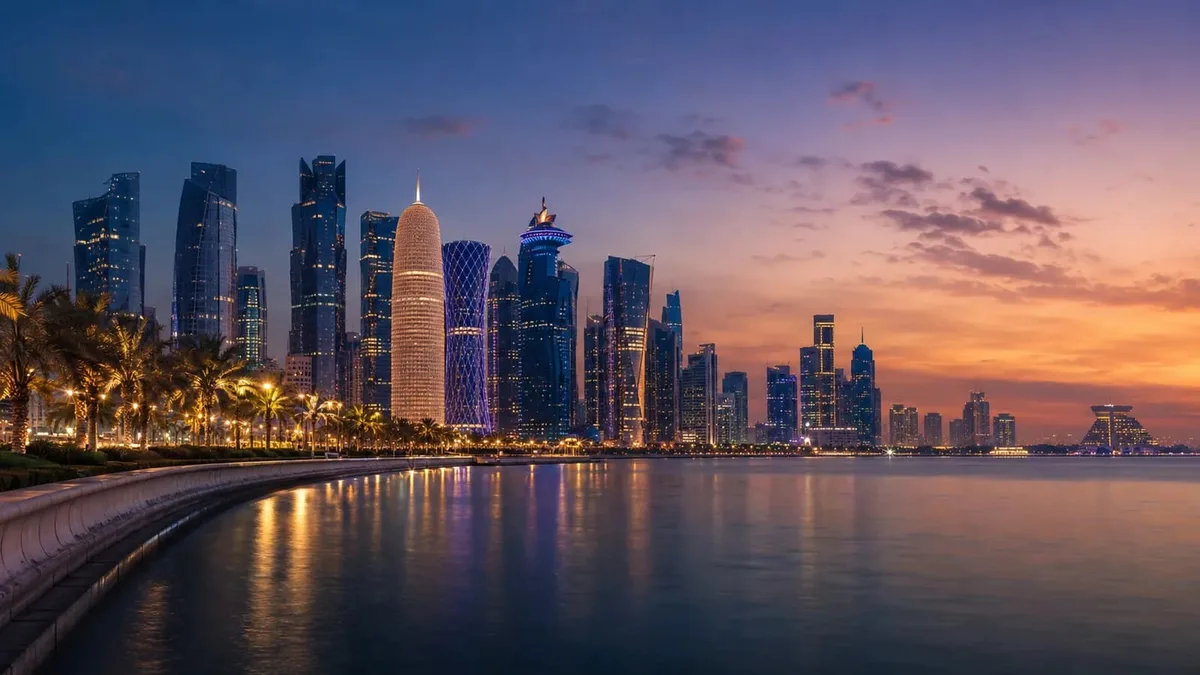
Doha greets a first time visitor with a skyline that rises fast from a low desert coast, then slows the pace down in a souq lane where spice sacks, falcons and hand woven textiles sit within a few steps of each other. The best things to do in Doha balance those two sides of the city: world class museums and a restored downtown on one hand, and old trading streets, a cultural village and quiet parkland on the other. This guide covers the top Doha attractions in the order a first visit flows, starting with the great museums of the southern waterfront, then the souq and Msheireb in the old centre, then Katara, The Pearl and Aspire Park to the north and west.
Every section gives a verified address, opening times where an official source lists them, and a practical tip, plus itinerary, ticket and cost tables. Doha is a compact city for sightseeing, and the metro makes the central sights easy to reach without a car. Give the city three full days at a minimum, and add a fourth day if a desert trip to the Inland Sea is on the list.
Base yourself in Msheireb or Souq Waqif if a first visit is the priority. The National Museum of Qatar, the Museum of Islamic Art, Souq Waqif and Msheireb Museums sit within a compact central area, and the metro interchange at Msheireb connects all three metro lines. Katara and The Pearl suit a second base for visitors who want a quieter northern stay.
Doha at a Glance

| Best Known For | National Museum of Qatar, Museum of Islamic Art, Souq Waqif, Katara Cultural Village, Msheireb Downtown Doha, desert landscapes |
| Location | East coast of the Qatar peninsula, on the Arabian Gulf |
| Top Cluster | Central Doha, with the two great museums, Souq Waqif and Msheireb Museums close together |
| Airport | Hamad International Airport, south of central Doha, on the Red Line |
| Best Months to Visit | November, December, January, February, March and April, when daytime temperatures are mild |
| Good to Know | Friday opening times start later at museums, and modest dress is expected at museums and mosques |
| Currency | Qatari riyal, written as QAR in this guide |
Best for First-Time Visitors

- National Museum of Qatar
- Museum of Islamic Art
- Souq Waqif
Best for Families

- Katara Cultural Village
- Aspire Park
- Msheireb Museums
Best Free Experiences
- Souq Waqif lanes and Gold Souq
- Msheireb Museums heritage houses
- Aspire Park trails and lake views
Top Things to Do in Doha

Start at the southern waterfront, where the National Museum of Qatar and the Museum of Islamic Art anchor a museum day. From there, walk or ride to Souq Waqif and Msheireb for the old centre, then head north to Katara and The Pearl, and west to Mathaf and Aspire Park. Keep the desert day trips for a separate day with a guide and a suitable vehicle.
1. Follow the Story of Qatar at the National Museum of Qatar
Best for
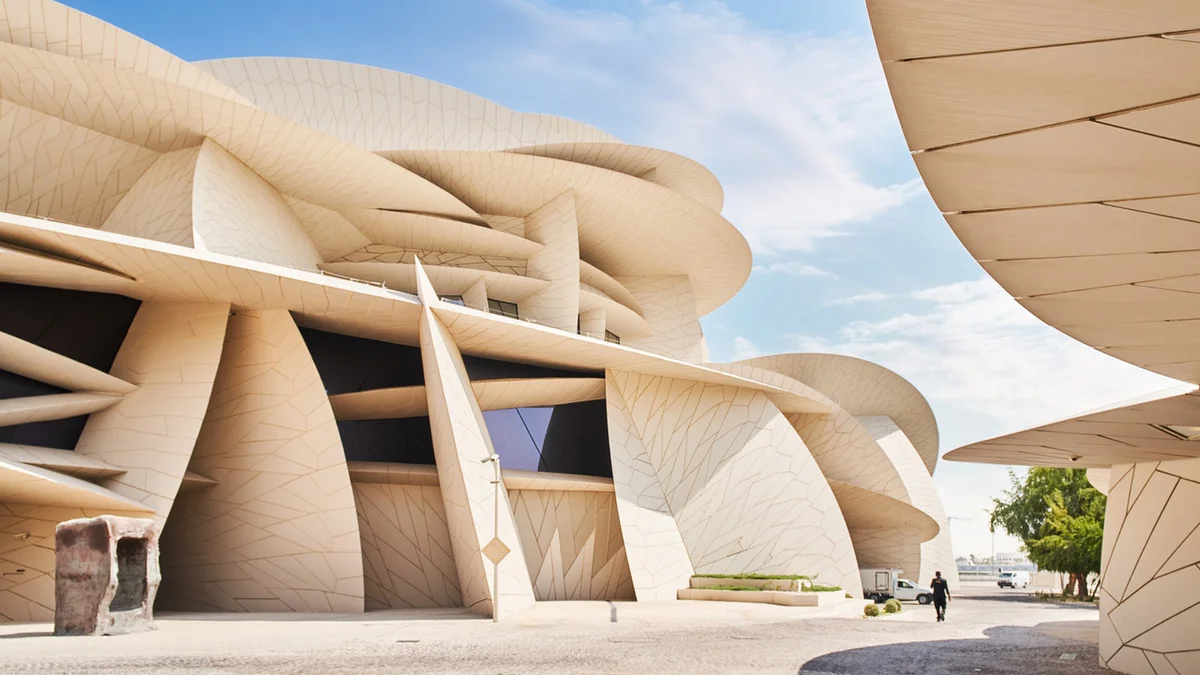
First-time visitors, history lovers and travellers who want the single best introduction to Qatar in one visit. The National Museum of Qatar tells the story of the country from its geological beginnings and desert life through pearling and trade to the modern state, in galleries that mix objects, film and sound. The building alone is worth the trip, and the galleries give context that makes every later stop in Doha easier to read.
French architect Jean Nouvel designed the building around the restored palace of Sheikh Abdullah bin Jassim Al Thani, and the interlocking discs take their form from the desert rose, a crystal formation found in arid regions. Inside, the route runs through eleven galleries in a flowing sequence, with pearl diving boats, traditional dress, jewellery and modern city models along the way. The park around the museum adds playgrounds, gardens and native plants, so families can break a long gallery visit with outdoor time. Allow three to four hours for the galleries.
Address: Museum Park Street, Doha
Do not miss
The restored palace at the heart of the building, and the lagoon side walk at the end of the gallery route, where the disc forms frame the water and the skyline. The palace rooms show how a ruling family lived and governed, and the contrast with the new discs around them sums up the museum theme in one view.
Practical info
The museum is open Sunday, Monday, Wednesday and Saturday from 9:00 in the morning to 7:00 in the evening, Thursday to 9:00 in the evening, and Friday from 1:30 in the afternoon to 7:00 in the evening, and it is closed on Tuesdays, according to the official museum site. Last entry is 45 minutes before closing time, and some galleries may be closed for enhancement work, so check the official site on the day. Tickets are required even for free categories, and admission prices for non resident adults vary across current listings, so the official ticket page should be checked before travel and no price is printed here.
Insider tip: Arrive at opening time and follow the gallery route in order, since the story builds from desert and sea to city. Save the park and the gift shop for the end, when the galleries have thinned out.
2. Admire Fourteen Centuries of Art at the Museum of Islamic Art

Best for
Art lovers, architecture fans and travellers who want the most beautiful single building in Doha. The Museum of Islamic Art stands on its own island at the southern end of the waterfront, designed by architect I. M. Pei, and its limestone tower rises in stepped geometric layers above the water. Inside, the collection spans fourteen centuries of Islamic art, from Spain to Central Asia, with ceramics, metalwork, textiles, manuscripts, glass and jewellery.
Start at the top of the atrium and look up at the domed ceiling and geometric patterns. The permanent galleries are arranged by theme and region, and the highlights include carved ivory, inlaid metalwork, illuminated manuscripts and a famous carpet collection. The park around the museum gives wide views across the water to the West Bay skyline. Allow two to three hours.
Address: Off Al Corniche Street, Doha
Do not miss
The atrium view from the upper galleries, and the fifth floor restaurant terrace view across the water, even for visitors who only stop for tea. The contrast between the quiet galleries and the bright water outside is the strongest memory most visitors take home.
Practical info
The museum is open Saturday to Thursday from 9:00 in the morning to 7:00 in the evening, and Friday from 1:30 in the afternoon to 7:00 in the evening, according to current official listings. Dress modestly, with shoulders and knees covered, and leave large bags for checking at entry. Admission prices for non resident adults vary across current listings, with recent figures of 50 QAR for adults and 25 QAR for students alongside older and discounted figures, so no price is printed here and the official ticket page should be checked before travel.
Insider tip: Visit in the late afternoon, when the light softens on the limestone tower and the park paths are at their quietest. The museum is close to the National Museum station area, so the two museums pair well by metro.
3. Get Lost in the Lanes of Souq Waqif

Best for
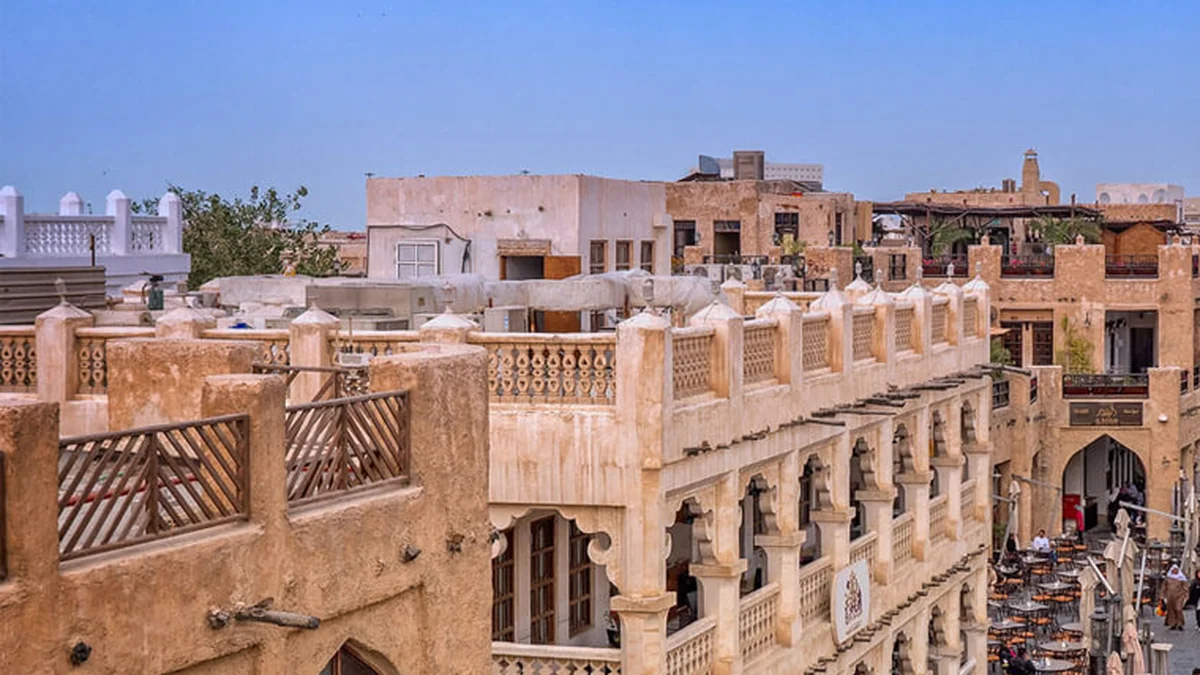
Shoppers, food lovers and travellers who want the living heart of old Doha. Souq Waqif, the standing market, is a restored maze of narrow lanes with spice stalls, textile shops, gold sellers, perfume makers and craft workshops. The souq has traded for generations, and the restoration kept the mud rendered walls, wooden beams and shaded walkways that give the lanes their character.
Begin at the main lanes and work outward to the Gold Souq, where jewellery ranges from everyday pieces to elaborate bridal sets, then to the Falcon Souq, where hooded falcons perch in specialist shops and the falcon hospital stands nearby. The falcon area is open from 9:00 in the morning to 1:00 in the afternoon and from 4:00 in the afternoon to 8:00 in the evening on weekdays, and in the evening only on Fridays, according to Visit Qatar. Spice stalls sell saffron, oud, dried limes and frankincense, and textile shops sell thobes, abayas and hand woven fabrics. Bargaining is expected in smaller stalls, and a polite opening offer well below the first price is the normal pattern. Allow two to three hours, and return in the evening, when the lanes fill with families and the air carries grilled meat, cardamom and coffee.
Address: Al Souq Street, Doha
Do not miss
The Falcon Souq in the morning, when traders are at work and the birds are most active, and a cup of karak tea at a lane side cafe after the Gold Souq. The falcon shops also sell hoods, gloves, lures and perches, which explain falconry far better than any label in a museum case.
Practical info
Souq Waqif is an open market district, so individual shops keep their own hours, with most trade in the morning and again from late afternoon into the evening. The main lanes are pedestrian friendly, although the ground is uneven in places, so flat shoes are the right choice. Keep valuables close in crowded evening lanes, and agree a price before a portrait or a falcon handling session. The souq is a short walk from Msheireb station and from the waterfront.
Insider tip: Shop the spice and textile lanes first, then save the Gold Souq for last, when the light makes the shop windows glow. Ask a shopkeeper about the origin of a textile or a spice blend, since the stories are part of the purchase.
4. Spend a Slow Afternoon at Katara Cultural Village

Best for
Families, art lovers and travellers who want Doha culture in one walkable district. Katara Cultural Village sits between West Bay and The Pearl, and it gathers theatres, galleries, studios, restaurants and public squares in low rise buildings around a central amphitheatre. The village was built as a home for Qatari arts and heritage, and the mix of traditional forms with modern facilities gives it a character unlike any other district in Doha.
Start at the amphitheatre, a classical style open air theatre that seats around 5,000 people and frames views across the village and the water. From there, walk to Katara Mosque, with blue and gold tile work in Persian and Turkish styles, and to the pigeon towers that recall old Qatari dovecotes. The galleries show Qatari and international artists, and the planetarium offers family shows about the sky. The 21 High Street area adds cooled outdoor shopping lanes, and the village squares host exhibitions and workshops through the cooler months. Allow three hours.
Address: 21 High Street, Katara Cultural Village, Doha
Do not miss
Katara Mosque from the amphitheatre side at golden hour, when the tile work catches the light, and the pigeon towers, which are easy to miss on a first walk. The towers are a reminder that Katara is built around old Qatari forms, not only around new cultural halls.
Practical info
Katara is an open village district, so individual venues keep their own hours, and the village itself is open through the day and into the evening. Reach Katara by taxi or by Metrolink bus from a Red Line station, since Katara has no direct metro station of its own. Dress modestly at the mosque, and check the Katara programme before travel, since exhibition and event hours change with the season.
Insider tip: Plan Katara for late afternoon, when the heat eases and the village squares fill with visitors. The amphitheatre steps give the best overview of the whole district in one glance.
5. Walk Four Houses of Old Doha at Msheireb Museums

Best for
History lovers and travellers who want to understand how Doha lived before oil wealth changed the city. Msheireb Museums are four restored heritage houses in Msheireb Downtown Doha, each telling a different part of the city story. The houses were saved from demolition and restored brick by brick, with original gypsum work, teak doors and courtyard layouts kept intact.
Bin Jelmood House tells the hard story of slavery in the Indian Ocean world, pearling and abolition in Qatar, with testimonies from formerly enslaved Qataris. Company House follows the oil industry and the workers who built the modern state. Mohammed Bin Jassim House traces the history of Msheireb and the values behind its regeneration, and Radwani House shows how a Qatari family lived, cooked and raised children across generations. Together, the four houses cover trade, work, family and memory, and around 45 minutes per house suits a slow visit. The surrounding Msheireb Downtown district adds shaded lanes and Barahat Msheireb square.
Address: Msheireb Downtown Doha, Doha
Do not miss
Radwani House kitchen and courtyard, where daily life comes closest to the visitor, and Bin Jelmood House, which is the most moving house in the group. Start with Bin Jelmood House if time is short, since its story frames the whole Msheireb visit.
Practical info
Msheireb Museums are open Monday to Thursday from 9:00 in the morning to 5:00 in the afternoon, Friday from 3:00 in the afternoon to 9:00 in the evening, and Saturday from 9:00 in the morning to 5:00 in the afternoon, according to current listings, and entry is free. Guided tours run in English and Arabic, and the Msheireb tram stop serves the district.
Insider tip: Take a guided tour for at least one house, since guides add family stories that the labels only summarise. The courtyards are the best places to pause between houses.
6. Stroll the Marinas and Canals of The Pearl
Best for
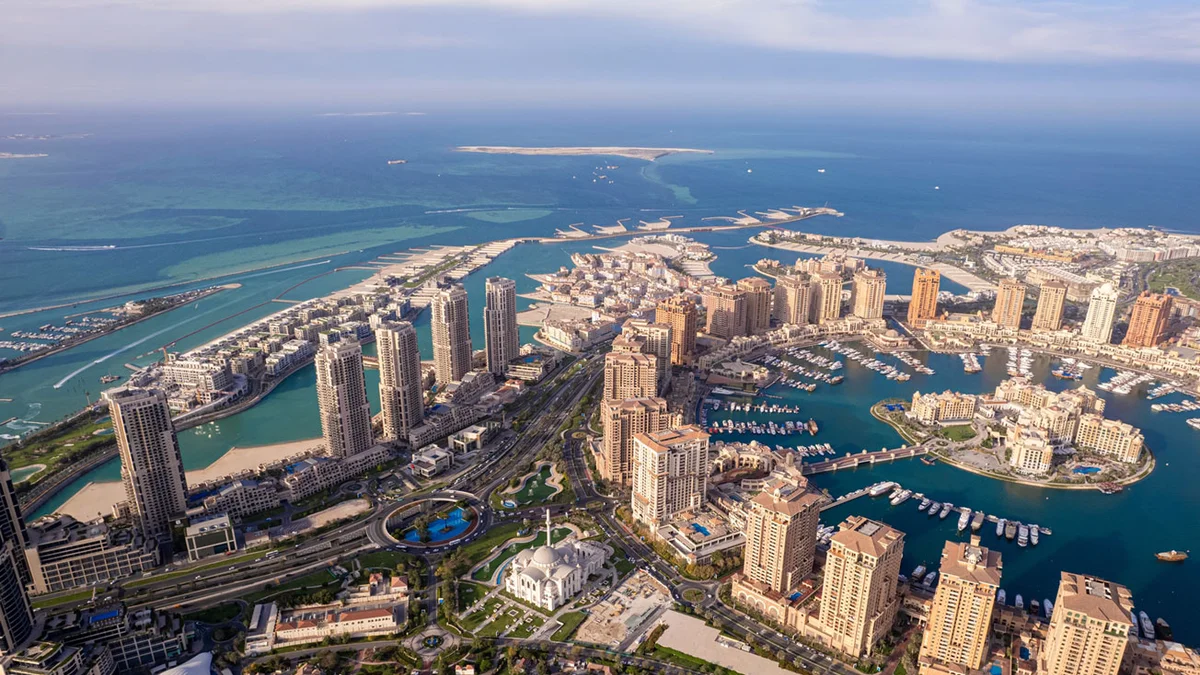
Travellers who want modern Doha at its most polished, with marina walks, canal views and cafe culture. The Pearl is an artificial island district north of West Bay, built on a former pearling site, and it is divided into themed districts with distinct architecture. The name recalls the pearl diving past that once defined the Qatari economy, and the island now holds homes, shops, restaurants and marinas around sheltered water.
Start at Porto Arabia, where towers curve around a circular marina and La Croisette promenade runs for around 2.5 kilometres along the water, with cafes, boutiques and yacht views at every turn. From there, head to Qanat Quartier, the canal district with pastel low rise buildings, arched bridges and a replica Rialto Bridge, which gives the area its Venice nickname. Medina Centrale adds plazas, gardens and play areas for children, and the whole island is best explored on foot. Allow two to three hours, and time the walk for late afternoon, when the light softens on the water and the promenades fill with walkers.
Address: The Pearl, Doha
Do not miss
The Qanat Quartier canals at sunset, when pastel facades reflect in the water, and the Porto Arabia marina from La Croisette, where the West Bay skyline rises across the water behind the yachts. The two views show modern Doha from its most photogenic side.
Practical info
The Pearl is an open district, listed as open 24 hours, with no entry fee, according to Visit Qatar. Reach the island by taxi, since no metro station serves the island directly, and Metrolink buses also link the island with the metro network. Bring sun protection, since shade is limited on the promenades.
Insider tip: Walk Porto Arabia first, then take a taxi to Qanat Quartier, since the two districts are too far apart for a comfortable single walk in summer heat. A canal side coffee stop is the best break between them.
7. Explore Modern Arab Art at Mathaf

Best for
Contemporary art lovers and travellers who want the other half of the Doha museum story. Mathaf: Arab Museum of Modern Art stands in Education City, west of central Doha, and it holds more than 9,000 objects of modern and contemporary Arab art. The collection covers painting, sculpture, photography, drawing and mixed media from across the Arab world and its diaspora, with themes of identity, migration, colonial history and modern life.
The museum opened in 2010, with permanent displays that set canonical figures beside emerging voices. Rotating exhibitions draw on the collection for thematic surveys and solo presentations, and the research and education programmes add talks, workshops and family activities. The Qatar National Library is a short tram ride away. Allow two hours for the galleries, and longer if a major temporary exhibition is on show.
Address: Education City, off Al Luqta Street, Doha
Do not miss
The collection displays that pair early modern Arab painting with contemporary photography, since the pairing shows how quickly Arab art changed across one century. The museum shop is also worth a stop, with catalogues that explain artists and movements in more depth than the wall labels allow.
Practical info
Mathaf is open Sunday, Tuesday, Wednesday and Saturday from 9:00 in the morning to 7:00 in the evening, Thursday to 9:00 in the evening, and Friday from 1:30 in the afternoon to 7:00 in the evening, and it is closed on Mondays, according to the official museum site. Entry is free to all, although tickets are required, so reserve a free ticket before travel. Reach Mathaf from Education City metro station on the Green Line, then walk for around 15 minutes or ride the free Education City tram.
Insider tip: Pair Mathaf with the Qatar National Library on one Education City day, and use the tram between stops. The campus is large, so the tram saves both time and energy in summer heat.
8. Slow Down in the Green Spaces of Aspire Park

Best for
Families, runners and travellers who want a green break from museum days. Aspire Park is the great park of Aspire Zone, in the west of Doha, with wide lawns, a lake with fountains, walking and running trails, playgrounds and views of the Torch Tower. The park covers around 880,000 square metres, according to Visit Qatar, and it is one of the largest green spaces in the city.
The lake sits at the heart of the park, with a water bridge and fountain displays that draw photographers at sunset. Running trails loop through the lawns, and playgrounds keep younger children busy while adults rest under the trees. The Villaggio Mall stands nearby, so a park visit pairs easily with shopping or a mall meal. Allow one to two hours for a relaxed walk, and longer for a picnic or a full family afternoon.
Address: Aspire Zone, Aspire Park Running Trail, Doha
Do not miss
The lake at sunset, when the Torch Tower lights up behind the water, and the early morning running trails, when local runners and families have the park almost to themselves. The quiet lawns against the stadium skyline show the park at its best.
Practical info
Aspire Park is open 24 hours, according to Visit Qatar, with no entry fee. Reach the park from Al Aziziyah station on the Gold Line, then walk for around 15 minutes, or take a bus or a taxi to the Aspire Zone entrance. Bring water and sun protection, since shade is patchy on the main lawns.
Insider tip: Visit at sunrise for the quietest trails and the softest light on the lake. The park is at its busiest on weekend evenings, so a weekday morning visit suits visitors who want space.
More Worth Your Time in Doha
If the eight main sights leave a spare half day, these stops add depth without repeating the same story. The Qatar National Library, at District of Freedom, Education City, Al Luqta Street, Doha, is a vast open library with a heritage collection, a children library and study spaces, and it is open Saturday to Thursday from 8:00 in the morning to 8:00 in the evening, and Friday from 4:00 in the afternoon to 8:00 in the evening. The building alone is worth a visit.
The Fire Station, a former civil defence building turned artist residency near the waterfront, shows contemporary Qatari art in rotating exhibitions, For a quieter cultural stop, the Katara Mosque and the Education City Mosque, at Minaretein, Education City, Doha, are both worth seeing from outside, with the Education City Mosque resting on five large columns that represent the five pillars of Islam.
Doha Attractions Compared

| Attraction | Best For | Cost | Time Needed |
|---|---|---|---|
| National Museum of Qatar | Qatar history in one visit | Check the official ticket page | 3 to 4 hours |
| Museum of Islamic Art | Islamic art and architecture | Check the official ticket page | 2 to 3 hours |
| Souq Waqif | Shopping, food and old Doha life | Free to enter, shopping varies | 2 to 3 hours |
| Katara Cultural Village | Arts, galleries and families | Free village, venues vary | 3 hours |
| Msheireb Museums | Heritage houses and city history | Free entry | 2 to 3 hours |
| The Pearl | Marina walks and canal views | Free to enter | 2 to 3 hours |
| Mathaf | Modern and contemporary Arab art | Free entry, ticket required | 2 hours |
| Aspire Park | Green space and family time | Free entry | 1 to 2 hours |
| Qatar National Library | Reading, heritage and architecture | Free entry | 1 to 2 hours |
Suggested Itineraries

| Trip Length | What to See |
|---|---|
| 1 Day | National Museum of Qatar in the morning, Souq Waqif in the afternoon, and Msheireb Museums in the early evening. |
| 2 Days | Day 1: As above, plus the Museum of Islamic Art at sunset. Day 2: Katara Cultural Village in the morning and The Pearl in the afternoon. |
| 3 Days | Days 1 and 2 as above. Day 3: Mathaf and Qatar National Library in Education City, then Aspire Park in the late afternoon. |
Book Tickets in Doha

Book the main museum sights in advance where the official site offers advance booking, especially on weekends. Every link below goes to the official page for that attraction.
| Attraction | Tickets |
|---|---|
| National Museum of Qatar | Book Tickets |
| Museum of Islamic Art | Book Tickets |
| Msheireb Museums | Book Tickets |
| Mathaf | Book Tickets |
| Al Zubarah Archaeological Site | Book Tickets |
Where to Stay in Doha
Top 3 hotels in Doha
Explore all hotels >- Souq Waqif Boutique Hotels by Tivoli ★★★★★
- Mandarin Oriental, Doha ★★★★★
- W Doha ★★★★★

Central Doha suits almost every itinerary. The National Museum of Qatar, the Museum of Islamic Art, Souq Waqif and Msheireb Museums sit within a compact area, and the metro interchange at Msheireb removes transport cost from central days. Katara and The Pearl suit a quieter northern base.
| Area | Best For | What Is Nearby |
|---|---|---|
| Msheireb and Souq Waqif | First-time visitors who want walkable streets | Souq Waqif, Msheireb Museums and Msheireb station |
| West Bay and The Pearl | Modern stays and marina walks | The Pearl, Katara Cultural Village and waterfront promenades |
| Education City and Aspire Zone | Museum and park days in the west | Mathaf, Qatar National Library and Aspire Park |
| Airport and southern Doha | Short stays and early flights | Hamad International Airport and the National Museum of Qatar |
Two hotels with verified official booking pages cover the main styles of stay:
- Souq Waqif Boutique Hotels by Tivoli: A collection of boutique hotels inside Souq Waqif, Doha, close to the Gold Souq, the Falcon Souq and Msheireb station. Best for travellers who want to sleep inside the old market district, with traditional architecture and immediate access to souq lanes and restaurants.
- Mandarin Oriental, Doha: A luxury hotel at Barahat Msheireb Street, Msheireb Downtown Doha, Doha, overlooking Barahat Msheireb square. Best for travellers who want a polished central stay within walking distance of Souq Waqif, Msheireb Museums and the metro interchange.
Where to Eat in Doha

Doha eats like a trading city, with Qatari machboos and harees beside Levantine mezze, Yemeni mandi, Indian curries and Persian grills. Food often becomes the memory travellers carry home, a pattern explored in our guide to how food tourism is shaping modern travel. The halal options below come first, and every halal label in this section is given exactly as found, with confirm with staff wording where the source is a listing rather than a statement from the restaurant itself.
Halal Food in Doha
Damasca One, listed halal in current listings, sits at Souq Waqif, Al Ahmed Street, Doha. The menu centres on Syrian mezze, kebabs, stews and rice dishes, with a traditional dining room inside the souq. Confirm halal status with staff on the day, since the listing gives no certifier name, and book ahead for weekend evenings, when the souq restaurants fill fast.
Al Shurfa Arabic Restaurant, listed halal in current listings, sits at Souq Waqif, Al Jomrok, Souq Waqif Boutique Hotels, Doha. The menu runs from Mediterranean and Levantine plates to grilled meats and vegetable dishes, and the terrace looks over the souq lanes below. Confirm halal status with staff before ordering meat dishes, since the listing gives no certifier name, and choose vegetable mezze and salads until staff confirm.
Beyond the two listed restaurants, the safest general pattern in Doha is to eat at Qatari and Levantine restaurants inside the souq and Msheireb, where halal food is the norm for local diners, and still to ask staff about meat sourcing at any restaurant that also serves international menus. Karak tea, a sweet spiced milk tea sold at lane side stalls, is the classic Doha drink to try between meals, and dates with Arabic coffee are the traditional welcome in Qatari homes and at cultural venues.
Mosques and Prayer Facilities in Doha

Doha is an easy city for Muslim travellers, with mosques in every district and prayer rooms at malls, metro stations and major attractions. Friday prayers draw large crowds, so arrive early for Jumuah at the major mosques, and dress modestly for every mosque visit, with a head covering for women at prayer halls that provide them.
The Imam Muhammad ibn Abd al-Wahhab Mosque, the State Grand Mosque, stands at Al Muhandiseen Street, Doha, in the Jubailat area south of the waterfront. The mosque was completed in 2011 and holds around 30,000 worshippers, with a central hall, libraries and a Quran recitation hall, and its sandstone facades and domes make it one of the most recognisable buildings in Doha. Visits outside prayer times are the right pattern for non worshippers, and the mosque should be approached with quiet respect at all times.
The Education City Mosque stands at Minaretein, Education City, Doha, and it rests on five large columns that represent the five pillars of Islam. The mosque holds 1,800 worshippers in the main prayer hall and 1,000 more in the exterior courtyard, according to Qatar Foundation, and it serves as the community mosque for the Al Rayyan area. Katara Mosque, inside Katara Cultural Village at 21 High Street, Doha, is a third useful stop, with blue and gold tile work that makes it a landmark in its own right. Prayer rooms at Hamad International Airport, at major malls and at Msheireb station cover the gaps between mosque visits.
Getting Around Doha

| Option | Best For | Cost |
|---|---|---|
| Doha Metro | Central sights, the airport and Education City | 2 QAR per standard journey, 6 QAR daily cap |
| Metrolink bus | Katara, The Pearl and Villaggio Mall from metro stations | Free with a valid metro ticket |
| Taxi and Karwa | The Pearl, Katara and evening trips | Metered and app fares vary |
| Walking | Souq Waqif, Msheireb and museum waterfront | Free, but summer heat limits midday walking |
| Guided tour and car | Al Zubarah, Inland Sea and Al Thakira day trips | Tour price varies, check the operator |
The Doha Metro has three lines, Red, Green and Gold, and all three meet at Msheireb station, the central interchange. A standard journey costs 2 QAR, with a daily cap of 6 QAR, and children under five travel free, according to current metro guides. Buy a rechargeable travel card at station machines or ticket offices, and tap in and out on every journey. Friday metro hours start later than weekday hours, so check the Qatar Rail app on the day of travel, especially for early airport trips.
Hamad International Airport has its own Red Line station, Hamad International Airport Terminal 1, and the ride to Msheireb is the simplest arrival route into central Doha. A taxi earns its keep for Katara, The Pearl and Aspire Park, while central days are best done on foot and by metro.
What a Day in Doha Costs

| Travel Style | Attractions | Food | Stay and Transport | Rough Daily Total |
|---|---|---|---|---|
| Budget Traveller | 0 to 50 QAR, mixing free sights with one museum | 60 to 100 QAR | 250 to 400 QAR hotel, metro fares | 310 to 550 QAR |
| Mid-Range Traveller | 50 to 150 QAR for two or three paid sights | 150 to 250 QAR | 500 to 900 QAR hotel, taxi fares | 700 to 1300 QAR |
| Family of Four | 100 to 250 QAR with museum tickets | 300 to 450 QAR | 700 to 1200 QAR family room, taxi fares | 1100 to 1900 QAR |
Doha rewards planners. Souq Waqif, Msheireb Museums, Mathaf and Aspire Park cost nothing to enter, and the metro daily cap keeps central transport costs low. Museum ticket prices for non resident adults should be checked on the official ticket pages before travel, since current listings conflict, and the totals above are rough planning figures, not quoted prices.
Best Time to Visit Doha

| Season | Weather | Good For |
|---|---|---|
| November to April | Mild days, cool evenings | Museums, souq walks, parks and desert day trips |
| May and October | Warm days, warm evenings | Early morning sights, indoor museums and evening walks |
| June to September | Very hot and humid days | Air conditioned museums, malls and evening activity only |
November to April is the best time to visit Doha, with daytime temperatures that suit walking, park visits and desert trips. Summer visits are still possible, but the plan should shift to indoor museums in the middle of the day and outdoor walks at sunrise or after sunset, with plenty of water and regular indoor breaks.
Day Trips from Doha

Al Zubarah Fort and Archaeological Site
Around 100 kilometres northwest of Doha, Al Zubarah is a UNESCO World Heritage site and the best preserved example of an eighteenth to nineteenth century trading and pearling town in the Gulf region, according to Qatar Museums. The fort, built in 1938 as a coast guard station, stands beside the walled town remains. The site is open Saturday to Thursday from 9:00 in the morning to 5:00 in the afternoon, and Friday from 12:30 in the afternoon to 5:00 in the afternoon, and entry is ticketed. Allow a half day with a car or a guided tour, and bring water, since shade is limited on the site. Al Zubarah appears as plain text (guide in preparation) for a future detailed guide.
Inland Sea viewpoint, Khor Al Adaid
South of Doha, near the border with Saudi Arabia, the Inland Sea is a UNESCO recognised natural reserve where high desert dunes meet the water of the Gulf. The visit here is a viewpoint visit: travel with a licensed desert guide in a suitable four wheel drive vehicle, stop at a high dune viewpoint, and take in the meeting of sand and water from above. Travel with a guide, since self driving in soft sand is risky without desert experience. The Inland Sea appears as plain text (guide in preparation) for a future detailed guide.
Al Thakira Mangroves viewpoint
North of Doha, near Al Khor, the Al Thakira mangroves form one of the most unexpected landscapes in Qatar, with grey mangrove trees rising from tidal flats and channels. The visit here is kept to scenery and birdlife: walk the land side viewpoints, watch herons, terns and flamingos at low tide, and study the pencil roots that rise from the mud around each tree. Allow a half day with a car, and pair the trip with Al Khor harbour and its wooden dhows. Al Thakira appears as plain text (guide in preparation) for a future detailed guide.
Practical Tips for Doha

- Dress modestly at museums, mosques and cultural venues, with shoulders and knees covered, and carry a light scarf for mosque visits.
- Plan around Friday hours, since museums open at 1:30 in the afternoon on Fridays and the metro starts later than on weekdays.
- Carry water on every outdoor walk, and shift park and souq walks to early morning or late afternoon in the warmer months.
- Buy a metro travel card on arrival, and keep it topped up, since the daily cap makes repeated central journeys cheap.
- Book museum tickets in advance on weekends, and check gallery closure notices on the official museum sites before travel.
- Confirm halal status with staff at any restaurant where the label comes from a listing rather than from the restaurant itself.
Final Thoughts on Doha
Doha rewards visitors who slow down. The great museums give the story, the souq gives the smells and sounds of old trading life, and Msheireb, Katara and Aspire Park show how the city lives today. Three days cover the central sights well, and a fourth day adds the desert. Travel here is also a reminder that food carries the story of a place, a theme explored in our guide to how food tourism is shaping modern travel, from karak tea in a souq lane to machboos at a family table.
The National Museum of Qatar and the Museum of Islamic Art give the story of the country, Souq Waqif gives the smells and sounds of old trading life, and Katara Cultural Village, Msheireb Museums, The Pearl, Mathaf, and Aspire Park show how the city lives today. The three day plan in this guide pairs the two great museums with the souq on day one, Katara and The Pearl on day two, and Mathaf with the desert on day three.
November to April brings mild days and cool evenings for museums, souq walks, parks, and desert day trips, while June to September brings very hot and humid days suited to air conditioned museums and evening activity only. Use the Metro for central sights, the airport, and Education City, at 2 QAR per standard journey with a 6 QAR daily cap, and the free Metrolink bus for Katara, The Pearl, and Villaggio Mall. Plan around Friday hours, since museums open at 1:30 in the afternoon on Fridays and the metro starts later than on weekdays, and carry water on every outdoor walk.
Central Doha suits almost every itinerary, with the National Museum, the Museum of Islamic Art, Souq Waqif, and Msheireb Museums in a compact area, while Katara and The Pearl suit a quieter northern base. Doha is an easy city for Muslim travellers, with mosques in every district and prayer rooms at malls, metro stations, and major attractions, and Friday prayers draw large crowds, so arrive early for Jumuah. If a fourth day is free, Al Zubarah Fort sits around 100 kilometres northwest, a UNESCO World Heritage site and the best preserved example of an eighteenth to nineteenth century trading and pearling town in the Gulf region.
Keep Exploring
FAQs
What are the best things to do in Doha for first-time visitors?
Start with the National Museum of Qatar, the Museum of Islamic Art and Souq Waqif, then add Msheireb Museums and Katara Cultural Village. This route covers Qatar history, Islamic art, old trading life, heritage houses and contemporary culture in three days.
How many days do you need in Doha?
Three full days cover the central museums, the souq, Msheireb, Katara and The Pearl. A fourth day adds Mathaf, the Qatar National Library and Aspire Park, and a fifth day adds a desert day trip to Al Zubarah or the Inland Sea viewpoint.
What is Doha best known for?
Doha is best known for the National Museum of Qatar, the Museum of Islamic Art, Souq Waqif, Katara Cultural Village, Msheireb Downtown Doha, The Pearl and its desert landscapes, from the Inland Sea dunes to the Al Zubarah heritage site.
When is the best time to visit Doha?
November to April brings the most comfortable sightseeing weather, with mild days and cool evenings. May and October suit early morning and evening sightseeing, while June to September is best kept to air conditioned museums and evening walks.
Is Doha a good destination for families?
Yes. Katara Cultural Village, Aspire Park and Msheireb Museums all suit children, the National Museum of Qatar has family galleries and a park, and the metro and Metrolink buses make central days easy without a car.
Where can visitors find halal food in Doha?
Damasca One and Al Shurfa Arabic Restaurant in Souq Waqif are listed halal in current listings, and Qatari and Levantine restaurants in the souq and Msheireb are the normal halal pattern for local diners. Confirm halal status with staff before ordering meat dishes where the label comes from a listing.
How do visitors get around Doha without a car?
Ride the metro between central sights, with Msheireb station as the interchange for all three lines, and use Metrolink buses and taxis for Katara, The Pearl and Aspire Park. A guided tour or a car is still needed for Al Zubarah, the Inland Sea viewpoint and Al Thakira.
