
Things to Do in Kruje, Albania: Castle, Skanderbeg Museum, Old Bazaar and Mountain Views
Kruje greets a first time visitor with a castle on a rocky ridge, a cobbled bazaar below the walls, and a story of resistance that shaped the identity of Albania. The town sits on a mountainside around 32 kilometres north west of Tirana, above the plain that runs toward Durres, and the castle once served…
Kruje greets a first time visitor with a castle on a rocky ridge, a cobbled bazaar below the walls, and a story of resistance that shaped the identity of Albania. The town sits on a mountainside around 32 kilometres north west of Tirana, above the plain that runs toward Durres, and the castle once served as the stronghold of Gjergj Kastrioti, known as Skanderbeg, during 25 years of resistance in the fifteenth century. Kruje is also spelled Kruja in English. Begin at the castle in the morning, walk the Old Bazaar at midday, and finish with the mountain light over the plain in the late afternoon.
This guide covers the top things to do in Kruje in the order a first visit flows, starting with Kruja Castle and the Skanderbeg Museum, then the Old Bazaar, the Ethnographic Museum, the Bazaar Mosque, the Dollma Tekke, the Sari Salltik shrine, and Albanopolis. Each section gives a verified address and a practical tip, with tables on halal food and mosques. For wider planning, the guide to The Ultimate Guide: 19 Best Things to Do in Albania (2026 Edition) sets Kruje beside the other great sights of Albania.
Base yourself near the Old Bazaar if you can. The castle, the museums, the mosque and the main viewpoints all sit within a compact upper town, although the climb from the lower town is steep and the cobbles need sturdy shoes.
Stay here: Hotel Panorama Kruje
Hotel Panorama Kruje stands at Rruga Kala, Kruje, at the entrance to the Old Bazaar, steps from Kruja Castle and the Skanderbeg Museum. The hotel holds 75 rooms, with a terrace and balcony views toward the castle and the plain. Phone: +355 511 24336.
Kruje at a Glance

Best for First-Time Visitors
- Kruja Castle
- Skanderbeg Museum
- Old Bazaar
Best for Families
- Ethnographic Museum
- Castle viewpoints
- Bazaar Mosque visit
Best Free Experiences
- Castle grounds and viewpoints
- Old Bazaar walk
- Statue of Skanderbeg in the town square
| Best Known For | Kruja Castle, the Skanderbeg Museum, the Old Bazaar, the Ethnographic Museum, the Bazaar Mosque, the Dollma Tekke, the Sari Salltik shrine, and the ruins of Albanopolis |
| Location | Mountain town around 32 kilometres north west of Tirana, above the plain toward Durres, at around 600 metres above sea level |
| Claim to Fame | Stronghold of Skanderbeg during 25 years of resistance against Ottoman expansion, from 1443 to 1468, and the town where Albanian national identity took shape |
| Top Cluster | The upper town around Rruga Kala, with the castle, the museums, the mosque, the tekke and the Old Bazaar close together |
| Nearest Airport | Tirana International Airport, around 40 minutes away by car or taxi, with no direct bus from the airport to Kruje |
| Best Months to Visit | April, May, June, September and October |
| Good to Know | The upper town is compact and walkable, mountain weather changes fast, cash in lek helps for small charges and museum tickets, and the climb to the castle is steep |
Top Things to Do in Kruje

Start at Kruja Castle and the Skanderbeg Museum, then walk down through the Old Bazaar, return to the castle grounds for the Ethnographic Museum and the Dollma Tekke, visit the Bazaar Mosque, and keep the Sari Salltik shrine and Albanopolis for the second half of the day or a second day.
1. Walk the Walls and Viewpoints of Kruja Castle

Best for
First-time visitors, history lovers and travellers who want to understand why Kruje holds a central place in the story of Albania. Kruja Castle is one of the most famous castles in Albania, an elliptical shaped fortress covering around 2.5 hectares on a rocky hill, built during the fifth and sixth centuries. The castle served as the main base of Skanderbeg, and its walls held through repeated sieges during the resistance of 1443 to 1468. Today the castle grounds hold the Skanderbeg Museum, the Ethnographic Museum, the Dollma Tekke, the remains of a church and a clock tower, and the homes of families who still live inside the walls.
Walk the full circuit of the walls before entering either museum. The fortified walls include nine towers, and the viewpoints from the ramparts look across the plain toward Tirana and Durres. The arched tunnel entrance, the watch tower, and the bell tower of the Church of St George, built in 1462 and later turned into a clock tower by the Ottomans, give the walk a clear sequence of stops, and the remains of the church itself, with a fragment of original fresco, reward a slow pause.
The castle grounds are open and free to enter, with charges applying only at the museums inside. The climb from the lower town is steep, so a taxi to the castle area suits visitors who prefer a gentler approach.
Address: Kruja Castle, Rruga Kala, Kruje 1501
Do not miss
The view from the ramparts toward Tirana and Durres, the clock tower, and the arched tunnel entrance.
Practical info
Confirm museum charges at the ticket points on the day, since published figures differ. Carry cash in lek and allow around one hour for the walls alone.
Insider tip: Walk the walls first and visit the museums second, so the scale of the fortress and the sweep of the plain frame the story told inside.
2. Follow the Life of Skanderbeg in the National Museum

Best for
History lovers, first-time visitors and travellers who want the full story behind the castle walls. The National Museum Gjergj Kastrioti Skenderbeu, known in English as the Skanderbeg Museum, stands inside Kruja Castle and chronicles the life of Gjergj Kastrioti, who led the resistance against Ottoman expansion for 25 years. The museum was inaugurated on 1 November 1982, designed by architects Pirro Vaso and Pranvera Hoxha, with architecture inspired by traditional Albanian stone towers. Inside, the pavilions cover antiquity, the Albanian principalities, the Ottoman invasion and the resistance, with weapons, documents, icons, a bell from 1462, and original swords from the fifteenth century among the displays.
The story told inside runs from the early life of Gjergj Kastrioti through the revolt of 1443, the defence of Kruje through three major sieges, and the legacy that followed his death in 1468. The rooms build the narrative step by step.
Plan the museum visit for the morning, when the rooms are quietest, and allow one to two hours. Photography without flash is permitted, and audio guides are reported as available for an additional fee.
Address: Kruja Castle, Rruga Kala, Kruje 1501
Do not miss
The resistance pavilion, the original fifteenth century swords, and the bell from 1462.
Practical info
Confirm hours and admission on the day and carry cash in lek. Hours are reported as 09:00 to 19:00 in summer, with admission from 200 to 500 lek, and Monday opening differs between listings.
Insider tip: Visit the museum before the Ethnographic Museum, so the story of resistance frames the story of daily life that follows.
3. Wander the Cobbles of the Old Bazaar
Best for
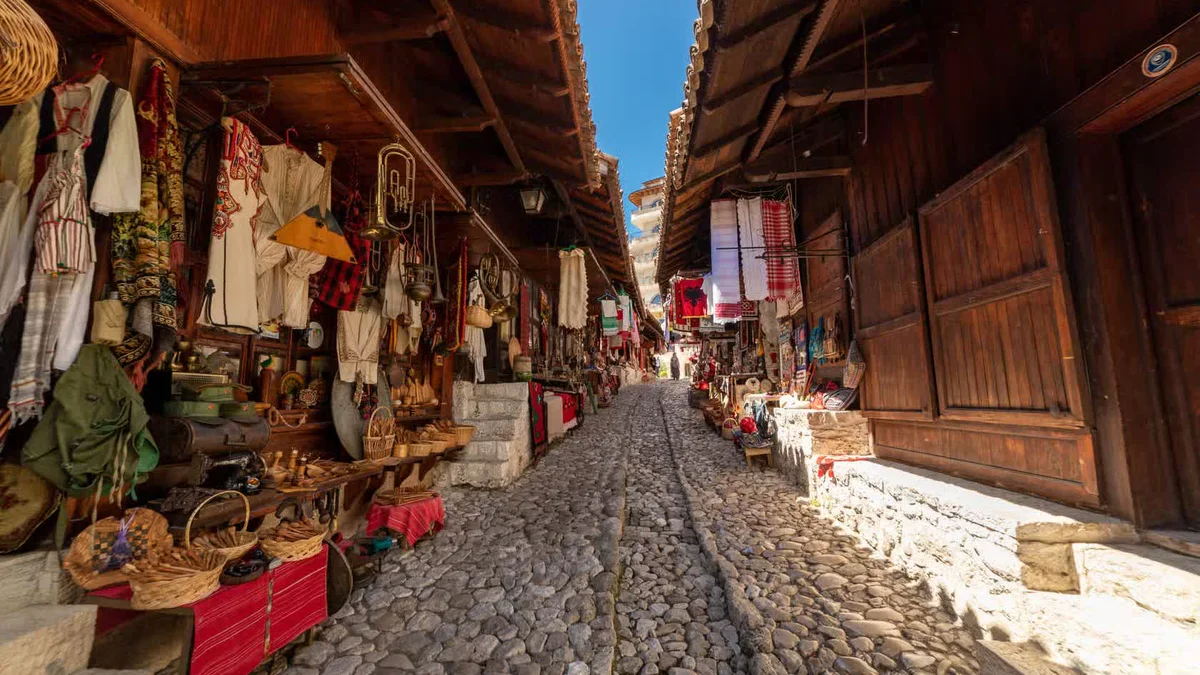
Shoppers, craft lovers and travellers who enjoy a market that still works for a living. The Old Bazaar of Kruje, known in Albanian as Pazari i Derexhikut, runs along the cobbled road that leads up to the castle, with wooden shops on both sides of the street selling handmade Albanian crafts. The bazaar occupies a commercial site described in sources from the Skanderbeg era, in Ottoman period stone buildings from the seventeenth century. The shops sell filigree silver jewellery, copperwork, embroidered textiles, kilim rugs, alabaster carvings, woodwork, traditional clothing, ceramics and antiques.
Walk the bazaar slowly in both directions. The uphill walk toward the castle gives the best sense of the street as a route, while the downhill walk gives time to look closely at the craftwork without the climb. The street is short and single, so the bazaar suits a relaxed hour of browsing, and the best approach is to walk the full length, note the workshops that interest you most, and return to them on the way back.
The bazaar also gives the most direct contact with the daily life of Kruje, with cafes and small restaurants along the route, the statue of Skanderbeg in the square below, and the Bazaar Mosque in the bazaar itself. The morning gives the quietest browsing.
Address: Pazari i Derexhikut, Rruga Kala, Kruje
Do not miss
The filigree silverwork, copperwork, kilim rugs and embroidered textiles.
Practical info
The bazaar is free to walk at all hours. Carry cash in lek and agree the price before buying larger pieces such as rugs and silverwork.
Insider tip: Walk the bazaar uphill to the castle in the morning, then browse on the way back down, when you know which workshops deserve a second look.
4. Step Inside the Ethnographic Museum

Best for
Families, first-time visitors and travellers who want to see how Albanian families lived in the centuries after Skanderbeg. The National Ethnographic Museum of Kruje stands inside the castle grounds in an original eighteenth century Ottoman residence, built in 1764 and once owned by the affluent Toptani family, with original frescoes from 1764 and the status of a Category I Cultural Monument. The museum was inaugurated on 20 November 1989, and after a restoration completed in 2024, it presents around 1,000 artefacts across 15 rooms.
Each room shows a different aspect of traditional life, from the ground floor workspaces with baking ovens and olive oil processing equipment to the upper floor family rooms with authentic furnishings, bridal dowry chests, historic costumes, ceramics and textiles dating back up to 500 years. The workshops show tools for milling, leatherwork, wool processing and olive oil production, while the family rooms show how a wealthy household organised daily life.
Visit the Ethnographic Museum after the Skanderbeg Museum. Allow around one hour for the 15 rooms, and ask staff before taking photographs indoors.
Address: Kruja Castle, Rruga Kala, Kruje
Do not miss
The frescoed rooms from 1764, the dowry chests and costumes, and the ground floor workshops.
Practical info
A small separate charge applies. Confirm the figure at the entrance on the day, carry cash in lek, and check the current timetable before planning around a fixed hour.
Insider tip: Start on the ground floor and work upward, so the workshops explain the objects and clothing you meet in the family rooms above.
5. Visit the Bazaar Mosque of Murad Bey
Best for
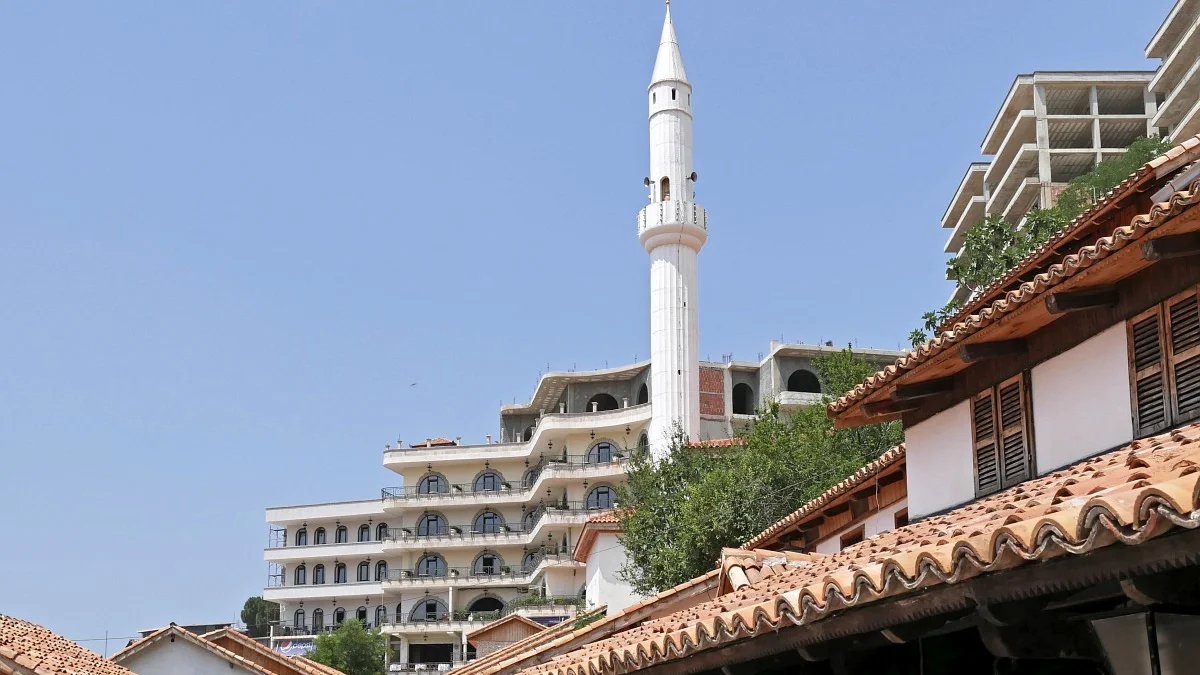
Muslim travellers, architecture lovers and visitors who want a quiet pause in the heart of the Old Bazaar. The Bazaar Mosque, known in Albanian as Xhamia e Pazarit and also called the Murad Bey Mosque or the Varosh Mosque, stands in the historic Derexhiku Bazaar of Kruje, known in Ottoman times as Akce Hisar. The mosque was completed in 1533, built by Murad Bey, an Ottoman Albanian bey, and it holds the status of a Cultural Monument of Albania. The mosque was closed in 1967, when its stone minaret was demolished, and worship resumed in 1991, with the minaret balcony rebuilt in 1994.
The mosque gives Muslim travellers a central place of prayer within a few steps of the bazaar and the castle route, and it gives all visitors a fine example of Ottoman architecture in a working town setting. The visit pairs naturally with the Old Bazaar walk: browse the market, step inside the mosque outside prayer times, and return to the street. A renovation in the 2010s refreshed the building, and the present interior is plain and calm.
Visit outside prayer times, dress modestly, remove shoes, and ask before taking photographs inside. Prayer times for Kruje are published by eSalah using the Muslim World League method, and times shift through the year, so check the current day timetable.
Address: Derexhiku Bazaar, Kruje, coordinates 41.509666, 19.794523
Do not miss
The calm of the prayer hall outside prayer times, and the minaret above the shop roofs.
Practical info
The mosque is an active place of worship with no entry charge. Visit outside prayer times, carry a head covering, and dress modestly.
Insider tip: Pair the mosque visit with the bazaar walk in the late morning, between Dhuhr and Asr, for the quietest prayer hall and the liveliest market street outside.
6. Pause at the Dollma Tekke in the Castle Grounds

Best for
Travellers interested in Sufi heritage, quiet corners and the layered religious history of the castle. The Tekke of Dollme, also called the Haxhi Mustafa Baba Tekke, stands in the southern corner of the fortress of Kruja, in Lagjja Kala, and holds the status of a Cultural Monument of Albania. The tekke was built in 1779 to 1780 by Adem Aga Toptani, whose marble tomb stands inside the building, and it served the Bektashi order, a Sufi order with deep roots in Albania. Before its destruction under the communist dictatorship, the tekke held 360 holy graves and was known as Little Khorasan.
The building rewards close looking. It was constructed in the Byzantine style, with murals from a later period on most of the inner walls, painted in two phases: the mihrab, the side niches and the wall between them in 1779, and the dome and the walls in 1807. A fragmented inscription near the mihrab preserves the date 1779, and the presence of a mihrab suggests that the building may originally have served as a mosque before becoming a Sufi shrine.
Treat the tekke as a quiet stop within the castle visit. The tekke is hidden in the lowest part of the castle. Dress modestly, keep voices low, and ask before taking photographs inside.
Address: Southern corner of Kruja Castle, Lagjja Kala, Kruje
Do not miss
The murals, the mihrab, and the inscription fragment dated 1779.
Practical info
No firm hours or charge were verified, so confirm access locally on the day. Allow around 30 minutes for the tekke and the walk to and from the site.
Insider tip: Visit the tekke after the two castle museums, when the crowds have thinned and the quiet of the site comes through most clearly.
7. Climb to the Sari Salltik Shrine Above Kruje

Best for
Walkers, photographers and travellers who want mountain air, wide views and a place of spiritual calm above the town. The Sari Salltik shrine, also spelled Sarisalltik, stands high on the mountain above Kruje, in Qafe Shtama National Park, and draws pilgrims and visitors as a Bektashi shrine with a cave, a small mosque and forest surroundings. Tour listings describe the shrine as perched on mountain cliffs above Kruje, with a moderate walk up from the road, panoramic views, and a peaceful, reflective atmosphere.
Treat Sari Salltik as a half day outing rather than a casual stroll from the castle. The shrine sits well above the town, so a car, a taxi or a guided tour is needed to reach the start of the walk, and the route rewards walkers who arrive early, when the light is clear and the air stays cool. The walk is described as moderate, suitable for most physically active travellers, but visitors with a fear of heights or limited mobility should plan carefully, since the path is uneven. Dress modestly and ask before taking photographs inside the shrine areas.
The shrine completes the mountain story of Kruje: the castle gives the history, the bazaar gives the craft, and Sari Salltik gives the high mountain viewpoint across the plain. The visit at the shrine itself lasts around 30 minutes in tour itineraries.
Address: Sari Salltik shrine, Mount Kruja, Qafe Shtama National Park, above Kruje
Do not miss
The view across the plain, and the quiet of the cave shrine.
Practical info
No firm entry charge was verified, and tour listings describe the cave visit as free. Allow a half day including travel, wear sturdy shoes, and check the weather before setting out.
Insider tip: Arrive early and walk to the shrine before the midday heat, then return to the town for lunch on Rruga Kala.
Stay here: Hotel Dior
Hotel Dior stands on Rruga Donika Kastrioti, Kruje 1501, within a 15 minute walk of Kruja Castle. The hotel holds around 30 rooms, with a restaurant and complimentary breakfast. Phone: +355 69 209 9935.
8. Trace Illyrian Roots at Albanopolis and Zgerdhesh

Best for
History lovers, archaeology fans and travellers who want the deepest layer of the Kruje story. Albanopolis, at Zgerdhesh, near the village of the same name a few kilometres from Kruje, was the centre of the Illyrian tribe of the Albans, from which the country and the people took the name Albania. The site flourished in the fourth century BC, occupied an area of around 10 hectares, and was surrounded by high walls and towers, The city was abandoned centuries later, when the local population moved to nearby Kruja or Lezha.
What survives gives a clear sense of the scale of the ancient city. A fragment of the imposing wall around 90 metres long can be seen at the lower part of the hill, along with the remains of three rectangular Illyrian watchtowers thought to have been built in the fourth century BC, and brick tombs found by archaeologists in the area. The site sits around 5 kilometres from Fushe Kruje and only a short drive from Kruje town, and tour itineraries commonly stop at Albanopolis on the way between Tirana airport and Kruje. A guide adds real value here, since the remains are fragmentary.
Treat Albanopolis as a half day outing with a guide or a driver. Wear sturdy shoes, carry water, and check access locally before setting out.
Address: Zgerdhesh village, near Kruje, around 5 kilometres from Fushe Kruje
Do not miss
The wall fragment and the remains of the three watchtowers.
Practical info
No firm entry charge or hours were verified, so arrange the visit through a local guide or your hotel. Allow one to two hours including travel from Kruje town.
Insider tip: Visit Albanopolis on the way to or from Tirana, so the ancient city frames the medieval castle visit that follows.
More Worth Your Time in Kruje

The Statue of Skanderbeg stands in the town square below the bazaar, a bronze statue of Skanderbeg on horseback with sword raised, on a lower pedestal than the duplicate statue in Skanderbeg Square in Tirana. The statue forms a natural meeting point and a starting point for the walk up through the bazaar to the castle. Qafe Shtama National Park, with pine forests and clear water springs, gives a second mountain outing beyond the Sari Salltik shrine, with peaceful walks through forest a short drive from the town. The Black River Canyon, between Kruja Mountain and Gamnit Mountain, offers a walking trail with views of waterfalls and old Ottoman bridges, best visited with a local guide. The castle mosque remains near the castle entrance give a final heritage stop inside the castle grounds.
Kruje Attractions Compared

Kruja Castle, the Old Bazaar and the Ethnographic Museum each need about one hour.
| Attraction | Best For | Time Needed | Cost |
| Kruja Castle | History and panoramas | 1 hour | Free grounds |
| Skanderbeg Museum | Resistance story | 1 to 2 hours | Confirm on the day |
| Old Bazaar | Crafts and browsing | 1 hour | Free |
| Ethnographic Museum | Families and daily life | 1 hour | Confirm on the day |
| Bazaar Mosque | Quiet reflection and prayer | 30 minutes | Free |
| Dollma Tekke | Sufi heritage | 30 minutes | Confirm on the day |
| Sari Salltik shrine | Mountain views and calm | Half day | Confirm on the day |
| Albanopolis | Ancient history | 1 to 2 hours | Confirm on the day |
Suggested Itineraries

One day covers the castle, the Skanderbeg Museum, the Old Bazaar and the Bazaar Mosque.
| Itinerary | Morning | Afternoon | Evening |
| One day in Kruje | Kruja Castle and Skanderbeg Museum | Old Bazaar and Bazaar Mosque | Ethnographic Museum and castle viewpoints at sunset |
| Two days in Kruje | Dollma Tekke and castle grounds | Sari Salltik shrine half day | Town square, Statue of Skanderbeg and dinner on Rruga Kala |
| Three days in Kruje | Albanopolis and Zgerdhesh | Qafe Shtama National Park walk | Day trip planning for Tirana or Durres |
Book Tickets in Kruje

No online ticket checkout was verified for any Kruje sight, so the table links to visit pages only. Tickets where charged are bought at the door or arranged locally. No checkout URL is invented.
| Ticket | Where to Book | Notes |
| Kruja Castle grounds | Visit page | Grounds free; museum charges separate |
| Skanderbeg Museum | Visit page | Tickets at the door; confirm hours and charge on the day |
| Ethnographic Museum | Visit page | Tickets at the door; separate charge from the Skanderbeg Museum |
| Sari Salltik guided tour | Visit page | Book through a tour operator; shrine visit free in tour listings |
| Albanopolis guided visit | Visit page | Arrange through hotel or local guide |
Where to Stay in Kruje
Top 3 hotels in Kruje
Explore all hotels >- Hotel Panorama Kruje ★★★★
- Hotel Dior ★★★
- Hotel Kroi

Stay near the Old Bazaar for the shortest walks to the castle, the museums, the mosque and the main viewpoints. The upper town holds the main hotels on and around Rruga Kala, while the lower town suits drivers who want easier road access.
Hotel Panorama Kruje
Hotel Panorama Kruje stands on Rruga Kala at the entrance to the Old Bazaar, just steps from Kruja Castle and the Skanderbeg Museum. The hotel holds 75 air conditioned rooms with private balconies, free wireless internet, free self parking, a restaurant, a coffee shop, tour and ticket assistance, and a complimentary buffet breakfast served daily from 07:00 to 10:00. The terrace and balconies give views toward the castle and the plain. Phone: +355 511 24336.
Hotel Dior
Hotel Dior stands on Rruga Donika Kastrioti in Kruje, within a 15 minute walk of Kruja Castle and the Skanderbeg Museum, and a short walk from the Old Bazaar. The hotel holds around 30 air conditioned guestrooms with complimentary wireless internet, private parking, a restaurant and a complimentary breakfast served daily from 07:00 to 10:00. Recent guest reviews praise the clean modern rooms, the friendly staff and the views at sunset. Phone: +355 69 209 9935. Email: info@hoteldior.al.
| Area | Best For | Notes |
| Upper town, Rruga Kala | First-time visitors and walkers | Closest to the castle, bazaar, museums and mosque |
| Centre, Rruga Donika Kastrioti | Comfortable stays and families | Modern hotels a short walk from the Old Bazaar |
| Lower town, SH38 side | Drivers and onward travel | Quick access to the Tirana road and the airport route |
Where to Eat in Kruje

Halal Food in Kruje
Kruje gives Muslim travellers a workable halal starting point, led by one clearly named halal pizzeria beside the Old Bazaar. The strongest verified halal name is Pizzeria Kupa Hallall, listed at plus code GQ6V+364 in Kruje, phone +355 68 635 8863, hours 08:00 to 23:00 daily. A 2026 dining guide for Kruje places Pizzeria Kupa close to the Old Bazaar and Kruje Castle, lists halal food among its best for categories, and states that the restaurant offers a halal menu, with wood fired pizza, chicken doner, kebabs and shawarma. Label Pizzeria Kupa Hallall as listed halal, and confirm halal status with staff on the day, since listings can change and the guide found no separate halal certification page. Ask staff which dishes form part of the halal menu before ordering.
Beyond the named halal pizzeria, use the ask staff rule everywhere in Kruje. KROI Restaurant, on Rruga Kala across from the castle entrance, is active daily from 07:00 to 23:00 with phone +355 69 362 9258, and Restaurant Panorama, on Rruga Kala beside the Old Bazaar, is active with phone +355 69 207 9854, but neither carries a verified halal claim. Horizont Restaurant, on Rruga e Malit, is active daily from 09:00 to 23:00 with phone +355 69 757 4317, and Fabiani Restaurant, on Rruga Kala, is active with phone +355 69 698 6638, but again no halal claim was verified for either, so ask staff before ordering meat. Tour listings state that halal meals can be requested with advance notice on Kruje tours from Tirana, but a tour level promise is not a restaurant level claim. Until staff confirm, choose vegetable, cheese, egg, lentil and fish dishes, salads, soups, byrek with spinach or cheese, and fergese without meat.
Local Dishes to Try in Kruje
Mountain and central Albanian cooking shapes the Kruje table: grilled meats, Tave Dheu, Tave Kosi, fergese, byrek, village bread, mountain cheese and Kabuni, the traditional sweet rice dish associated with Kruje, made with rice, raisins and cinnamon. Wood fired pizza, chicken doner, kebabs and shawarma give the quickest lunch beside the bazaar, while the castle side restaurants give the fullest traditional menus, with generous portions and terrace views. Ask about the dish of the day in every restaurant, and the guide to how food tourism is shaping modern travel explains why a town table matters as much as a museum. The guide to The Ultimate Guide to Berat Restaurants: A Culinary Journey Through the City of a Thousand Windows gives a wider Albanian food frame for travellers continuing south after Kruje.
Where to Eat: Quick Guide
- Pizzeria Kupa Hallall, Old Bazaar area on Rruga Kala, plus code GQ6V+364, listed halal, daily 08:00 to 23:00, best for halal pizza and chicken doner at a quick central lunch
- KROI Restaurant, Rruga Kala across from the castle entrance, daily 07:00 to 23:00, phone +355 69 362 9258, ask staff about meat sourcing before ordering meat dishes
- Restaurant Panorama, Rruga Kala beside the Old Bazaar, phone +355 69 207 9854, best for castle views, ask staff about meat sourcing before ordering meat dishes
- Horizont Restaurant, Rruga e Malit, daily 09:00 to 23:00, phone +355 69 757 4317, best for terrace dining, ask staff about meat sourcing before ordering meat dishes
- Fabiani Restaurant, Rruga Kala, phone +355 69 698 6638, best for pizza and pasta, ask staff about meat sourcing before ordering meat dishes
Mosques and Prayer Facilities

Kruje offers straightforward prayer facilities for Muslim travellers, centred on the Bazaar Mosque in the Old Bazaar. The Bazaar Mosque, Xhamia e Pazarit, also called the Murad Bey Mosque, stands active in the Derexhiku Bazaar, at coordinates 41.509666, 19.794523, a short walk from the castle entrance. The historic castle mosque, the Mosque of Sultan Mehmed Fatih, stands near the castle entrance, built before 1481 and used as a house of worship until 1937, and today it forms a heritage stop inside the castle grounds rather than a confirmed active prayer site, so visitors should pray at the Bazaar Mosque. Prayer times for Kruje are published by eSalah using the Muslim World League method as the default for Albania, and times shift through the year, so check the current day timetable. Visit mosques outside prayer times, dress modestly, and remove shoes.
Getting Around Kruje

Taxis in Kruje take lek, with a base fare reported at 200 lek plus 150 lek per kilometre, but agree the price before departure. Buses from Tirana run from the Regional Bus Terminal, with departures reported from 07:00 to 18:00, dropping visitors near the town centre, with the Old Bazaar a 5 to 10 minute walk away. Confirm the timetable on the day.
| Route | Mode | Notes |
| Upper town and Old Bazaar | On foot | Compact and walkable, with the castle, museums, mosque and bazaar close together, but steep and cobbled |
| Tirana to Kruje | Bus or car | Buses from the Regional Bus Terminal, around one hour, fare reported at 100 to 150 lek one way, cash only on the bus |
| Tirana International Airport to Kruje | Taxi or car | Around 40 minutes by taxi, fare around 25 to 30 euros from Tirana; no direct airport bus to Kruje |
| Sari Salltik and Albanopolis | Car, taxi or tour | Needed for sights outside the town; agree taxi prices before departure |
| Castle climb | On foot or taxi | Taxi from the town centre to the castle area costs around 200 to 300 lek; walking takes 10 to 15 minutes uphill from the square |
What a Day in Kruje Costs

Hotel and food figures are planning estimates, not verified menu prices, so treat them as a budgeting guide. Bus fares use the reported range of 100 to 150 lek one way, museum charges are left as confirm on the day because published figures differ, and guided tour prices vary by operator, so compare operators before booking.
| Item | Budget | Comfortable |
| Hotel, per night for two | 50 euros | 90 euros |
| Lunch beside the bazaar | 500 lek | 1,200 lek |
| Dinner with a castle view | 1,000 lek | 2,500 lek |
| Bus from Tirana, one way | 100 lek | 150 lek |
| Local taxi rides | 200 lek | 700 lek |
| Museum visits | Confirm on the day | Confirm on the day |
| Guided Sari Salltik or Albanopolis visit | Confirm on the day | Confirm on the day |
Best Time to Visit Kruje

April, May, June, September and October are the best months to visit Kruje.
| Season | Weather | Best For |
| Spring, April to May | Mild days, green valleys | Walking, mountain viewpoints and town sights |
| Summer, June to August | Warm days, cool mountain air | Castle viewpoints, Sari Salltik and long evenings |
| Autumn, September to October | Crisp air, clear light | Photography, bazaar browsing and harvest food |
| Winter, November to March | Cold, snow on the mountain | Quiet town visits; mountain routes need local advice |
Day Trips from Kruje

Tirana: The Capital in a Day
Tirana sits around 32 kilometres south east of Kruje, around one hour away by bus, and suits a full day built around Skanderbeg Square, the National History Museum and the Ethem Bey Mosque. The capital gives the wider context for the Kruje story. Buses run back to Kruje through the afternoon, so plan the return journey before leaving Kruje in the morning. For a full capital guide, see Is Tirana Worth Visiting? A Comprehensive Guide to the Vibrant Capital of Albania.
Durres: Roman History and the Old Town
Durres sits around 33 kilometres from Kruje, around 35 minutes away by bus, and suits a history day built around the Roman amphitheatre, the Archaeological Museum, and the old town walls and towers. The amphitheatre, one of the largest in the Balkans, gives the ancient layer of the Albanian story that precedes the medieval castle at Kruje, while the old town streets give a relaxed afternoon walk. For the full Durres guide, see Durrës, Albania: The Ultimate Family Sanctuary & Historical Coastal Gem.
Shkoder: Rozafa Castle and the Northern Old Town
Shkoder sits north of Kruje, around two hours away by road, and suits a long day built around Rozafa Castle and the old town. Rozafa Castle gives the northern counterpart to Kruja Castle, with Illyrian foundations and Venetian and Ottoman layers. A car or a guided trip suits this day best, and an early start leaves time for the castle climb and the old town in daylight. For the full Shkoder guide, see What to Do in Shkoder: The Ultimate Guide to the Northern Gem of Albania.
Practical Tips for Visiting Kruje

Good to Know
Start at the castle in the morning, when the museums are quietest. Carry cash in lek for tickets, purchases and taxi rides. Check museum hours and charges on arrival, confirm the bus timetable for the return journey, and agree every taxi price before departure. Carry a light layer and wear sturdy shoes for the cobbles.
Good to Avoid
Do not rely on a single printed timetable for buses or a single printed figure for museum hours and charges, since services and prices change. Do not enter shrine or mosque interiors without checking guidance on the day, do not attempt the Sari Salltik walk in heavy rain, and do not rely on card payment in market stalls. Do not order meat dishes on trust alone: ask staff about meat sourcing at every restaurant except the listed halal pizzeria, and choose vegetable, cheese, egg, lentil and fish dishes until staff confirm. For food planning on longer trips, the guide to how food tourism is shaping modern travel gives a useful frame for eating well while travelling.
Final Thoughts
Kruje rewards travellers who slow down and climb. The town is small, the upper town is walkable, and the sights sit close together, yet the stories run deep: an Illyrian city at Albanopolis, a medieval fortress that held an empire at bay for 25 years, an Ottoman bazaar that still works for a living, and a mountain shrine above the town.
Plan the visit around the three anchors of the town: Kruja Castle in the morning, the Old Bazaar at midday, and the castle viewpoints at sunset. Add the two museums, the Dollma Tekke and the Bazaar Mosque to the same walk, and keep Sari Salltik and Albanopolis for a second day.
Kruje also works as a base for the wider centre of Albania: Tirana to the south east, Durres to the west, and Shkoder to the north. For travellers building a longer Albania journey, the guide to how food tourism is shaping modern travel shows how food, place and people connect across a trip, and Kruje proves the point at every table and every stall.
Come for the Skanderbeg story, stay for the mountain light, and leave with a clearer picture of a town that shaped a nation from a single rocky ridge. Walk slowly, read the museum captions, and ask the vendors about their craft.
Keep Exploring
- The Ultimate Guide: 19 Best Things to Do in Albania (2026 Edition)
- The Ultimate Guide to Berat Restaurants: A Culinary Journey Through the City of a Thousand Windows
- What to Do in Shkoder: The Ultimate Guide to the Northern Gem of Albania
- Is Tirana Worth Visiting? A Comprehensive Guide to the Vibrant Capital of Albania
- Durrës, Albania: The Ultimate Family Sanctuary & Historical Coastal Gem
- Things to Do in Elbasan, Albania: Castle, Museums, Mosques and Via Egnatia
- Saranda to Corfu Ferry: The Ultimate Guide to Crossing the Ionian
Frequently Asked Questions
What are the top things to do in Kruje?
The top things to do in Kruje are walking the walls of Kruja Castle, following the life of Skanderbeg in the National Museum, wandering the Old Bazaar, visiting the Ethnographic Museum and the Bazaar Mosque, pausing at the Dollma Tekke, climbing to the Sari Salltik shrine, and tracing Illyrian roots at Albanopolis. Most sights sit within a short walk in the upper town, while the shrine and Albanopolis need a car or a tour.
How many days do you need in Kruje?
One day covers Kruja Castle, the Skanderbeg Museum, the Old Bazaar, the Bazaar Mosque and the Ethnographic Museum. Two days add the Dollma Tekke and the Sari Salltik shrine, and three days add Albanopolis and a day trip to Tirana or Durres.
Is Kruje worth visiting?
Yes, for travellers interested in Albanian history, mountain scenery and craft markets away from the main tourist routes. The Skanderbeg story, the castle viewpoints, the working Old Bazaar and the two castle museums give a distinctive visit in a compact town close to Tirana.
What is Kruje famous for?
Kruje is famous as the stronghold of Skanderbeg during 25 years of resistance against Ottoman expansion, from 1443 to 1468, and as the town where Albanian national identity took shape. The town is also known for Kruja Castle, the Skanderbeg Museum, the Old Bazaar and the Ethnographic Museum.
How do you get from Tirana to Kruje?
Buses run from the Regional Bus Terminal in Tirana, with departures reported from 07:00 to 18:00, taking around one hour, with a fare reported at 100 to 150 lek one way, paid in cash. A taxi from Tirana costs around 25 to 30 euros and takes 45 to 60 minutes, and a taxi from the airport takes around 40 minutes, since no direct airport bus to Kruje was verified.
Where can I find halal food in Kruje?
Pizzeria Kupa Hallall, in the Old Bazaar area on Rruga Kala at plus code GQ6V+364, is listed halal, with a halal menu reported in a 2026 dining guide and hours of 08:00 to 23:00 daily. Confirm halal status with staff on the day, and at other restaurants ask staff about meat sourcing before ordering meat dishes.
Which mosques can I visit in Kruje?
The Bazaar Mosque, Xhamia e Pazarit, also called the Murad Bey Mosque, in the Derexhiku Bazaar, is the central active mosque for visitors, a short walk from the castle entrance. The historic castle mosque is a heritage stop inside the castle grounds rather than a confirmed active prayer site. Visit outside prayer times, dress modestly, remove shoes, and check current prayer times locally on the day.


4 Comments