
Things to Do in Kuala Lumpur: The Petronas Skybridge, the Rainbow Steps of Batu Caves and the Halal Food of the Capital
Kuala Lumpur is a garden city with a skyline habit: a tin mining town at the muddy confluence of the Klang and Gombak rivers that grew into the capital of Malaysia, then raised the tallest twin towers in the world above its rain trees. The best things to do in Kuala Lumpur move between those…
Kuala Lumpur is a garden city with a skyline habit: a tin mining town at the muddy confluence of the Klang and Gombak rivers that grew into the capital of Malaysia, then raised the tallest twin towers in the world above its rain trees. The best things to do in Kuala Lumpur move between those two layers, the decks of the Petronas Twin Towers and the streets around Merdeka Square, where the call to prayer drifts across red brick and copper domes.
This guide plans the city the practical way: the eight sights that matter most, with verified ticket prices in Malaysian ringgit from official pages. Kuala Lumpur also works beautifully for Muslim and family travellers, because Malaysia is a Muslim majority country and halal food, certified under the national JAKIM system, is the everyday norm.
Stay here: Mandarin Oriental, Kuala Lumpur
A hotel standing between the Petronas Twin Towers and KLCC Park, with the park at one door and Suria KLCC beside it. Rooms face the towers or the park, and KLCC station sits five minutes away through the mall.
Kuala Lumpur at a Glance

| Detail | What to Know |
|---|---|
| Country | Malaysia |
| Region | The Klang Valley, Peninsular Malaysia |
| Best for | First time visitors, architecture lovers, families and food travellers |
| Famous for | Petronas Twin Towers, Menara Kuala Lumpur, Batu Caves and Masjid Negara |
| Currency | Malaysian ringgit (RM); cards accepted at the main sights |
| Getting around | LRT, MRT and Monorail trains, the GOKL city bus and Grab |
| Halal food | The local norm, certified under the JAKIM system and mapped below |
| Prayer | Masjid Negara is the centrepiece; mosques and prayer rooms stand in every district, mapped below |
Quick Picks

Best Iconic Sights

- The Skybridge and Level 86 deck of the Petronas Twin Towers
- Masjid Negara at a visitor hour
- The 272 rainbow steps of Batu Caves
- Merdeka Square and the Sultan Abdul Samad Building
Best for Families

- Kuala Lumpur Bird Park and the free flight aviary
- KLCC Park and the Lake Symphony fountains
- Perdana Botanical Gardens and the Deer Park
- Central Market and the craft stalls of Kasturi Walk
Best Free and Low Cost

- Batu Caves Temple Cave, free
- Masjid Negara and Merdeka Square, free
- Perdana Botanical Gardens, free entry
- Muzium Negara, RM 5 for international adults
The Top Things to Do in Kuala Lumpur
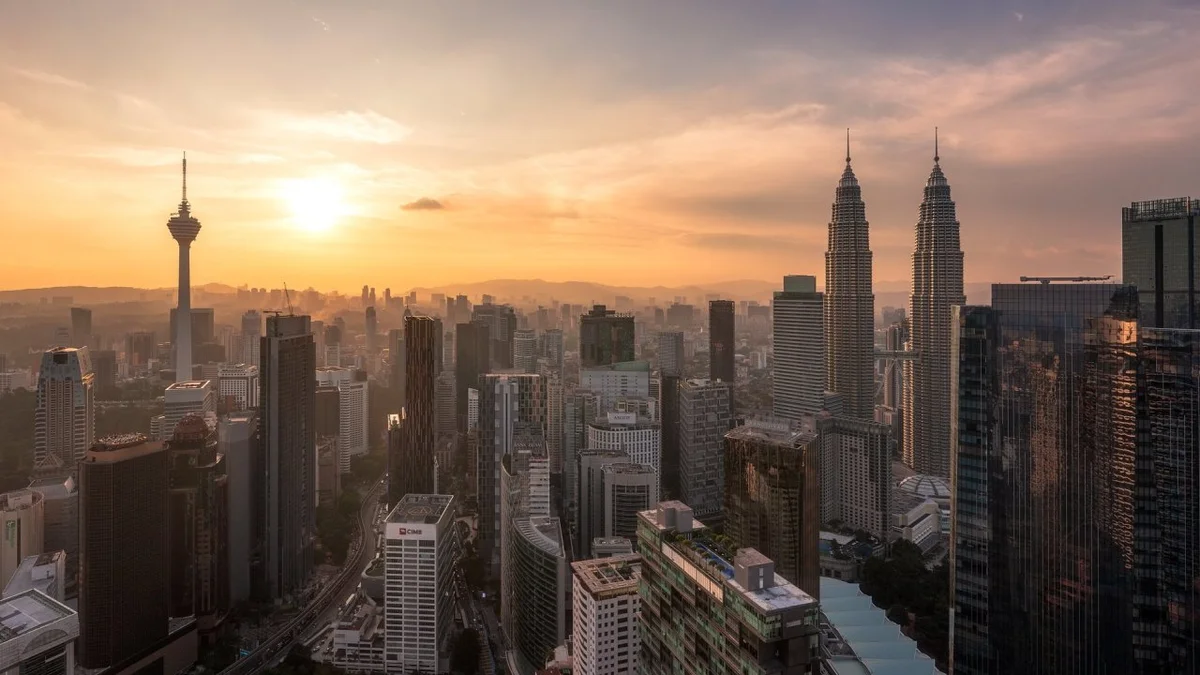
The eight experiences below are ranked in the order first time visitors should meet them. Prices are the adult rates on the official pages. The halal kitchens are mapped in the Where to Eat section; readers planning a food led trip will also enjoy our guide to how food tourism is shaping modern travel.
1. Petronas Twin Towers: The Tallest Twin Towers in the World

Best for
The essential sight of the city; book ahead, give the visit about an hour, then stay for KLCC Park at the base.
Address: Concourse Level, Lower Ground, Kuala Lumpur City Centre, Jalan Ampang, 50088 Kuala Lumpur. The nearest station is KLCC on the Kelana Jaya Line.
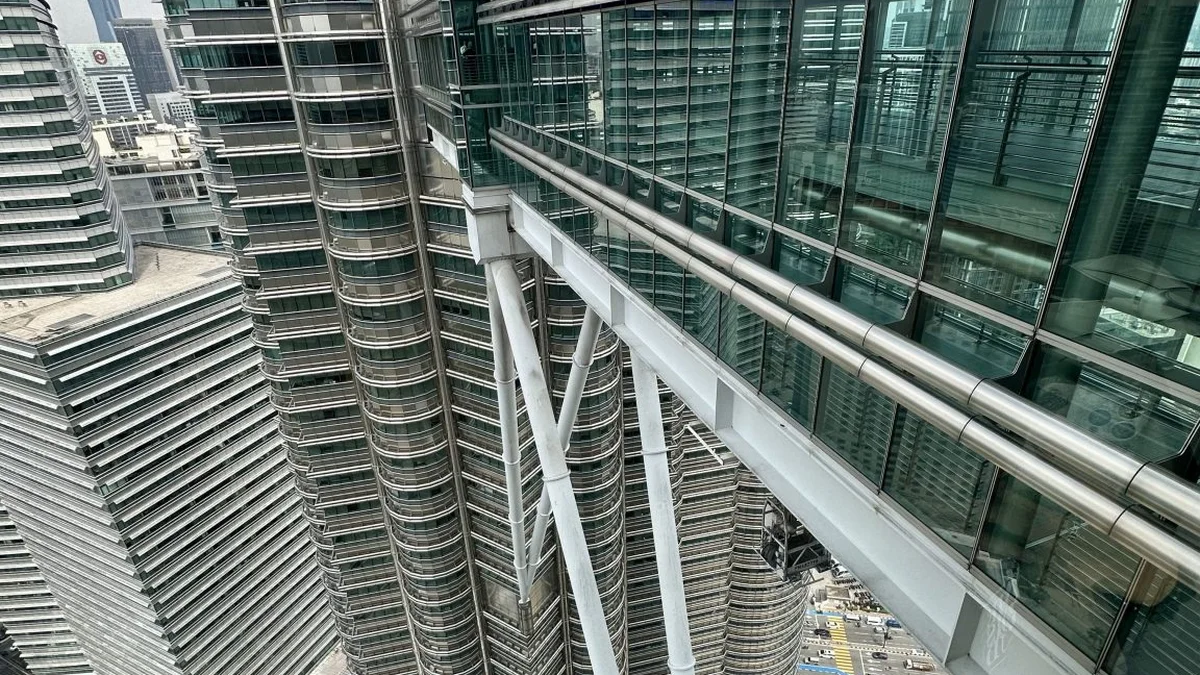
The twin towers rose to a design by the Argentine architect Cesar Pelli and opened in 1999, the tallest buildings in the world until 2004 and still the tallest twin towers on the planet. Each tower climbs 451.9 metres through 88 storeys of stainless steel and glass, and the plan of each floor draws on the eight pointed star of Islamic geometry.
High speed lifts carry each timed group to the Skybridge on levels 41 and 42, a double decker bridge suspended about 170 metres above the street. Then the lifts climb again to the Observation Deck on level 86, about 370 metres up, with digital displays and a scale model of the city. The whole visit takes about 45 minutes.
Do not miss

The Skybridge at 170 metres, the Level 86 deck, and the towers lit after dark from the KLCC Park esplanade.
Practical info

Tickets are timed and sell out, so book on the official site before you travel. Hours run Tuesday to Sunday 9:00 to 22:30, last admission 21:30, open through Friday prayers. Mondays open only on the second, fourth and fifth Monday of the month, 9:00 to 20:00; the towers close on the first and third Mondays and on listed holiday closures. International adults pay RM 127 on weekdays and RM 137 at weekends, children RM 65 and RM 69, seniors RM 88 and RM 96; Malaysian adults pay RM 42 and RM 45. Arrive 15 minutes early; food and drink stay outside.
Book the first slot of the day for the clearest skies, and keep the evening free for the towers from KLCC Park, when the facade lights up.
Insider tip
2. Batu Caves: The Rainbow Steps and the Temple Cave

Best for

The great half day sight of the city list; a limestone hill, a golden statue and a vast cave, best climbed early.
Address: Batu Caves, Gombak, 68100 Batu Caves, Selangor. Batu Caves KTM Komuter station stands at the entrance, about 30 minutes from KL Sentral.
Thirteen kilometres north of the centre, a limestone hill rises straight out of the plain, developed as a Hindu temple complex in the 1890s, now among the most important shrines outside India. At the base stands a golden statue of Lord Murugan 42.7 metres high, one of the tallest statues of the deity in the world. Above it, 272 steps climb the cliff face to the Temple Cave, repainted in rainbow colours in 2018.
The Temple Cave rewards the climb: a chamber of cathedral scale, its ceiling about 100 metres high, daylight falling through openings in the rock onto shrines and statues. The caves remain a working temple, so visitors walk quietly and dress modestly. Long tailed macaques patrol the steps; keep food, bottles and loose items inside a closed bag, and expect the largest crowds on major temple festival days.
Do not miss

The view over the city from the top step, the Temple Cave ceiling, and the story panels of the Ramayana Cave at ground level.
Practical info

Entry to the staircase and the Temple Cave is free; the grounds open from about 6:00 until about 21:00 daily. The dress code is enforced at the steps: cover shoulders and knees, or rent a sarong at the base. The climb takes 10 to 15 minutes; carry water, and keep it out of sight of the macaques.
Ride the KTM train out before 8:00, climb in the cool of the morning, and be back in the city for lunch.
Insider tip
3. Menara Kuala Lumpur: The Tower on the Bukit Nanas Hill

Best for

The highest public viewpoint of the city; the place to photograph the Petronas Twin Towers whole.
Address: No. 2 Jalan Punchak, off Jalan P. Ramlee, 50250 Kuala Lumpur, on the Bukit Nanas hill. Bukit Nanas Monorail and Dang Wangi LRT stations sit a short walk away, and a free shuttle runs from the base of the hill to the entrance.
Menara Kuala Lumpur, the KL Tower, opened in 1996 at 421 metres, one of the tallest freestanding towers in the world, and it still works as a telecommunications tower. The hill does half the lifting: Bukit Nanas carries the tower above the city grid. The tower serves as an official post for sighting the new moon that opens Ramadan.
The enclosed Observation Deck wraps the tower in glass for a 360 degree circuit in air conditioned comfort. Above it, the Sky Terrace stands open air at 300 metres, the highest viewpoint of the tower, and the Glass Box cubes push a glass floor out over the street far below.
Do not miss

The Sky Terrace at 300 metres, a Glass Box photograph, and the Petronas Twin Towers framed whole from the Observation Deck.
Practical info

The tower opens daily 9:00 to 22:00, last admission 21:30. Tickets are sold at the tower and on the official site, with separate rates for Malaysians, international visitors and each deck: the Observation Deck is the lower cost ticket, and the Sky Terrace with the Glass Box costs more. Check the current rates on the official site before you go. The open air terrace closes in rain and lightning, so pick a clear morning.
Come on a weekday morning: the decks stay quiet, the haze stays low, and the Twin Towers stand sharp across the city.
Insider tip
4. Islamic Arts Museum Malaysia: Twelve Galleries of Islamic Art

Best for

The culture day of the trip; the finest museum in the city, paired easily with Masjid Negara and the Lake Gardens.
Address: Jalan Lembah Perdana, 50480 Kuala Lumpur, beside Masjid Negara and the Perdana Botanical Gardens.
The Islamic Arts Museum Malaysia opened in December 1998 as the largest museum of Islamic art in Southeast Asia, holding more than 7,000 artefacts across 12 galleries. Galleries of Quran manuscripts lead into ceramics, jewellery, textiles and arms and armour. The building makes its own argument for the art inside: pale domes, Iznik style tiles, and an entrance hall crowned by an inverted dome.
The architecture gallery is the favourite of most visitors: scale models rebuild the great buildings of the Islamic world in miniature, from Masjid al-Haram in Makkah to the Taj Mahal. The Ottoman Room recreates a 19th century interior from Damascus. Allow two to three hours.
Do not miss

The architecture gallery and its scale models, the Ottoman Room, and the Quran and manuscripts gallery.
Practical info

The museum opens daily 9:30 to 18:00, last entry 17:30; during Ramadan the doors close at 17:00, and the museum closes only for the two Hari Raya holidays. Admission costs RM 20 for adults and RM 10 for students with ID and Malaysian senior citizens; senior citizens of other countries pay RM 20, and children under 6 enter free. No booking is needed; tickets are sold at the lobby counter.
Give the museum the middle of the day, when the heat peaks outside; the galleries run cool and unhurried.
Insider tip
5. Masjid Negara and Merdeka Square: The Heritage Heart of Kuala Lumpur

Best for

The history walk of the trip; the National Mosque, the independence square and the grandest colonial building in one compact loop.
Address: Masjid Negara stands on Jalan Perdana, 50480 Kuala Lumpur, beside the old Kuala Lumpur railway station; Merdeka Square lies a short walk east on Jalan Raja.
Masjid Negara, the National Mosque, was completed in 1965 as the mosque of a newly independent Malaysia, and its design startles: a main roof of folded concrete shaped like an open umbrella, clad in blue and green tiles, beside a minaret 73 metres high. The prayer hall holds 15,000 worshippers; the complex rests in gardens of reflecting pools and fountains, with an underground passage to the old railway station of 1910.
Across the old town, Merdeka Square keeps the founding moment of the nation. The lawn began as the cricket field of the Royal Selangor Club; at midnight on 31 August 1957 the Union Jack came down here and the flag of Malaya rose for the first time, and a flagpole of 95 metres marks the spot. Facing the lawn stands the Sultan Abdul Samad Building of 1897, red brick banded with white plaster arches, copper domes and a clock tower of 41 metres.
Do not miss

The umbrella roof of Masjid Negara from the gardens, the flagpole at the south end of the square, and the clock tower of the Sultan Abdul Samad Building lit after dark.
Practical info
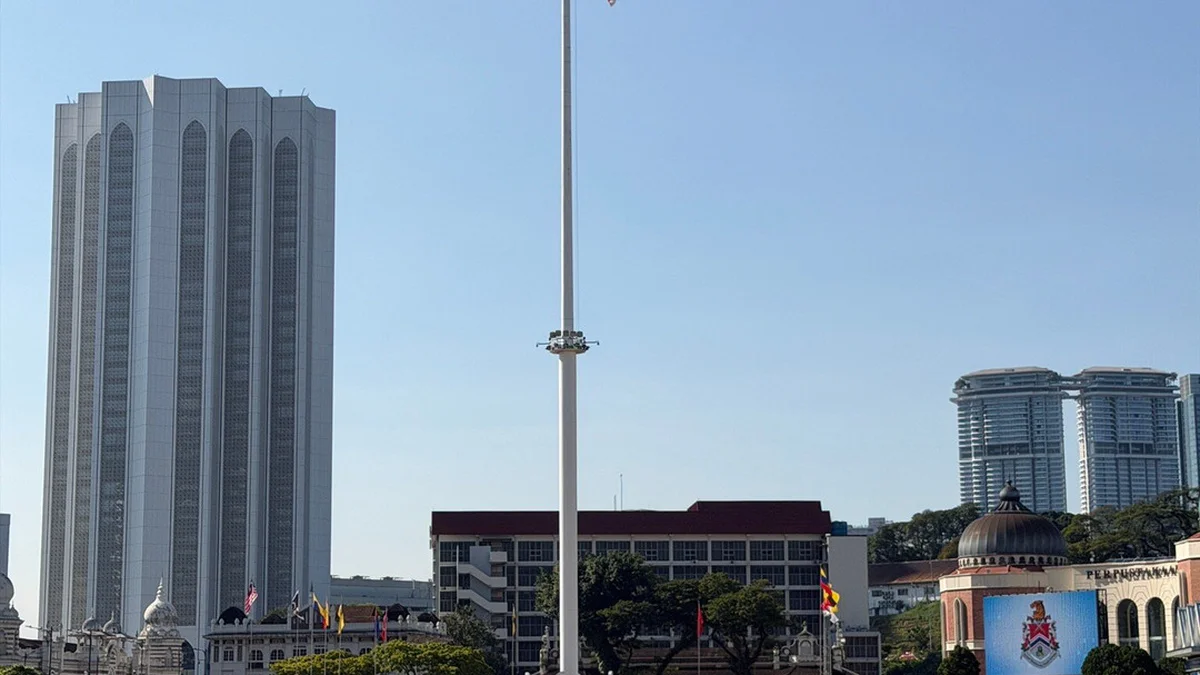
Entry to Masjid Negara is free. Visitors are received outside prayer times: Saturday to Thursday 9:00 to 12:00, 15:00 to 16:00 and 17:30 to 18:30, and on Friday in the two afternoon windows only. Robes and headscarves are provided free at the entrance, and non-Muslim visitors view the prayer hall from the perimeter. Merdeka Square is an open public square, free at all hours.
Walk the loop in the late afternoon: the mosque at the 17:30 visitor window, then the square as the clock tower lights come on.
Insider tip
6. KLCC Park and Suria KLCC: The Green Forecourt of the Towers

Best for

The slow hour of the city day; lawns, lake and fountains at the foot of the towers, with the mall in reserve for midday heat.
Address: KLCC Park, Jalan Ampang, Kuala Lumpur City Centre, 50450 Kuala Lumpur, behind Suria KLCC. KLCC station on the Kelana Jaya Line opens into the mall.
Fifty acres of parkland unfold at the base of the towers, planted with about 1,900 native trees as the green forecourt of KLCC. A jogging track of 1.3 kilometres loops the lawns, and the whole park frames the photograph every visitor wants. At the mall edge lies Symphony Lake, where two musical fountains run more than 150 programmed animations.
Suria KLCC, the mall inside the base of the towers, carries more than 300 shops and restaurants across six floors, with halal counters on the dining levels. The rhythm of a KLCC day writes itself: the park in the cool of the morning, the mall through the heat, then the park again at dusk for the fountains and the towers in lights.
Do not miss

The Lake Symphony light and sound shows at 20:00, 21:00 and 22:00, the light only shows at 19:30, 20:30 and 21:30, and the towers reflected in the lake between shows.
Practical info

The park and the fountain shows are free, and the park opens daily from early morning until late evening. The esplanade fills before the 20:00 show, so arrive 20 minutes early. The towers stand at their best from the lake bridge at dusk.
Photograph the towers from the lake bridge at dusk, then take a front row step on the esplanade for the 20:00 fountains.
Insider tip
7. Perdana Botanical Gardens: The Lake Gardens of the Old City

Best for

The green morning of the trip; lakes, orchids and deer, free to enter and easy to pair with the museum beside it.
Address: Jalan Kebun Bunga, Tasik Perdana, 50480 Kuala Lumpur. The nearest station is Muzium Negara on the MRT Kajang Line, a walk of about 15 to 20 minutes from the main entrances.
The gardens were laid out in 1888 around an artificial lake, the oldest parkland of the city, spreading today across 91.6 hectares of lawns, water and themed collections. The Orchid Garden climbs a slope, the Hibiscus Garden honours the bunga raya, the national flower of Malaysia, and the Sunken Garden circles a star shaped fountain.
A Deer Park holds spotted deer on a wooded slope, and joggers and tai chi groups own the paths before the heat builds. The gardens anchor the green quarter: the Bird Park stands inside the same parkland, and the Islamic Arts Museum, Masjid Negara and Muzium Negara stand within a short walk.
Do not miss

The Orchid Garden in flower, the Sunken Garden fountain, and the lake view back toward the towers.
Practical info

Entry is free and the gardens open daily 7:00 to 20:00. A buggy service loops the main paths for a small fee. Carry water and visit in the morning or after 16:00; shade is plentiful, but the midday heat is real.
Start at the Orchid Garden at 7:30, walk the lake loop, and finish at the Bird Park gate as it opens at 9:00.
Insider tip
Stay here: Traders Hotel, Kuala Lumpur
A hotel facing the towers across KLCC Park, connected directly to the Kuala Lumpur Convention Centre. The famous view here is the unobstructed one, the twin towers above the park lake, and a complimentary buggy service carries guests to Suria KLCC.
8. Kuala Lumpur Bird Park: The Free Flight Aviary of the Lake Gardens

Best for

Families and bird lovers; a morning walk under one vast net while hornbills cross above the paths, the gentle answer to what to do in Kuala Lumpur with family.
Address: 920 Jalan Cenderawasih, Taman Tasik Perdana, 50480 Kuala Lumpur, inside the Perdana Botanical Gardens.
The Bird Park holds more than 3,000 birds of about 200 species across 20.9 acres of the Lake Gardens, and its first two zones form a free flight aviary billed as the largest walk in aviary in the world. Peacocks, storks and ibis wander the paths under the canopy netting, feeding and nesting as they would in the wild, while visitors walk among them on shaded trails.
Zone 3, the Hornbill Park, guards the rhinoceros hornbills of Malaysia, and Zone 4 gathers the flightless birds and the amphitheatre. The day runs on feedings: free flying birds at 10:30, hornbills at 11:30, eagles at 14:30, and the bird show at 12:30 and 15:30, all included in the ticket. Allow two to three hours.
Do not miss
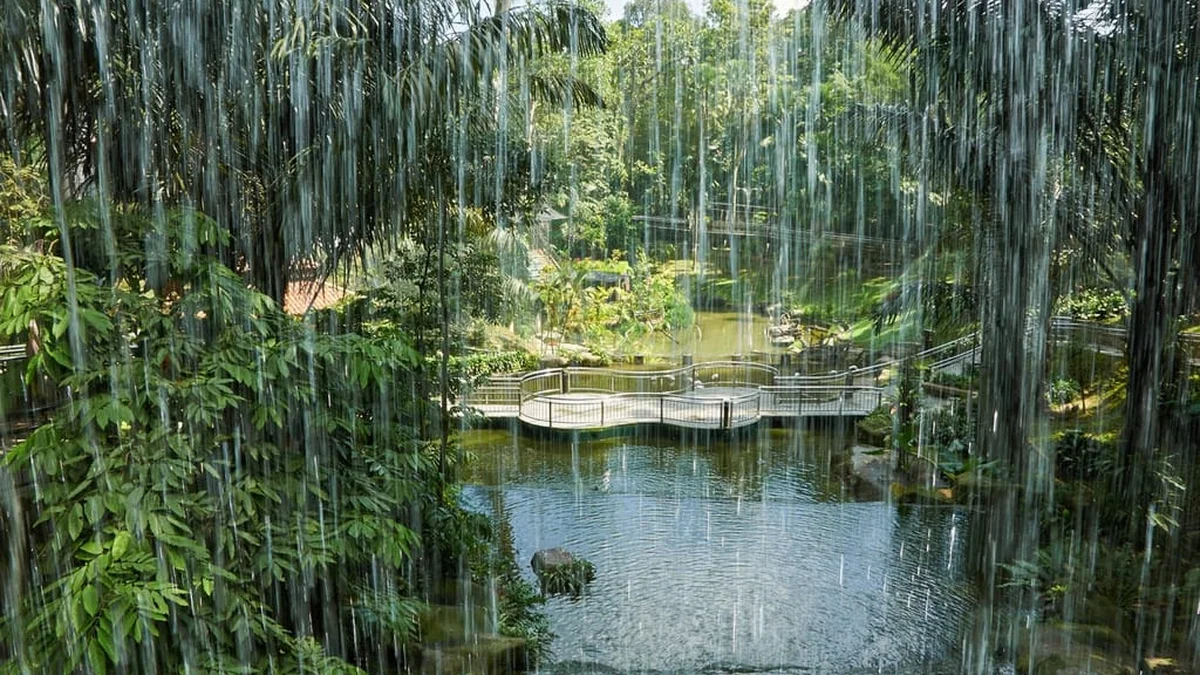
The hornbill feeding at 11:30, the bird show at 12:30 and 15:30, and the flamingo pond in Zone 1.
Practical info

The park opens daily 9:00 to 17:30, including public holidays. Standard admission costs RM 90 for adults and RM 70 for children aged 3 to 11; MyKad holders pay RM 50 for adults and RM 25 for children, and Malaysian senior citizens pay RM 25. Most of the park is wheelchair accessible.
Enter at the 9:00 opening, walk Zone 1 and Zone 2 while the birds feed, and sit down for the 12:30 show before the afternoon rain.
Insider tip
More Worth Your Time in Kuala Lumpur

Three stops: crafts under an Art Deco roof, a river confluence with the oldest mosque, and the national museum beside the gardens.
Central Market and Kasturi Walk: Crafts in an Art Deco Hall

On Jalan Hang Kasturi, Central Market began life as a wet market in 1888 and survives in an Art Deco building of 1937, now the craft address of the capital. More than 300 stalls sell batik cloth, songket weaving, pewter, wood carving and gifts, and batik painting workshops run through the day. Alongside runs Kasturi Walk, a covered lane of food stalls and craft kiosks. Entry is free, the hall opens daily 10:00 to 22:00, and Pasar Seni station stands three to five minutes away.
River of Life and Masjid Jamek: Where the Rivers Meet

At the meeting of the Klang and Gombak rivers, the muddy confluence that gave Kuala Lumpur its name, stands Masjid Jamek Sultan Abdul Samad, opened in 1909 and among the oldest mosques of the city. Red and white banded brick, onion domes and twin minarets rise straight from the riverbank, fronted by the River of Life promenade. Visitors are welcomed outside prayer times, robes are lent free, entry is free, and Masjid Jamek LRT station exits at the plaza.
Muzium Negara: The Story of Malaysia in Four Galleries

On Jalan Damansara, 50566 Kuala Lumpur, the National Museum tells the country whole in four galleries: Prehistory, the Malay Kingdoms, the Colonial Era and Malaysia Today. The museum opens daily 9:00 to 17:00, last admission 16:30, closing only on the first day of Aidilfitri and the first day of Aidiladha. Admission costs RM 5 for international adults and RM 2 for Malaysians.
Kuala Lumpur Attractions Compared

All eleven stops, with area, adult entry price and time needed.
| Attraction | Area | Adult entry | Time needed |
|---|---|---|---|
| Petronas Twin Towers | KLCC | RM 127 weekday; RM 137 weekend | About 1 hour |
| Batu Caves | Gombak, 13 km north | Free | 2 to 3 hours |
| Menara Kuala Lumpur | Bukit Nanas | Rates by deck on the official site | 1 to 2 hours |
| Islamic Arts Museum Malaysia | Jalan Lembah Perdana | RM 20 | 2 to 3 hours |
| Masjid Negara and Merdeka Square | Old city | Free | 2 to 3 hours |
| KLCC Park and Suria KLCC | KLCC | Free | 1 to 2 hours |
| Perdana Botanical Gardens | Tasik Perdana | Free | 2 to 3 hours |
| Kuala Lumpur Bird Park | Tasik Perdana | RM 90 | 2 to 3 hours |
| Central Market | Jalan Hang Kasturi | Free | 1 to 2 hours |
| Masjid Jamek and River of Life | Jalan Tun Perak | Free | About 1 hour |
| Muzium Negara | Jalan Damansara | RM 5 | 1 to 2 hours |
Kuala Lumpur Itineraries: One, Two and Three Days

Kuala Lumpur rewards cluster by cluster planning: KLCC in the east, the old city and the Lake Gardens in the west. Build your kuala lumpur itinerary from the table below.
| Length | Where you go | Why it works |
|---|---|---|
| 1 day | Batu Caves on the first KTM train, Masjid Negara and Merdeka Square late morning, the Islamic Arts Museum at midday, the Petronas Twin Towers late afternoon and the Lake Symphony fountains after dark | The icons in one sweep, sequenced around the heat and the prayer times |
| 2 days | Day one as above; day two: Perdana Botanical Gardens and the Bird Park in the morning, Central Market and Masjid Jamek in the afternoon, Menara Kuala Lumpur at dusk | The green west of the city, then the towers seen whole from the rival deck |
| 3 days | Add a day trip: Putrajaya for the lake and the pink mosque, or Melaka for the UNESCO old town; keep the last evening for KLCC Park | The full city plus one day beyond it, at family pace |
Book Tickets Before You Go

The five tickets where the official page genuinely saves time or money.
| Attraction | Adult price | Official ticket page |
|---|---|---|
| Petronas Twin Towers (Skybridge and Observation Deck) | RM 127 weekday; RM 137 weekend | petronastwintowers.com.my official ticketing |
| Menara Kuala Lumpur (Observation Deck and Sky Terrace) | Current rates on the official site | menarakl.com.my official site |
| Islamic Arts Museum Malaysia (general admission) | RM 20 | iamm.org.my official visitor page |
| Kuala Lumpur Bird Park (general admission) | RM 90 | klbirdpark.com official visitor page |
| KLIA Ekspres (single, KL Sentral to KLIA) | RM 55 | kliaekspres.com official fares |
Where to Stay in Kuala Lumpur
Top 3 hotels in Kuala Lumpur
Explore all hotels >
Kuala Lumpur divides into stay zones with clear trade offs. KLCC sleeps beside the towers and the park. Bukit Bintang holds the shopping streets. The old city and Jalan Sultan Ismail put heritage walks at the door, and Bangsar offers a local neighbourhood at a calmer pace.
| Area | Best for | Character | Price level |
|---|---|---|---|
| KLCC | First time visitors and tower views | The towers, the park and Suria KLCC at the door | High |
| Bukit Bintang | Shopping and food streets | Malls, monorail stops and late opening shops | Mid to high |
| Old city and Jalan Sultan Ismail | Heritage walks and value | Hotels near Merdeka Square and the rail lines | Mid |
| Bangsar | Families and a local feel | Residential streets, cafes and neighbourhood malls | Mid |
Mandarin Oriental, Kuala Lumpur
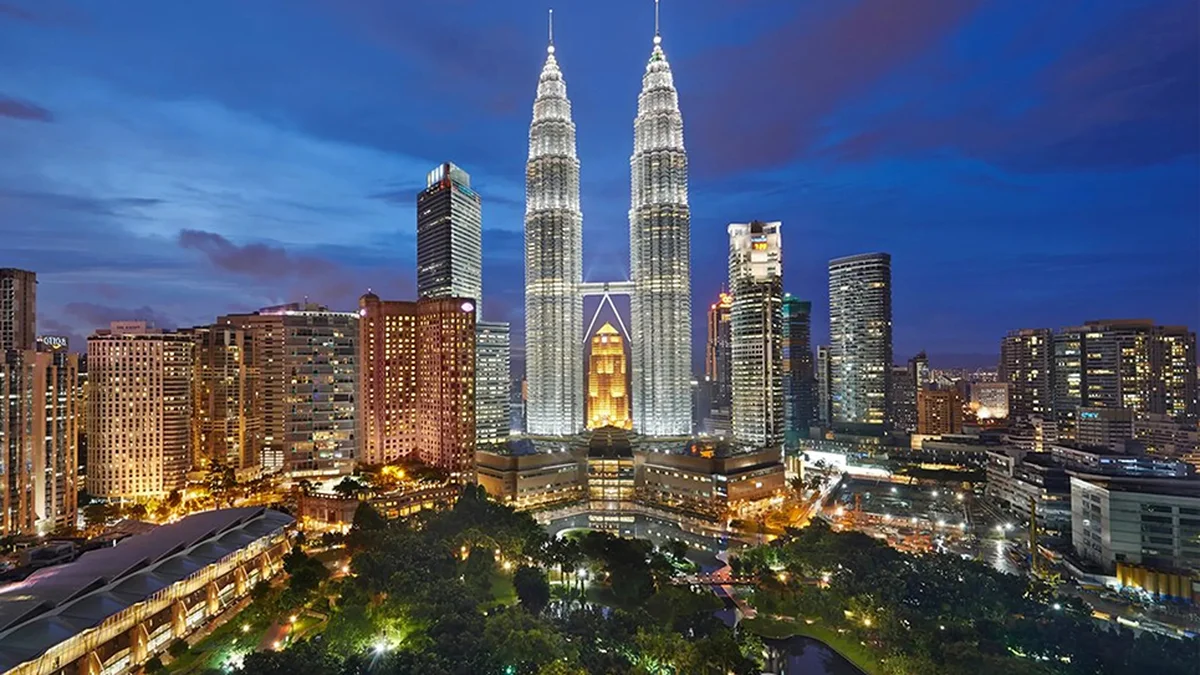
Mandarin Oriental, Kuala Lumpur stands between the Petronas Twin Towers and KLCC Park, with the park at one door and Suria KLCC beside it. Rooms face the towers or the park, and KLCC station sits five minutes away through the mall.
Traders Hotel, Kuala Lumpur

Traders Hotel, Kuala Lumpur by Shangri-La faces the towers across KLCC Park and connects directly to the Kuala Lumpur Convention Centre. The famous view here is the unobstructed one, the twin towers above the park lake, and a complimentary buggy service carries guests to Suria KLCC.
Where to Eat in Kuala Lumpur
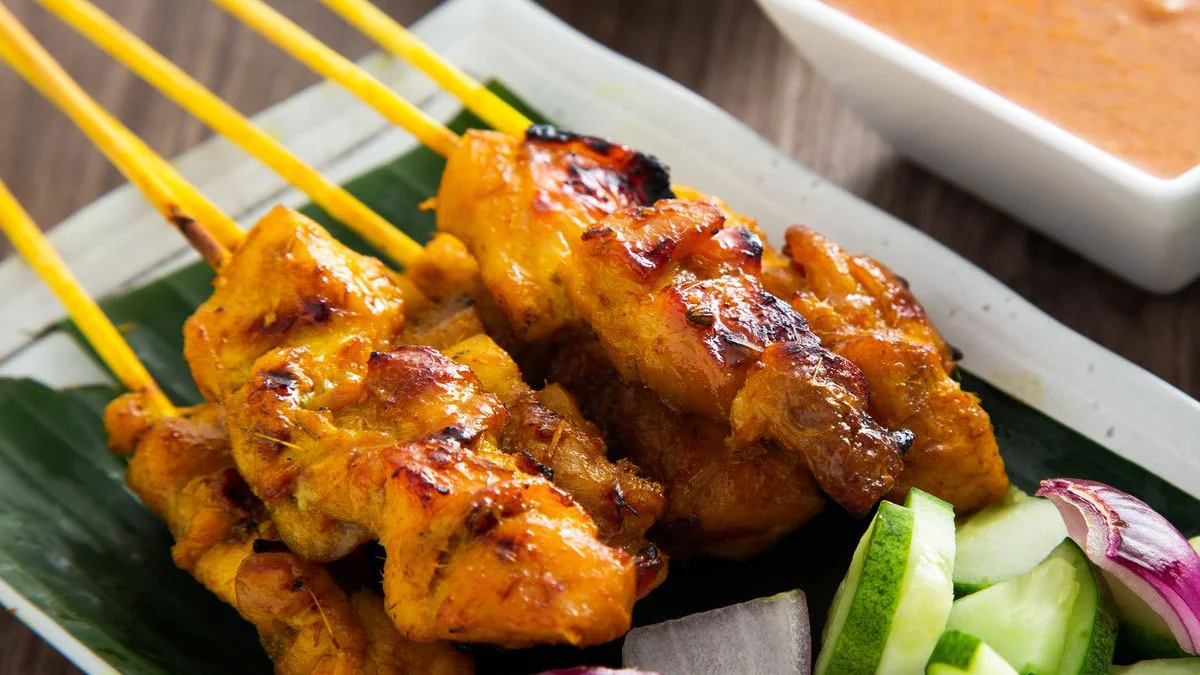
Eating halal in Kuala Lumpur needs no strategy: Malaysia is a Muslim majority country, and halal certification under JAKIM runs as a national system, with the halal logo on menus and doors across the city. One honest note: some Chinese kitchens in the city serve pork, so Muslim travellers eat best at the certified and Muslim owned tables below. Readers building a trip around food should start with our explainer on how food tourism is shaping modern travel.
Halal Food in Kuala Lumpur

Restoran Rebung Chef Ismail serves the Malay kampung buffet on Level 5 of the Bukit Aman multi storey car park at No. 1 Jalan Tanglin, Taman Botani Perdana, beside the Lake Gardens. The kitchen of the celebrity chef Ismail Ahmad lays out more than 90 traditional dishes, from daging salai masak lemak to ulam herbs and trays of kuih. STATED HALAL.
Restoran Kudu bin Abdul has poured Penang style curry over nasi kandar at 335 Jalan Tuanku Abdul Rahman, Chow Kit, since 1969. Order the ayam sambal bawang, the daging kicap and the fish roe curry, and join the lunch queue between 12:30 and 14:00; the kitchen is Muslim owned. STATED HALAL.
Nasi Kandar Pelita at 149 Jalan Ampang is the flagship of the Pelita chain, ten minutes on foot from the Petronas Twin Towers, open 24 hours a day and pausing only for the Friday prayer break. The ayam masak merah leads a full Indian Muslim menu of roti canai, biryani, fried squid and Maggi goreng. HALAL AS THE LOCAL NORM.
Mohd Chan Restaurant cooks Chinese Muslim food at 59 and 60 Jalan Negara, Taman Melawati. Butter prawns, Szechuan chicken, Shanghai dumplings and baby kailan with tofu show what a halal Chinese kitchen does at full strength; doors open 11:30 to 23:00 daily. STATED HALAL.
Local Dishes to Try

Malaysian cooking is a meeting of Malay, Chinese and Indian kitchens. Nasi lemak, coconut rice with sambal, anchovies, peanuts and egg, holds the breakfast table and is the national dish. Nasi kandar brings Penang curry ladled over rice, and roti canai tears into curry at every mamak stall. Satay grills over charcoal with peanut sauce, laksa comes in curry and asam styles, and cendol shaves ice over coconut milk and palm sugar. The drink is teh tarik, milk tea pulled between two vessels until it froths. One phrase helps everywhere: saya makan halal means I eat halal.
Mosques and Prayer Facilities in Kuala Lumpur

Prayer in Kuala Lumpur is never a logistics problem: mosques anchor every district, and the centrepiece stands in the old city. Masjid Negara, the National Mosque on Jalan Perdana, holds the five daily prayers and the Friday prayer; worshippers enter directly, while visitors join through the timed windows of the fifth section of this guide.
Masjid Jamek Sultan Abdul Samad, on Jalan Tun Perak at the meeting of the rivers, is the grand old mosque of the city, opened in 1909 and still holding daily prayers beside the LRT station that carries its name. North west of the centre, the Federal Territory Mosque on Jalan Duta, the Masjid Wilayah Persekutuan, adds Ottoman scale to Malay design and runs free guided tours, with robes at the door. Prayer rooms, called surau, also serve travellers inside Suria KLCC, at KL Sentral and at the airport.
Getting Around Kuala Lumpur
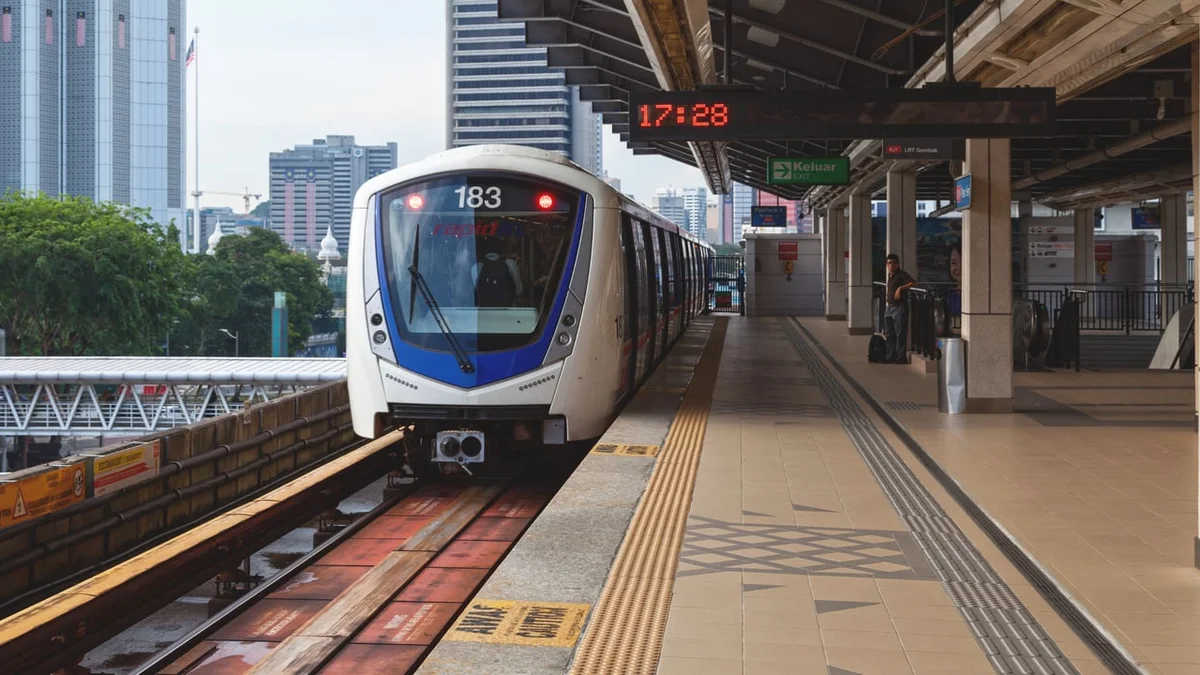
Kuala Lumpur spreads across the Klang Valley: KLCC in the east, the old city and the Lake Gardens in the west, Batu Caves on the northern line. The rail network is cheap; Grab covers the gaps.
| Mode | Cost | Good to know |
|---|---|---|
| KLIA Ekspres | RM 55 single; RM 100 return | Non stop from KL Sentral to KLIA in 28 minutes, every 20 minutes through the day |
| LRT, MRT and Monorail | Single fares by distance, paid by Touch n Go card | KLCC, Masjid Jamek, Pasar Seni and Muzium Negara stations cover nearly every sight in this guide |
| Rapid Kembara pass | RM 25 for 1 day; RM 55 for 3 days | The visitor pass for unlimited Rapid KL rail and bus rides, sold at station counters |
| GOKL city bus | RM 1 per ride for visitors; free for Malaysians | Colour coded loops link KLCC, Bukit Bintang, the old city and KL Sentral |
| Grab and taxis | Metered or app priced | Door to door; allow extra time at peak hours, when the centre slows |
| KTM Komuter | Single fares by distance | Direct trains to the Batu Caves entrance |
KL Sentral is the hub of every line and the city terminus of the KLIA Ekspres. Kuala Lumpur International Airport lies south of the city, about an hour by road and 28 minutes by the express train.
What a Day in Kuala Lumpur Costs

Kuala Lumpur rewards planners: the mosque, the square, the gardens and Batu Caves are all free, and the budget turns on the tower decks and the Bird Park.
| Category | Budget day | Comfortable day |
|---|---|---|
| Sightseeing entries | About RM 25 (Muzium Negara and the Islamic Arts Museum; the mosque, the square, the gardens and Batu Caves are free) | About RM 220 (Petronas Twin Towers and the Kuala Lumpur Bird Park) |
| Transport | About RM 25 (a one day Rapid Kembara pass) | About RM 80 (trains plus Grab rides between clusters) |
| Lunch | About RM 15 (a nasi kandar plate at Restoran Kudu bin Abdul) | About RM 60 (the Malay buffet at Restoran Rebung Chef Ismail) |
| Dinner | About RM 20 (roti canai and teh tarik at a mamak restaurant) | About RM 90 (a Chinese Muslim dinner at Mohd Chan Restaurant) |
| Total per person | About RM 85 | About RM 450 |
Best Time to Visit Kuala Lumpur

Kuala Lumpur sits almost on the equator, so the year turns on rain rather than temperature: days hold between about 27 and 33 degrees, with short heavy downpours most afternoons.
| Season | Months | What you get | Crowds |
|---|---|---|---|
| The drier start | December to February | Warm days, the lowest rainfall of the year and clear tower views | High |
| The hot season | March to May | The hottest months, with afternoon storms; indoor sights at midday | Moderate |
| The second dry spell | June to August | Drier weeks and green gardens | High |
| The wet season | September to November | The heaviest rain, short and intense; lower prices and quieter sights | Low |
The holy month of Ramadan changes the rhythm rather than closing the city: the mosques fill at night, restaurants open for iftar at sunset, and some sights adjust their hours, the Islamic Arts Museum closing at 17:00 during the month. The dates move each year, so check the calendar before fixing a mosque day.
Day Trips from Kuala Lumpur

Three day trips run from the city: Putrajaya, the capital to the south; Melaka, the UNESCO old town down the coast; and Kuala Selangor, for fireflies on the river after dark.
Putrajaya: The Pink Mosque and the Lake of Bridges

Putrajaya, the federal administrative capital, stands about half an hour south of Kuala Lumpur, reached in about 25 minutes by KLIA Transit from KL Sentral. The Putra Mosque rises in rose tinted granite at the edge of the lake; visitors are received outside prayer times and robes are provided. Cruise Tasik Putrajaya runs 45 minute sightseeing cruises from Jeti Putra, past a parade of bridges across the 650 hectare man made lake.
Melaka: The UNESCO Old Town and the River Cruise

Melaka lies about two hours south of the capital by bus from Terminal Bersepadu Selatan or by car, and its historic centre joined the World Heritage List of UNESCO in 2008. The red walls of the Stadthuys, built in 1650 and counted the oldest Dutch building of Malaysia, face Dutch Square. The Melaka River Cruise is the gentle way to read the city: 45 minutes and about 9 kilometres from Taman Rempah Jetty, boats running daily 9:00 to 23:00, past Kampung Morten.
Kuala Selangor: Fireflies on the Selangor River

Kuala Selangor stands about an hour north west of the capital by road. Spend the late afternoon on Bukit Melawati, hill of the lighthouse and the silvered leaf monkeys, then head for the Kampung Kuantan Firefly Park as dark falls. From about 19:30, small electric powered boats carry a handful of passengers at a time along the river, where one of the largest firefly colonies in the world sets the berembang trees flashing in synchrony. Flash photography stays off on the boats.
Practical Tips for Kuala Lumpur
Good to Know

- Book the Petronas Twin Towers ticket online before you travel; the timed slots sell out days ahead, and the towers close on the first and third Mondays.
- Dress for the mosques before you leave the hotel: loose clothing to the ankle and a headscarf for women, long trousers and covered shoulders for men; Masjid Negara and Masjid Jamek lend robes free at the entrance.
- Buy a Touch n Go card at any station; the Rapid Kembara pass costs RM 25 for one day and RM 55 for three days of unlimited Rapid KL rides.
- Look for the JAKIM halal logo on menus and door stickers; Malaysia runs halal certification as a national system.
- Plan outdoor sights for the morning: Batu Caves, the botanical gardens and the Bird Park reward a start before 10:00, and the afternoon rain lands late in the day.
- Carry notes and coins: the nasi kandar counters, market stalls and sarong desks move fastest with cash.
Good to Avoid

- Do not arrive at the Petronas Twin Towers without a booked slot; same day tickets are the first to sell out, above all at weekends.
- Do not plan mosque visits across the Friday midday prayer; visitor windows close, roughly between 12:00 and 15:00.
- Do not feed the macaques at Batu Caves or carry open food and plastic bags on the steps; the monkeys take both as an invitation.
- Do not underestimate the midday heat on the Merdeka Square lawn; the square is open ground, so walk it in the morning or late afternoon.
- Do not book the open air Sky Terrace on a stormy day; the terrace closes in rain and lightning, while the enclosed Observation Deck stays open.
- Do not squeeze Batu Caves and the Lake Gardens into one morning; the cave climb and the gardens sit on opposite sides of the city.
Final Thoughts on Kuala Lumpur
Kuala Lumpur gives its best to travellers who work with its rhythm: a cave climb at dawn, a museum through the heat, a mosque in the late afternoon light and the towers after dark. Give the city that shape and it returns a complete story in three days: a muddy river crossing that became a capital, told in twin towers, an umbrella roof, a rainbow staircase and a bowl of nasi kandar.
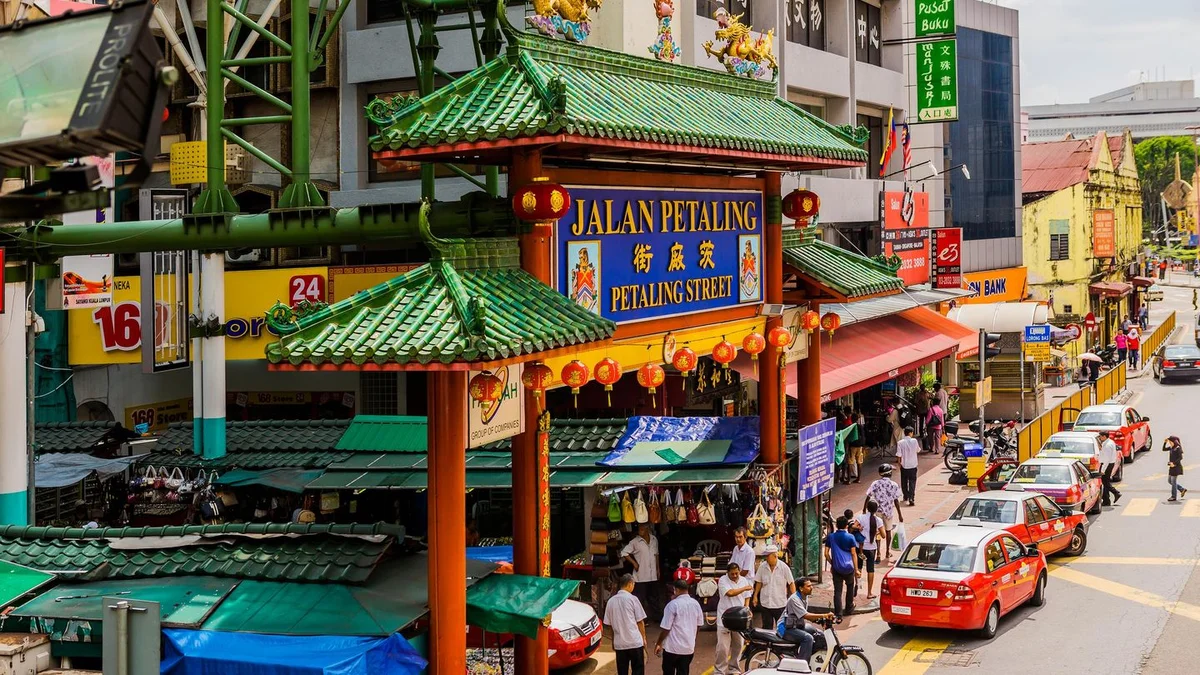
The Petronas Twin Towers, Batu Caves, and the KL Tower make the essential circuit, and Merdeka Square, Central Market, Chinatown with Petaling Street, Little India, the Islamic Arts Museum, the National Mosque, the KL Bird Park, and Bukit Bintang fill the days around them. The three day plan in this guide pairs the towers with Bukit Bintang on day one, Batu Caves with Little India on day two, and the Islamic Arts Museum with Central Market on day three.
March to September brings the drier months, while the rest of the year brings warm and humid days with afternoon rain, so plan indoor sights for the afternoons. Use the LRT and MRT for every district, with a Touch n Go card for all rides, and walk Bukit Bintang and Chinatown, where the markets, the food streets, and the malls sit within a few minutes of each other. Book Petronas Towers Skybridge tickets before arrival, since the timed slots sell out first in peak season, and dress modestly for mosque visits, with robes available at the National Mosque.
Bukit Bintang suits almost every itinerary, with the malls, the food streets, and the rail stations at the door, while Chinatown suits budget travellers near the markets, and KLCC suits travellers who want the towers at sunrise. The National Mosque and the Jamek Mosque both hold daily prayers and the Friday prayer, and visitors are welcome. If a fourth day is free, Genting Highlands sits around 1 hour north, with the cable car and the hilltop resort in one half day.
Keep Exploring
FAQs
What are the best places to visit in Kuala Lumpur on a first trip?
The Petronas Twin Towers, Batu Caves, Masjid Negara with Merdeka Square, and the Islamic Arts Museum Malaysia. Add Menara Kuala Lumpur, KLCC Park, the Perdana Botanical Gardens and the Bird Park, and the first trip covers the icons, the mosques and the green west of the city.
How much do Petronas Twin Towers tickets cost?
International adults pay RM 127 on weekdays and RM 137 at weekends for the Skybridge and Observation Deck; children pay RM 65 and RM 69, seniors RM 88 and RM 96, and Evening Experience slots cost RM 157 and RM 167. Malaysian adults pay RM 42 and RM 45.
Is Kuala Lumpur a good city for halal food?
Yes, as easily as any capital in the region. Malaysia is a Muslim majority country, and halal certification under JAKIM is a national system. Start with Restoran Rebung Chef Ismail, nasi kandar at Restoran Kudu bin Abdul and Nasi Kandar Pelita, and Chinese Muslim cooking at Mohd Chan Restaurant.
How many days do you need in Kuala Lumpur?
Three days cover the headline sights: one for Batu Caves, the old city and the towers, one for the Lake Gardens cluster, and one for a day trip to Putrajaya or Melaka. Two days work if the Petronas slot is booked first.
When is the best time to visit Kuala Lumpur?
December to February and June to August bring the driest weeks of the year, with warm days and clearer tower views. Rain falls in short heavy bursts through the year, heaviest from September to November.
Is Batu Caves free to enter, and how do you get there?
Yes: entry to the staircase and the Temple Cave is free, and the smaller side caves charge small fees. The KTM Komuter train runs from KL Sentral to the station at the entrance in about 30 minutes. Cover shoulders and knees, or rent a sarong at the base.
How do you travel between Kuala Lumpur airport and the city centre?
The KLIA Ekspres runs non stop from KL Sentral to Kuala Lumpur International Airport in 28 minutes, for RM 55 single or RM 100 return. Buses and Grab cars cover the route by road in about an hour.
