Things to Do in Monterey: Aquarium Wonders, Cannery Row History and Old Monterey Charm
Monterey greets a first time visitor with cool air, the smell of salt in the wind, and streets that still follow the lines of the first capital of California under Spanish and Mexican rule. Cannery Row tells the story of sardines and Steinbeck, Colton Hall tells the story of statehood, and the aquarium at the…
Monterey greets a first time visitor with cool air, the smell of salt in the wind, and streets that still follow the lines of the first capital of California under Spanish and Mexican rule. Cannery Row tells the story of sardines and Steinbeck, Colton Hall tells the story of statehood, and the aquarium at the end of the Row turns the natural history of the bay into a full day indoors. The best things to do in Monterey reward a slow start: walk the historic centre in the morning, take a museum visit at midday, and save Cannery Row for late afternoon.
This guide covers the top attractions in Monterey in the order a first visit flows, starting with the aquarium and Cannery Row, then the historic adobes and museums of Old Monterey, then the family parks of the city centre, and finally the hillside trails east of town. Every section gives a verified address, opening times where an official source lists them, and a practical tip, plus itinerary, ticket and cost tables and sections on halal food and mosques.
Base yourself in Old Monterey or on Cannery Row if you can. Colton Hall, the cathedral, the art museum and the youth museum sit within a compact central area, and Cannery Row sits a short ride to the north. Give the city three full days at a minimum.
Monterey at a Glance

| Best Known For | Monterey Bay Aquarium, Cannery Row, Colton Hall, historic adobes, Steinbeck country and valley viewpoints |
| Location | Central California, on the southern curve of Monterey Bay, around 120 miles south of San Francisco |
| Founded | 1770, when the Spanish presidio and mission were established on the site of the present city |
| Top Cluster | Old Monterey, with Colton Hall, the cathedral and the art museum close together |
| Airport | Monterey Regional Airport, a short drive southeast of downtown |
| Best Months to Visit | April, May, September and October, with warm autumn days and thinner crowds |
| Good to Know | Mornings are often cool and foggy even in summer, so carry a layer for every outdoor walk |
Best for First-Time Visitors

- Monterey Bay Aquarium
- Cannery Row
- Colton Hall Museum
Best for Families

- Monterey Bay Aquarium
- Dennis the Menace Park
- MY Museum
Best Free Experiences
- Colton Hall Museum
- Dennis the Menace Park
- Path of History walking route
Top Things to Do in Monterey

Start on Cannery Row, where the aquarium and the cannery story sit side by side. From there, head into Old Monterey for Colton Hall, the cathedral and the art museum, then to the city centre parks for family time. Keep the Laguna Seca hills for a separate half day with a car.
1. Meet Kelp Forests and Sea Otters at Monterey Bay Aquarium

Best for
First-time visitors, families and travellers who want the single best indoor attraction in Monterey. The Monterey Bay Aquarium stands at the west end of Cannery Row on the site of the old Hovden Cannery, with galleries that run from a towering living kelp forest and playful sea otters to the Open Sea gallery and the strange animals of the deep sea.
The Kelp Forest gallery is the centrepiece, a tall tank of swaying kelp, schooling fish and rays, fed with natural seawater and shaped by surge, while the Sea Otters gallery pairs public feedings with stories of rescue and rehabilitation. The Open Sea gallery holds schooling fish, sharks and sea turtles in a vast blue water tank, and the deep sea galleries show luminous animals that few public aquariums can keep. The aquarium also carries the conservation work of the region, with exhibits that explain the bay ecosystem and the research behind it. Allow three to four hours, and arrive near opening for calmer viewing in the Kelp Forest and Sea Otters galleries.
Address: 886 Cannery Row, Monterey, CA 93940
Do not miss
The Kelp Forest gallery and a sea otter feeding session, which give the scale of the living kelp habitat and the most popular animal moment in the building.
Practical info
The aquarium is open daily, with hours that vary by season and last entry one hour before closing, so check the official site for your date. Admission is 65 dollars for adults aged 18 to 69, 50 dollars for young visitors aged 5 to 17 and seniors aged 70 and over, while children aged 4 and under enter free. Tickets are sold only on the official aquarium site, with no third party sellers, and advance booking is strongly recommended, especially on weekends. There is no public parking at the aquarium itself, so use the Cannery Row Parking Garage or the nearby city lots and walk in.
Insider tip: Visit the Kelp Forest first, then circle back to the Sea Otters gallery at feeding time. The morning route runs against the main flow and keeps the big galleries quiet.
2. Walk the Cannery Story on Cannery Row

Best for
History lovers, Steinbeck readers and travellers who want the most famous street in Monterey in one walk. Cannery Row runs along the northern edge of the city centre, a former sardine canning district turned into a street of shops, tasting rooms, galleries and historic cannery buildings, named for the 1945 novel by John Steinbeck.
The street began as Ocean View Avenue, where the first major cannery opened in the early 1900s and where, by 1918, district businesses processed more than 1.4 million cases of canned sardines a year. Workers from China, Portugal, Japan, Italy and other countries filled the canneries, and the biologist Ed Ricketts ran a biological supply laboratory at 800 Cannery Row, the model for the character Doc in the novel. Overfishing collapsed the sardine industry after the Second World War, the district fell into disrepair, and the city renamed the street Cannery Row in 1958 to honour the novel. Surviving cannery buildings now hold shops and restaurants, and plaques and the Steinbeck Plaza bust tell the story as you walk. Allow two hours, and pair the walk with the aquarium at one end of the Row.
Address: Cannery Row, Monterey, CA 93940
Do not miss
Steinbeck Plaza and the Cannery Row Monument, which give the literary heart of the street and the names of the people who revived the district.
Practical info
Cannery Row is a public street, open at all hours, and the shops and tasting rooms keep their own hours, so check individual listings before you go. Parking in the Cannery Row lots is paid and busy, so walk from central Monterey or ride the MST JAZZ lines when practical. Wear comfortable shoes, since the walk is best done slowly, with stops for the plaques and the historic building fronts.
Insider tip: Walk the Row from the aquarium end toward the city centre in the late afternoon, when the light is soft and the crowds thin. Read the plaques as you go, since the street tells its own story.
3. Stand Where California Began at Colton Hall Museum

Best for
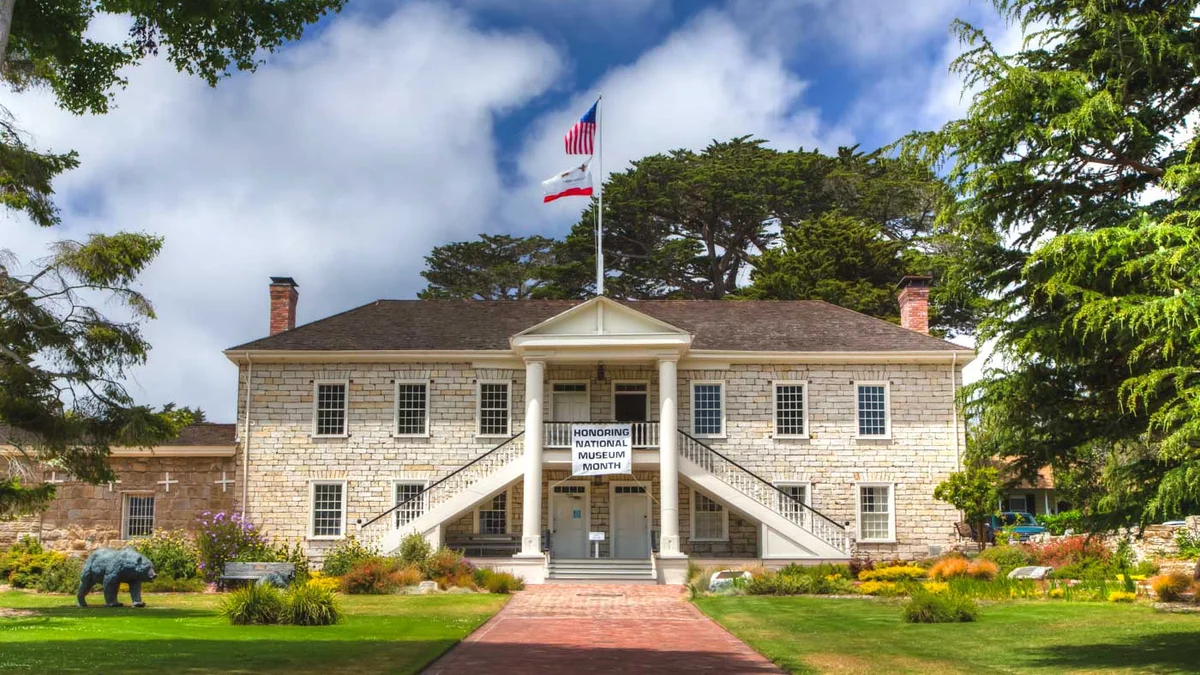
History lovers and travellers who want the most important building in California history in one visit. Colton Hall Museum sits in the heart of Old Monterey, in the white stone town hall built between 1847 and 1849, where 48 delegates debated and drafted the first constitution of California in 1849.
The museum upstairs recreates the meeting room where the constitutional convention sat, with original documents, artifacts and furniture, and visitors walk on the same floor as the delegates. The lower rooms served as a school and town hall, and the building is described by the city as one of the most historic buildings in California and the birthplace of the state. The small jail beside the hall adds a quiet, human footnote to the grand story. Allow one to two hours, and pair the visit with the cathedral and the art museum, both a short walk away.
Address: 570 Pacific Street, Monterey, CA 93940
Do not miss
The recreated convention room upstairs, which gives the sense of standing inside the debate that made California a state.
Practical info
Colton Hall Museum is open seven days a week from 10:00 in the morning to 4:00 in the afternoon, according to the city. Entry is listed as free, and the museum is reached upstairs with an accessible lift, with parking at the rear of the building. Check the city site before you go, since public programmes and events can change access on the day.
Insider tip: Arrive at opening time, when the convention room is quiet. Read the delegate panels first, then sit for a moment in the room itself before moving to the jail.
4. Step Inside the Royal Presidio Chapel

Best for
Architecture lovers, history lovers and travellers who want the oldest stone building in California. The San Carlos Cathedral, known as the Royal Presidio Chapel, stands in Old Monterey near Colton Hall, a Spanish Colonial church built between 1791 and 1794 as the chapel of the Royal Presidio of San Carlos, and still a working parish today.
The parish traces its founding to June 3, 1770, when Father Junipero Serra established the mission and presidio that gave Monterey its start, and the present stone church replaced earlier adobe chapels. Inside, the simple and dignified interior holds paintings of the Stations of the Cross and preserved original wall paintings, while the garden outside holds a grotto shrine and the historic Junipero Oak. A heritage centre beside the cathedral shows artifacts uncovered during restoration. Keep voices low, since this is a working church, and allow one hour.
Address: 500 Church Street, Monterey, CA 93940
Do not miss
The interior wall paintings and the garden grotto, which give the age of the building and a quiet pause between historic sights.
Practical info
The cathedral is open daily, but published hours conflict across sources, with weekday hours listed differently in the parish bulletin and in directories, so check the cathedral site on the day of your visit. Mass times run through the week and on Sundays, so plan a quiet visit outside service times if you want the interior to yourself. The cathedral sits a short walk from Colton Hall and the art museum.
Insider tip: Visit the heritage centre first, then the church interior. The artifacts explain the restoration, so the original paintings inside carry far more meaning.
5. See California Art at Monterey Museum of Art

Best for
Art lovers and travellers who want the finest collection of California art on the peninsula. The Monterey Museum of Art stands on Pacific Street across from Colton Hall, with eight galleries of historic paintings, photography and contemporary work, plus a sculpture garden and rotating exhibitions that change every few months.
The collection traces California visual art from the early landscape painters to contemporary makers, with photography and works on paper alongside painting and sculpture. Docent tours run on Sundays, and free family days and evening openings through the year open the galleries to new visitors. The Pacific Street building sits at the centre of the Old Monterey cluster, so the museum pairs naturally with Colton Hall and the cathedral in a single morning. Allow two hours.
Address: 559 Pacific Street, Monterey, CA 93940
Do not miss
The California painting galleries and the sculpture garden, which give the sweep of the collection and a calm outdoor pause between galleries.
Practical info
The museum is open Thursday to Sunday from 11:00 in the morning to 5:00 in the afternoon, according to current listings. Admission is 15 dollars for adults, while students, active military personnel with identification, members and young visitors under 18 enter free. Check the museum site for current exhibitions, since the galleries rotate, and for free evening and family day dates.
Insider tip: Take the Sunday docent tour if your visit falls on a Sunday. The guides connect the paintings to Monterey history, so the collection reads like a story of the city.
6. Let Children Run Wild at Dennis the Menace Park

Best for
Families, grandparents and travellers who want the best playground in Monterey. Dennis the Menace Park sits in El Estero Park in the city centre, a much loved playground designed with help from Hank Ketcham, creator of the Dennis the Menace comic strip, and opened on November 17, 1956.
The playground holds a famous roller slide, a suspension bridge, a hedge maze with a lookout, a rock climbing wall, concrete tunnels, swings and a lion water fountain, all set on grass and paths with picnic areas nearby. The vintage Southern Pacific steam engine that stood in the park since 1956 is currently fenced off, since it does not meet current safety standards, but the rest of the playground remains the most popular municipal playground in the city. The park sits a short walk from the youth museum and the city centre, so it pairs naturally with a museum morning. Allow one to two hours.
Address: 777 Pearl Street, Monterey, CA 93940
Do not miss
The roller slide and the suspension bridge, which give the classic Dennis the Menace experience and the views across the playground from above.
Practical info
Entry is free. The playground is listed as open daily from 10:00 in the morning to dusk, and closed on non-holiday Tuesdays from September to May, though some listings give different closing hours, so check the city site before you go. Weekends are busy, so visit on a weekday if you can, and bring a picnic for the nearby tables.
Insider tip: Start at the maze and work toward the roller slide. The maze tires younger legs gently, and the slide at the end feels like a reward.
7. Play and Learn at MY Museum

Best for
Families with young children and travellers who want a hands on indoor stop in downtown Monterey. MY Museum, the Monterey County Youth Museum, sits on Washington Street in the city centre, with nine interactive galleries designed for children aged 8 and under to explore with family and friends.
The 8,500 square foot museum holds galleries such as a healthy farm, a hospital role play area, a creation station and an imagination tree, with daily programmes that encourage self directed learning through play. The galleries suit toddlers and pre school children best, while the creation station stretches older children too. The museum sits minutes from Dennis the Menace Park, so the two make a natural family half day. Allow two hours.
Address: 425 Washington Street, Monterey, CA 93940
Do not miss
The creation station and the healthy farm gallery, which give the most hands on making and the most imaginative role play in the building.
Practical info
The museum is open Wednesday to Sunday from 10:00 in the morning to 5:00 in the afternoon, according to the museum site. Admission is 10 dollars for adults and children, while children under 24 months enter free. The museum is closed on major holidays, and street parking nearby is limited to 90 minutes, with garages close by, so check the museum site for holiday hours and parking guidance.
Insider tip: Pair the museum with Dennis the Menace Park next door in spirit. Visit the museum first, then let children run off the energy in the playground.
8. Walk Hillside Trails at Laguna Seca Recreation Area

Best for
Walkers, cyclists and travellers who want valley viewpoints and open hills without leaving the Monterey area. Laguna Seca Recreation Area sits inland from Monterey on Highway 68 toward Salinas, a county recreation area of open grassy hills, trails and campgrounds beside the well known raceway grounds.
The recreation area opens onto miles of hillside trails, with wildlife that includes red tailed hawks, deer, jackrabbits and, on lucky days, bobcats, and with wide views across the Salinas Valley and the surrounding hills. Trails suit walkers and cyclists, and the open terrain gives a strong contrast to the compact streets of Old Monterey and Cannery Row. Visit outside major event days for the quietest trails, and carry water, since shade is limited on the open hillsides. Allow half a day, and drive, since no bus serves the recreation area directly.
Address: 1021 Monterey-Salinas Highway, Salinas, CA 93908
Do not miss
The hillside trail viewpoints over the valley, which give the widest panorama in this guide and the best photographs of the inland landscape.
Practical info
Access and hours change with the event calendar at the neighbouring raceway grounds, so check the official raceway site before you go, and expect day use and camping fees to apply. The recreation area is reached by car on Highway 68, around 15 minutes east of downtown Monterey. Wear sturdy shoes, carry drinking water, and keep to marked trails.
Insider tip: Go in the morning, when the light is low over the valley and wildlife is most active. The trails are quietest before midday.
More Worth Your Time in Monterey

If the eight main sights leave you with a spare half day, these stops add depth without repeating the same story. The Path of History, a self guided walking route through Old Monterey, links the historic adobes around Custom House Plaza, including the Custom House, the oldest government building in California, Pacific House, Larkin House and Casa del Oro, with markers that explain each building as you walk. The route is free, it takes one to two hours, and it pairs naturally with Colton Hall and the cathedral.
Old Fisherman Wharf, the historic working wharf district beside Custom House Plaza, gives a different slice of Monterey history, with wharf buildings, fish market stalls and shops that trace the working harbour story of the city. The Museum of Monterey, at Custom House Plaza, adds paintings, photography and artifacts on Monterey history and art, including the Salvador Dali exhibition of the Monterey History and Arts Association. Check opening hours for both before you go, since wharf businesses and museum hours vary.
Monterey Attractions Compared

| Attraction | Best For | Cost | Time Needed |
|---|---|---|---|
| Monterey Bay Aquarium | Kelp forests, sea otters and deep sea galleries | 65 dollars adults | 3 to 4 hours |
| Cannery Row | Steinbeck history and historic cannery buildings | Free to walk | 2 hours |
| Colton Hall Museum | California statehood history | Listed as free | 1 to 2 hours |
| San Carlos Cathedral | Spanish Colonial architecture and quiet reflection | Check the cathedral site | 1 hour |
| Monterey Museum of Art | California art and sculpture garden | 15 dollars adults | 2 hours |
| Dennis the Menace Park | Families and playground time | Free | 1 to 2 hours |
| MY Museum | Young children and hands on play | 10 dollars adults and children | 2 hours |
| Laguna Seca Recreation Area | Hillside trails and valley viewpoints | Check the official site | Half day |
| Path of History | Historic adobes walking route | Free | 1 to 2 hours |
| Old Fisherman Wharf | Historic working wharf district | Free to walk | 1 to 2 hours |
| Museum of Monterey | Monterey history and art | Check the official site | 1 to 2 hours |
Suggested Itineraries

| Trip Length | What to See |
|---|---|
| 1 Day | Monterey Bay Aquarium in the morning, Cannery Row at midday, and Colton Hall Museum in the afternoon. |
| 2 Days | Day 1: As above, plus San Carlos Cathedral and Monterey Museum of Art in the evening. Day 2: MY Museum in the morning and Dennis the Menace Park in the afternoon. |
| 3 Days | Days 1 and 2 as above. Day 3: Laguna Seca Recreation Area for hillside trails, or a day trip to Carmel Mission or the National Steinbeck Center in Salinas. |
Book Tickets in Monterey

Book the main paid sights in advance where the official site offers advance booking, especially on weekends. Every link below goes to the official page for that attraction, and free sights are marked as free entry.
| Attraction | Tickets |
|---|---|
| Monterey Bay Aquarium | Book Tickets |
| Monterey Museum of Art | Book Tickets |
| MY Museum | Book Tickets |
| Colton Hall Museum | Free Entry |
| Dennis the Menace Park | Free Entry |
Where to Stay in Monterey
Top 3 hotels in Monterey
Explore all hotels >
Old Monterey suits almost every itinerary. Colton Hall, the cathedral, the art museum and the youth museum sit within a compact area, and Cannery Row sits a short ride to the north. Cannery Row suits travellers who want the aquarium and the Row itself on the doorstep, while the city centre suits families who want the parks and museums close by.
| Area | Best For | What Is Nearby |
|---|---|---|
| Old Monterey and downtown | First-time visitors who want walkable streets | Colton Hall Museum, San Carlos Cathedral and Monterey Museum of Art |
| Cannery Row | Aquarium days and evening walks on the Row | Monterey Bay Aquarium, Cannery Row shops and galleries |
| City centre and El Estero | Families who want parks and museums close by | Dennis the Menace Park, MY Museum and city centre shops |
| Del Monte Centre area | Quiet stays with easy road access | Shops, restaurants and Highway 1 and Highway 68 routes |
Two hotels with verified official booking pages cover the main styles of stay:
- Monterey Plaza Hotel and Spa: A polished Cannery Row hotel at 400 Cannery Row, Monterey, CA 93940, three blocks from the aquarium, with a spa, gardens and restaurants on site. Best for travellers who want a full service stay on the Row itself.
- Portola Hotel and Spa: A modern hotel at 2 Portola Plaza, Monterey, CA 93940, beside Custom House Plaza in Old Monterey, with a spa and restaurants on site. Best for travellers who want a central base close to Colton Hall, the cathedral and the wharf district.
What to Eat in Monterey

Monterey eats like a historic harbour city, with clam chowder in sourdough bowls, grilled fish plates, and Mexican, Indian and Mediterranean tables across Old Monterey and Cannery Row. Food often becomes the memory travellers carry home, a pattern explored in our guide to how food tourism is shaping modern travel. The halal options below come first, then the local dishes worth knowing by name.
Halal Food in Monterey
Halal provision in Monterey is thin, and this guide is honest about that. Only one venue was verified as stated halal during research, so plan around it and confirm meat sourcing with staff everywhere else. Mediterranean Halal Market, at 825 Hamilton Avenue, Seaside, a short drive northeast of downtown Monterey, is a Lebanese restaurant and grocery whose name and menu carry the halal claim, with halal gyro plates, chicken shawarma plates, beef kabob wraps and falafel. The portions are generous, the prices are modest, and the saffron rice plates with hummus, tzatziki and tabbouleh make a full meal. Eating well is part of understanding a place, a theme explored in our guide to how food tourism is shaping modern travel, and diners should still confirm halal status with staff on the day, since no certifier name was found.
For other meals, choose vegetable, egg or fish dishes and confirm meat sourcing with staff before ordering meat. Namaste India Bistro, at 538 Lighthouse Avenue, Monterey, serves vegetable biryani, palak paneer, aloo gobi and lentil dishes that suit a meat free meal, with a lunch buffet on many days. Ambrosia India Bistro, at 565 Abrego Street, Monterey, in Old Monterey, serves vegetable pakora, vegetable curries and garlic naan in a courtyard garden setting, and the vegetable dishes are the safest choices here. Troya Turkish Delight and Baklava, at 685 Cannery Row, Monterey, suits a sweet stop, with baklava, Turkish delight, Turkish coffee and pistachio sweets. Habibi Kabab, at 223 Reindollar Avenue in Marina, is a family run Mediterranean kebab spot that appears in delivery listings, but no halal claim was verified for it, so treat it as a confirm-with-staff choice only, and choose falafel and vegetable dishes until staff confirm.
Local Dishes to Try
Monterey food has its own signatures. Look for clam chowder served in a sourdough bread bowl, grilled fish plates with local vegetables, artichoke dishes from the Salinas Valley, and sourdough bread from local bakeries. Cannery Row and Old Monterey hold the widest choice, while the farmers markets and delis of the city centre give a low cost way to taste several dishes in one stop. Food choices shape a trip as much as sights do, a point covered in our guide to how food tourism is shaping modern travel, and the halal venue above plus the vegetable dishes at the Indian bistros let Muslim travellers enjoy the same food led days.
Mosques and Prayer Facilities in Monterey

Monterey holds a small and welcoming Muslim community, centred on the mosque in neighbouring Seaside, and visitors are welcome at daily and Friday prayers. Prayer times shift with the season, so check the mosque site before you go.
- Islamic Society of Monterey County: The mosque of the Islamic Society of Monterey County, at 405 Elm Avenue, Seaside, a short drive northeast of downtown Monterey. The centre holds daily prayers and Friday prayer, and it serves the Muslim community of the whole Monterey Peninsula. Note that the organisation name is Islamic Society of Monterey County, not Islamic Center of Monterey County, and the Seaside address is the verified location.
No other mosque in Monterey itself was verified during research. Travellers who need a prayer space during a long museum day should ask at the Islamic Society centre about quiet prayer options, and plan prayer stops around the Seaside location.
Getting Around Monterey

| Option | Best For | Cost |
|---|---|---|
| MST bus | Downtown, Cannery Row, Seaside and Carmel | 2 dollars regular fare for 2 hours, 1 dollar discount fare |
| MST JAZZ lines | Sand City to the aquarium via Cannery Row | Same MST fare |
| Walking | Old Monterey, the city centre and Cannery Row | Free, but Cannery Row to Old Monterey is a fair walk |
| Car and Parking | Laguna Seca, Salinas and Carmel day trips | Rental plus garage and lot fees |
| Taxi and Rideshare | Airport runs and evenings | Metered and app fares vary |
| Cycling | Cannery Row and the recreation trail | Rental fees vary |
Downtown Monterey and Cannery Row are walkable, but the walk between them takes time, so use the bus for the link. Monterey-Salinas Transit runs a simple fare of 2 dollars for 2 hours of unlimited rides on fixed routes, with a 1 dollar discount fare for older adults, veterans, Medicare cardholders and courtesy card holders, according to MST. The JAZZ lines link Sand City with the aquarium via Cannery Row, and other lines serve Seaside, Marina, Salinas and Carmel.
Monterey Regional Airport sits a short drive southeast of downtown, and a rental car earns its keep on Laguna Seca, Salinas and Carmel days, while central days are best done on foot and by bus. Parking in the Cannery Row lots and downtown garages is paid, so check lot signs before you park.
What a Day in Monterey Costs

| Travel Style | Attractions | Food | Stay and Transport | Rough Daily Total |
|---|---|---|---|---|
| Budget Traveller | 0 to 30 dollars, mixing free sights with one low cost museum | 30 to 50 dollars | 110 to 150 dollars hotel, MST bus fares | 140 to 230 dollars |
| Mid-Range Traveller | 45 to 85 dollars for two or three paid sights | 60 to 100 dollars | 170 to 260 dollars hotel, 20 to 40 dollars parking and rides | 295 to 485 dollars |
| Family of Four | 100 to 180 dollars with aquarium and youth museum pricing | 130 to 200 dollars | 210 to 320 dollars family room, 25 to 45 dollars parking and fuel | 465 to 745 dollars |
Monterey rewards planners. Colton Hall, Dennis the Menace Park and the Path of History cost nothing to enter, and the MST bus fare keeps central days cheap. The aquarium is the biggest single cost, so book it early and build the day around it.
Best Time to Visit Monterey

| Season | Months | What to Expect |
|---|---|---|
| Spring | March to May | Mild days, wildflowers on the hills, cool mornings |
| Summer | June to August | Cool foggy mornings, busy aquarium and Cannery Row |
| Autumn | September to November | Warmest and clearest days, thinner crowds |
| Winter | December to February | Quiet museums, rain possible, green hills |
April, May, September and October give the easiest sightseeing weather in Monterey. Spring brings wildflowers and mild days, autumn brings the warmest and clearest weather of the year, and winter brings quiet museums and green hills. Summer visitors should start outdoor days early, save museums for foggy mornings, and carry a layer for every outing.
Day Trips from Monterey

Carmel Mission and Carmel Village
Carmel Mission, officially Mission San Carlos Borromeo del Rio Carmelo, sits around 5 miles south of Monterey in Carmel, and it makes the classic historic day trip. Founded in 1771 by Father Junipero Serra, the mission holds a basilica church, gardens, courtyards and a museum of mission history, and the village nearby gives galleries, shops and cafes in a compact walkable centre. Carmel Mission (guide in preparation) suits travellers who want a second mission story after the Royal Presidio Chapel. Check the mission site before you go, since the mission is closed on Mondays and Tuesdays and hours vary by day.
National Steinbeck Center in Salinas
The National Steinbeck Center sits around 20 miles northeast of Monterey in downtown Salinas, at 1 Main Street, and it tells the life and work of John Steinbeck through interactive exhibits, films, artifacts and a research collection of more than 45,000 items. Exhibits follow the novels set in the Salinas Valley and on Cannery Row, and the centre suits readers who want the literary side of Monterey after walking the Row itself. National Steinbeck Center (guide in preparation) pairs naturally with the Cannery Row day. Hours vary across listings, so check the centre site before you go.
San Juan Bautista Historic Mission Town
San Juan Bautista sits around 40 miles northeast of Monterey, a small historic mission town with a mission church, a historic plaza and adobe buildings that preserve the Spanish and Mexican era of California. The town gives a quieter mission experience than Carmel, with a walkable historic core and a state historic park around the plaza. San Juan Bautista (guide in preparation) suits travellers who want a full historic day after Old Monterey. Allow a full day with a car, since no direct bus serves the town.
Practical Tips for Visiting Monterey

Good to Know
- Group the Old Monterey sights into one day, and keep Cannery Row, the aquarium and the family parks for separate half days.
- Book aquarium tickets ahead on weekends, since tickets are sold only on the official site.
- Use the MST bus between Old Monterey and Cannery Row, and save parking fees for day trip days only.
- Carry a layer for every outing, since mornings are cool and foggy even in summer.
- Check mosque prayer times and halal restaurant hours before you go, and confirm meat sourcing with staff at every restaurant except the stated halal venue.
Good to Avoid
- Starting a Laguna Seca trail walk at midday in summer, when heat builds fast and shade is scarce.
- Assuming every museum opens daily at the same hour, when Thursday to Sunday and Wednesday to Sunday patterns differ.
- Driving between downtown sights, when the bus is faster than parking twice.
- Visiting the aquarium without a timed plan, when the Kelp Forest and Sea Otters galleries are busiest at midday.
Final Thoughts
Monterey gives a traveller more than a checklist: kelp forests that sway indoors and history that asks for thought, from the cannery street where Steinbeck set a novel, to the hall where California began, to the hillside trails where the valley opens wide. Walk early, take the bus downtown, and let the cool air set the pace.
The Monterey Bay Aquarium, with kelp forests and sea otters, leads the list for most visitors, and Cannery Row, Colton Hall Museum, the Royal Presidio Chapel, and the Monterey Museum of Art fill the streets around it. Families get a full day from Dennis the Menace Park and MY Museum, and the Laguna Seca Recreation Area gives hillside trails when the town itself feels done.
Group the Old Monterey sights into one day and keep Cannery Row, the aquarium, and the family parks for separate half days. Book aquarium tickets ahead on weekends, since tickets are sold only on the official site, and use the MST bus between Old Monterey and Cannery Row. Autumn brings the warmest and clearest days with thinner crowds, while spring brings mild days and wildflowers on the hills.
Old Monterey suits almost every itinerary, with Colton Hall, the cathedral, the art museum, and the youth museum in a compact area, and Cannery Row suits travellers who want the aquarium on the doorstep. The mosque of the Islamic Society of Monterey County stands in neighbouring Seaside, and visitors are welcome at daily and Friday prayers, with prayer times shifting by season. If a fourth day is free, Carmel Mission sits around 5 miles south and makes the classic historic day trip.
Keep Exploring
FAQs
What are the best things to do in Monterey for first-time visitors?
Start with Monterey Bay Aquarium, Cannery Row and Colton Hall Museum, then add San Carlos Cathedral and Monterey Museum of Art. This route covers marine life, cannery history, statehood history and California art.
How many days do you need in Monterey?
Two full days cover the aquarium, Cannery Row, Old Monterey and the family parks. A third day adds Laguna Seca trails and a day trip to Carmel Mission, the National Steinbeck Center or San Juan Bautista.
What is Monterey best known for?
Monterey is best known for Monterey Bay Aquarium, Cannery Row, Colton Hall, the Royal Presidio Chapel, Steinbeck country and the historic adobes of Old Monterey.
When is the best time to visit Monterey?
April, May, September and October bring the most comfortable sightseeing weather, with wildflowers in spring and the warmest, clearest days in autumn.
Is Monterey a good destination for families?
Yes. Monterey Bay Aquarium fills a full day for younger children, Dennis the Menace Park adds a free playground afternoon, and MY Museum gives hands on play for children aged 8 and under.
Where can visitors find halal food in Monterey?
Mediterranean Halal Market in Seaside is the one venue verified as stated halal during research, with halal gyro and chicken shawarma plates. Elsewhere, choose vegetable, egg or fish dishes and confirm meat sourcing with staff before ordering meat.
How do visitors get around Monterey without a car?
Ride MST buses between downtown, Cannery Row, Seaside and Carmel, with a 2 dollar regular fare for 2 hours, and walk the Old Monterey and Cannery Row clusters. A rental car is still needed for Laguna Seca Recreation Area and the San Juan Bautista day trip.