
Things to Do in Marrakech: Jemaa el-Fnaa, Palaces, Souks and a Blue Garden Escape
Marrakech greets a first time visitor with colour before the map has time to explain itself. The ochre walls of the medina glow in the morning light, the call to prayer rolls across the rooftops, and the scent of spices drifts from the souks into the open square. The best things to do in Marrakech…
Marrakech greets a first time visitor with colour before the map has time to explain itself. The ochre walls of the medina glow in the morning light, the call to prayer rolls across the rooftops, and the scent of spices drifts from the souks into the open square. The best things to do in Marrakech reward a slow start: walk the medina sights in the morning, take a palace or garden visit at midday, and save Jemaa el-Fnaa for the late afternoon, when the square fills with food stalls, storytellers and musicians and the light turns soft.
This guide covers the top attractions in Marrakech in the order a first visit flows, starting with Jemaa el-Fnaa and the Koutoubia Mosque in the centre, then the palaces and tombs of the southern medina, the madrasa and souks of the northern medina, and the blue garden of Gueliz to the northwest. Every section gives a verified address, opening times where an official source lists them, and a practical tip, plus itinerary, ticket and cost tables and sections on halal food and mosques. Where ticket prices conflict across current listings, the guide prints no price and directs readers to check the current price before paying.
Base yourself in the medina if you can. Jemaa el-Fnaa, the Koutoubia Mosque, Bahia Palace, the Saadian Tombs, Ben Youssef Madrasa and the souks sit within a compact walking area. Give the city three full days at a minimum, and keep a fourth day free for a day trip to the Atlas Mountains or the Ourika Valley.
Stay here: La Mamounia
A classic grand hotel at Avenue Bab Jdid, Marrakech 40040, set in large gardens just west of the medina, within walking distance of the Koutoubia Mosque and Jemaa el-Fnaa. Best for travellers who want gardens, courtyards and historic rooms, and a stay that suits a special occasion.
Marrakech at a Glance

| Best Known For | Jemaa el-Fnaa, the Koutoubia minaret, Bahia Palace, the Saadian Tombs, Ben Youssef Madrasa, Jardin Majorelle and the medina souks |
| Location | Central Morocco, on a plain south of the Atlas Mountains, inland from the Atlantic coast |
| Founded | Around 1070, as a capital of the Almoravid dynasty, with later Almohad, Saadian and Alaouite layers |
| Top Cluster | The medina, with Jemaa el-Fnaa, the Koutoubia Mosque, Bahia Palace and the Saadian Tombs close together |
| Airport | Marrakech Menara Airport, code RAK, around 6 kilometres southwest of the medina |
| Best Months to Visit | March, April, May, September, October and November, with mild winter days from December to February |
| Good to Know | Summer afternoons are very hot, medina lanes are narrow and often one way for vehicles, and Friday midday prayer changes opening times at some sites |
Best for First-Time Visitors

- Jemaa el-Fnaa
- Koutoubia Mosque exterior and gardens
- Bahia Palace
Best for Families

- Jardin Majorelle
- Medina souks with a guide
- El Badi Palace ramparts and storks
Best Free Experiences

- Jemaa el-Fnaa square
- Koutoubia Mosque exterior and gardens
- Medina souks window browsing
Top Things to Do in Marrakech

Start in the centre, where the square and the minaret set the scale of the old city. From there, head south to the palaces and tombs of the Kasbah quarter, then north through the souks to the madrasa. Keep Jardin Majorelle for a separate half day in Gueliz, reached by a short taxi ride, so the blue garden gets unhurried time.
1. Feel the Pulse of Jemaa el-Fnaa
Best for
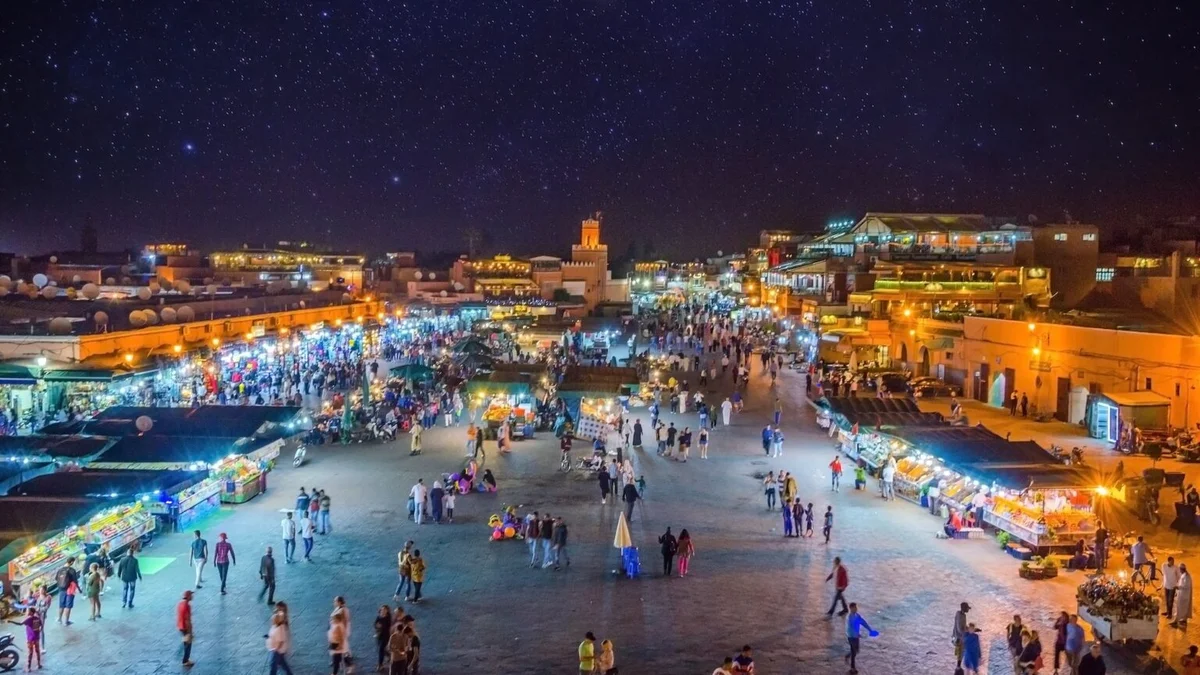
First-time visitors, photographers and travellers who want the most recognisable sight in Marrakech in one visit. Jemaa el-Fnaa is the great open square at the heart of the medina, ringed by cafes, market stalls and the Koutoubia minaret to the west. By day it holds juice sellers, storytellers, henna artists and musicians; by late afternoon it fills with food stalls, smoke from grills, drummers and crowds, and the whole square becomes a stage.
Arrive in the late afternoon and stay into the early evening for the full change of mood. Walk a full loop of the square first, without stopping to buy, so you learn the layout and the flow of the crowds. Then choose a food stall with a busy local queue, agree the price of anything you order before it is cooked, and keep small notes ready. The square is listed by UNESCO as a cultural space, and it rewards patience. Allow two to three hours, including a pause on a terrace above the square for a view across the rooftops.
Address: Place Jemaa el-Fnaa, Medina, Marrakech 40000
Do not miss
The square at sunset, when the Koutoubia minaret is lit and the food stalls light up in rows, and the view from a terrace cafe over the whole square. Fresh orange juice from a numbered stall in the daytime is a simple Marrakech ritual, and it costs only a small sum.
Practical info
The square is open all day and all evening, with no entry charge. Crowds peak in the early evening, and pickpockets work busy areas, so keep bags closed and in front of you. Agree prices before photographs with performers or animal handlers, and decline firmly if you do not want a service. The square is flat and open, but the surrounding lanes are crowded and uneven.
Walk the square once without buying anything. On the second loop you will know which stalls draw local families, and that is where the food is freshest.
2. Admire the Koutoubia Mosque Exterior and Gardens
Best for
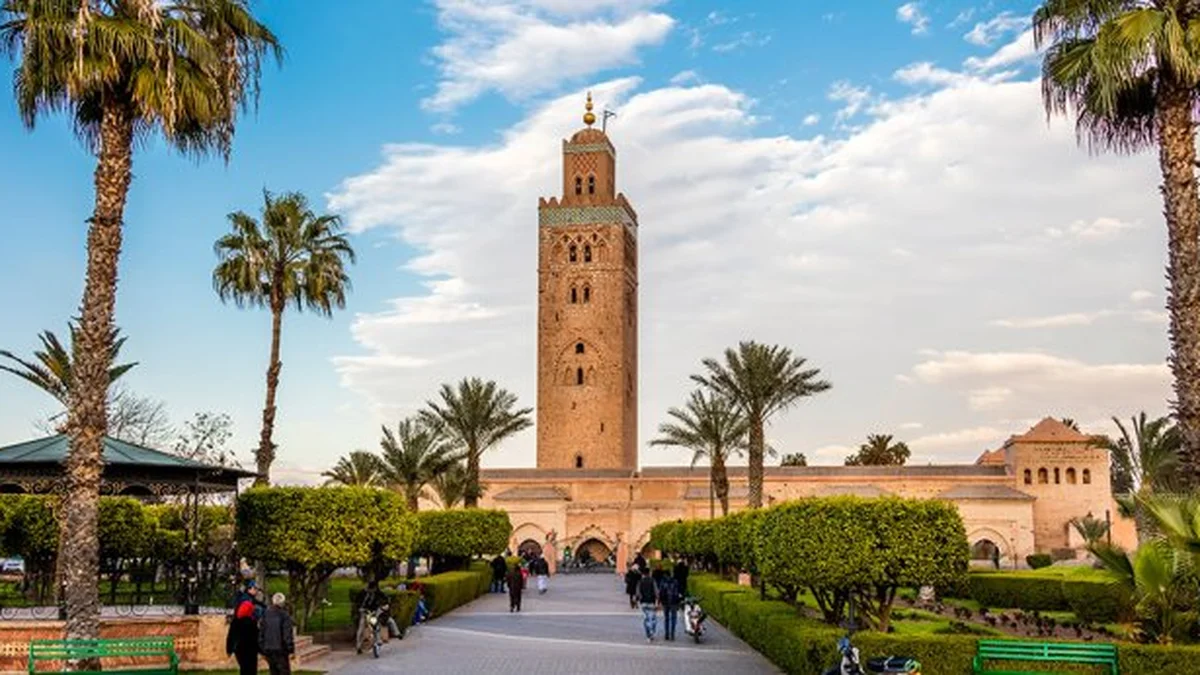
First-time visitors, architecture lovers and travellers who want the landmark that orients the whole medina. The Koutoubia Mosque stands just west of Jemaa el-Fnaa, and its minaret rises 77 metres, making it the tallest structure in the old city. The mosque was built in the 12th century under the Almohads, after an earlier mosque on the site was found to be misaligned, and its minaret later inspired the Giralda in Seville and the Hassan Tower in Rabat.
The interior is reserved for Muslim worship, and non-Muslim visitors cannot enter the prayer hall. The visit here is therefore an exterior visit, and it is a rich one: walk the gardens and the esplanade around the mosque, study the carved stonework and the decorative arches of the minaret from different angles, and look for the remains of the first mosque in the gardens. The gardens are free, open during daylight hours, and quietest in the early morning. Allow 30 to 45 minutes, and combine the visit with Jemaa el-Fnaa next door.
Address: Avenue Mohammed V, Marrakech 40000
Do not miss
The minaret in late afternoon light, when the sandstone glows warm, and again after dark, when it is floodlit against the sky. The gardens on the south side give the calmest views and the best photographs without crowds in the frame.
Practical info
Viewing the exterior and walking the gardens is free, with no ticket and no booking. The area around the mosque may be quieter during the five daily prayers, particularly the Friday noon prayer, so plan a garden walk outside those times if you want the liveliest atmosphere. Dress modestly around the mosque out of respect for worshippers, and keep voices low near the prayer hall entrances.
See the minaret twice: once in daylight for the carving, and once after dark for the floodlit silhouette. The two views feel like different landmarks.
3. Wander the Courtyards of Bahia Palace

Best for
First-time visitors, architecture lovers and travellers who want the finest decorated interiors in Marrakech. Bahia Palace was built in the late 19th century for the grand vizier Ba Ahmed, and its name means brilliance. The palace holds around 150 rooms across courtyards, reception halls and gardens, with carved cedar ceilings, painted woodwork, stucco lacework and zellige tilework in every direction.
Start in the Grand Courtyard, where orange trees shade a marble-paved space ringed by carved columns, then move through the reception halls to the smaller courtyards of the Petit Riad. The rooms are unfurnished and signage is limited, so a licensed guide adds a great deal. Arrive at opening time and allow 60 to 90 minutes.
Address: Rue Riad Zitoun el Jedid, Medina, Marrakech 40000
Do not miss
The Grand Courtyard in early morning light, the painted cedar ceilings of the reception halls, and the quiet smaller courtyards at the back of the palace, where the crowds thin out and the tilework can be studied at close range.
Practical info
Current listings agree that Bahia Palace is generally open daily from 9:00 AM to 5:00 PM, with shorter hours during Ramadan and occasional closures for official events. Ticket prices conflict across current listings, with figures from 70 to 110 dirhams for a foreign adult, so this guide prints no price: check the current price at the ticket office on the day of your visit, and carry cash as well as a card. Last entry is usually around 30 minutes before closing.
Look up in every room. The ceilings carry the finest work in the palace, and most visitors spend too long looking at eye level and miss the painted cedar above them.
4. Step Into the Saadian Tombs

Best for
History lovers, architecture lovers and travellers who want the most intact Saadian interior in Marrakech. The Saadian Tombs are a royal necropolis built at the end of the 16th century by Sultan Ahmad al-Mansur, then walled up in the 17th century by Sultan Moulay Ismail, who chose to seal the tombs rather than destroy them. The site stayed hidden for around two centuries until it was rediscovered in 1917, which is why the decoration survives in such fine condition.
The visit is compact but intense. The Hall of Twelve Columns holds the tomb of Ahmad al-Mansur under a cedar dome, carried on twelve columns of Italian Carrara marble, with stucco muqarnas work above. The Hall of Three Niches and the mausoleum of Lalla Messaouda follow, and the garden outside holds around a hundred tombs of soldiers and servants. Entry to the Hall of Twelve Columns is through a narrow corridor, so queues form between 10:00 AM and 1:00 PM; arrive at opening or after 3:00 PM to avoid the longest wait. Allow 30 to 45 minutes.
Address: Rue de la Kasbah, Kasbah, Marrakech 40000
Do not miss
The Hall of Twelve Columns itself, seen slowly rather than in a rush through the corridor, and the garden tombs, which are easy to overlook after the main hall but give the site its scale. Look for storks nesting on the walls around the Kasbah quarter on the walk to and from the tombs.
Practical info
Current listings agree that the tombs are generally open daily from 9:00 AM to around 5:00 PM, with last entry around 4:30 PM and shorter hours during Ramadan. Ticket prices conflict across current listings, with figures from 70 to 110 dirhams for a foreign adult, so this guide prints no price: check the current price at the ticket office on the day of your visit. Buy tickets at the official counter and decline unsolicited guide offers outside the entrance.
Come at opening time and head straight to the Hall of Twelve Columns. The corridor queue is the whole visit in high season, and an early start turns it into a short wait.
5. Study the Carving at Ben Youssef Madrasa

Best for
Architecture lovers, history lovers and travellers who want the finest Islamic school interior in Morocco. Ben Youssef Madrasa was founded in the 14th century and rebuilt in the 16th century, and it served for centuries as one of the most important centres of Islamic learning in North Africa. After a long restoration it reopened in 2022, and the marble courtyard, with its central pool, zellige tilework, carved stucco and cedar ceilings, is now one of the most photographed rooms in Marrakech.
Walk the courtyard slowly first, then climb to the upper floors to see the 132 student cells arranged around inner courtyards. The prayer hall and carved wooden doors reward close looking. Dress modestly, covering shoulders and knees. Allow 60 to 90 minutes.
Address: Rue Assouel, Medina, Marrakech 40000
Do not miss
The courtyard pool reflections in the morning, the stucco inscriptions above the arches, and the view from the upper galleries across the courtyard, which shows the symmetry of the whole building at a glance.
Practical info
The madrasa is generally open daily from 9:00 AM to 7:00 PM, with shorter hours during Ramadan, and the official site lists the address as Rue Assouel. Ticket prices conflict across current listings, with recent figures from 50 to 120 dirhams for a foreign adult, so this guide prints no price: check the current price at the ticket office on the day of your visit. Floors are uneven and upper levels are reached by stairs, so access may be difficult for visitors with limited mobility.
Stand at the edge of the pool and look across, not down. The reflection doubles the carving, and it is the photograph that most visitors miss while staring at the floor tiles.
6. Find Calm in Jardin Majorelle
Best for
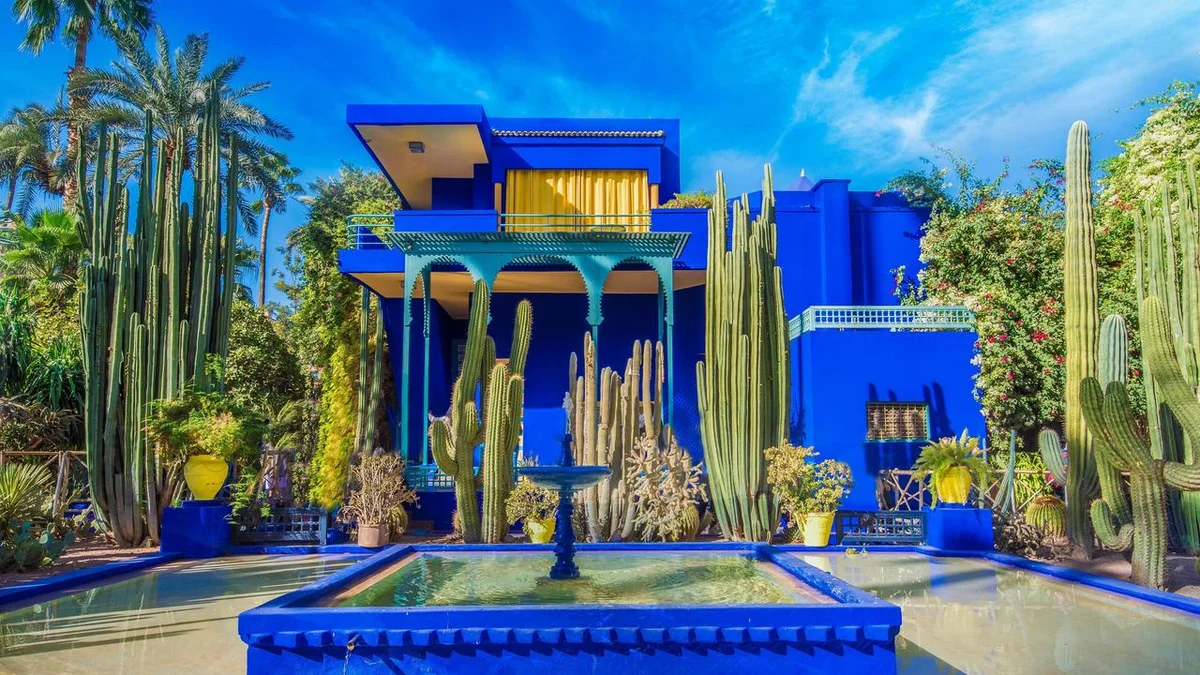
Garden lovers, photographers and travellers who want a calm counterpoint to the medina. Jardin Majorelle was created over nearly forty years from 1923 by French artist Jacques Majorelle, then restored after 1980 by Yves Saint Laurent and Pierre Berge. The garden holds exotic plants from around the world, including cacti, bamboo, palms and water lilies, arranged around pools, pergolas and paths, with the famous cobalt blue villa, painted in Majorelle Blue, at its heart.
Book a timed ticket online before you go, because tickets are sold online only and walk-in tickets are not available at the entrance. The Pierre Berge Museum of Berber Arts sits inside the blue villa, and the Yves Saint Laurent Museum stands next door, so the three sites make a natural half day in Gueliz. Arrive at the first time slot for the quietest paths, and note that photography is not permitted inside the Berber Museum. Allow one to two hours for the garden alone.
Address: Rue Yves Saint Laurent, Gueliz, Marrakech 40090
Do not miss
The blue villa against the cacti, the bamboo groves, the lily pools, and the Berber Museum collection of jewellery, textiles and artefacts inside the villa. The garden paths are narrow and busy at midday, so the early slot matters more here than at any other Marrakech garden.
Practical info
The garden is generally open daily from 8:00 AM to 6:30 PM in summer and to 5:30 PM in winter, with last entry around 30 minutes before closing and shorter hours during Ramadan. Ticket prices conflict sharply across current listings, with garden-only figures from 70 to 170 dirhams, so this guide prints no price: the exact price for your date and time slot is shown on the official ticket site when you book. Arrive within the booked time window, because late arrival can mean loss of the ticket.
Book the first slot and go straight to the far end of the garden. Most visitors stop at the first blue wall, and the quietest paths are the ones beyond it.
7. Get Lost in the Medina Souks

Best for
Shoppers, craft lovers and travellers who want the living heart of Marrakech. The medina souks are a vast covered market north of Jemaa el-Fnaa, organised by trade: leather in one quarter, metalwork in another, textiles, carpets, spices, lamps and jewellery each with their own lanes. Souk Semmarine is the main covered spine, and from it a maze of smaller lanes branches off to workshops where artisans still hammer brass, dye leather, weave carpets and carve wood by hand.
Hire a licensed guide for a first souk walk, or walk alone keeping to the main spine and noting landmarks at every turn. Haggling is expected: start well below the first price, smile, take your time, and be ready to walk away, which is often when the real price appears. Buy large items only from shops that can arrange insured shipping. Allow two to three hours, with a tea stop in the Rahba Lakdima spice square.
Address: Souk Semmarine, Medina, Marrakech 40000
Do not miss
The dyers quarter with its coloured pits, the metalworkers hammering lamps and trays, the spice pyramids of Rahba Lakdima, and a rooftop view over the souk roofs at the end of the walk. The carpet shops with a tea invitation are part of the experience, but there is no obligation to buy.
Practical info
The souks are open daily, busiest from late morning to early evening, with some shops closing for Friday prayer. There is no entry charge for the souks themselves. Wear comfortable shoes for uneven lanes, carry small notes, and ask before photographing people or private workshops. Motorbikes and donkey carts use the same lanes, so step aside promptly when you hear a warning call behind you.
Never start haggling unless you are ready to buy. The shopkeeper will remember your face, and the next lane will be much easier once you have shown that you mean it.
Stay here: Riad Yasmine
A traditional medina riad at 209 Rue Ank Jemel, Marrakech 40030, in the Bab Taghzout area, about twenty minutes on foot from Jemaa el-Fnaa and five minutes from a souk entrance, arranged around a central courtyard with a terrace. Best for travellers who want a quiet riad base with direct car and taxi access.
8. Climb the Ramparts of El Badi Palace

Best for
History lovers, photographers and travellers who want scale, sky and storks after the decorated interiors of Bahia Palace. El Badi Palace was built in the late 16th century by Sultan Ahmad al-Mansur to celebrate victory over the Portuguese, and it was once one of the most lavish palaces in the Islamic world. In the early 17th century it was stripped of its precious materials to build Meknes, leaving the dramatic ruin seen today: vast courtyards, sunken orange gardens, a long reflecting pool and high earthen ramparts.
Climb the ramparts for a panorama across the medina rooftops to the Atlas Mountains, then descend to the underground passages, which stay cool even on hot days. The Koutoubia Minbar, a 12th century cedar pulpit carved in Cordoba in 1137, is housed in a pavilion within the palace grounds and is one of the finest surviving pieces of Almoravid woodwork. White storks nest on the ramparts, most actively from January to April, and they have become the unofficial symbol of the site. Allow one to one and a half hours.
Address: Ksibat Nhass, Kasbah, Marrakech 40000
Do not miss
The rampart panorama at opening time, the stork nests on the high walls, the sunken orange gardens and the long pool, and the Koutoubia Minbar pavilion, where photography of the pulpit itself may be restricted, so check with the guardian on site.
Practical info
The palace is generally open daily from 9:00 AM to 5:00 PM, with shorter hours during Ramadan. Ticket prices conflict across current listings, with figures from 70 to 100 dirhams for a foreign adult, so this guide prints no price: check the current price at the ticket office on the day of your visit. The site is almost entirely open air and exposed, so bring water, a hat and sun protection, and visit early or late in the day in summer. Rampart access involves stairs and is not step free.
Go at opening time. The high walls hold heat once the sun is up, and the first hour gives both cooler walking and the best light for the courtyard.
More Worth Your Time in Marrakech

Le Jardin Secret, at 121 Rue Mouassine in the medina, is a restored 16th century garden with two courtyards, an Islamic garden and an exotic garden, plus a tower with rooftop views over the medina. The Yves Saint Laurent Museum, on Rue Yves Saint Laurent in Gueliz next to Jardin Majorelle, shows couture, sketches and accessories from four decades of design work, and it pairs naturally with the garden visit. The Marrakech Museum, at Place Ben Youssef next to Ben Youssef Madrasa, is housed in the Dar Menebhi Palace, built at the end of the 19th century and opened as a museum in 1997, with a tiled courtyard, a great brass chandelier and exhibitions of Moroccan art, ceramics, coins and calligraphy.
Marrakech Attractions Compared

| Attraction | Best For | Time Needed | Entry |
| Jemaa el-Fnaa | First-time visitors and evening atmosphere | 2 to 3 hours | Free |
| Koutoubia Mosque exterior | Architecture and photography | 30 to 45 minutes | Free exterior |
| Bahia Palace | Decorated interiors | 60 to 90 minutes | Ticketed, price to check on the day |
| Saadian Tombs | Saadian history | 30 to 45 minutes | Ticketed, price to check on the day |
| Ben Youssef Madrasa | Islamic architecture | 60 to 90 minutes | Ticketed, price to check on the day |
| Jardin Majorelle | Gardens and calm | 1 to 2 hours | Timed online ticket |
| Medina souks | Shopping and craft | 2 to 3 hours | Free to walk |
| El Badi Palace | Ruins, views and storks | 1 to 1.5 hours | Ticketed, price to check on the day |
Suggested Itineraries

| Itinerary | Morning | Afternoon | Evening |
| One Day Highlights | Koutoubia Mosque exterior and Bahia Palace | Saadian Tombs and El Badi Palace | Jemaa el-Fnaa food stalls |
| Two Day Medina Plus Garden | Day 1: Jemaa el-Fnaa, Koutoubia Mosque exterior, Bahia Palace | Day 1: Saadian Tombs, El Badi Palace | Day 1 evening: Jemaa el-Fnaa |
| Two Day Medina Plus Garden | Day 2: Ben Youssef Madrasa and medina souks | Day 2: Jardin Majorelle and Yves Saint Laurent Museum | Day 2 evening: medina terrace dinner |
| Three Day Slow Marrakech | Day 3 morning: Le Jardin Secret and Marrakech Museum | Day 3 afternoon: Atlas Mountains Berber villages viewpoint trip (guide in preparation) | Day 3 evening: return to Jemaa el-Fnaa |
Book Tickets in Marrakech

Book Jardin Majorelle online well ahead, because same day slots sell out in peak season. For the other ticketed sites in this table, buy at the ticket office on the day, and check the current price before paying, because prices change and listings conflict. The five rows below use only verified official site or ticket pages.
| Attraction | Tickets | Booking Note |
| Jardin Majorelle | Online timed ticket only | Book ahead, arrive in your time window |
| Ben Youssef Madrasa | Ticket office on the day | Check current price at the gate |
| Yves Saint Laurent Museum | Official site and Jardin Majorelle ticket site | Combine with Jardin Majorelle |
| Le Jardin Secret | Ticket office on the day | Tower access is a separate small charge |
| Marrakech Museum | Ticket office on the day | Combine with Ben Youssef Madrasa |
Where to Stay in Marrakech
Top 3 hotels in Marrakech
Explore all hotels >- La Mamounia ★★★★★
- Riad Yasmine
- Four Seasons Resort Marrakech ★★★★★

The medina suits first-time visitors who want to walk to the sights, with riads tucked into quiet lanes a short walk from Jemaa el-Fnaa. Gueliz suits visitors who want wider streets, modern hotels and easy access to Jardin Majorelle. The Palmeraie suits visitors who want resort space and a car, but it is a taxi ride from the medina sights.
| Area | Best For | Trade Off |
| Medina near Jemaa el-Fnaa | Walking to all medina sights | Narrow lanes, noise at night near the square |
| Gueliz | Jardin Majorelle, modern hotels, wider streets | Taxi ride to medina sights |
| Kasbah | Bahia Palace, Saadian Tombs, El Badi Palace | Quieter, fewer restaurant choices late at night |
| Palmeraie | Resort space and gardens | Car or taxi needed for the medina |
La Mamounia is the classic grand hotel of Marrakech, set in large gardens just west of the medina near Bab Jdid, within walking distance of the Koutoubia Mosque and Jemaa el-Fnaa. Its gardens, courtyards and historic rooms make it a destination in itself, and it suits a special occasion stay. Address: Avenue Bab Jdid, Marrakech 40040.
Riad Yasmine is a traditional medina riad in the Bab Taghzout area, around a 20 minute walk from Jemaa el-Fnaa and five minutes from the souk entrance, with a central courtyard, terrace and rooms arranged around the courtyard. It suits visitors who want a quiet riad base with direct car and taxi access to the front door. Address: 209 Rue Ank Jemel, Marrakech 40030.
What to Eat in Marrakech

Marrakech food is built around tagine, couscous, harira soup, grilled meats, fresh bread, salads and mint tea, with spices, preserved lemons and olives giving the dishes their character. Food in Marrakech is halal by local default, but this guide still labels each restaurant honestly: listed halal means the restaurant appears in halal listings, and confirm with staff means you should ask about meat sourcing on the day, because no certifier name was verified for these restaurants during research. The wider story of how food shapes travel is covered in how food tourism is shaping modern travel, and Marrakech is a strong example of a city where a meal is part of the sightseeing, not an afterthought.
Halal Food in Marrakech
Cafe des Epices, at 75 Rahba Lakdima, Marrakech 40000, is a simple cafe on the spice square, open daily from 9:00 AM to 11:00 PM in current listings, serving teas, coffee, fresh juices, sandwiches, salads and light Moroccan dishes from a terrace over the square. Label: listed halal, confirm with staff for meat dishes, because the cafe own site does not publish a halal certification statement. NOMAD, at 1 Derb Aajrane, Marrakech 40000, is a modern Moroccan restaurant near the spice square, serving tagine, couscous and vegetable dishes across four floors with terraces over the medina. Label: listed halal, confirm with staff, because no certifier name was verified. Le Jardin, at 32 Souk Jeld Sidi Abdelaziz, Marrakech 40000, is a garden restaurant in a 16th century building in the souks, serving Moroccan and European dishes in a lush courtyard. Label: listed halal, confirm with staff for meat dishes.
Local Dishes to Try
Try lamb tagine with prunes and almonds, chicken tagine with preserved lemon and olives, couscous with seven vegetables on Fridays, harira soup with bread, zaalouk aubergine salad, and msemen flatbread with honey for breakfast. Mint tea is served throughout the day, sweet and poured from a height, and fresh orange juice in Jemaa el-Fnaa is a daytime staple. In the square in the evening, choose stalls with busy local queues, agree prices before ordering, and try snail soup, grilled meats and vegetable tagines from stalls that cook to order.
Mosques and Prayer Facilities in Marrakech

Marrakech is a Muslim city, and prayer facilities are easy to find in the medina, with mosques in every quarter and prayer rooms in larger hotels and shopping areas. Muslim visitors can pray at the Koutoubia Mosque, on Avenue Mohammed V, Marrakech 40000, and at Ben Youssef Mosque, on Rue Assouel, Marrakech 40000, next to Ben Youssef Madrasa. Both mosques are working places of worship, and non-Muslim visitors cannot enter the prayer halls, so the exterior and gardens are the visitor experience at Koutoubia, while Ben Youssef Mosque is best admired from the square and the madrasa next door. Friday noon prayer is the busiest prayer time, and some sites close or shorten hours around it, so plan palace and museum visits outside that window on Fridays.
For wudu and prayer during a medina walk, larger riads and hotels can direct guests to the nearest mosque. Prayer times shift through the year with the sun, so check the current day prayer times on arrival.
Getting Around Marrakech

Walk in the medina, take a petit taxi in Gueliz and for the airport, and use a licensed guide with a car for day trips. The medina is a walking city, and most sights in this guide sit within a 20 minute walk of Jemaa el-Fnaa. Petit taxis are metered inside the city, but agree the fare before departure for airport trips and for trips outside the city limits, where grands taxis take over.
| Mode | Best For | Note |
| Walking | All medina sights | Main way to see the medina, lanes are narrow and uneven |
| Petit taxi | Gueliz, Jardin Majorelle, airport | Metered in the city, agree airport fares before departure |
| Grand taxi | Day trips outside the city | Shared or private hire, agree price before departure |
| City bus | Airport to city centre, Gueliz routes | Cheapest option, slower and crowded at peak times |
| Private driver and guide | Atlas Mountains and Ourika Valley day trips | Best for mountain roads and Berber village stops |
What a Day in Marrakech Costs

Costs below are planning ranges in Moroccan dirhams, not fixed prices, because attraction ticket prices conflict across current listings and hotel and food prices vary by season. Use the ranges to budget, and check the current price at each ticket office and restaurant before paying.
| Item | Budget Day | Comfortable Day |
| Stay per night | Modest riad room | Grand hotel or large riad suite |
| Food per day | Medina cafes, market stalls and mint tea | Terrace restaurants and a guided food walk |
| Attraction tickets per day | Two ticketed sites, rest free | Three to four ticketed sites plus a museum |
| Local transport per day | Walking plus one petit taxi | Petit taxis plus a private driver for half a day |
| Total per person per day, excluding stay | Low to moderate, street food and walking | Moderate to high, restaurants and taxis |
Best Time to Visit Marrakech

Spring and autumn give the best balance of warmth, light and crowds, while winter gives mild days and lower prices, and summer demands early starts and shade. Ramadan changes hours and rhythms across the city, with shorter opening times at many sites and a livelier atmosphere after sunset, so check hours in advance if you travel during Ramadan.
| Season | Weather | Crowds and Tips |
| March to May | Warm and pleasant, gardens in bloom | Best overall season, book Jardin Majorelle early |
| June to August | Very hot, often above 38 degrees Celsius | Sightsee early, rest at midday, drink water often |
| September to November | Warm days, cooler evenings | Best autumn season, good light for photography |
| December to February | Mild days, cool nights, occasional rain | Good value, Atlas views clearest after rain |
Day Trips from Marrakech

Atlas Mountains Berber villages viewpoint trip. A day in the foothills south of Marrakech, with a private driver and a local guide, gives mountain viewpoints, Berber village lanes, terraced fields and a traditional lunch in a village house. The trip suits travellers who want scenery and village life without a long trek, and it can be shortened to a half day from the Ourika Valley road. Atlas Mountains Berber villages viewpoint trip (guide in preparation).
Essaouira old town. Essaouira, around three hours west of Marrakech by road, is a walled Atlantic town with a medina, ramparts, a fishing port and whitewashed lanes that feel calmer than Marrakech. This guide covers the medina and the ramparts only: walk the ramparts for views over the port and the town walls, explore the medina craft shops and the fishing port, and eat grilled fish at a port restaurant. Essaouira old town (guide in preparation).
Ouzoud waterfalls viewpoint. Ouzoud, around two and a half hours northeast of Marrakech, is a set of waterfalls in a green valley, reached by a walk down to viewpoints above and below the falls. This guide covers viewing only: take the upper viewpoints for the full cascade, walk the path to the lower viewpoints for closer views, and look for Barbary macaques in the olive groves around the falls. Wear sturdy shoes for the steps, and allow a full day with a driver. Ouzoud waterfalls viewpoint (guide in preparation).
Practical Tips for Marrakech

Carry cash in small notes for souk purchases, tips and small cafes, and keep a card for hotels and larger restaurants. Agree taxi fares before departure, and agree the price of any service in the square before it starts. Dress modestly around mosques and religious sites, covering shoulders and knees, and wear comfortable shoes for medina lanes. Drink bottled water if you are unsure about tap water, and carry water on palace and garden visits in summer. The story of food as a travel motive runs through Marrakech, and how food tourism is shaping modern travel helps explain why a tagine in a medina courtyard feels like part of the sightseeing. Book Jardin Majorelle online before you travel, arrive early at Bahia Palace and the Saadian Tombs, and keep Friday midday prayer in mind when planning a Friday itinerary.
Stay alert in crowded areas and agree guide fees in advance.
Final Thoughts on Marrakech
Marrakech works best when you let it set the pace. The square, the minaret, the palaces and the souks are not a checklist to rush through, but a set of rooms in one large house, each with its own light, sound and smell. Spend three days, walk the medina in the morning, rest in a garden at midday, and return to Jemaa el-Fnaa in the evening, and the city will show you its layers: Almoravid foundations, Almohad minarets, Saadian tombs, 19th century palaces and a living market that still works as it has for centuries.
For first-time visitors, the order in this guide is the safest route to a full Marrakech visit: square and minaret first, palaces and tombs second, madrasa and souks third, and the blue garden as a calm finale. Marrakech is a strong choice for a family-friendly, halal-friendly city break in Morocco.
Keep Exploring
Continue your city guide journey with things to do in New York City, things to do in Boston, things to do in Washington DC, and how food tourism is shaping modern travel. Each guide follows the same practical format: verified addresses, opening times, ticket guidance, halal food and mosque information, and day trip ideas for a longer stay.
Jemaa el-Fnaa square, the Koutoubia Mosque, and the Bahia Palace make the essential circuit, and El Badi Palace, the Saadian Tombs, the Majorelle Garden, the Ben Youssef Madrasa, the souks, and the Menara Gardens fill the days around them. March to May and October to November bring the best walking weather, while summer brings very hot days suited to palaces and evening squares only. Book Bahia Palace and Majorelle Garden visits before arrival, since both sell out in peak season, and haggle in the souks, where the first price runs high.
The medina suits almost every itinerary, with the square, the Koutoubia, and the souks within walking distance, while Gueliz suits travellers who want the modern streets and the gardens, and the Palmeraie suits resort stays. Marrakech is an easy city for Muslim travellers, with mosques in every quarter and the Friday prayer at the Koutoubia Mosque and the Ben Youssef Mosque. If a fourth day is free, the Ourika Valley sits around 1 hour southeast in the Atlas Mountains, with waterfalls and Berber villages in one day.
Frequently Asked Questions
What are the best things to do in Marrakech for first-time visitors?
Start with Jemaa el-Fnaa, the Koutoubia Mosque exterior and gardens, Bahia Palace, the Saadian Tombs, Ben Youssef Madrasa, Jardin Majorelle and the medina souks. These eight sights cover the square, the minaret, the palaces, the tombs, the madrasa, the garden and the market, and they sit within a compact walking area plus one short taxi ride to Gueliz.
How many days do you need in Marrakech?
Three full days cover the main medina sights, Jardin Majorelle and a relaxed evening in Jemaa el-Fnaa. Four days add a day trip to the Atlas Mountains, the Ourika Valley or Ouzoud waterfalls viewpoints. One day is enough for the highlights only, but it will feel rushed, because the medina rewards slow walking.
Can non-Muslim visitors enter the Koutoubia Mosque?
No. The interior of the Koutoubia Mosque is reserved for Muslim worship, as are most working mosques in Morocco. Non-Muslim visitors can freely view the exterior, walk the gardens and photograph the 77 metre minaret from outside, which is where the main visitor experience lies.
Do you need to book Jardin Majorelle tickets in advance?
Yes. Jardin Majorelle tickets are sold online only, for a date and time slot, through the official ticket site, and walk-in tickets are not available at the entrance. Book several days ahead in peak season, arrive within your time window, and combine the garden with the Berber Museum inside the villa and the Yves Saint Laurent Museum next door.
When is the best time to visit Marrakech?
March to May and September to November give the best balance of warm days, good light and manageable crowds. Winter days are mild and good value, while summer afternoons are very hot, so sightsee early in the morning and rest in shade at midday if you travel from June to August.
Where can visitors find halal food in Marrakech?
Food in Marrakech is halal by local default, and medina restaurants around Jemaa el-Fnaa and the spice square serve tagine, couscous, grilled meats and vegetable dishes throughout the day. This guide lists Cafe des Epices, NOMAD and Le Jardin as listed halal with confirm with staff wording, because no certifier name was verified for them, so ask about meat sourcing on the day for meat dishes.
How do visitors get around Marrakech without a car?
Walk in the medina, where all main sights sit within a 20 minute walk of Jemaa el-Fnaa, and take a petit taxi for Gueliz, Jardin Majorelle and the airport. Petit taxis are metered inside the city, so agree airport fares before departure, and use a private driver with a guide for Atlas Mountains and Ourika Valley day trips.

2 Comments